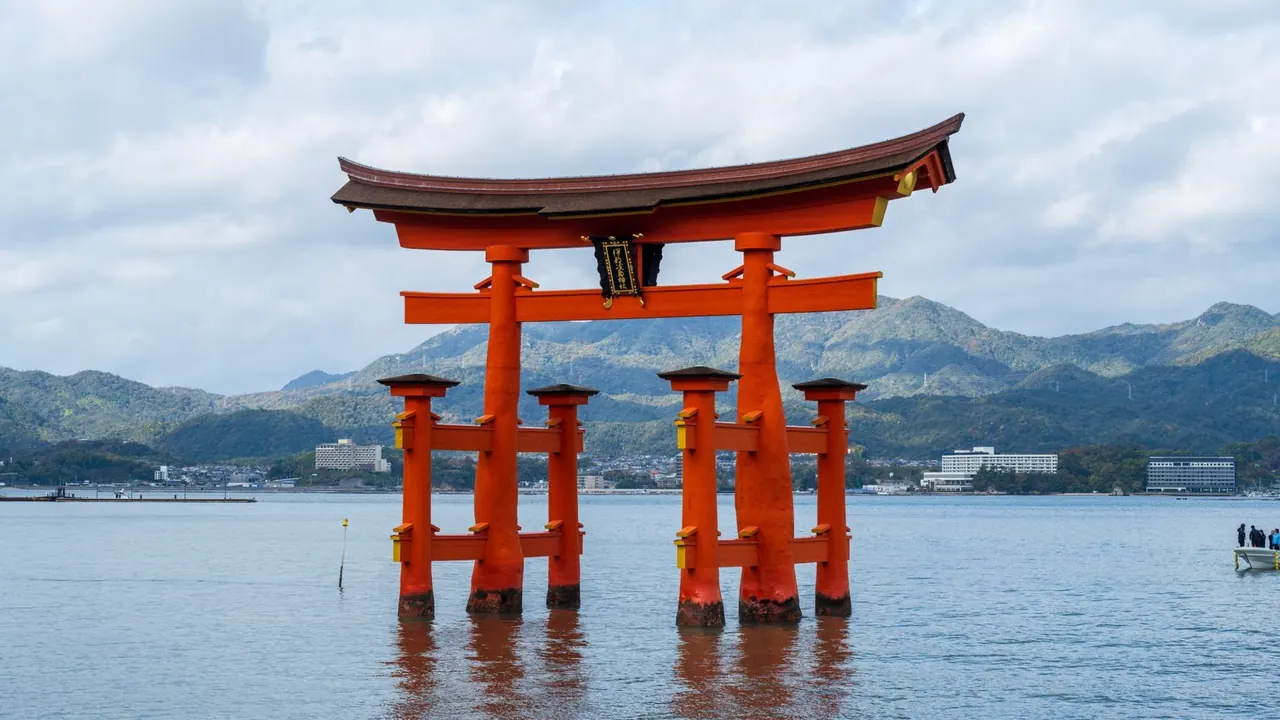
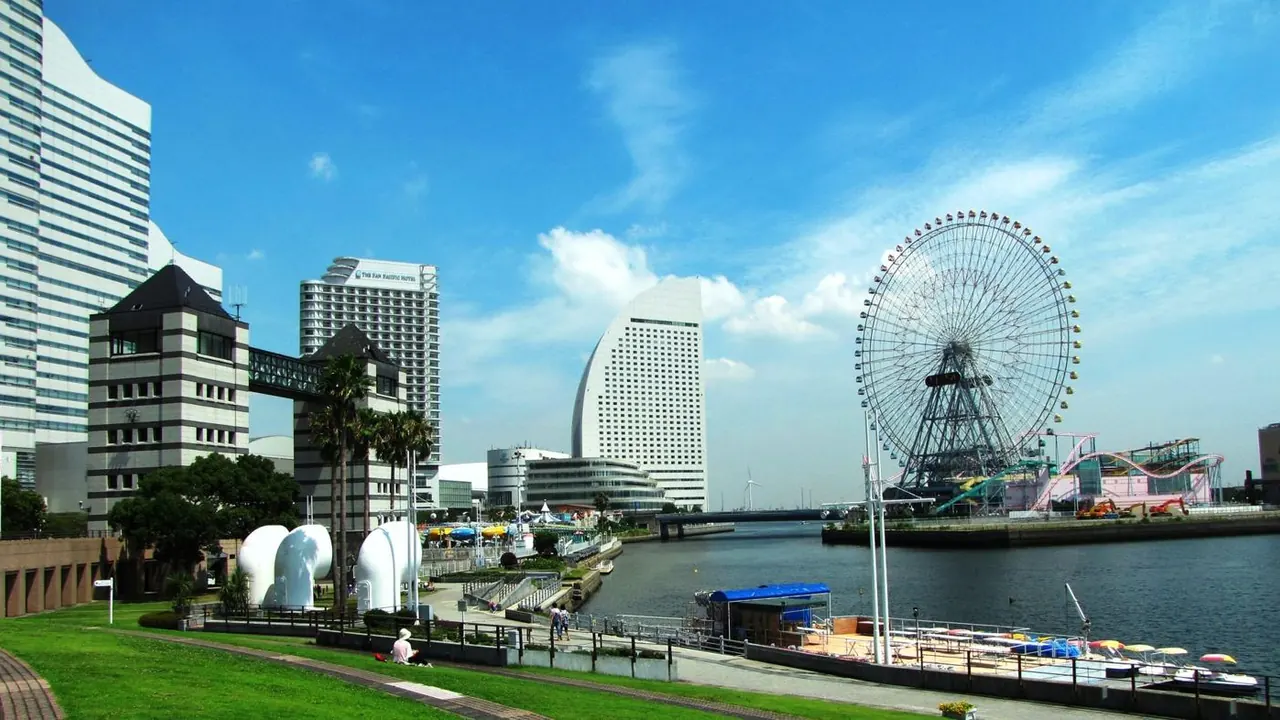
Photos: Hiroshima by Guohua Song, Pexels License; Yokohama by Yoshio Kohara, CC BY 3.0, cropped.
Hiroshima or Yokohama?
Our verdict in twelve categories, each scored against the same fixed benchmark cities, and the climate month by month, so you can choose for your trip.
Choose Hiroshima for
- culture and sights
- prices
- nightlife
Hiroshima suits a traveller who comes for the weight of its history and the beauty of the Inland Sea around it. The Peace Memorial Park and its museum are a visit people remember for years, and Miyajima, the islands and the old ports along the coast make the rest of the stay quieter and more scenic than a big-city break. It also asks a little less of the wallet, and its slower pace suits two or three unhurried days.
Choose Yokohama for
- families
- live music and the arts
- beaches
Families, and anyone who wants one comfortable base for a lot of Japan, will do better in Yokohama. Children have aquariums, the Cup Noodles Museum and harbour rides, and the trains run quickly to Tokyo, Kamakura and Hakone. Add Chinatown's food, a jazz-loving concert scene and hot-spring baths both in town and in the mountains, and it offers more to fill a longer stay.
Scoreboard
Twelve categories on one fixed scale from 0 to 100. The shaded stretch is the gap between the two.
Your match
Pick a travel style or drag the sliders, and both match scores follow your weighting.
Wins on culture and sights and prices with your weighting.
Wins on families and live music and the arts with your weighting.
What matters to you?
Category by category
What the scores mean for a trip.
Beaches & swimming
Neither city is built for a beach vacation, but Yokohama gets you to proper sand more easily. Its own man-made beach at Umi no Koen is in the city, and the Shonan coast at Zushi, Kamakura and Enoshima, with broad grey-brown beaches, is a short train ride south.
From Hiroshima a swim means a ferry or a drive to small beaches on Miyajima, Ninoshima or Etajima, which are calm but modest. In both places the season is short, roughly July and August, with jellyfish towards the end.
Food & drink
Yokohama has the wider table. Japan's largest Chinatown, the rich iekei ramen born here and a whole museum of ramen shops give it more variety, and the small grill bars of Noge add a good evening scene.
Hiroshima eats more narrowly but with real character: layered okonomiyaki straight off the griddle, winter oysters from the bay, and sake tastings in the breweries of Saijo, a short train ride away. Neither city has much high-end dining, so the best meals in both are at the counter.
Culture & sights
The two are close in what they offer, but the experiences could hardly differ more. Hiroshima's sights are dominated by the Peace Memorial Park, the A-Bomb Dome and a museum that needs half a day and an open heart, with Shukkeien garden and the castle grounds as quieter counterpoints.
Yokohama tells the story of Japan opening to the world: Western merchant houses on the Yamate Bluff, the stone customs buildings of Kannai, a moored 1930s liner and Sankeien's relocated temples and teahouses. It is lighter going, and two days covers either city.
Nightlife
Evenings out are much alike, built around izakaya and small bars rather than clubs. Hiroshima's Nagarekawa is a single dense grid of tiny bars and karaoke that keeps going past midnight, especially after a baseball game. Yokohama spreads its drinking between Noge's standing bars and harbour-view bars in Minato Mirai, winds down earlier, and sends anyone wanting a late night to Tokyo.
Nature & outdoors
The outdoors is equally good in both, but it is sea against mountains. Hiroshima's landscape is the Inland Sea: forested islands linked by ferries, the climb up Mount Misen on Miyajima, the gorge walk at Sandankyo and the Shimanami Kaido cycle route across the islands.
Yokohama looks inland and down the coast instead. There are temple trails on Kamakura's wooded ridges, real day hikes in the Tanzawa mountains, volcanic valleys at Hakone and, on clear winter days, Mount Fuji on the horizon.
Day trips
Both make excellent bases, but Yokohama has the edge because Tokyo is under half an hour away and Kamakura's Great Buddha and Zen temples even closer. Hakone, Enoshima and Kawagoe round out an easy list on cheap local trains.
Hiroshima's own day trips are superb, led by Miyajima's floating torii and Iwakuni's arched wooden bridge, with Onomichi, Takehara and rabbit-filled Okunoshima nearby. Himeji Castle and Kurashiki need the shinkansen, so the wider circle costs more time and money.
Good for families
Yokohama is far better set up for children. It has Hakkeijima Sea Paradise with its aquarium and rides, the Cup Noodles Museum where children make their own noodles, the Anpanman museum, the Zoorasia zoo and Tokyo Disneyland about an hour away.
Hiroshima is safe and friendly, and children enjoy the Miyajima deer, the ropeway and Okunoshima's rabbits. Yet it lacks big attractions, and parents must think carefully about how much of the Peace Memorial Museum to show young children.
Getting around
Yokohama is the smoother city to move around. One tap-on card covers the Minatomirai Line, subways, JR and private railways, with fast links to Tokyo and Haneda Airport and a flat harbour walk from Minato Mirai to Chinatown.
Hiroshima's centre is compact and flat enough to walk between the Peace Park, Hondori and the castle. Its trams are charming but slow at busy times, so JR trains are the better choice for Miyajima.
Shopping & style
Yokohama gives more choice. Department stores and underground arcades around the station, waterfront malls at Minato Mirai and the long, smart street of Motomachi, known for leather goods, cover most needs, with Chinatown for teas and tableware.
Hiroshima's Hondori arcade is pleasant but smaller. What it does better is distinctive crafts to take home: Kumano brushes, Miyajima rice paddles, Saijo sake and local lemon products.
Affordability
Costs are much the same, and in both cities cheap noodles and set lunches keep food bills low. The difference lies in where the money goes. In Hiroshima it is shinkansen tickets for longer day trips and pricier island hotels on Miyajima, while Yokohama's free harbour sights and cheap local trains are offset by harbour-view hotels and family attractions that charge admission.
Live music & performing arts
Yokohama has the stronger stage. Minato Mirai Hall, home to the Kanagawa Philharmonic, and the Kanagawa Arts Theatre host concerts, opera and dance, and jazz runs through the city's old cafés and its autumn festival. Tokyo's Kabuki and musicals are a short ride away.
Hiroshima's programme is more modest, though it has one thing Yokohama lacks: regular performances of kagura, the masked and drummed Shinto dance-drama from the surrounding mountains.
Wellness & relaxation
Yokohama offers more for a restful stay. Hot-spring bath complexes, including one on the Minato Mirai waterfront, are in the city itself, and Hakone's mountain onsen inns make an easy overnight escape.
Hiroshima has no hot springs of its own, so it relies on sento and hotel baths, with real onsen an hour out. Its quiet charms are a ryokan night on Miyajima after the crowds leave and slow walks by Shukkeien's ponds.
When should you go?
Pick your month. The climate figures are measured averages, not a forecast.
Hiroshima in July
Yokohama in July
Daytime high, °C
Rainfall in the month, mm
Where the figures come from
Yokohama's sunshine is measured 29 km from the centre, at Tokyo.
Temperature and rainfall are climate normals, averaged over the years shown. Hiroshima: 1991-2020 normals, Hiroshima (1.7 km from centre). Yokohama: 1971-2000 (sunshine 1991-2020) normals, Yokohama (1.6 km from centre).
Both cities are at their best in spring and autumn, when days are mild and good for walking. Summers part ways. Hiroshima gets hotter, with August highs around 33°C against Yokohama's 30°C, and its rain arrives in one heavy burst in early summer, peaking near 299mm in July. Yokohama's wettest stretch comes later, in September and October, when typhoon-season rain reaches about 219mm, so its autumn starts less settled than Hiroshima's.
For a swim, the sea off both cities warms to about 26°C in August, so July and August are the beach months in each. Winter is similar in temperature, cool but rarely bitter, though Yokohama has clearly sunnier winter days, which also bring the clear skies for Mount Fuji views.
Which traveller are you?
On a family trip with children, Yokohama is the easy choice. It has an aquarium island with rides, the Cup Noodles Museum, a big zoo and step-free stations, while Hiroshima offers deer and rabbits but no theme parks and a museum unsuitable for young children.
For a relaxing and wellness trip, Yokohama again comes out ahead. Large hot-spring complexes sit right on the waterfront, and Hakone's mountain onsen inns are within reach for a night away. Hiroshima has only sento in town, with true hot springs further out.
For travellers drawn by twentieth-century history, Hiroshima has no equal anywhere. The A-Bomb Dome and the Peace Memorial Museum tell the story of 6 August 1945 where it happened. Yokohama's history is a gentler one of treaty-port trade and Western merchant houses.
Before you go
| Measure | Hiroshima | Yokohama |
|---|---|---|
| Official language | Japanese | Japanese |
| Currency | Yen (JPY) | Yen (JPY) |
| Sockets | AB100 V, 50 and 60 Hz depending on the region | AB100 V, 50 and 60 Hz depending on the region |
| Driving side | Left | Left |
| Time zone | UTC+9 | UTC+9 |
| Emergency number | Police 110, fire 119 | Police 110, fire 119 |
| Elevation | 3 m | 24 m |
| Main airport | Hiroshima Airport (HIJ)43 km from centre10 non-stop destinations | Tokyo Haneda International Airport (HND)18 km from centre98 non-stop destinations |
| Public holidays this year | 16 days | 16 days |
By the numbers
| Measure | Hiroshima | Yokohama |
|---|---|---|
| City population | 1,198,021 | 3,757,630 |
| People per km² | 1,324 | 8,585 |
| Museums within 10 km | 18 | 38 |
| UNESCO World Heritage sites within 50 km | 2 | 1 |
| Swim season, months above 21 °C | 4 months | 5 months |
Where else could you go?
Every comparison below shares a destination with this one, so you can follow Hiroshima or Yokohama somewhere new.