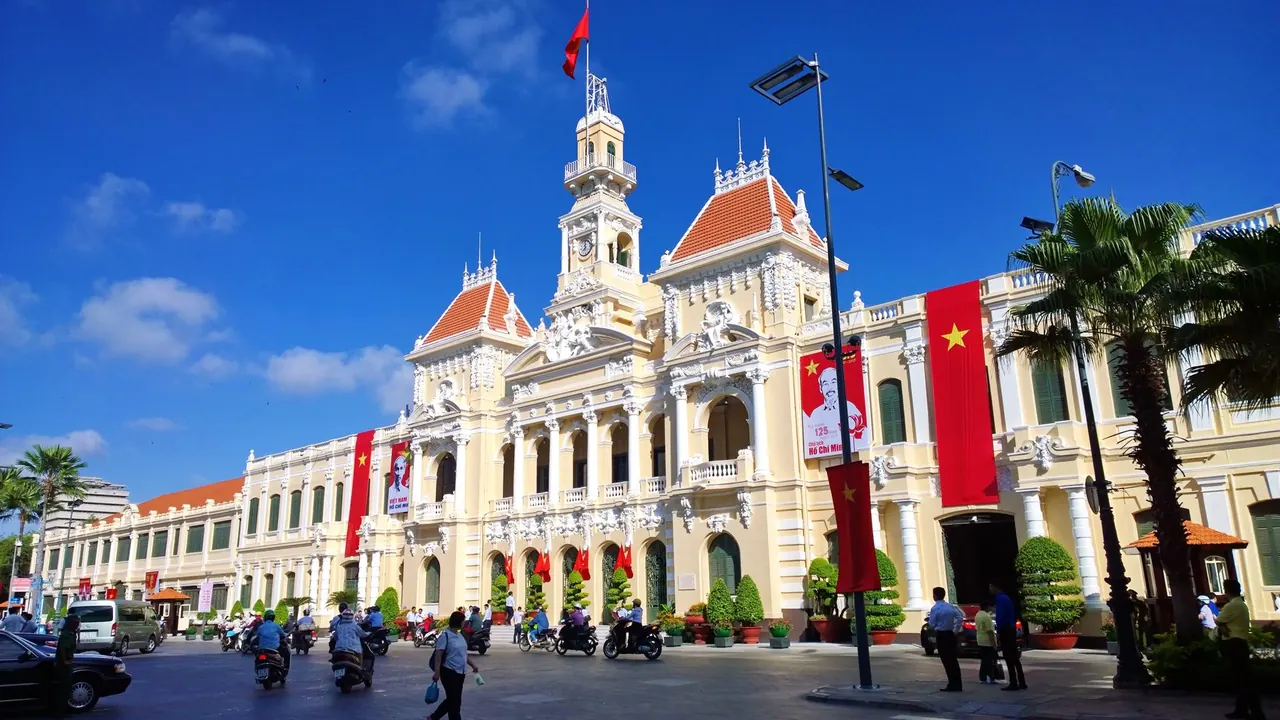
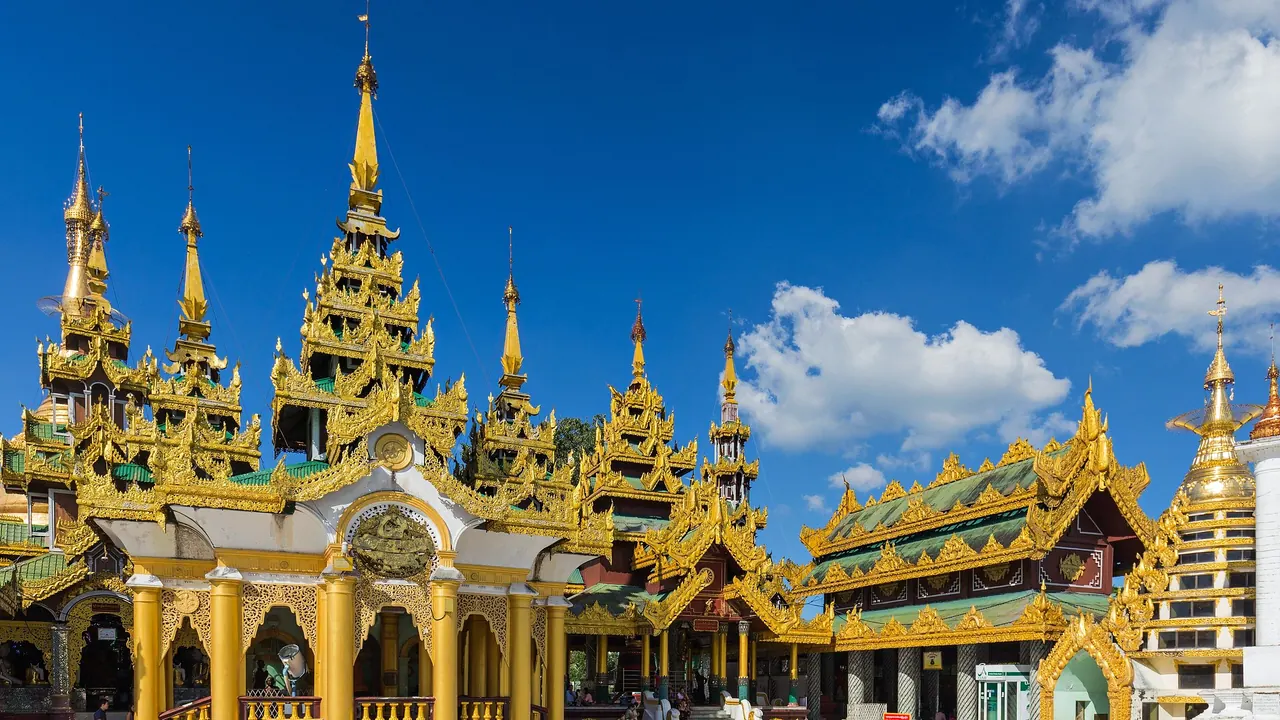
Photos: Ho Chi Minh City by trungydang, CC BY 3.0, cropped; Yangon by Marcin Konsek, CC BY-SA 4.0, cropped.
Ho Chi Minh City or Yangon?
Our verdict in twelve categories, each scored against the same fixed benchmark cities, and the climate month by month, so you can choose for your trip.
Choose Ho Chi Minh City for
- nightlife
- live music and the arts
- food and drink
Ho Chi Minh City is the better pick for a trip built around eating, drinking and evenings out. Its street cooking runs from broken-rice plates to after-dark snail stalls and serious modern Vietnamese kitchens. The bars stay open into the small hours, and massage, tailoring and the Mekong Delta all fit easily around them, with your money going a very long way.
Choose Yangon for
- culture and sights
Yangon suits the traveller who comes to look rather than to go out. The Shwedagon at dusk and one of Southeast Asia's largest colonial downtowns give it the stronger sights. Its quiet evenings and tea-shop mornings suit someone happy to swap bars and stages for pagodas, markets and a slower, rougher-edged city.
Scoreboard
Twelve categories on one fixed scale from 0 to 100. The shaded stretch is the gap between the two.
Your match
Pick a travel style or drag the sliders, and both match scores follow your weighting.
Wins on nightlife and live music and the arts with your weighting.
Wins on culture and sights with your weighting.
What matters to you?
Category by category
What the scores mean for a trip.
Beaches & swimming
Neither city is a place to swim, so in both a dip means a hotel pool. Ho Chi Minh City at least has a beach within reach: Vung Tau is about two hours away by road or by fast boat down the river. Its water is warm but often cloudy, and the sand fills up at weekends.
From Yangon, the Bay of Bengal beaches at Chaung Tha and Ngwe Saung are a long day's drive away. That makes them a separate trip of several nights, not an outing.
Food & drink
Both cities eat on low plastic stools, but Ho Chi Minh City has the deeper and more varied table. Southern cooking brings broken rice, banh xeo and hu tieu, plus whole streets of shellfish stalls, and Cholon's Chinese-Vietnamese food is a cuisine of its own. Above that there is a real upper tier of modern Vietnamese and French cooking, and a coffee culture worth planning your mornings around.
Yangon is more of a discovery than a feast: mohinga and laphet thoke in the tea shops, slow-cooked Burmese curries with their spread of side dishes, and biryani and barbecue skewers from the Indian quarter and 19th Street. Polished restaurants and good wine are scarce.
Culture & sights
Yangon has the more memorable sights, and one above all: the gilded Shwedagon, best at dusk when families walk its marble terrace barefoot. Add Botataung's mirrored interior, the huge reclining Buddha at Chaukhtatgyi and a colonial quarter of the Secretariat, the High Court and the Strand, and the whole city reads as a religious and architectural record.
Ho Chi Minh City tells a different story, mostly about the twentieth century. The War Remnants Museum and the Reunification Palace are powerful, the French landmarks around Dong Khoi are handsome, and Cholon's incense-filled assembly halls add an older layer. Much of the city around them, though, is modern and dense.
Nightlife
This is where the two cities differ most. Ho Chi Minh City goes out every night: pavement beer, the neon noise of Bui Vien, rooftop bars above Nguyen Hue, cocktail rooms up old apartment stairwells, and clubs that keep going into the small hours.
In Yangon an evening means draught beer at a beer station with football on the screens, or skewers on 19th Street, and the streets are quiet well before midnight. It is pleasant enough, but it is not a reason to go.
Nature & outdoors
Neither city is an outdoors base. Both sit on flat, hot delta land with no hills anywhere near. Ho Chi Minh City has a little more within reach: the Can Gio mangroves with their boardwalks and macaques, and the canals and orchards of the Mekong Delta, seen from a small boat or a bicycle.
Yangon's green spaces are mostly inside the city. There is the Kandawgyi Lake boardwalk with views of the Shwedagon, evening walks around Inya Lake, and river ferries for a look at life on the delta.
Day trips
Ho Chi Minh City has the fuller list of outings. The Cu Chi tunnels, often paired with the Cao Dai Holy See at Tay Ninh, the Mekong towns of My Tho and Ben Tre, and seaside Vung Tau make several very different days out.
From Yangon the standout trip is Bago, the old royal capital with the Shwemawdaw Pagoda and a long reclining Buddha. The pottery kilns of Twante and Kyauktan's island pagoda are closer in. The Golden Rock, which many visitors want to see, needs a night away.
Good for families
Children in Ho Chi Minh City get proper days out. Dam Sen has rides and a water park, Suoi Tien is an odd and sprawling Buddhist-themed amusement park, and the old zoo and botanical garden are right in the centre. The streets are the hard part, because the steady flow of motorbikes makes every road crossing a test of nerve. Sightseeing is best kept to the cooler mornings.
Yangon has far less built for children: an old-fashioned zoo, a small amusement park and the lawns of People's Park. Broken pavements and chaotic traffic make walking hard work. People are warm towards children, though, and older ones who enjoy temples and markets can manage a few days.
Getting around
Both cities have a colonial core you can walk and a sprawl beyond it, where most visitors switch to cheap ride-hailing. Ho Chi Minh City adds a metro line running east from Ben Thanh, motorbike taxis and a river bus. Its streets, though, are a constant flow of motorbikes, and bag snatching from passing bikes is a known risk.
Yangon has no metro, and taxis sit in heavy traffic. Because motorbikes are kept out of the centre, its downtown grid is calmer on foot, even if the pavements are uneven. The Circular Railway is for watching daily life, not for getting anywhere.
Shopping & style
Made-to-measure tailoring sets Ho Chi Minh City apart, with suits and ao dai ready within days. Around it you can haggle at Ben Thanh, browse the wholesale floors of Binh Tay in Cholon and take home lacquerware or Song Be ceramics. The malls around Dong Khoi carry the international labels, and Thao Dien has small design shops.
In Yangon, shopping centres on one colonial-era market hall, Bogyoke Aung San. It sells Bagan lacquerware, puppets and longyi, along with gems that are best bought with caution. Beyond it there are malls for imported brands, but little in the way of fashion or design.
Affordability
Both are cheap for a visitor, and in both the money goes furthest on street food and local transport. Ho Chi Minh City stretches a budget further, because comfortable mid-range hotels in the centre cost a fraction of Western rates. Its expensive layer is mostly rooftop bars, imported wine and smart restaurants.
In Yangon, meals, taxis and most pagodas cost little, but international-standard hotels are the costly part of a stay, and the Shwedagon charges foreigners for entry. Simple guesthouses keep it cheap if you don't mind the basics.
Live music & performing arts
Ho Chi Minh City has the more usable stage. The French-built Opera House hosts the city's ballet and symphony orchestra, plus acrobatic shows about southern village life. Water puppetry plays regularly in the centre, and small jazz rooms fill a spare evening.
Yangon offers marionette shows and dinner shows of classical dance at the barge-shaped Karaweik Palace on Kandawgyi Lake. Zat pwe at pagoda festivals is the real local theatre, but it is hard to find, and concerts and opera are essentially absent.
Wellness & relaxation
In Ho Chi Minh City, being looked after is part of daily life. Foot and body massage parlours line the central streets and stay open late, and the long reclining hair-wash with scalp and face massage quickly becomes a habit. Calm outside the treatment room is harder to find, so dawn in the parks and the riverside lanes of Thao Dien are worth seeking out.
Yangon has firm, stretch-based Burmese massage and hotel spas, but its distinctive offer is quieter: vipassana practice at meditation centres such as Mahasi, for days or weeks. The Shwedagon early in the morning and Inya Lake in the evening are its calmest hours.
When should you go?
Pick your month. The climate figures are measured averages, not a forecast.
Ho Chi Minh City in July
Yangon in July
Daytime high, °C
Rainfall in the month, mm
Temperature and rainfall are climate normals, averaged over the years shown. Ho Chi Minh City: 1991-2020 normals, Ho Chi Minh (6 km from centre). Yangon: 1991-2020 normals, Yangon (3.2 km from centre).
Both cities are hot all year and follow the same broad pattern, with a dry season around the turn of the year and a monsoon through the middle months. In Ho Chi Minh City the dry months run from December to April, and April is the hottest at 35°C. The rain arrives in May and stays heavy until November, with October the wettest month.
Yangon swings harder. Its dry season falls at a similar time, but in March and April it climbs to 37°C and then 38°C, too hot for long walks around downtown. From June to August the monsoon brings around 590mm a month, about double Saigon's wettest month. That leaves November to February as Yangon's comfortable window, while Saigon is easier to visit from December into March. Both coasts have warm sea all year, but neither city is a place to swim.
Which traveller are you?
For a culture and arts trip, Yangon has the stronger sights: the Shwedagon at dusk, the Sule and Botataung pagodas, and a whole downtown of weathered colonial buildings. Saigon has more on stage in the evenings, but its sights are mostly twentieth-century and cover less ground.
On a food and nightlife trip, Ho Chi Minh City is the clear choice. Southern street cooking, Cholon's Chinese-Vietnamese food and a deep coffee culture lead into rooftop bars, hidden cocktail rooms and a loud backpacker strip. Yangon is mostly asleep before midnight.
On a family trip with children, Ho Chi Minh City is the easier of two demanding cities. It has more places built for children, cheap ride-hailing cars to cut short the hot walks, and plenty of hotel pools. Yangon has little made for young visitors beyond park lawns.
Before you go
| Measure | Ho Chi Minh City | Yangon |
|---|---|---|
| Official language | Vietnamese | Burmese |
| Currency | Dong (VND) | Kyat (MMK) |
| Sockets | ACFG220 V, 50 Hz | CFG230 V, 50 Hz |
| Driving side | Right | Right |
| Time zone | UTC+7 | UTC+6:30 |
| Emergency number | Police 113, ambulance 115, fire 114 | Police 199, ambulance 192, fire 191 |
| Elevation | 13 m | 15 m |
| Main airport | Tan Son Nhat International Airport (SGN)7 km from centre91 non-stop destinations | Yangon International Airport (RGN)13 km from centre27 non-stop destinations |
By the numbers
| Measure | Ho Chi Minh City | Yangon |
|---|---|---|
| City population | 14,002,598 | 6,874,000 |
| People per km² | 2,068 | 11,934 |
| Museums within 10 km | 9 | 5 |
| UNESCO World Heritage sites within 50 km | 0 | 0 |
| Swim season, months above 21 °C | 12 months | 12 months |
Where else could you go?
Every comparison below shares a destination with this one, so you can follow Ho Chi Minh City or Yangon somewhere new.
- Phnom Penhvs Ho Chi Minh City
- Da Latvs Ho Chi Minh City
- Nha Trangvs Ho Chi Minh City
- Chiang Maivs Yangon
- Paivs Yangon
- Siem Reapvs Ho Chi Minh City