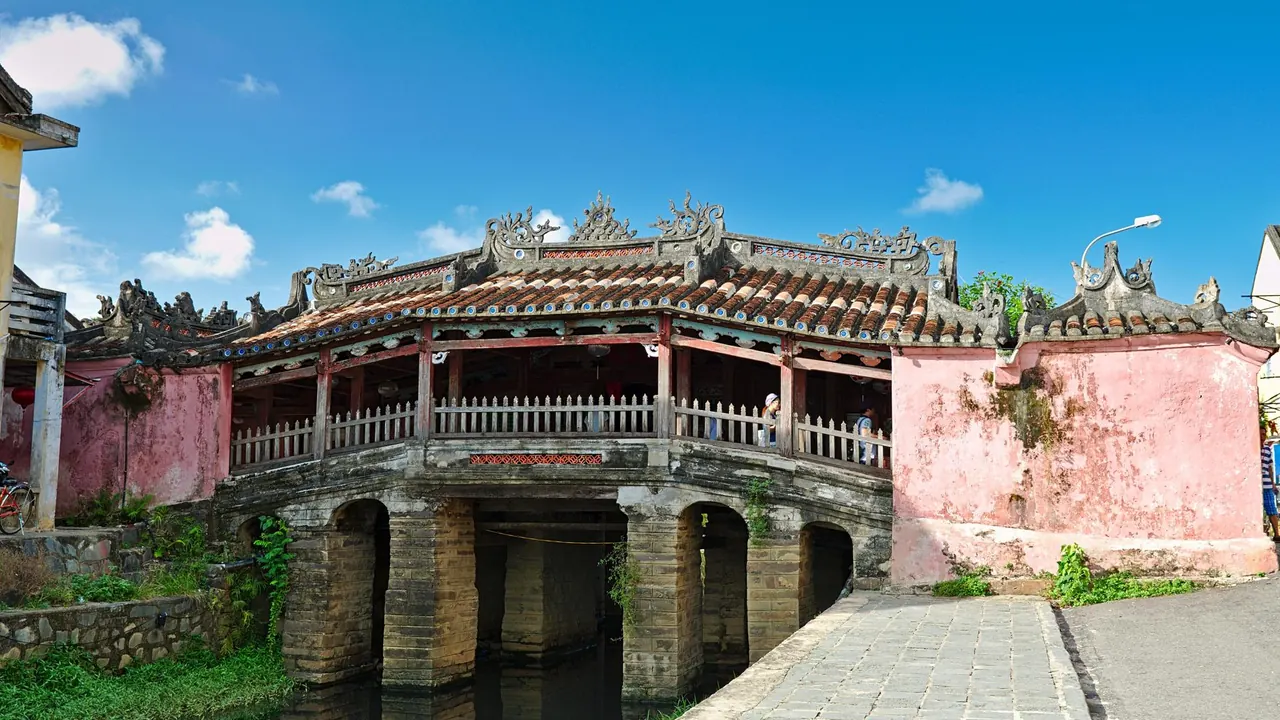
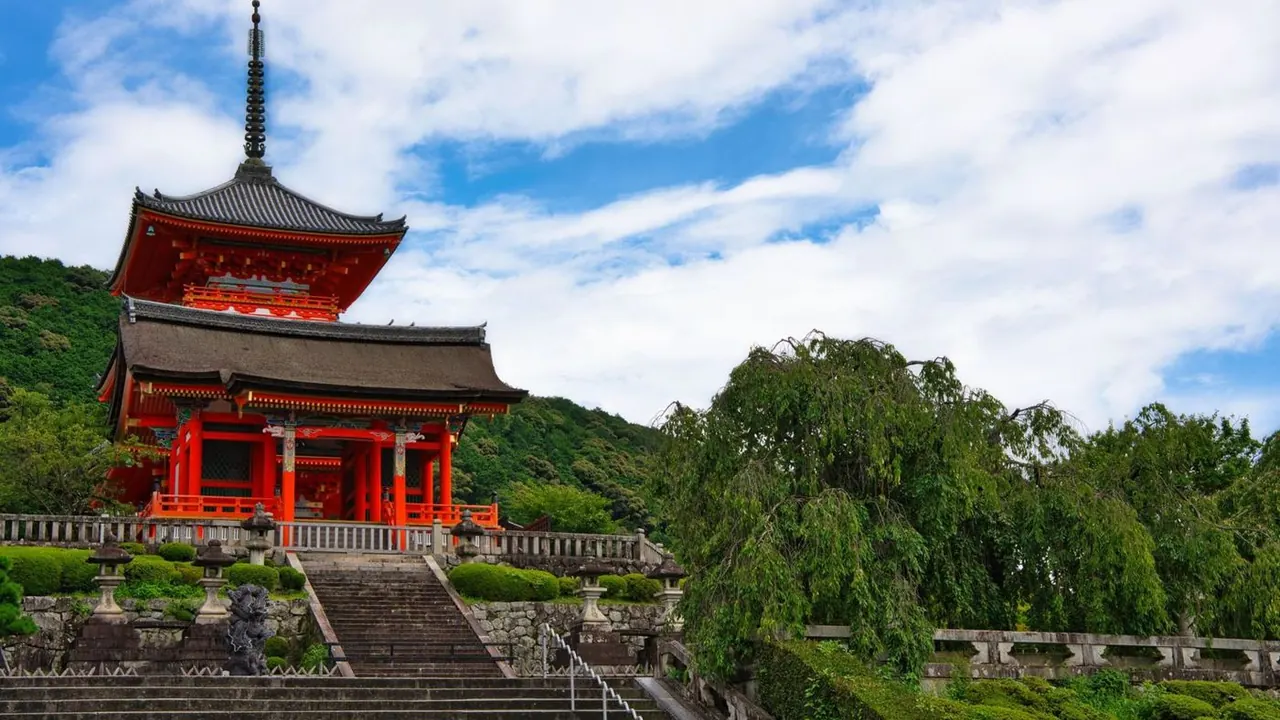
Photos: Hoi An by François Guerraz, CC BY-SA 3.0, cropped; Kyoto by Bert Mulder, Pexels License.
Hoi An or Kyoto?
Our verdict in twelve categories, each scored against the same fixed benchmark cities, and the climate month by month, so you can choose for your trip.
Choose Hoi An for
- beaches
- prices
Hoi An suits travellers who want a slow, inexpensive trip with sand a bike ride away. Mornings and evenings go to the lantern-lit old town and afternoons to An Bang beach, with tailoring and street food in between. It is ideal for a week of warm sea and very little planning, as long as you avoid the autumn monsoon and don't need late nights or an evening programme.
Choose Kyoto for
- day trips
- live music and the arts
- culture and sights
Choose Kyoto when the trip is about seeing things. Its temples, gardens and wooden lanes exist on a far greater scale, the cooking is more refined, and fast trains put Nara, Osaka, Uji and Himeji within easy reach, so even a long stay never runs short. Expect higher hotel bills and no beach. In return you get kabuki, geiko dances and old bathhouses that Hoi An has no equivalent for.
Scoreboard
Twelve categories on one fixed scale from 0 to 100. The shaded stretch is the gap between the two.
Your match
Pick a travel style or drag the sliders, and both match scores follow your weighting.
Wins on beaches and prices with your weighting.
Wins on day trips and live music and the arts with your weighting.
What matters to you?
Category by category
What the scores mean for a trip.
Beaches & swimming
For beaches, only Hoi An is in the running. An Bang lies about 5km from the old town through rice paddies, and pale sand runs almost unbroken north toward Da Nang. Swimming is warm and easy from spring to late summer, though the autumn monsoon brings rough seas.
Kyoto is inland. Its nearest swimming is the freshwater shore of Lake Biwa in high summer. The good Sea of Japan beaches are more than two hours north, so time on the sand there means an overnight detour.
Food & drink
Kyoto has the deeper table. You can eat kaiseki in old wooden houses in Gion, temple cuisine at Daitokuji and Tenryuji, tofu and yuba, snacks along Nishiki Market and sake at the Fushimi breweries, and serious restaurants are unusually common for a city its size.
Hoi An's cooking is narrower but entirely its own. Cao lau, white rose dumplings and the town's stuffed banh mi are eaten on plastic stools for very little, and a market visit followed by a cooking class is a highlight. The riverside menus repeat, though, and there is little fine dining.
Culture & sights
Kyoto is far ahead here. Seventeen UNESCO-listed sites, from Kinkaku-ji to Nijo Castle, over a thousand temples and shrines, the machiya lanes of Higashiyama and the Kyoto National Museum could fill weeks.
Hoi An offers one compact, beautiful ensemble: the merchant houses, Japanese Bridge and Chinese assembly halls of an old trading port. It is best walked at dawn or under the lanterns and covered in a day or two, and its small museums can't compare with Kyoto's.
Nightlife
Neither is a city for big nights out, but Kyoto gives you a little more to do after dinner. Pontocho and the Kiyamachi canal have sake bars, standing izakaya and a few small clubs, and Osaka is under an hour away by train.
Evenings in Hoi An are for walking along the lantern-lit river and floating a paper candle. A few backpacker bars on An Hoi islet stay open later, but there are no clubs, the town is quiet before midnight, and anyone wanting more goes to Da Nang.
Nature & outdoors
Kyoto's nature is more varied and closer to hand. Forested hills enclose it on three sides, with the Daimonji climb, Arashiyama's bamboo and the cedar path from Kurama to Kibune, all heightened by spring blossom and autumn maples.
Around Hoi An the land is flat and rural: rice paddies by bicycle and basket boats among the Cam Thanh palms. Its distinctive extra is offshore, where you can snorkel over coral at the Cham Islands, though the stormy autumn rules out much of this.
Day trips
Kyoto is an outstanding base. Nara's deer and great Buddha, Osaka, Uji's Byodo-in and Himeji Castle are each an hour or less by train, with Kobe and the castle towns of Lake Biwa as further options.
From Hoi An there are two outings of real weight. One is the Cham temple ruins of My Son, the other Da Nang, with its Museum of Cham Sculpture and the Marble Mountains on the way. Beyond those the choice thins, and Hue is too far for a comfortable return in a day.
Good for families
Kyoto is the easier family trip. It is safe, clean and orderly, with steam locomotives at the Railway Museum, an aquarium and zoo near the centre, ninja shows at the Toei studio park, and Nara's deer a short ride away.
Hoi An wins children over with lantern-making, basket boats and gentle sand in the calm season, and resort pools help. Midday heat, motorbikes outside the pedestrian core and broken pavements mean parents need to watch more closely.
Getting around
Hoi An has no public transport a visitor would use, while Kyoto has trains, a tram and buses running to almost every sight, and that makes Kyoto the simpler place to get about. In Hoi An, walking the small old town is easy because much of it is closed to traffic, and a borrowed bicycle covers the flat lanes out to the beach. But My Son, Da Nang and the airport all mean a taxi, a ride-hailing app or a driver.
In Kyoto a car is never needed. The flat central grid suits walking and cycling, and JR lines, private railways, the little Randen tram and city buses reach the temples around the edges of the basin. The two subway lines miss most of those temples, though, and the buses crawl in the blossom and autumn colour seasons.
Shopping & style
Kyoto has the wider and finer shopping. Family-run craft shops sell Kiyomizu ceramics, Nishijin silk, kitchen knives and tea. There are the Teramachi arcades, department stores and food halls on Shijo, and the monthly flea markets at To-ji and Kitano Tenmangu.
Hoi An has one thing Kyoto doesn't: clothes made to measure in a day or two, along with shoes and bags. It pays to order early so there is time for several fittings. Beyond that it is lanterns, ceramics and the An Hoi night market, with much of the same stock in shop after shop.
Affordability
Hoi An is far kinder to the wallet. Homestays and small hotels with pools, market noodles and borrowed bicycles keep a comfortable stay cheap. Only the beachfront resorts and riverfront restaurants come close to Western prices.
Kyoto is mid-range. Everyday food, trains and temple fees are reasonable, but hotels and ryokan are expensive and climb further during the blossom and autumn colour seasons, and a kaiseki dinner is a real splurge.
Live music & performing arts
Kyoto has a real stage tradition. There are the spring dances of the geiko, kabuki at the Minamiza, Japan's oldest kabuki house, regular Noh, and a concert hall with its own symphony orchestra, though much of the calendar is seasonal.
Hoi An offers bai choi, a sung card game played in the old town, short shows of folk music and dance, and a large outdoor spectacle on the town's history. It has no theatre or concert hall.
Wellness & relaxation
Both reward a slower pace, but in different ways. In Hoi An that means massage at every level, resort pools and yoga, best enjoyed from a base among the paddies or by the sea rather than in the crowded evening old town.
Kyoto has the bathing culture Hoi An lacks: century-old sento, hot springs at Kurama and Ohara, Arima an hour away and deep ryokan tubs. Add zazen, tea ceremonies and temple stays, though finding calm there means early mornings or the quieter northern temples.
When should you go?
Pick your month. The climate figures are measured averages, not a forecast.
Hoi An in July
Kyoto in July
Daytime high, °C
Rainfall in the month, mm
Where the figures come from
Kyoto's sunshine is measured 43 km from the centre, at Osaka.
Temperature and rainfall are climate normals, averaged over the years shown. Hoi An: 1991-2020 normals, Da Nang (23.5 km from centre). Kyoto: 1971-2000 (sunshine 1991-2020) normals, Kyoto (3.2 km from centre).
Hoi An is warm all year. February to April is dry and pleasant for walking, though the sea is still a little cool. May to August is the beach season, with sunny days and the water around 29°C, but afternoons reach 35°C and make the old town hard going at midday. From September the monsoon takes over, peaking at about 726mm of rain in October. The sea turns rough and the weather stays wet and grey into December.
Kyoto runs the other way. Winters are cold, around 9°C by day in January, but fairly dry and bright. Spring from late March to May and autumn in October and November are mild and the best times for walking between temples. June brings the rainy season at about 232mm, and July and August are hot and sticky. The two fit together well: Kyoto's autumn colour comes just when Hoi An is at its wettest, while Hoi An's dry spring overlaps with Kyoto's cherry blossom.
Which traveller are you?
On a beach and sun trip, Hoi An is the clear choice. An Bang and the long sand running north toward Da Nang are a short bike ride from town, with warm, calm water from spring to late summer. Kyoto has only a lake shore.
For a culture and arts trip, Kyoto wins comfortably. A thousand years as the imperial capital left Kinkaku-ji, Ryoan-ji, Nijo Castle and hundreds of other temples, as well as kabuki at the Minamiza and Noh stages. Hoi An's old town is lovely but takes two days.
On a trip on a tight budget, Hoi An makes money go much further. Homestays with pools, market noodles and free bicycles cost very little. In Kyoto the noodle counters are fair value, but hotels and ryokan are expensive, especially in the blossom and autumn colour seasons.
Before you go
| Measure | Hoi An | Kyoto |
|---|---|---|
| Official language | Vietnamese | Japanese |
| Currency | Dong (VND) | Yen (JPY) |
| Sockets | ACFG220 V, 50 Hz | AB100 V, 50 and 60 Hz depending on the region |
| Driving side | Right | Left |
| Time zone | UTC+7 | UTC+9 |
| Emergency number | Police 113, ambulance 115, fire 114 | Police 110, fire 119 |
| Elevation | 13 m | 51 m |
| Main airport | Da Nang International Airport (DAD)23 km from centre47 non-stop destinations | Kansai International Airport (KIX)81 km from centre62 non-stop destinations |
| Public holidays this year | - | 16 days |
By the numbers
| Measure | Hoi An | Kyoto |
|---|---|---|
| City population | 121,716 | 1,463,723 |
| People per km² | - | 1,768 |
| Museums within 10 km | 5 | 77 |
| UNESCO World Heritage sites within 50 km | 2 | 4 |
| Swim season, months above 21 °C | 12 months | 5 months |
Where else could you go?
Every comparison below shares a destination with this one, so you can follow Hoi An or Kyoto somewhere new.