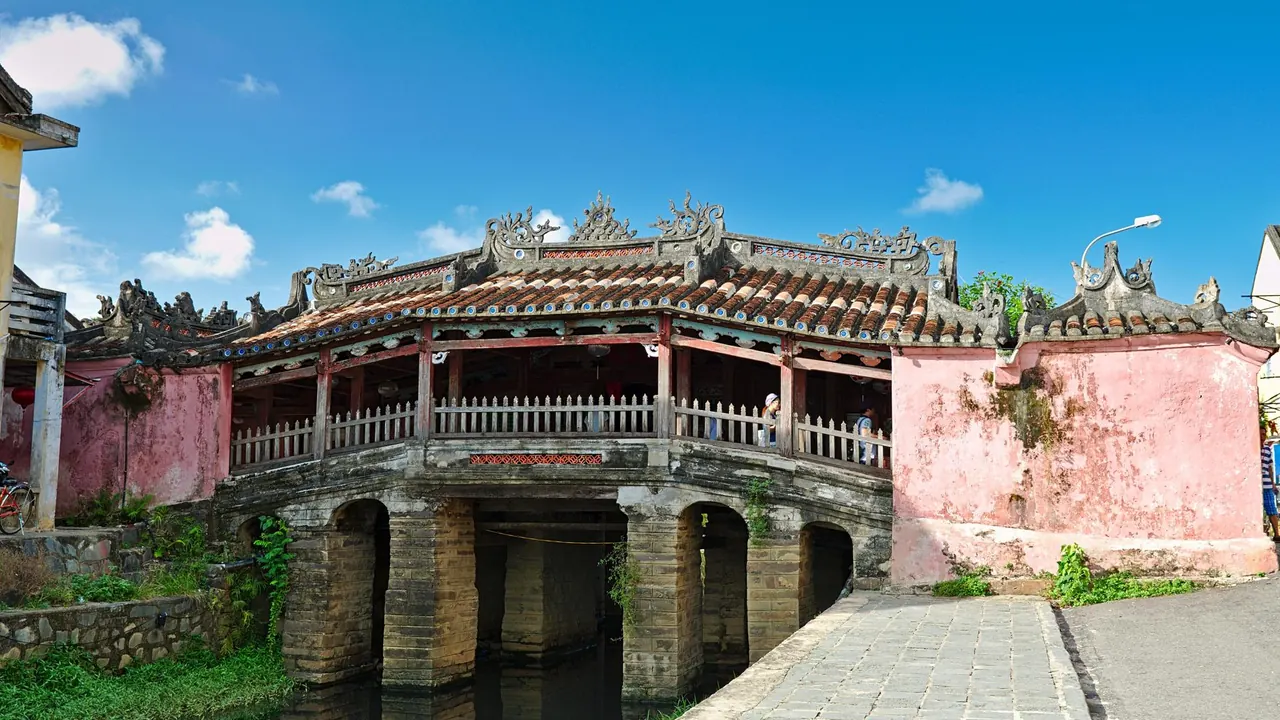
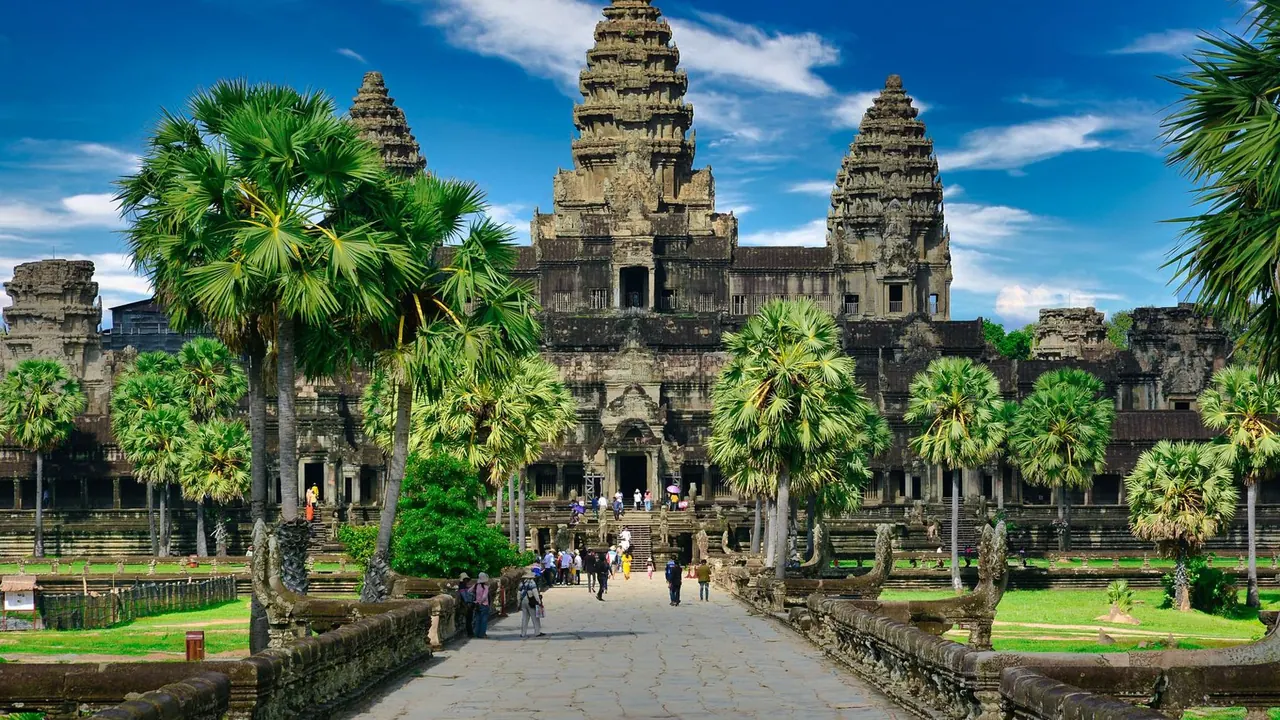
Photos: Hoi An by François Guerraz, CC BY-SA 3.0, cropped; Siem Reap by allPhoto Bangkok, Pexels License.
Hoi An or Siem Reap?
Our verdict in twelve categories, each scored against the same fixed benchmark cities, and the climate month by month, so you can choose for your trip.
Choose Hoi An for
- beaches
- food and drink
- nature and the outdoors
Hoi An suits a slower, more varied trip: a compact riverside old town to wander, a sandy beach a short bike ride away, a local cooking found nowhere else and flat countryside to cycle through. It is the easier pick with children, and the obvious one if you want sea and sightseeing in the same week, provided you steer clear of the stormy autumn.
Choose Siem Reap for
- culture and sights
- nightlife
- live music and the arts
Choose Siem Reap when the temples are the point of the journey. Angkor puts one of the world's great monument landscapes on the edge of town, and days settle into a rhythm of ruins at dawn, a pool through the heat and a lively bar street after dark. There is no sea and less for small children, but for history and architecture it is in a different league from Hoi An.
Scoreboard
Twelve categories on one fixed scale from 0 to 100. The shaded stretch is the gap between the two.
Your match
Pick a travel style or drag the sliders, and both match scores follow your weighting.
Wins on beaches and food and drink with your weighting.
Wins on culture and sights and nightlife with your weighting.
What matters to you?
Category by category
What the scores mean for a trip.
Beaches & swimming
On beaches there is no contest. Hoi An has An Bang and an almost unbroken run of pale sand toward Da Nang a short ride from the old town, with warm, calm water from spring to late summer and red-flag seas in the autumn monsoon.
Siem Reap has no coast at all. The Tonle Sap is for boat trips, not swimming, and the sea is most of a day away, so swimming means the hotel pool, welcome after a hot morning at the temples but no substitute for a beach.
Food & drink
Hoi An eats better for a visitor because its dishes exist nowhere else: cao lau, white rose dumplings and its stuffed banh mi are worth the trip on their own, and cooking classes that start at the market or in the Tra Que gardens are a local speciality. The weak spot is the riverfront, where menus repeat.
Siem Reap has Khmer cooking to offer, fish amok and num banh chok from morning stalls, plus a small group of tasting-menu kitchens and social-enterprise restaurants. The centre around Pub Street leans heavily on pizza and backpacker menus, though, so the good meals take more seeking out.
Culture & sights
Siem Reap is far ahead here. The Angkor temples, from Angkor Wat to the stone faces of the Bayon and the tree-split galleries of Ta Prohm, take three days or more and rank among the great monuments anywhere, with the Angkor National Museum to set the scene.
Hoi An's old town is a well-kept ensemble of merchant houses, the Japanese Bridge and Chinese assembly halls, lovely by lantern light. But it is a day or two of slow walking with only small museums, a charming backdrop rather than a sight on Angkor's scale.
Nightlife
Neither is a clubbing town, but Siem Reap gives more of a night out. Pub Street packs a few blocks with late bars, cheap draught beer and music every night, with calmer cocktail bars along the river.
Hoi An's evenings are about lantern-lit walks and paper candles on the river, with a few backpacker bars on An Hoi and streets that go quiet before midnight. Anyone wanting a bigger night has to go to Da Nang.
Nature & outdoors
Hoi An has more variety within reach. Beyond its own paddies and the Cam Thanh palm waterways, the Cham Islands offer snorkelling and diving over coral, while the Marble Mountains, the Son Tra peninsula and the Hai Van Pass add real relief, though autumn storms curb much of this.
Siem Reap's countryside is flat paddy and sugar palm, best cycled early. Its highlights are the bird colonies of Prek Toal on the Tonle Sap and the waterfall and forest of Phnom Kulen, but there are no mountains or sea, and the heat limits activity for much of the year.
Day trips
Both have a solid handful of outings, but of different kinds. Siem Reap's best days out are more temples, the fine pink sandstone of Banteay Srei and the collapsed, overgrown Beng Mealea, along with the stilt villages on the lake, and no town is close enough for an easy return.
Hoi An mixes ruins with a city: the Cham temple valley of My Son one day, Da Nang's Cham sculpture museum and the Marble Mountains the next, and a boat out to the Cham Islands. Hue is better kept for an overnight stop.
Good for families
Hoi An is clearly easier with children, especially young ones. The old town is small and partly traffic-free, there are lanterns to make and basket boats to spin in, and resort pools plus a gentle beach in the calm season give plenty of downtime.
Siem Reap rewards older children who enjoy clambering through Ta Prohm's roots and riding in tuk-tuks. Steep temple steps, long walks, fierce spring heat and almost nothing built for kids make it tiring for little ones.
Getting around
Neither town has useful public transport, but Hoi An is easier to get around under your own steam. Its old town is closed to motor traffic for long spells, and the beach and villages are a flat bike ride away, often on a free hotel bicycle.
In Siem Reap you are driven most of the time. The centre is walkable, but heat and broken pavements cut walks short, and the temples mean a hired tuk-tuk, a car or an e-bike on the main circuits.
Shopping & style
Hoi An has a shopping draw of its own in made-to-measure tailoring, with suits, dresses, shoes and bags made in a day or two, alongside silk lanterns, ceramics and the An Hoi night market.
Siem Reap's offer is narrower: Old Market silk scarves, kramas and silver, plus night-market trinkets. Its artisan workshops for silk weaving, stone carving and lacquerware are the place to look for quality.
Affordability
Both are very cheap, with pool hotels, market meals and massages costing a fraction of Western prices. The difference is in the fixed costs. Siem Reap's Angkor pass is a large outlay on a short stay, and a tuk-tuk for the temples is a daily expense. In Hoi An, free hotel bicycles cover most outings, though the beachfront resorts can reach international prices.
Live music & performing arts
Siem Reap has the better stage evenings. Apsara dance links directly to the figures carved at Angkor, and the Cambodian circus under its big top, with acrobatics, theatre and live music, is widely admired.
Hoi An has bai choi games in the old town, short folk music and dance shows and a large outdoor history spectacle on the river. These are pleasant but slight, and neither town has a theatre or concert hall.
Wellness & relaxation
Both make it easy to slow down, with massage at every level, yoga classes and pools, and neither has a bathing tradition. Hoi An's calm comes from its setting: rooms among the paddies or by the sea, and days paced by bicycle and river.
Siem Reap's calm comes from routine, with early temple starts followed by long afternoons in garden hotels and Khmer massage with herbal compresses. In either town, staying a little away from the evening crowds of the old town or Pub Street pays off.
When should you go?
Pick your month. The climate figures are measured averages, not a forecast.
Hoi An in July
Siem Reap in July
Daytime high, °C
Rainfall in the month, mm
Where the figures come from
Siem Reap has no weather station within reach, so its figures come from a gridded climate model rather than a measured record, and read a broad area rather than the city itself.
Temperature and rainfall are climate normals, averaged over the years shown. Hoi An: 1991-2020 normals, Da Nang (23.5 km from centre). Siem Reap: 2001-2020 normals, NASA POWER reanalysis grid, no weather station within 90 km.
Hoi An is at its best from February to April, when rain is scarce, days are warm rather than fierce and the sea is warming up. From May to August the water holds at 28°C or more and the beach is at its peak, though the old town grows very hot for walking around midday. The rains arrive in September and peak in October with around 726mm, and rough seas and wet weather last through December, with January still cool and damp.
Siem Reap runs almost the other way round. November to January is the pleasant dry season, with December almost rainless at 7mm and temple days hot but manageable. February to April brings the hardest heat, around 36°C, and the rains run from May to October, heaviest in September. February and March suit both: Hoi An is dry and mild, and Siem Reap is hot but still dry.
Which traveller are you?
On a beach and sun trip, Hoi An is the only real option of the two. An Bang and the long sand running toward Da Nang are a bike ride from town, with warm, calm sea from spring to late summer, while Siem Reap has only hotel pools.
For a culture and arts trip, Siem Reap is the stronger choice. Angkor's temples fill several days and stand among the world's great monuments, and evenings bring apsara dance and a much-admired circus, which Hoi An's compact old town cannot match.
On a family trip with young children, Hoi An is the gentler base. Its small, partly car-free old town, lantern-making, basket boats, resort pools and calm-season beach suit little ones far better than Siem Reap's steep temple steps and heavy heat.
Before you go
| Measure | Hoi An | Siem Reap |
|---|---|---|
| Official language | Vietnamese | Khmer |
| Currency | Dong (VND) | Riel (KHR) |
| Sockets | ACFG220 V, 50 Hz | ACG230 V, 50 Hz |
| Driving side | Right | Right |
| Time zone | UTC+7 | UTC+7 |
| Emergency number | Police 113, ambulance 115, fire 114 | Police 117, ambulance 119, fire 118 |
| Elevation | 13 m | 18 m |
| Main airport | Da Nang International Airport (DAD)23 km from centre47 non-stop destinations | Siem Reap-Angkor International Airport (SAI)39 km from centre14 non-stop destinations |
| Public holidays this year | - | 21 days |
By the numbers
| Measure | Hoi An | Siem Reap |
|---|---|---|
| City population | 121,716 | 147,866 |
| Museums within 10 km | 5 | 6 |
| UNESCO World Heritage sites within 50 km | 2 | 1 |
| Swim season, months above 21 °C | 12 months | - |
Where else could you go?
Every comparison below shares a destination with this one, so you can follow Hoi An or Siem Reap somewhere new.