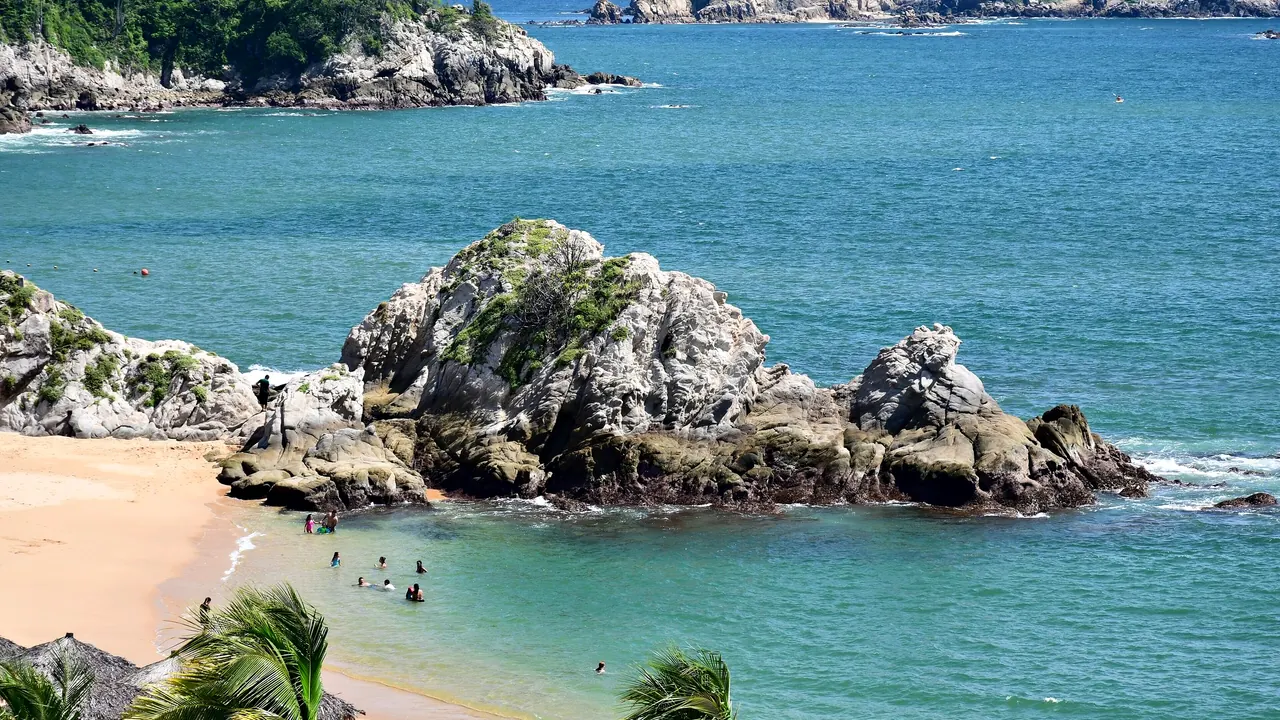
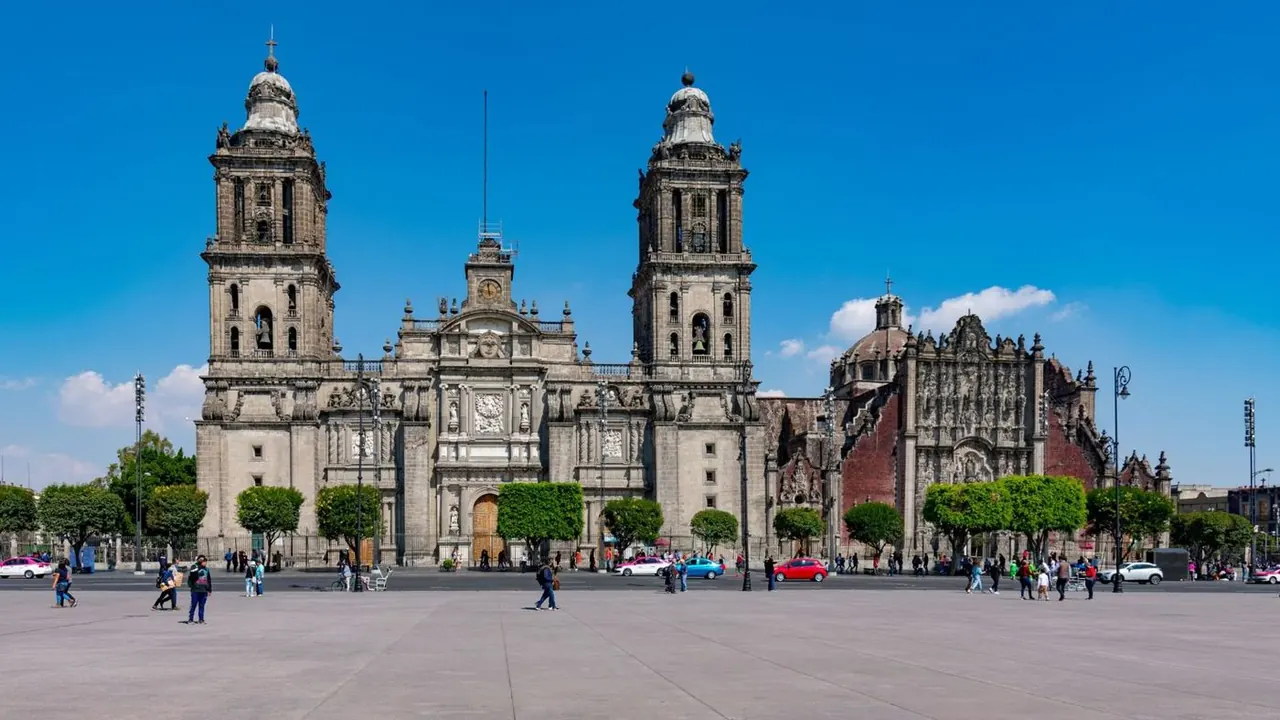
Photos: Huatulco by Gzzz, CC BY-SA 4.0, cropped; Mexico City by Oscar Dominguez, Pexels License.
Huatulco or Mexico City?
Our verdict in twelve categories, each scored against the same fixed benchmark cities, and the climate month by month, so you can choose for your trip.
Choose Huatulco for
- beaches
- nature and the outdoors
- wellness
Huatulco is the choice if the sea is the point of the trip. Its sheltered bays give warm, calm swimming, snorkelling over coral and boat days to beaches with no road, set against a protected coast of dry forest and cliffs. Evenings are quiet and the sights take a morning, so it suits a slow beach week, couples who want to unwind and families with young swimmers more than anyone looking for a busy itinerary.
Choose Mexico City for
- culture and sights
- live music and the arts
- nightlife
Travellers who want a full programme of food, history and nights out will get far more from Mexico City. Street stands and markets sit alongside celebrated tasting menus. The Aztec ruins, murals and great museums could fill a week on their own, and Roma and Condesa keep going late. Teotihuacan and Puebla are within reach for a day. There is no beach and little calm, but for a culture-led city trip the capital is the stronger choice.
Scoreboard
Twelve categories on one fixed scale from 0 to 100. The shaded stretch is the gap between the two.
Your match
Pick a travel style or drag the sliders, and both match scores follow your weighting.
Wins on beaches and nature and the outdoors with your weighting.
Wins on culture and sights and live music and the arts with your weighting.
What matters to you?
Category by category
What the scores mean for a trip.
Beaches & swimming
This is Huatulco's whole reason for being. Golden-sand coves such as La Entrega, Santa Cruz and Chahué have calm, clear water where you can snorkel straight from the shore, Tangolunda carries the resort strip, and boats reach wilder bays like Cacaluta and El Órgano inside the national park.
Mexico City sits high on a plateau, and the nearest coast is a long road trip away, so swimming means a hotel pool. Anyone who wants both usually adds coastal days before or after the city, and Huatulco is a natural candidate.
Food & drink
Huatulco eats simply and well: mole, tlayudas and banana-leaf tamales at La Crucecita's market and fondas, and whole fish grilled at palapas on the sand. Beyond that the choice is thin, and resort dining leans towards buffets.
Mexico City is a reason to travel in itself. Al pastor tacos late into the night, markets like Medellín and La Merced, old pulquerías and cantinas, and some of the most respected tasting menus in the Americas in Roma, Condesa and Polanco give a range Huatulco cannot approach. The coast does have the edge on fresh seafood eaten by the water.
Culture & sights
Huatulco is a planned resort, and its sights fit into a morning: the painted dome of La Crucecita's church, the small pre-Hispanic site at Copalita, and the colonial church in Santa María Huatulco.
Mexico City has one of the great historic centres of the continent, with the Zócalo, the cathedral, Rivera's murals in the National Palace and the excavated Templo Mayor of Tenochtitlan side by side. Add the National Museum of Anthropology, Chapultepec Castle, the Kahlo house in Coyoacán and the canals of Xochimilco, and a week still feels short.
Nightlife
Nights in Huatulco usually mean a long dinner, a mezcal on La Crucecita's plaza and a beachfront bar in Santa Cruz, with most of the town quiet by midnight. People who want a party head up the coast to Zipolite.
Mexico City keeps going until morning. Roma and Condesa are made for bar-hopping on foot between cocktail bars, mezcalerías and rooftops, old Centro cantinas give a traditional evening, and there are electronic clubs, salsa halls and a large LGBTQ scene in the Zona Rosa.
Nature & outdoors
Huatulco has the stronger outdoors, and it starts at the water's edge. The national park joins dry forest, cliffs, blowholes and coral reefs good for snorkelling and diving, humpback whales pass offshore in winter, and inland there is rafting on the Copalita and waterfalls and coffee farms in the Sierra Sur.
Mexico City's nature is either in the city, at Chapultepec and the Xochimilco wetlands, or a drive away in the volcano country of Iztaccíhuatl, Popocatépetl and Nevado de Toluca, with the monarch butterfly reserves in winter. The scenery is grand, but traffic eats into the day and the dry-season air can be poor.
Day trips
From Huatulco the best outing is about an hour west along the coast to Mazunte's turtle centre, Puerto Ángel and Zipolite, or two hours to Puerto Escondido. Oaxaca city is too far to manage without an overnight stay.
Mexico City has more in reach and more variety. Teotihuacan's pyramids are about an hour away, Puebla and the great pyramid at Cholula about two, and to the south lie Cuernavaca, Tepoztlán and silver-town Taxco. The price is traffic leaving the city, so early starts pay off.
Good for families
Both work for families, in opposite ways. Huatulco is an easy beach base: calm coves where children snorkel among fish, resort pools and kids' clubs, and a small town that is simple to manage, though there is little for older children beyond the sea.
Mexico City offers a zoo, the hands-on Papalote museum, an aquarium, a theme park, Xochimilco boats and lucha libre, but its size, traffic, crowded metro and altitude mean planning days by neighbourhood.
Getting around
Huatulco is small but spread out. La Crucecita and the walk to Santa Cruz are fine on foot, while other bays need a taxi or colectivo, and the remoter beaches and coffee hills are easiest by boat or hire car.
Mexico City is easier for a visitor despite its size. The Centro, Roma, Condesa, Polanco and Coyoacán are pleasant to walk, and a cheap metro, the Metrobús and bike-share link them. Rush-hour crowds, pickpockets and long distances mean most people also use ride-hailing cars, and a car of your own is more trouble than it is worth.
Shopping & style
Huatulco's shopping is a few craft and souvenir stalls around La Crucecita and Santa Cruz, with textiles, black pottery, alebrijes, hammocks, mezcal and coffee, and no fashion at all.
Mexico City gathers crafts from the whole country at La Ciudadela, with Oaxacan pottery among them. It adds the San Ángel Saturday bazaar, the Lagunilla flea market, luxury houses on Masaryk in Polanco, grand department stores and Mexican designers in Roma and Condesa, so serious shoppers should save their budget for the capital.
Affordability
Huatulco is reasonable for a beach resort if you stay in La Crucecita and eat at the market, but the all-inclusives in Tangolunda, boat tours and hotel dining push costs up, especially in high season.
Mexico City is cheaper to get by in day to day. Street tacos, market lunches, metro rides and many museums cost little, and ride-hailing is affordable. Spending only rises sharply in the boutique hotels, restaurants and cocktail bars of Roma, Condesa and Polanco, which a careful traveller can avoid by staying in the Centro.
Live music & performing arts
Huatulco has almost nothing to plan an evening around beyond resort folk dance shows, a few bar bands and music on the plaza at festival time.
Mexico City has the national opera, symphony and the Ballet Folklórico at Bellas Artes, concerts at Sala Nezahualcóyotl and the Auditorio Nacional, mariachis in Plaza Garibaldi, jazz and son clubs, and the loud spectacle of lucha libre at Arena México.
Wellness & relaxation
Huatulco is the more restful of the two because the place itself is slow: low-rise, uncrowded and quiet in the evening, with full spas at the Tangolunda and Conejos resorts and easy massage in town.
Mexico City has good spas in Polanco, Roma and Condesa, but noise, traffic and altitude work against relaxation, and calm comes from Coyoacán's plazas or a long café morning. Both offer the temazcal steam bath, and in the capital the usual way to retreat is to head south to Cuernavaca or Tepoztlán.
When should you go?
Pick your month. The climate figures are measured averages, not a forecast.
Huatulco in July
Mexico City in July
Daytime high, °C
Rainfall in the month, mm
Where the figures come from
Huatulco's temperatures are measured 42 km from the centre, at Puerto Angel, Oax..
Huatulco's station stands 177 m below the city centre, so the centre is likely a little cooler than the figures say.
Huatulco has no rain gauge within 25 km of the centre, so its rainfall comes from a gridded climate dataset read at the city rather than from a gauge further away.
Temperature and rainfall are climate normals, averaged over the years shown. Huatulco: 1991-2020 normals, Puerto Angel, Oax. (42.2 km from centre). Mexico City: 1991-2020 normals, Mexico Central, D. F. (7.9 km from centre).
Huatulco is hot every month, with daytime highs of about 33°C and a sea that never drops below 27°C, so the beach is always on. Rain is what changes. November to April is almost completely dry and very sunny, with the calmest days and clearest water. The wet season builds from May, June and September are the heaviest months at up to 270mm, and the heat and humidity then make midday walking and hiking hard work.
Mexico City's altitude keeps it mild all year and never too hot for walking the streets. Afternoons peak at around 28°C in April and drop closer to 22°C in December and January. The city's rain falls in the same months as Huatulco's, heaviest from June to September, and in most months it gets somewhat less sunshine than the coast. For both cities November to April is the best time, which makes it the natural season to combine them.
Which traveller are you?
On a beach and sun trip, Huatulco wins outright. Nine bays with warm, sheltered water, coral close to shore and boat trips to roadless coves give days of swimming and snorkelling, while Mexico City has no sea and only hotel pools.
For a culture and arts trip, Mexico City is in a different league. Templo Mayor, the Rivera murals, the National Museum of Anthropology and the Kahlo house fill days, and evenings bring Bellas Artes and folk ballet. Huatulco's sights take a single morning.
On a food and nightlife trip, the capital is the obvious pick. Taco stands, markets, cantinas and tasting menus feed you well at every level, and Roma and Condesa bars run late. Huatulco offers good simple Oaxacan cooking and quiet plaza evenings.
Before you go
| Measure | Huatulco | Mexico City |
|---|---|---|
| Official language | Spanish, Nahuatl, Yucatec Maya | Spanish, Nahuatl, Yucatec Maya |
| Currency | Mexican Peso (MXN) | Mexican Peso (MXN) |
| Sockets | AB127 V, 60 Hz | AB127 V, 60 Hz |
| Driving side | Right | Right |
| Time zone | UTC-6 | UTC-6 |
| Emergency number | 911 | 911 |
| Elevation | 220 m | 2,240 m |
| Main airport | Bahías de Huatulco International Airport (HUX)15 km from centre13 non-stop destinations | Mexico City Benito Juárez International Airport (MEX)7 km from centre109 non-stop destinations |
| Public holidays this year | 9 days | 9 days |
By the numbers
| Measure | Huatulco | Mexico City |
|---|---|---|
| City population | 7,409 | 9,209,944 |
| People per km² | - | 6,202 |
| Museums within 10 km | 0 | 108 |
| UNESCO World Heritage sites within 50 km | 0 | 6 |
| Swim season, months above 21 °C | 12 months | - |
Where else could you go?
Every comparison below shares a destination with this one, so you can follow Huatulco or Mexico City somewhere new.