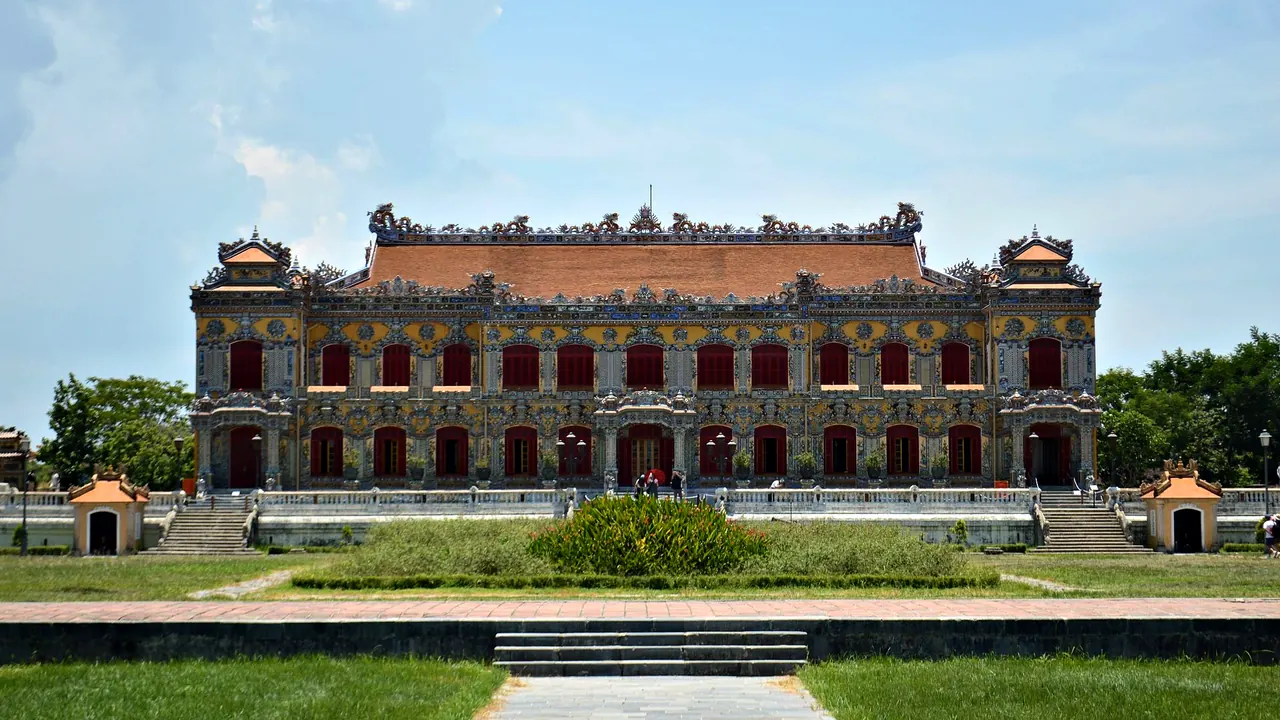
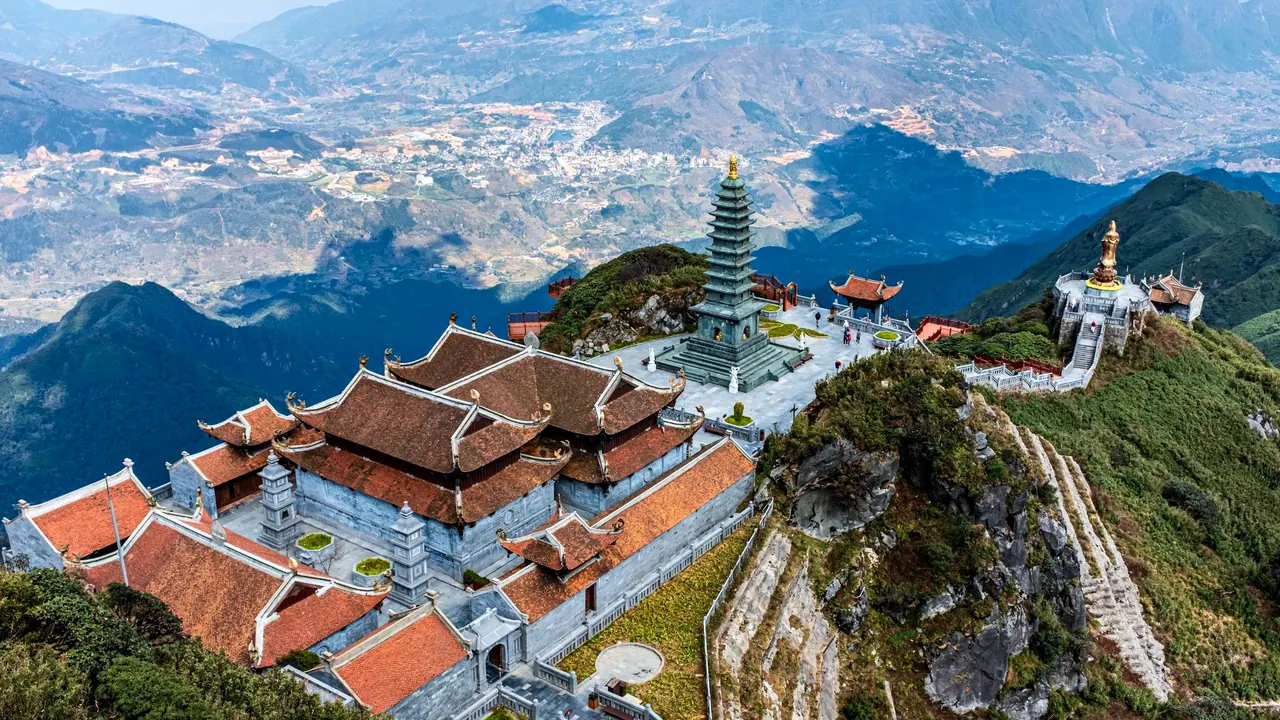
Photos: Hue by Valeria Drozdova, Pexels License; Sapa by Kirandeep Singh Walia, Pexels License.
Hue or Sapa?
Our verdict in twelve categories, each scored against the same fixed benchmark cities, and the climate month by month, so you can choose for your trip.
Choose Hue for
- culture and sights
- beaches
- food and drink
Hue is the choice for travellers who want history and good eating on the same trip. The Nguyen citadel, the royal tombs along the Perfume River and a regional cooking style found nowhere else fill two or three rich days. In summer the sea is within reach, and the old DMZ and the Hai Van Pass make strong excursions. It also stretches a budget a little further.
Choose Sapa for
- nature and the outdoors
Walkers and anyone after mountain scenery should head to Sapa instead. The town itself is plain. The trip is about the trails into the Muong Hoa valley, the terraced rice fields, nights in homestays with Hmong and Dao families, and the climb or cable car up Fansipan. Expect simple food, early nights and cool air rather than monuments.
Scoreboard
Twelve categories on one fixed scale from 0 to 100. The shaded stretch is the gap between the two.
Your match
Pick a travel style or drag the sliders, and both match scores follow your weighting.
Wins on culture and sights and beaches with your weighting.
Wins on nature and the outdoors with your weighting.
What matters to you?
Category by category
What the scores mean for a trip.
Beaches & swimming
Hue at least has the sea within reach. Thuan An is about 15km away, and Lang Co, the prettier of the two, is a longer drive south. Both are fine for swimming from roughly April to August, until the autumn rains make the water rough.
Sapa has no beach at all. It is a mountain town far from the coast, with only cold streams in the valleys, so anyone who wants to swim will need to add some days on the coast.
Food & drink
Hue is a city to eat your way through, and Sapa is not. Hue's cooking is a regional tradition in its own right, with a court heritage behind it, so a few days here can bring a different dish at every meal: bun bo Hue for breakfast, banh beo and banh nam in the afternoon, com hen made with river clams, and sweet che at Dong Ba market. Thanks to the pagodas, vegetarians eat unusually well too. What Hue lacks is food from outside Vietnam.
Sapa's food is mountain fare, cooked to warm you up rather than to be explored. Expect a hotpot of fish farmed in the cold streams, evening skewers from the charcoal grills by the lake, highland dishes such as the Hmong horse stew, and corn wine to drink. It is hearty and makes a good night or two. But Hue keeps offering something new, while Sapa's menus start to repeat within a few days, and the tourist cafés in the centre add little to them.
Culture & sights
This is the widest gap between them. Hue was an imperial capital, and the moated Citadel, the Forbidden Purple City, the tombs of Tu Duc, Minh Mang and Khai Dinh and Thien Mu pagoda make up a full itinerary of monuments.
Sapa has a stone church from the French years and a small ethnic museum. Its interest lies in living culture rather than buildings: walking to Black Hmong, Red Dao and Giay villages such as Ta Van and Ta Phin, past indigo dyeing and weaving. Go beyond the nearest villages for something less staged.
Nightlife
Neither is a place for late nights, but Hue has a little more going on. A few south-bank streets have backpacker bars with happy hours, and the night market by the Truong Tien bridge brings families out to the river. In Sapa the evening is a hotpot, a drink by the fire and an early bed, with a small cluster of pool-table bars and the lakeside grills as the only alternatives.
Nature & outdoors
Sapa is the clear winner. From its ridge at about 1,500m, trails drop into the terraced Muong Hoa valley, walks of several days between homestays are easy to arrange, and Fansipan rises to 3,143m, reached on foot or by cable car.
Hue's setting is softer: cycling past rice fields along the Perfume River, boat trips on the Tam Giang lagoon, and Bach Ma National Park and the Hai Van Pass about an hour or so away. It is pleasant countryside to ride through rather than mountains to walk in, and the autumn floods put much of it out of reach.
Day trips
Hue has more within reach. North lies the old DMZ, where the Vinh Moc tunnels and Khe Sanh make a long guided day. South, the Hai Van Pass leads to Lang Co and Da Nang, and many travellers carry on to Hoi An.
From Sapa, the best outing is Bac Ha's Sunday market with its Flower Hmong traders, and smaller markets such as Can Cau are similar. After those, the excursions are simply more mountains.
Good for families
Both are hard going with small children, and neither has attractions made for them. Hue is flatter and calmer, with dragon boats, cyclos and the open Citadel grounds, but the summer heat and autumn rain soon wear a family out.
Sapa suits older children who can walk, with buffalo in the paddies, village homestays and the Fansipan cable car. Its steep streets and cold, damp winters make it a poor choice with toddlers.
Getting around
Hue is the easier of the two. Its centre is small and flat, so the hotel area, the riverside and the Citadel are a short walk or bike ride apart. The tombs upriver need a taxi, a motorbike or a boat.
Sapa's centre is walkable but steep and uneven. Apart from the short tram down to the cable car, getting anywhere means trekking, hiring a driver or taking a motorbike taxi. Getting there is also a long road trip or an overnight train from Hanoi.
Shopping & style
Neither is a shopping destination, so the difference is in the crafts. Hue's best buys are the conical hats with poems hidden in the leaves, sesame candy and incense from Thuy Xuan, with Dong Ba market for everyday browsing and tailors in the hotel streets. Sapa's are textiles such as Hmong and Dao embroidery, indigo batik and silver, best bought in the villages or at Bac Ha, though copies are common and sellers push hard.
Affordability
Both are very cheap, and Hue is slightly cheaper. Its guesthouses, stall food and cyclos cost very little, and the main extras are monument tickets and royal dinners. In Sapa the central hotels and cafés cost a little more than in the lowlands and the Fansipan cable car is the one expense that stands out, though homestays and guided treks stay inexpensive.
Live music & performing arts
Hue has more to offer, all of it rooted in the court: nha nhac royal music in the Citadel, ca Hue singing on lantern-lit dragon boats, and the Hue Festival in its season. Sapa has only short staged shows of Hmong and Dao pan pipes and dance on weekend evenings. Neither city has a theatre or concert scene.
Wellness & relaxation
The two are level here but restful in different ways. In Hue the calm comes from the city itself: pagodas, the garden houses of Kim Long, morning tai chi and quiet evenings, with resort spas and the Thanh Tan hot springs about an hour away.
Sapa has the stronger single tradition, the Red Dao herbal bath in wooden tubs, which is perfect after a trek. For real rest, though, stay in a valley homestay, because the town is noisy with traffic and persistent sellers.
When should you go?
Pick your month. The climate figures are measured averages, not a forecast.
Hue in July
Sapa in July
Daytime high, °C
Rainfall in the month, mm
Where the figures come from
Sapa has no weather station within reach, so its figures come from a gridded climate model rather than a measured record, and read a broad area rather than the city itself.
Temperature and rainfall are climate normals, averaged over the years shown. Hue: 1991-2020 normals, Hue (13 km from centre). Sapa: 1991-2020 normals, TerraClimate 4 km grid at the town, no weather station within 90 km.
The two run on almost opposite calendars. Hue is at its best from February to April, when days are warm and fairly dry, which is ideal for the Citadel and the tombs. From May to August it is hot, up to 35°C, but sunny, and the sea reaches 28°C or more, so this is the season for Thuan An and Lang Co. Then the rains arrive. September to December is very wet, with around 979mm in October alone, along with floods and rough seas.
Sapa stays cool all year because of its altitude. Its rainy season is summer, peaking in July at about 433mm, when trails turn muddy and cloud hides the terraces. October and November are dry and mild, the best time for trekking, and March and April are good too. December and January are dry but cold, with highs near 15°C and fog. So in autumn, when Hue is at its wettest, Sapa is at its best.
Which traveller are you?
On a culture and arts trip, Hue wins easily. The Imperial City, the royal tombs, Thien Mu pagoda and the antiquities museum fill several days, and court music and ca Hue singing on the river add evenings that sight-poor Sapa cannot match.
For an outdoors trip, Sapa is the place. Trails leave straight from town through the Muong Hoa terraces to village homestays, with Fansipan, Indochina's highest peak, above. Hue has gentle cycling, the Tam Giang lagoon and Bach Ma, but nothing on this scale.
For a food and nightlife trip, Hue is the better bet, though neither is lively. Bun bo Hue, banh beo and the old royal-kitchen tradition give far more to eat, and the south-bank bars stay open later than Sapa's handful of pool-table places.
Before you go
| Measure | Hue | Sapa |
|---|---|---|
| Official language | Vietnamese | Vietnamese |
| Currency | Dong (VND) | Dong (VND) |
| Sockets | ACFG220 V, 50 Hz | ACFG220 V, 50 Hz |
| Driving side | Right | Right |
| Time zone | UTC+7 | UTC+7 |
| Emergency number | Police 113, ambulance 115, fire 114 | Police 113, ambulance 115, fire 114 |
| Elevation | 12 m | 1,544 m |
| Main airport | Phu Bai International Airport (HUI)15 km from centre3 non-stop destinations | Noi Bai International Airport (HAN)238 km from centre91 non-stop destinations |
By the numbers
| Measure | Hue | Sapa |
|---|---|---|
| City population | 652,572 | 70,663 |
| People per km² | 2,453 | 103 |
| Museums within 10 km | 2 | 0 |
| UNESCO World Heritage sites within 50 km | 1 | 0 |
| Swim season, months above 21 °C | 12 months | - |
Where else could you go?
Every comparison below shares a destination with this one, so you can follow Hue or Sapa somewhere new.