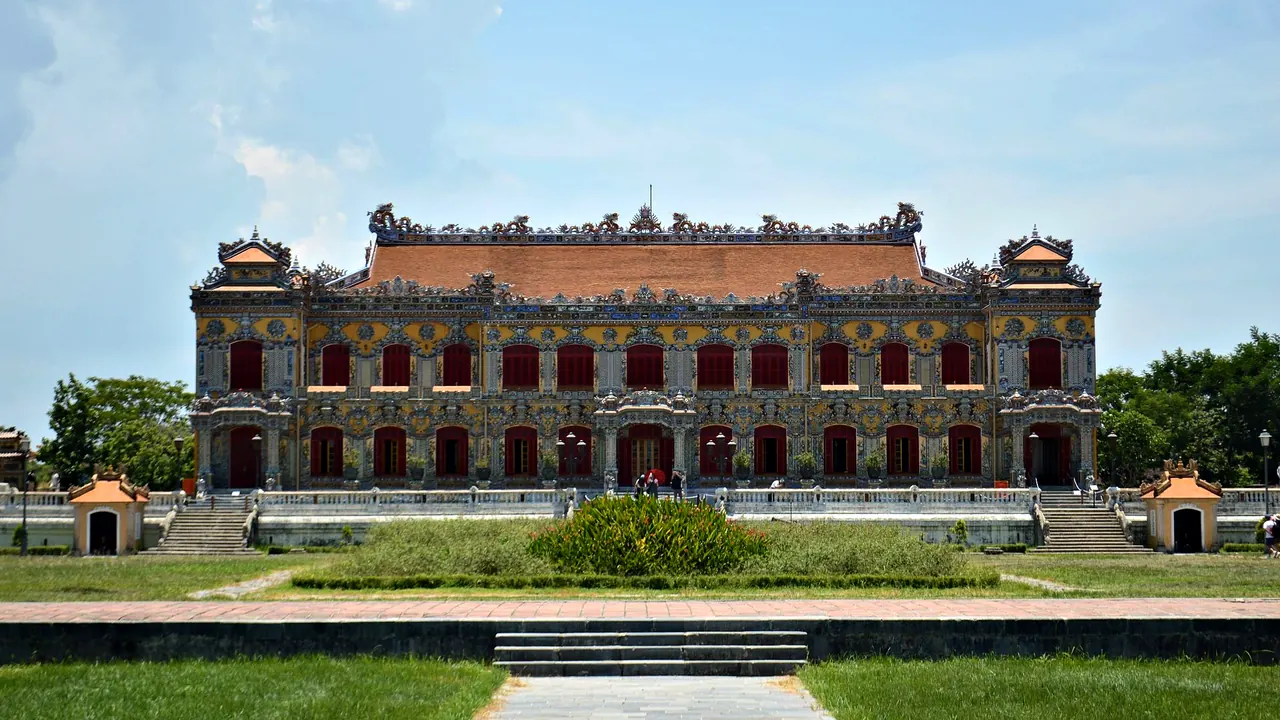
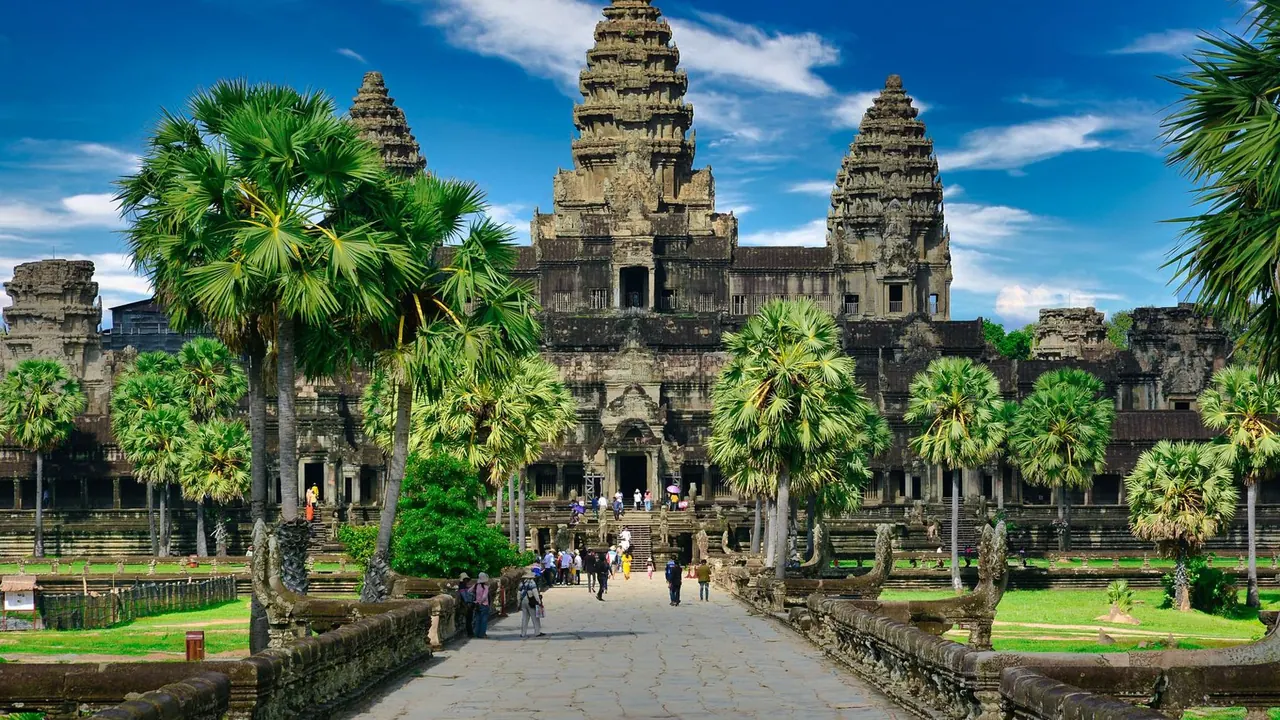
Photos: Hue by Valeria Drozdova, Pexels License; Siem Reap by allPhoto Bangkok, Pexels License.
Hue or Siem Reap?
Our verdict in twelve categories, each scored against the same fixed benchmark cities, and the climate month by month, so you can choose for your trip.
Choose Hue for
- beaches
- food and drink
- nature and the outdoors
Hue suits the traveller who wants a slower, cheaper stop with more to it than monuments. The imperial citadel and royal tombs fill a few rewarding days, the local cooking is among the most distinctive in Vietnam, and the river, the lagoon, the hills of Bach Ma and the Hai Van Pass give you real reasons to get outside. It also works well as one stop on a journey along the Vietnamese coast, with a beach not far off in the warm months.
Choose Siem Reap for
- nightlife
- wellness
- culture and sights
Siem Reap is the choice when the sights are the whole point of the trip. Angkor is on another scale from anything around Hue, and the town is set up around it: dawn at the temples, afternoons by a pool or on a massage table, and evenings on Pub Street, which stays lively long after Hue has gone quiet. Craft shopping and spa time are better here too, but there is no sea and the countryside is flat.
Scoreboard
Twelve categories on one fixed scale from 0 to 100. The shaded stretch is the gap between the two.
Your match
Pick a travel style or drag the sliders, and both match scores follow your weighting.
Wins on beaches and food and drink with your weighting.
Wins on nightlife and wellness with your weighting.
What matters to you?
Category by category
What the scores mean for a trip.
Beaches & swimming
Hue has beaches within reach and Siem Reap has none. From Hue, Thuan An is a short ride to a plain stretch of family sand, and Lang Co, over an hour south, has a curve of sand between lagoon and sea that makes a proper day out from spring through summer.
Siem Reap sits beside the muddy Tonle Sap, which nobody swims in, and the coast is most of a day away. Here the water you get is a hotel pool, which you will be glad of in the heat.
Food & drink
Hue is the better place to eat if you travel for local cooking. Its spicy, salty cuisine comes from the old royal kitchens, so you get bun bo Hue, saucer-sized banh beo, clam rice from the river and a strong Buddhist vegetarian tradition, all cheap and served on plastic stools.
Siem Reap has fish amok, morning num banh chok and roadside grills, and it has more variety in its restaurants: a few kitchens rework Khmer ingredients as tasting menus, and social enterprises train young cooks. The catch is that the centre is full of pizza and backpacker menus, so the good meals take a tuk-tuk ride to find.
Culture & sights
Both are old royal capitals, but Angkor puts Siem Reap ahead. Angkor Wat, the faces of the Bayon and the tree-split galleries of Ta Prohm spread across a forest park so large that three days only cover the main circuits.
Hue's Nguyen citadel and the tombs of Tu Duc, Minh Mang and Khai Dinh are younger and smaller, but they are moving in their own way, with restored halls standing beside ground still scarred by war. Two or three days does them justice, and the riverside pagoda of Thien Mu is easy to add.
Nightlife
Siem Reap is livelier after dark. Pub Street and the lanes around it fill every night with cheap beer, cocktail buckets and music, open late, and there are quieter bars along the river for a calmer drink.
Hue has a smaller backpacker strip on the south bank and street-side beer places where locals drink, but evenings mostly mean a riverside walk or the night market, and the town is asleep before midnight. Neither has a club scene.
Nature & outdoors
Hue has the more varied countryside. You can cycle through rice fields and garden villages along the Perfume River, take a boat out among the fish traps of the huge Tam Giang lagoon, climb into the cool forest of Bach Ma or ride the Hai Van Pass where the mountains meet the sea.
Siem Reap is flat paddy and sugar palm country. Its best outings are by boat to the flooded forest and the bird colonies of Prek Toal, with forest walks on Phnom Kulen and at Kbal Spean further out.
Day trips
The two are about level for day trips, but the outings are very different. From Hue they are about war history and the coast: the Vinh Moc tunnels and other sites of the old Demilitarised Zone to the north, and the Hai Van Pass, Lang Co and Da Nang to the south, with Hoi An usually the next stop rather than a return trip.
From Siem Reap they are mostly more temples, such as the fine carving of Banteay Srei and the collapsed, overgrown Beng Mealea, plus trips to the stilt villages on the Tonle Sap. There are no towns within comfortable reach.
Good for families
Neither is built for children, and both suit older ones best. Hue is gentler, with lighter traffic, riverside parks, dragon boat rides and room to roam in the citadel grounds.
Siem Reap offers more adventure, with scrambling through root-tangled ruins and boat trips to stilt villages, and cheap family rooms with a pool make the hot afternoons easier. Both are hard on small children in the heat, and Siem Reap's steep temple steps and chaotic traffic add to the strain.
Getting around
Hue is easier to get around on your own. The hotel streets, the riverside and the citadel are close together on flat ground, and a bicycle or cyclo handles most of it, though you will need a taxi, a driver or a boat for the tombs upriver.
Siem Reap's centre is small too, but broken pavements and heat mean you end up taking tuk-tuks for nearly everything, and Angkor is done with a hired driver or by bicycle.
Shopping & style
Siem Reap has the better shopping, mainly because of its artisan workshops. You can watch silk weaving, stone carving and lacquerwork, the quality is high, and there are a few boutiques selling homewares and clothes made in Cambodia, along with the Old Market and the night markets.
Hue's shopping is more workaday and centres on Dong Ba market. Its own souvenirs are worth looking for, though: conical hats with poems hidden in the leaves, sesame candy and incense from Thuy Xuan.
Affordability
Both are very cheap, and Hue is cheaper still. Rooms, stall food and cyclos cost next to nothing, and the only real extras are the citadel and tomb tickets.
In Siem Reap the Angkor pass is a large single cost on a short stay, and the restaurants and boutique hotels aimed at visitors cost noticeably more than local places. Daily life there is still inexpensive.
Live music & performing arts
The two are about even here, and both build their evenings on old court traditions. Hue has the Nguyen court music performed in the citadel and ca Hue singing on lantern-lit dragon boats on the river, with the Hue Festival bringing more in its season.
Siem Reap has apsara dance, best seen at the smaller, more serious performances, and a contemporary Cambodian circus that mixes acrobatics, theatre and live music and is the more modern evening of the two.
Wellness & relaxation
Siem Reap is better set up for pampering. Massage rooms line the central streets, resort spas use herbal compresses and local ingredients, and yoga classes and small retreats are easy to find. The day falls naturally into dawn at the temples and a long afternoon by the pool.
Hue's restfulness comes from its calm: pagodas, the garden houses of Kim Long and quiet evenings, with inexpensive massage, a few riverside resort spas and the Thanh Tan hot springs and mud baths about an hour out.
When should you go?
Pick your month. The climate figures are measured averages, not a forecast.
Hue in July
Siem Reap in July
Daytime high, °C
Rainfall in the month, mm
Where the figures come from
Siem Reap has no weather station within reach, so its figures come from a gridded climate model rather than a measured record, and read a broad area rather than the city itself.
Temperature and rainfall are climate normals, averaged over the years shown. Hue: 1991-2020 normals, Hue (13 km from centre). Siem Reap: 2001-2020 normals, NASA POWER reanalysis grid, no weather station within 90 km.
Hue is at its best from February to April, when the days are warm rather than hot, the rain is light and the citadel is pleasant to walk. May to August is the beach season, with the sea warm enough to swim and the longest sunny days of the year, but highs reach 35°C and sightseeing becomes an early-morning job. From September to December the rain takes over, peaking at about 979mm in October, with rough seas and flooded countryside. January is cooler but still damp and grey.
Siem Reap is hot all year, so the question is how hot and how wet. December and January are the most comfortable months for the temples, almost rainless and a little less fierce, and November is drying out after the rains. Rain is light in February, then starts to rise through March and April while the heat builds to about 36°C, which makes temple days hard. The wet season runs from May to October and peaks in September at about 231mm, when the lake swells and the countryside turns green. Siem Reap is drying out in November and December, just as Hue is in the depths of its rainy season.
Which traveller are you?
On a beach and sun trip, Hue is the only one of the two that works. Lang Co and Thuan An are within reach and the sea is warm through the summer, while Siem Reap's only swimming is the hotel pool.
For a culture and arts trip, Siem Reap wins. The Angkor temples, from Angkor Wat to the Bayon and Ta Prohm, outclass even Hue's citadel and royal tombs, and the town adds apsara dance and an admired Cambodian circus in the evenings.
On a relaxing and wellness trip, Siem Reap is the easier choice if treatments are the point, because pampering is part of everyday life there and needs no planning. Stay across the river, away from Pub Street's late noise. Hue suits those who unwind through quiet alone.
Before you go
| Measure | Hue | Siem Reap |
|---|---|---|
| Official language | Vietnamese | Khmer |
| Currency | Dong (VND) | Riel (KHR) |
| Sockets | ACFG220 V, 50 Hz | ACG230 V, 50 Hz |
| Driving side | Right | Right |
| Time zone | UTC+7 | UTC+7 |
| Emergency number | Police 113, ambulance 115, fire 114 | Police 117, ambulance 119, fire 118 |
| Elevation | 12 m | 18 m |
| Main airport | Phu Bai International Airport (HUI)15 km from centre3 non-stop destinations | Siem Reap-Angkor International Airport (SAI)39 km from centre14 non-stop destinations |
| Public holidays this year | - | 21 days |
By the numbers
| Measure | Hue | Siem Reap |
|---|---|---|
| City population | 652,572 | 147,866 |
| People per km² | 2,453 | - |
| Museums within 10 km | 2 | 6 |
| UNESCO World Heritage sites within 50 km | 1 | 1 |
| Swim season, months above 21 °C | 12 months | - |
Where else could you go?
Every comparison below shares a destination with this one, so you can follow Hue or Siem Reap somewhere new.
- Da Nangvs Hue
- Hoi Anvs Hue
- Phnom Penhvs Siem Reap
- Pattayavs Siem Reap
- Bangkokvs Siem Reap
- Ho Chi Minh Cityvs Siem Reap