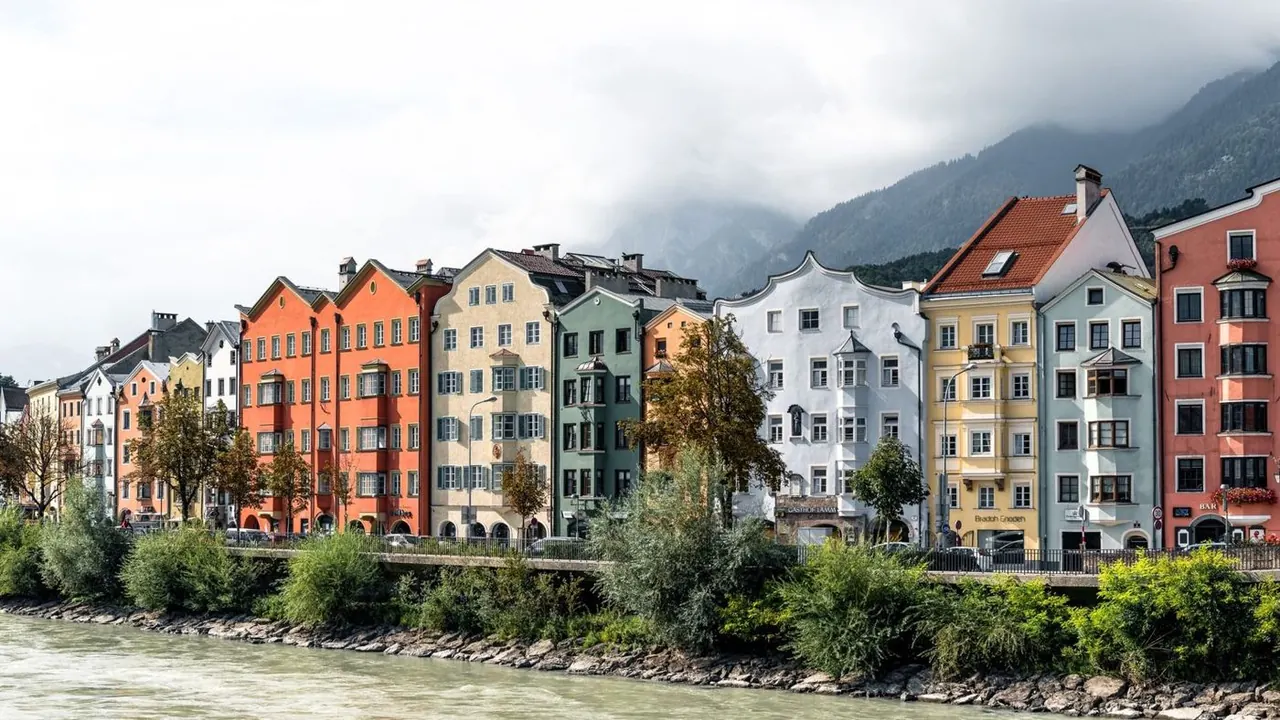
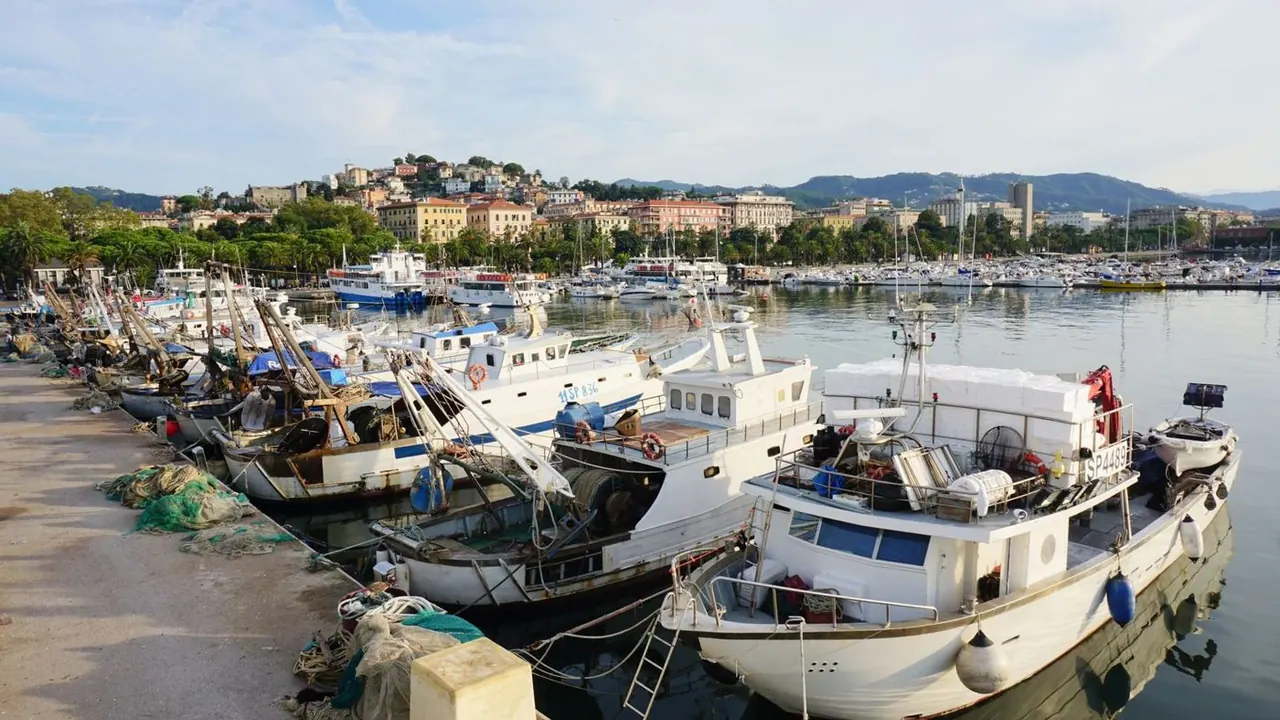
Photos: Innsbruck by Wolfgang Weiser, Pexels License; La Spezia by Irina Balashova, Pexels License.
Innsbruck or La Spezia?
Our verdict in twelve categories, each scored against the same fixed benchmark cities, and the climate month by month, so you can choose for your trip.
Choose Innsbruck for
- culture and sights
- nature and the outdoors
- live music and the arts
Innsbruck is for travellers who want the mountains on the doorstep and a proper old town to come back to. A funicular from beside the Habsburg quarter puts you on an Alpine ridge before your coffee has gone cold, the ski areas and hut trails sit all around, and the Hofkirche and Ambras Castle give the evenings some history. It is also the easier pick with young children, and the better one if a concert or a spa matters to you.
Choose La Spezia for
- beaches
- food and drink
- day trips
La Spezia suits a summer trip built around the sea and the Cinque Terre. The villages are a short train ride away, the coves of the gulf and Palmaria give you clear water, and the food is Ligurian, with farinata, gulf mussels and crisp local whites. It costs less day to day than the Tyrol, though the city has fewer sights of its own and goes to bed early.
Scoreboard
Twelve categories on one fixed scale from 0 to 100. The shaded stretch is the gap between the two.
Your match
Pick a travel style or drag the sliders, and both match scores follow your weighting.
Too close to call, 2 points apart
Wins on culture and sights and nature and the outdoors with your weighting.
Wins on beaches and food and drink with your weighting.
What matters to you?
Category by category
What the scores mean for a trip.
Beaches & swimming
This is where the two differ most. Innsbruck has no coast at all, and swimming there means the shallow Lanser See or Natterer See on a hot afternoon in July or August, or a bracing dip in the beautiful but cold Achensee.
La Spezia has no beach in town either, but the gulf makes up for it. There are sandy, sheltered strips at San Terenzo and Lerici, small coves at Fiascherino and Tellaro, clear water off Palmaria and Monterosso's long beach up the line. Most of it is small and pebbly and much of it is paid bathing, but you can swim in warm sea for a third of the year.
Food & drink
La Spezia eats better. Farinata from wood ovens, mesciua soup, pesto on trofie and testaroli and the rope-grown mussels of Portovenere give it a distinct local table, the covered market on Piazza Cavour sells the fish and produce, and Cinque Terre and Colli di Luni whites are poured alongside.
Innsbruck's cooking is heartier and narrower: Gröstl, Kaspressknödel, Speck and Kaiserschmarrn, at their best in a mountain hut after a climb, plus strudel in the old town coffee houses. There is no market culture to speak of, and the inns around the Golden Roof lean towards tour groups.
Culture & sights
Innsbruck has the deeper heritage, thanks to its years as a Habsburg seat. The Hofkirche, with Maximilian I's tomb ringed by its bronze giants, the Hofburg, the Golden Roof and Ambras Castle's cabinet of curiosities fill two or three good days within a compact arcaded old town.
La Spezia is a nineteenth-century naval town of straight avenues and Liberty facades, with no medieval core. Its strengths are particular ones: the early Italian paintings of the Museo Amedeo Lia, the naval museum and the odd Lunigiana stele statues in Castello San Giorgio. That makes a day or two, and the region's real history lies out along the coast.
Nightlife
Neither is a place for big nights, but Innsbruck's students give it the edge. The bars and small clubs in the brick arches under the railway viaduct stay open late at weekends, and in winter there is après-ski in the resorts nearby. La Spezia's evenings are about the aperitivo on Via del Prione or the waterfront at Lerici, and the town is mostly quiet soon after dinner, with hikers turning in early.
Nature & outdoors
Both are outdoor destinations, but Innsbruck is in a class of its own. The Nordkette ridge is under half an hour from the old town, the Karwendel nature park starts just behind it, and the surrounding valleys add glaciers, via ferratas, paragliding, rafting and skiing.
La Spezia's landscape is the sea version: terraced cliffs of vines and olives along the Cinque Terre paths, the Palmaria loop past forts and sea caves, and kayaking and diving in the gulf. The marble peaks of the Apuan Alps an hour inland offer serious hiking, but summer heat and crowds make the coastal trails a spring and autumn pleasure.
Day trips
La Spezia is the stronger base. The Cinque Terre villages are minutes away by train, Portovenere is a short boat ride, and Sarzana, Luni and the Carrara quarries are close inland. Pisa and Lucca are about an hour away, and the Riviera towards Portofino and Genoa is an easy day out.
Innsbruck's trips reach further and cross borders: Hall in Tirol and Rattenberg along the valley, Munich and Salzburg by train, Bolzano and Merano over the Brenner, and Neuschwanstein by car. The choice is a cluster of seaside villages close together against a spread of Alpine towns and cities in three countries.
Good for families
Innsbruck is the easier place with children. The Alpenzoo's ibex and bears are on the same funicular as the Nordkette, and the mountains add adventure trails, hut playgrounds, plateau lakes and ski schools, though rainy days take some planning.
La Spezia's flat centre and seafront gardens are fine with a pushchair, and boat trips and the shallow beaches at San Terenzo work well. Beyond that there is little built for children, and the steep villages and packed trains are hard going with toddlers.
Getting around
Both have flat, walkable centres, and neither needs a car. Innsbruck pulls ahead because the mountains are part of the transport network: the funicular starts at the edge of the old town, trams run to Igls and the Stubai valley, and ski buses fan out in winter.
La Spezia works as a rail and ferry hub, with coastal trains through the Cinque Terre, buses round the gulf and boats from spring to autumn. Its weak point is summer, when the trains and village platforms get crowded and driving into the villages is no help.
Shopping & style
Neither is a shopping destination, and each fills an afternoon at most. The difference is what you carry home. In Innsbruck it is loden jackets, dirndls, woodcarvings and Speck from the old town arcades, plus first-rate ski and outdoor gear. In La Spezia it is mostly edible, with pesto, olive oil, Sciacchetrà and anchovies, and Carrara marble from the towns nearby.
Affordability
La Spezia is the gentler on the budget. Farinata, focaccia and simple trattorias keep meals fair, local trains are cheap, and rooms in town cost well under those in the Cinque Terre villages, although trail passes, boat trips and bathing establishments add up in summer.
Innsbruck carries an Alpine resort premium on top of Western European prices, especially in ski season and around the Christmas markets, and cable car tickets mount quickly on an active trip. The guest and city cards soften this, and spring and autumn are cheaper in both places.
Live music & performing arts
Innsbruck has the fuller calendar. The Tiroler Landestheater stages opera, operetta and dance through the season, the Tyrolean Symphony Orchestra plays regularly, and the summer Festival of Early Music fills settings such as the Spanish Hall at Ambras Castle.
La Spezia's Teatro Civico offers drama and touring shows, and summer brings a long-established jazz festival and concerts in piazzas and castle courtyards around the gulf. Outside the warm months there is little on, and for opera you have to go to Genoa or Pisa.
Wellness & relaxation
Neither has thermal baths in town, but Innsbruck does relaxation better. Hotels in Igls and the plateau villages have good spas with mountain views, the large thermal complexes of the Ötztal and Zillertal are about an hour away, and a sauna after a day on the slopes is part of local life. La Spezia offers the small baths at Equi Terme inland and a slower pace in quiet corners like Palmaria or Tellaro, best enjoyed outside the summer rush.
When should you go?
Pick your month. The climate figures are measured averages, not a forecast.
Innsbruck in July
La Spezia in July
Daytime high, °C
Rainfall in the month, mm
Where the figures come from
La Spezia's temperatures are measured 65 km from the centre, at Pisa / S. Giusto.
La Spezia has no rain gauge within 25 km of the centre, so its rainfall comes from a gridded climate dataset read at the city rather than from a gauge further away.
Temperature and rainfall are climate normals, averaged over the years shown. Innsbruck: 1991-2020 normals, Innsbruck-Flughafen (3.3 km from centre). La Spezia: 1991-2020 normals, Pisa / S. Giusto (64.8 km from centre).
Innsbruck has a true four-season climate. Summer highs reach about 26°C in July, which is pleasant for walking and hiking, but June to August is also the wettest stretch, with August bringing about 144mm, so expect wet afternoons between the sunny ones. Winter days hover just above freezing, which is cold for wandering the streets but right for the ski season, while May, September and early October give mild, drier weather for the trails.
La Spezia turns this around. Its summers are dry and sunny, and from June to September the sea is warm enough for easy swimming, peaking around 25°C in August. July and August reach about 30°C, which makes the coastal paths hard going in the middle of the day. The rain arrives in autumn and peaks in November at about 151mm, so late spring and early autumn are the best times for walking, and winter stays mild but grey.
Which traveller are you?
For a beach and sun trip, La Spezia is the clear choice. Sheltered sand at Lerici and San Terenzo, clear rocky water around Palmaria and the long beach at Monterosso are all close by, whereas Innsbruck can only offer a short season of swimming in small plateau lakes.
On a family trip with young children, Innsbruck works better. The Alpenzoo, adventure trails and playgrounds by the huts and gentle ski slopes are all easy to reach, while the steep villages and crowded summer trains around La Spezia suit older children far better than toddlers.
Skiers have only one option here, and it is Innsbruck. Several ski areas around the city share a single pass, ski buses run from town and the Stubai Glacier holds snow for most of the year. La Spezia has no slopes at all, and its winter is mild and damp.
Before you go
| Measure | Innsbruck | La Spezia |
|---|---|---|
| Official language | German, Austrian Sign Language | Italian |
| Currency | Euro (EUR) | Euro (EUR) |
| Sockets | CF230 V, 50 Hz | CFL230 V, 50 Hz |
| Driving side | Right | Right |
| Time zone | UTC+1, UTC+2 in summer | UTC+1, UTC+2 in summer |
| Emergency number | 112 | 112 |
| Elevation | 574 m | 3 m |
| Main airport | Innsbruck Airport (INN)4 km from centre40 non-stop destinations | Pisa International Airport (PSA)65 km from centre82 non-stop destinations |
| Public holidays this year | 16 days | 13 days |
By the numbers
| Measure | Innsbruck | La Spezia |
|---|---|---|
| City population | 132,499 | 92,119 |
| People per km² | 1,263 | 1,792 |
| Museums within 10 km | 28 | 12 |
| UNESCO World Heritage sites within 50 km | 1 | 2 |
| Swim season, months above 21 °C | - | 4 months |
Where else could you go?
Every comparison below shares a destination with this one, so you can follow Innsbruck or La Spezia somewhere new.