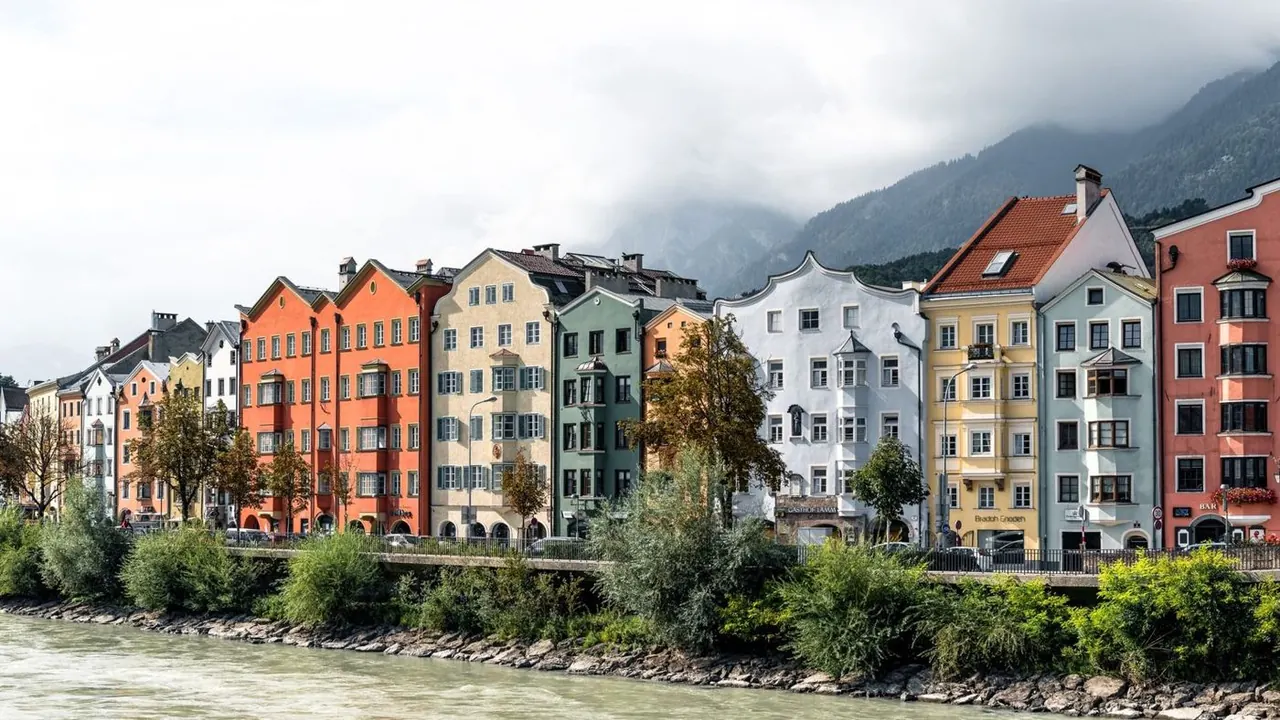
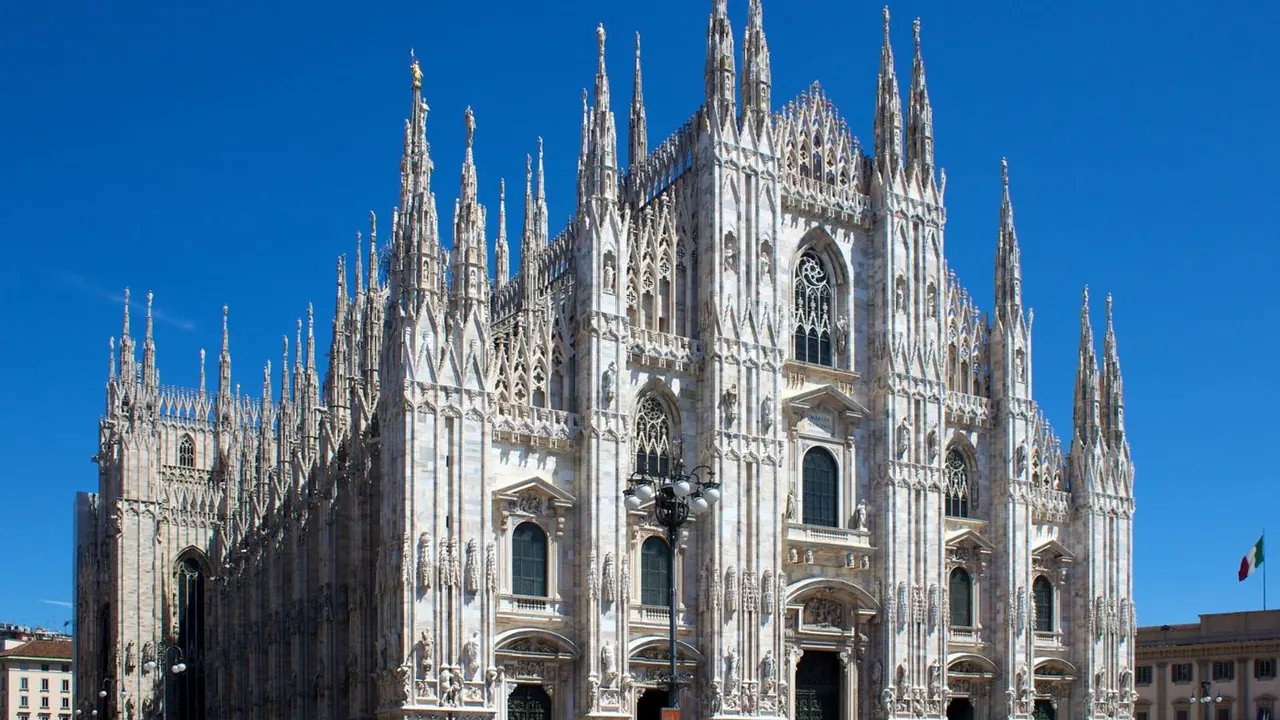
Photos: Innsbruck by Wolfgang Weiser, Pexels License; Milan by Jiuguang Wang, CC BY-SA 3.0, cropped.
Innsbruck or Milan?
Our verdict in twelve categories, each scored against the same fixed benchmark cities, and the climate month by month, so you can choose for your trip.
Choose Innsbruck for
- nature and the outdoors
- families
- prices
Innsbruck is the pick for travellers who want the mountains to be the trip. Cable cars climb from the edge of the old town to an Alpine ridge, the Karwendel lies just behind it, and ski areas, huts and trails sit close enough to fill every day. You come back each evening to a compact Habsburg old town and a quiet night. It also suits families who would rather have fresh air and Alpine animals than theme parks.
Choose Milan for
- shopping
- food and drink
- live music and the arts
Choose Milan when the city itself is the attraction. It has fashion flagships and design showrooms, La Scala and the Last Supper, aperitivo along the Navigli and a far broader table than Tyrol offers. Fast trains to Como, Verona, Bergamo and Turin stretch the trip further. It rewards people who like to eat well, dress up and keep moving, and who accept that this is not a cheap city.
Scoreboard
Twelve categories on one fixed scale from 0 to 100. The shaded stretch is the gap between the two.
Your match
Pick a travel style or drag the sliders, and both match scores follow your weighting.
Wins on nature and the outdoors and families with your weighting.
Wins on shopping and food and drink with your weighting.
What matters to you?
Category by category
What the scores mean for a trip.
Beaches & swimming
Neither city is a swimming destination, and both send you to lakes in high summer. What differs is the kind of lake. Innsbruck's swimming spots are small and shallow, like the Lanser See and the Natterer See on the plateaus just above town. They warm up quickly but the season is short, and the beautiful Achensee stays cold.
Milan has the Idroscalo and its open-air pools in the city itself, and its real escape is the famous lakes. Como and Maggiore are about an hour away by train, with pebbly lidos and swimming platforms in grand scenery, which makes for a full day out rather than a quick afternoon dip.
Food & drink
Milan eats far better. Its own cooking is rich and buttery, with saffron risotto, ossobuco and cotoletta, and because people come to the city from all over Italy you can also eat well from every region. Add serious fine dining, old pasticcerie and the evening aperitivo with snacks, and food becomes a reason to choose it.
Innsbruck's table is hearty and narrower: Gröstl, Kaspressknödel, Speck and Kaiserschmarrn, at their best in a mountain hut after a walk. In town it is mainly traditional inns and coffee houses serving strudel. It is filling and satisfying, but you will run out of variety long before you would in Milan.
Culture & sights
Milan's major sights are of a different order. There is the marble Duomo with its rooftop walk among the spires, Leonardo's Last Supper, the paintings at the Brera and Michelangelo's Rondanini Pietà in the Castello Sforzesco. They are spread across a largely modern city, though, and they come in clusters.
Innsbruck offers a smaller but more coherent picture. Its Habsburg heritage, from the Golden Roof and the Hofburg to the Hofkirche with Maximilian's ring of bronze figures, sits in one arcaded old town by the Inn. Ambras Castle and its cabinet of curiosities complete it, and two or three days cover the lot.
Nightlife
Milan has much more going on after dark. Evenings begin with aperitivo and carry on along the Navigli towpaths, in smart Brera, in relaxed Isola and in Porta Venezia, which is also the centre of the gay scene. Clubs range from dressy rooms around Corso Como to warehouse nights, but expect style rather than wild excess.
Innsbruck's nights are student-driven and small. They centre on the bars and clubs in the brick arches under the railway viaduct, with pubs in the old town. In winter, much of the real partying happens at après-ski out in the resorts.
Nature & outdoors
Here Innsbruck is in a class of its own. The mountains start at the edge of town: a funicular and cable cars reach a ridge at about 2,300m in under half an hour, the Karwendel nature park lies behind it, and the Stubai Glacier keeps snow for most of the year. Hut-to-hut hiking, paragliding and rafting are all part of an ordinary day.
Milan sits on the flat, often hazy Po plain, with parks and canal towpaths for cycling. Its scenery is an hour north, where Como, Maggiore and the Grigne ridges offer lakeside paths, sailing and serious hiking. That suits a day trip, but it does not compare with mountains you can see from the city centre.
Day trips
Both cities are well-placed rail hubs, but Milan's options are richer. Bergamo, Lake Como, Verona and Turin are all about an hour away, and Bologna, Mantua, Cremona, Parma, the Certosa di Pavia and the Borromean Islands add a long list of Italian art and food towns.
Innsbruck's strength is its range across borders. Medieval Hall in Tirol is ten minutes away, Rattenberg and Kitzbühel are along the valley, and Munich, Salzburg and South Tyrol's Bolzano and Merano are each about two hours away. Neuschwanstein is within reach by car.
Good for families
Innsbruck is a little easier with children, mainly because the outdoors is so close. The Alpenzoo, home to ibex, bears and wolves, is on the funicular line, the summer slopes have adventure trails and playgrounds by the huts, and the plateau lakes are good for a family swim. Rainy days are its weak point.
Milan has better answers for bad weather, with the science and technology museum and its submarine, plus Leolandia and Gardaland within reach for older children. On the other hand, its summer heat and its adult-oriented sights wear out small children faster.
Getting around
Both have flat, compact centres where the main sights are a short walk apart, and neither needs a car. The difference is where the transport takes you. Milan's five metro lines and dense tram network, old orange cars included, move you across a large city and on to direct trains to the lakes, though the trip in from Malpensa is long.
Innsbruck's network is smaller, but it does something rare: the funicular from the old town links to the Nordkette cable cars, and trams and ski buses run up into the valleys.
Shopping & style
Milan is one of the world's fashion capitals, and shopping can justify the whole trip. The great Italian houses have their flagships in the Quadrilatero della Moda, the Galleria and La Rinascente are long-standing institutions, and Brera, Porta Ticinese, the design showrooms and the Navigli antique markets add plenty of variety.
Innsbruck has a high street on Maria-Theresien-Strasse and old-town arcades selling crystal and Tyrolean crafts. It is worth shopping for loden, dirndls, Speck and especially outdoor and ski equipment, but there is no fashion district to speak of.
Affordability
Neither is a cheap place to stay, and the costs build up in different ways. In Innsbruck, the Alpine resort premium peaks in ski season and at Christmas, and cable car tickets add up on an active trip. Spring and autumn are clearly cheaper, and the city cards that bundle transport and lifts help.
In Milan, hotels are the main cost, especially during trade fairs and fashion weeks, and bars in Brera are expensive. Office-worker lunch menus, an aperitivo that stands in for supper and a room near a metro stop outside the centre can all ease the bill.
Live music & performing arts
Milan is the place for a night out at the theatre or opera. La Scala's season opens each December on the feast of Sant'Ambrogio, and the Piccolo Teatro, the symphony orchestra at the Auditorium and summer concerts at San Siro add plenty more. Gallery seats put La Scala within reach of anyone who plans ahead.
Innsbruck has a solid provincial programme at the Tiroler Landestheater. Its distinctive event is the summer Festival of Early Music in settings such as the Spanish Hall at Ambras Castle, which is worth timing a trip around if that music is your interest.
Wellness & relaxation
Innsbruck is the calmer place by nature. The town is small and unhurried, and its kind of rest is Alpine: mountain air, a quiet walk, a sauna after a day on the trails and a slow evening in a mountain hut. It has no thermal water of its own, but hotel spas in Igls and the plateau villages often have mountain views, and the big thermal complexes of the Ötztal and Zillertal are about an hour away.
Milan is busy and work-focused, but it has what Innsbruck lacks in town. There is a thermal spa complex with outdoor pools in the southern part of the centre, and on summer afternoons the restored 1930s open-air pools of the Bagni Misteriosi. For deeper rest, most visitors take the train an hour north to the quiet villas and lakeside walks.
When should you go?
Pick your month. The climate figures are measured averages, not a forecast.
Innsbruck in July
Milan in July
Daytime high, °C
Rainfall in the month, mm
Where the figures come from
Milan has no rain gauge within 25 km of the centre, so its rainfall comes from a gridded climate dataset read at the city rather than from a gauge further away.
Milan's sunshine is measured 41 km from the centre, at Novara / Cameri.
Temperature and rainfall are climate normals, averaged over the years shown. Innsbruck: 1991-2020 normals, Innsbruck-Flughafen (3.3 km from centre). Milan: 1991-2020 normals, Milano / Linate (8 km from centre).
Summer is warm in both cities, but it is warmer and stickier in Milan, which reaches about 30°C in July, while Innsbruck peaks nearer 26°C. Late June to August is the only real window for lake swimming in either. The catch in Innsbruck is that its wettest months are in high summer, up to about 144mm in August, often as afternoon storms over the peaks. Milan's July is drier and the sunniest month of its year. For walking around town, May, June and September suit both cities, and Milan's July and August heat can make sightseeing tiring.
The two differ most in autumn and winter. Milan's rain comes in autumn, peaking around 128mm in November, under grey skies. Innsbruck is drier and brighter from October onwards, although its winter days stay near 4°C, which is cold for strolling but right for a trip built around the slopes. Milan's winters are a few degrees milder but no sunnier.
Which traveller are you?
On an outdoors trip, Innsbruck is the clear choice. A funicular and cable cars take you from the old town to the Nordkette ridge in under half an hour, with the Karwendel, glaciers, via ferratas and ski areas all close by. From Milan, the mountains are a train ride away.
On a shopping trip, Milan has no real rival here. The Quadrilatero della Moda, the Galleria and La Rinascente, the design showrooms and the Brera boutiques can fill whole days. Innsbruck's shopping is mostly loden, crystal, Speck and very good ski gear, enough for one afternoon.
On a food and nightlife trip, Milan is far better. Risotto, ossobuco and food from every Italian region lead into aperitivo along the Navigli and late nights in Isola or Porta Venezia. Innsbruck offers hearty hut meals and a small, friendly bar scene under the railway arches.
Before you go
| Measure | Innsbruck | Milan |
|---|---|---|
| Official language | German, Austrian Sign Language | Italian |
| Currency | Euro (EUR) | Euro (EUR) |
| Sockets | CF230 V, 50 Hz | CFL230 V, 50 Hz |
| Driving side | Right | Right |
| Time zone | UTC+1, UTC+2 in summer | UTC+1, UTC+2 in summer |
| Emergency number | 112 | 112 |
| Elevation | 574 m | 138 m |
| Main airport | Innsbruck Airport (INN)4 km from centre40 non-stop destinations | Milan Malpensa International Airport (MXP)40 km from centre208 non-stop destinations |
| Public holidays this year | 16 days | 13 days |
By the numbers
| Measure | Innsbruck | Milan |
|---|---|---|
| City population | 132,499 | 1,354,196 |
| People per km² | 1,263 | 7,453 |
| Museums within 10 km | 28 | 88 |
| UNESCO World Heritage sites within 50 km | 1 | 4 |
Where else could you go?
Every comparison below shares a destination with this one, so you can follow Innsbruck or Milan somewhere new.