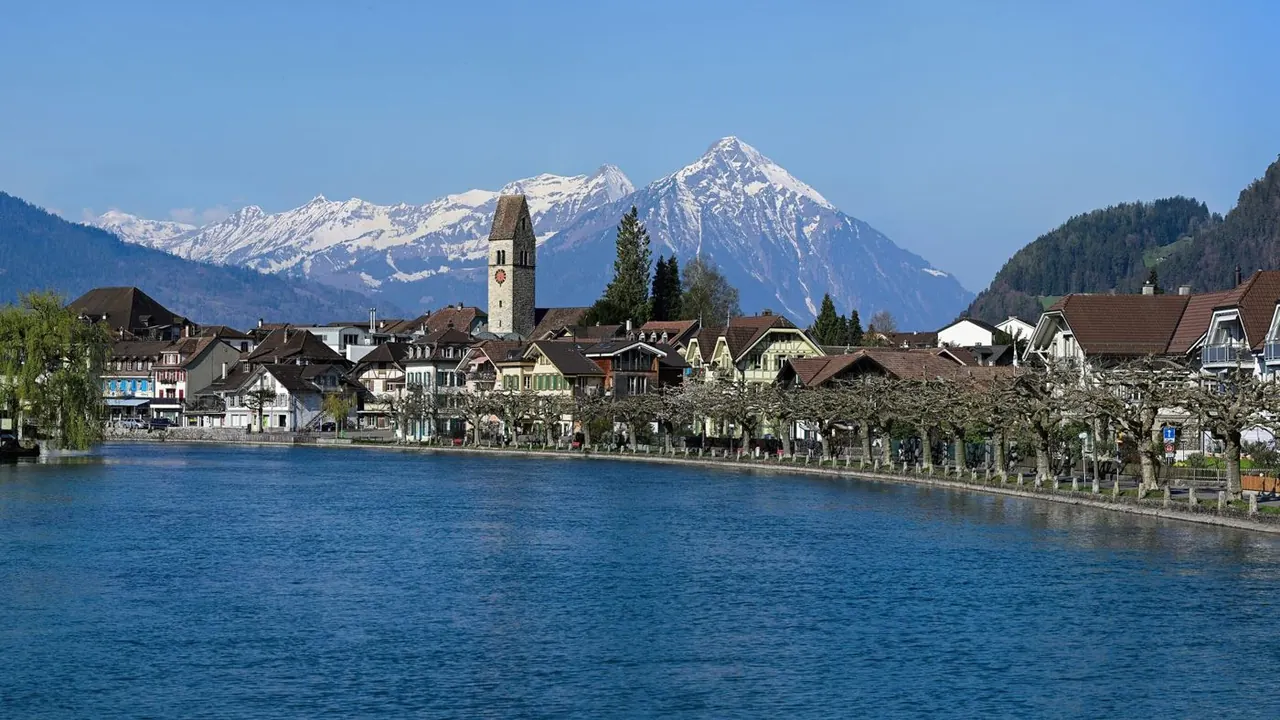
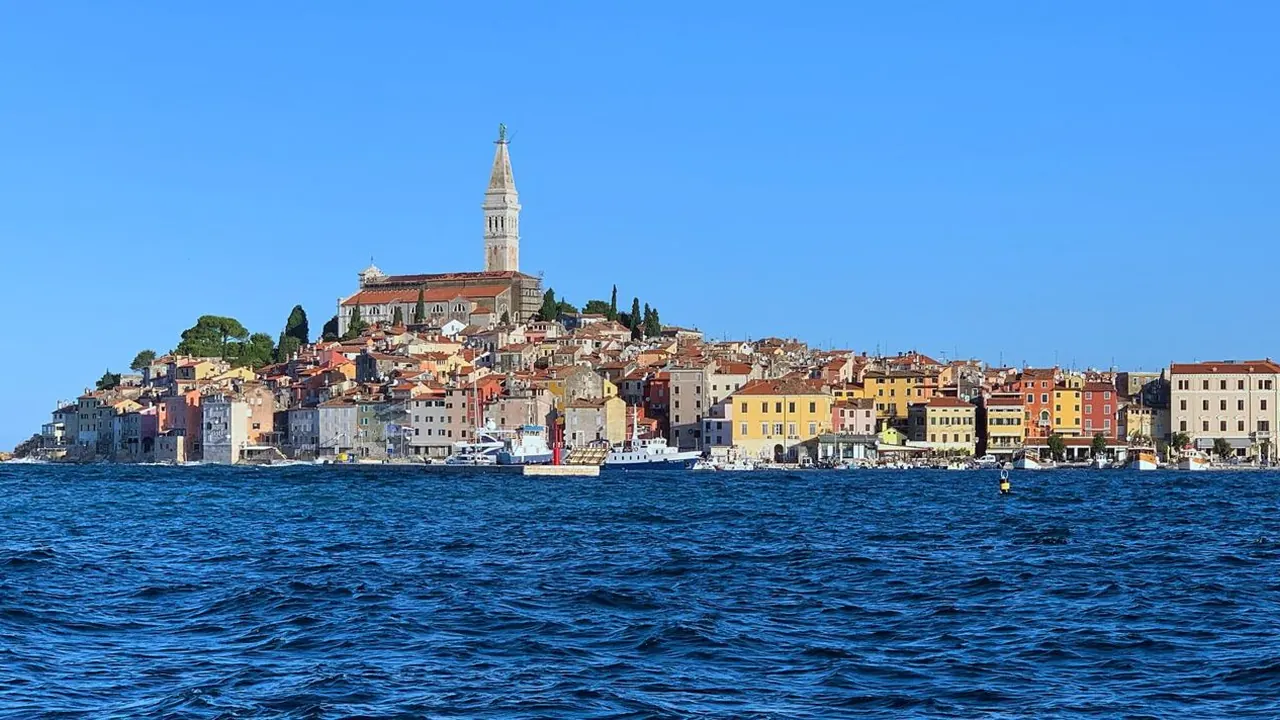
Photos: Interlaken by Roy Egloff, CC BY-SA 4.0, cropped; Rovinj by Vyacheslav Bukharov, CC BY-SA 4.0, cropped.
Interlaken or Rovinj?
Our verdict in twelve categories, each scored against the same fixed benchmark cities, and the climate month by month, so you can choose for your trip.
Choose Interlaken for
- nature and the outdoors
- getting around
- families
Interlaken is for travellers who come for the mountains and plan to spend their days outside. Trains and cable cars take you to the Jungfrau peaks and the Lauterbrunnen valley, the town is a base for paragliding and canyoning, and in winter there is skiing. The rail network is good enough that you won't need a car, and families with children who love gondolas and summit playgrounds do very well here. The trade-off is a town with little to see, plain food and very high costs.
Choose Rovinj for
- beaches
- culture and sights
- prices
Rovinj suits a slower summer trip by the sea: swimming off limestone ledges in clear Adriatic water, long fish dinners, and evenings in a Venetian old town that is worth seeing in its own right. Couples who want warmth, good regional food and wine, and Roman and medieval towns within a drive will be happier here. It is also much easier on the budget than Interlaken, though you will want a car for anything beyond the town.
Scoreboard
Twelve categories on one fixed scale from 0 to 100. The shaded stretch is the gap between the two.
Your match
Pick a travel style or drag the sliders, and both match scores follow your weighting.
Wins on nature and the outdoors and getting around with your weighting.
Wins on beaches and culture and sights with your weighting.
What matters to you?
Category by category
What the scores mean for a trip.
Beaches & swimming
Rovinj is a real swimming destination and Interlaken is not. The Adriatic around Rovinj is clear and warm through the summer. Flat rock ledges and pebble coves run on into the Golden Cape park, you can swim right below the old town walls, and taxi boats go to quieter coves on the islands. There is no sand, so pack water shoes.
Interlaken offers a cool lake dip in July and August, on the grassy lidos of Lake Thun or in the colder turquoise water at Bönigen on Lake Brienz. The snow peaks behind make it memorable, but a swim is an extra at the end of a mountain day.
Food & drink
Rovinj eats noticeably better. It sits in Istria, so expect grilled fish, scampi buzara, truffle pasta, peppery local olive oil and Malvazija and Teran wines. Family konobas in the countryside are worth the drive, even if the harbourfront menus are written for passing visitors.
Interlaken feeds you well enough on fondue, rösti and international cooking, but its best meals are a lunch on a hut terrace above Grindelwald or Mürren, or cheese from a mountain dairy. Many visitors get by on supermarket picnics.
Culture & sights
Neither is a culture destination, but Rovinj's old town is worth seeing in its own right. Pastel Venetian houses climb a former island to the bell tower of St Euphemia, and the Grisia lane, the Balbi Arch and the Batana House, which tells the story of the local fishing boats, fill a slow afternoon.
Interlaken offers the grand hotels and the Kursaal along the Höheweg and the old timber houses of Unterseen, and very little more. For historic architecture you have to take a train somewhere else.
Nightlife
Both towns go quiet early, but Rovinj makes more of the evening. You get a long dinner, then a drink on the rocks or in a waterfront wine bar as the sun sets, and a couple of venues stay open late for dancing in high season. Interlaken has a handful of backpacker pubs and basement clubs near the hostels, plus the casino in the Kursaal, in a town where most people are up for the first mountain train.
Nature & outdoors
Interlaken is built for the outdoors in a way Rovinj cannot match. The Lauterbrunnen valley and its waterfalls are a short train ride away, Grindelwald and the high trails at First take about an hour under the walls of the Eiger, Mönch and Jungfrau, and the Harder Kulm funicular climbs straight from town. A longer journey by cog railway reaches the Jungfraujoch, high above the Aletsch glacier. Paragliders land on the meadow in the middle of town, rafting and canyoning run on the Lütschine, and in winter the ski areas take over.
The only real catch is low cloud hiding the peaks.\n\nRovinj's outdoors is gentle and stays close to the water: shaded paths through the Golden Cape park, kayaking and diving among the reefs and wrecks of the archipelago, boats up the Lim Fjord to the oyster farms, and quiet vineyard roads inland. There are no high mountains or wild country, and it is best for easy walking and cycling in spring and autumn.
Day trips
Both make good bases, and Interlaken edges ahead because trains and lake steamers make every outing easy. Bern's arcaded old town is under an hour away, there are castles at Thun, Spiez and Oberhofen, woodcarving in Brienz and the Ballenberg open-air museum, and Lucerne is further along a scenic line.
Rovinj's outings reach further back in time: Pula's Roman amphitheatre, the mosaics of the Euphrasian Basilica in Porec, and the hill towns of Motovun and Groznjan above the truffle forests, with Piran and Trieste across the border. The drawback is that most of it needs a car.
Good for families
Interlaken works better with children because the transport itself is the entertainment. The summit stations add playgrounds, cliff walks and summer toboggan runs, and the St Beatus caves and Ballenberg's farm animals are good backups. Wet days and very high altitudes for toddlers are the weak points.
Rovinj is safe and easygoing, with island boat trips, gelato and flat paths in the park, and the campsites and resorts outside town have pools and playgrounds. In town, though, there is little made for children, and the nearest big waterparks are a drive away.
Getting around
Interlaken is far easier without a car. The town is small and flat, and mainline trains, narrow-gauge mountain railways, cable cars and steamers connect across the whole Jungfrau region. The main nuisance is summer crowds on the busiest lines.
Rovinj is a delight on foot, with a car-free old town and a waterfront promenade leading into the park. But it has no railway, so the hill towns and wineries mean driving, and then hunting for parking in summer.
Shopping & style
Neither town is for serious shopping, and Rovinj has the slight edge for character. Its steep Grisia lane is lined with small galleries and artists' studios, and the food to take home is the real prize: truffles, olive oil and Istrian wine. Interlaken's Höheweg sells watches, army knives, cuckoo clocks and chocolate to tour groups, and carved wood from Brienz is the one local craft worth seeking out.
Affordability
Rovinj is expensive by Croatian coastal standards but still much easier on the budget than Interlaken. Private apartments, the large campsites, bakeries and the morning market keep costs down, and late spring and September cost noticeably less than high summer.
In Interlaken everything is priced at Swiss levels, and the mountain railways and cable cars, the whole point of going, add a heavy extra, the Jungfraujoch above all. Hostels, transport passes and picnics help, but there is no cheap way to do the region properly.
Live music & performing arts
Both have a thin, mostly summer programme, so neither is a reason to go. What differs is the local flavour.
Interlaken's signature is the amateur open-air William Tell performed in the woods each summer, plus folklore evenings of yodelling and alphorns. Rovinj has summer concerts in St Euphemia and the bitinada, its unaccompanied singing tied to the batana boats, and big summer concerts in Pula's Roman arena nearby.
Wellness & relaxation
Neither town has a bathing tradition, so in both a spa means a hotel wellness area: the grand old hotels on the Höheweg in Interlaken, or the resort hotels along the Golden Cape in Rovinj. The real difference is the way you unwind.
In Interlaken the calm is cool and alpine: early mornings on the lakeshore, slow steamer crossings and the quiet villages of Wengen and Mürren, away from a busy town centre. Rovinj's calm is warm and slow, with long lunches, late swims and walks in the pines, though in high summer it is hard to find in the crowded lanes.
When should you go?
Pick your month. The climate figures are measured averages, not a forecast.
Interlaken in July
Rovinj in July
Daytime high, °C
Rainfall in the month, mm
Where the figures come from
Interlaken has no rain gauge within 25 km of the centre, so its rainfall comes from a gridded climate dataset read at the city rather than from a gauge further away.
Rovinj's temperatures are measured 64 km from the centre, at Trieste.
Rovinj has no rain gauge within 25 km of the centre, so its rainfall comes from a gridded climate dataset read at the city rather than from a gauge further away.
Temperature and rainfall are climate normals, averaged over the years shown. Interlaken: 2005-2020 (rainfall 1991-2020) normals, Meiringen / Unterbach (19.3 km from centre). Rovinj: 1991-2020 normals, Trieste (63.7 km from centre).
Interlaken has two seasons worth planning around. From June to August days reach about 24°C, ideal for high trails, and July and August are the only months the lakes are warm enough to swim. Summer is also one of the wetter stretches, with showers and low cloud that can hide the peaks, while September stays mild and somewhat drier for walking. In winter the valley is barely above freezing, which suits the ski areas rather than wandering the streets. It never gets too hot to walk.
Rovinj is warmer all year and is plainly a summer beach town. The sea is pleasant from June and reaches about 26°C in August. July and August bring highs of 29°C and the longest sunshine of the year. That heat can make the climbs through the old town hard work at midday, so May, June and September are better for walking. Autumn is the wet season: rain jumps to 85mm in September and stays heavy through November. Winters are mild but grey.
Which traveller are you?
For a beach and sun trip, Rovinj wins easily. Its rocky shore, pine-shaded coves and island beaches have clear sea that stays warm from June to September. Interlaken's lakes give you a brief summer swim after the mountains, not a reason to come.
On an outdoors trip, Interlaken is one of the best bases anywhere. Trains and cable cars reach glacier views, high ridge trails and the Lauterbrunnen waterfalls within an hour, and you can add paragliding, canyoning and winter skiing. Rovinj's kayaking and forest paths are pleasant but modest.
On a family trip with children, Interlaken is the easier choice. Rack railways and lake steamers thrill children, and the summit stations have playgrounds and toboggan runs. Rovinj is relaxed, but its rock shore and steep cobbles mean constant watching and a struggling pushchair.
Before you go
| Measure | Interlaken | Rovinj |
|---|---|---|
| Official language | French, German, Italian, Romansh | Croatian |
| Currency | Swiss Franc (CHF) | Euro (EUR) |
| Sockets | CJ230 V, 50 Hz | CF230 V, 50 Hz |
| Driving side | Right | Right |
| Time zone | UTC+1, UTC+2 in summer | UTC+1, UTC+2 in summer |
| Emergency number | 112 | 112 |
| Elevation | 571 m | 0 m |
| Main airport | Zürich Airport (ZRH)100 km from centre226 non-stop destinations | Pula Airport (PUY)31 km from centre34 non-stop destinations |
| Public holidays this year | 10 days | 14 days |
By the numbers
| Measure | Interlaken | Rovinj |
|---|---|---|
| City population | 6,123 | 12,968 |
| People per km² | 1,424 | - |
| Museums within 10 km | 3 | 1 |
| UNESCO World Heritage sites within 50 km | 2 | 1 |
| Swim season, months above 21 °C | - | 4 months |
Where else could you go?
Every comparison below shares a destination with this one, so you can follow Interlaken or Rovinj somewhere new.