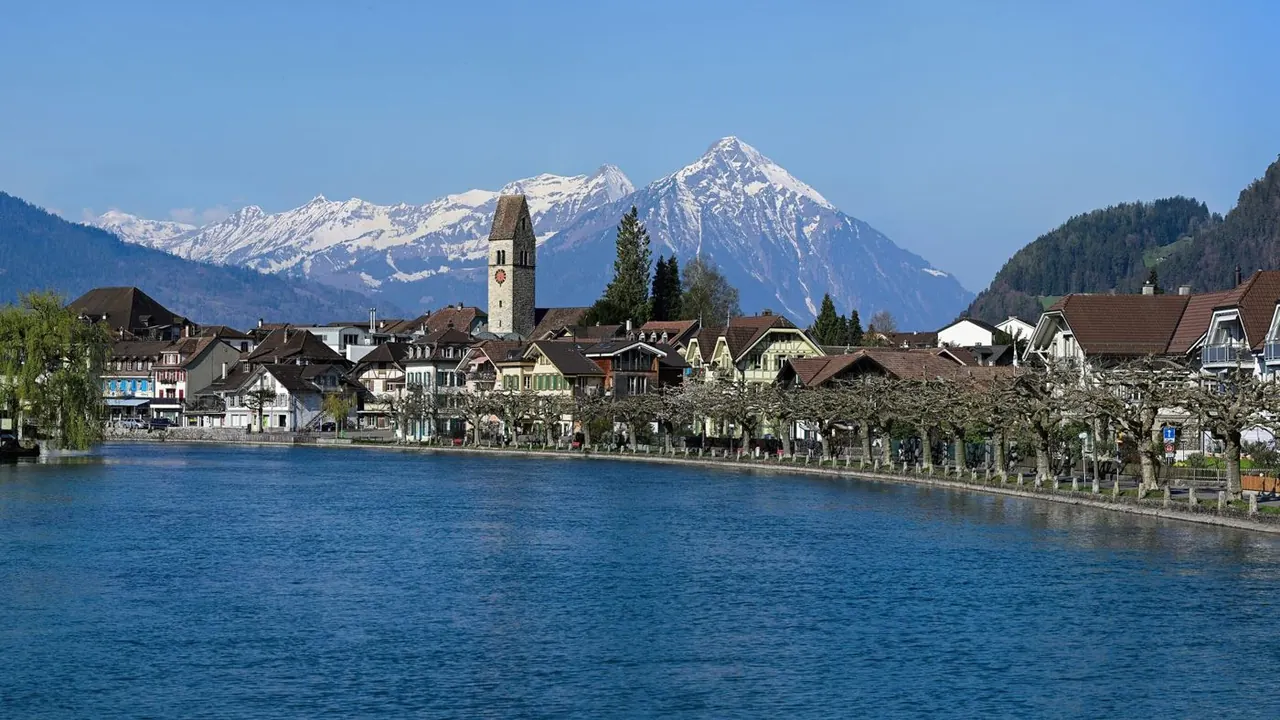
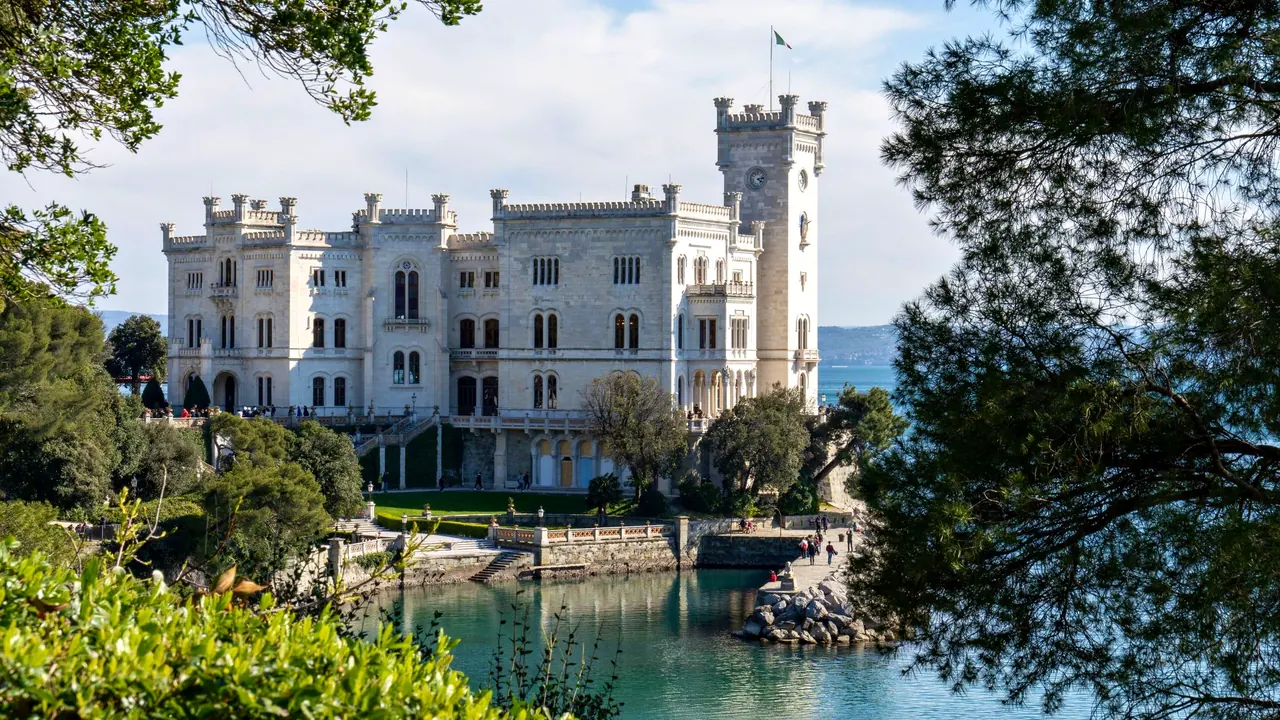
Photos: Interlaken by Roy Egloff, CC BY-SA 4.0, cropped; Trieste by Tibor Szabo, Pexels License.
Interlaken or Trieste?
Our verdict in twelve categories, each scored against the same fixed benchmark cities, and the climate month by month, so you can choose for your trip.
Choose Interlaken for
- nature and the outdoors
- families
- getting around
Interlaken is the choice for travellers who come to be outside. The Eiger, Mönch and Jungfrau, the Lauterbrunnen valley and a tight web of mountain trains, gondolas and lake steamers put high trails, paragliding and winter skiing within easy reach of the hotel door. Children tend to love the rides themselves. In return, the town has little to see and little worth eating, and every day up in the mountains is expensive.
Choose Trieste for
- culture and sights
- prices
- live music and the arts
Trieste suits a slower, more urban trip at a much gentler price. Habsburg squares, Miramare Castle, old coffee houses, buffet counters and a proper opera house fill days in a way Interlaken never tries to. You can swim off the Barcola promenade all summer, and Friuli and Slovenia are easy outings. Its outdoors means a limestone plateau and the sea rather than glaciers, but for a mix of city, coast and food it is the better pick.
Scoreboard
Twelve categories on one fixed scale from 0 to 100. The shaded stretch is the gap between the two.
Your match
Pick a travel style or drag the sliders, and both match scores follow your weighting.
Wins on nature and the outdoors and families with your weighting.
Wins on culture and sights and prices with your weighting.
What matters to you?
Category by category
What the scores mean for a trip.
Beaches & swimming
Neither has sand, but Trieste is the one where swimming is part of the stay. Interlaken's lakes are only swimmable in July and August: Lake Thun is the warmer, with lidos at Neuhaus, and Lake Brienz is a glacial turquoise but colder. They are a refreshing dip after a hike rather than a reason to come.
In Trieste the Adriatic is used every day from June to September. Locals swim from Barcola's concrete platforms and ladders, from old bathing establishments near the centre, or from the pebble coves under the cliffs at Sistiana and Duino. The sea is warmer and clearer than either lake, as long as you are happy getting in off rocks.
Food & drink
Trieste eats far better. Interlaken's restaurants do reliable fondue, raclette and rösti for visitors, plus a run of international places, and the meals people remember come from the mountain dairies and hut terraces above Grindelwald and Mürren. Many visitors get by on supermarket picnics.
Trieste has a cuisine of its own, shaped by Italy, Austria and the Slavic world. Buffet counters carve boiled pork with horseradish, jota and sardoni appear on menus beside strudel, and the coffee comes with its own vocabulary. Up on the Karst, the osmize sell farm wine and ham. Neither city has much fine dining.
Culture & sights
There is almost no contest here. Interlaken has a row of grand hotels and the Kursaal on the Höheweg, plus a few timber houses in Unterseen, and it expects you to take the train to Bern for museums and old architecture.
Trieste is a whole Habsburg seaport. Piazza Unità opens onto the sea, the Borgo Teresiano runs along the Canal Grande past San Spiridione, and San Giusto hill has its mosaics, castle and Roman theatre below. Add Miramare Castle, the Revoltella museum, the great synagogue and the Risiera di San Sabba memorial, and you have several full days.
Nightlife
Neither is a party city, but Trieste's evenings are longer and more sociable. Interlaken goes to bed early before trains and hikes. What is left is a handful of backpacker pubs and basement clubs near the hostels, the Kursaal casino and a quiet drink on the Höheweg.
Trieste revolves around the aperitivo: spritz and local white wine around Piazza Unità, along the Canal Grande and in Cavana, with student wine bars and, in summer, seafront kiosks at Barcola open late. Clubs are scarce there too, so it suits a long dinner by the sea more than dancing.
Nature & outdoors
Interlaken is the stronger place for nature, and by a long way. Mountain railways climb to the Jungfraujoch above the Aletsch glacier, Lauterbrunnen's walls pour with waterfalls, and gondolas reach high trails at First, Schynige Platte and Mürren. Paragliders land in the town meadow, and in winter the Jungfrau ski areas take over. The one catch is cloud.
Trieste's landscape is limestone and sea instead. The Strada Napoleonica and the Rilke Path run along cliffs above the gulf, Val Rosandra offers gorge hiking and climbing, and the Grotta Gigante and Škocjan caves lie underground. There is also sailing and snorkelling off Miramare. It is good, but it is not on Alpine scale.
Day trips
Both are excellent bases, and the difference is range. From Interlaken everything is Swiss and comes by rail or steamer: Bern's arcaded old town in under an hour, castle towns such as Thun, Spiez and Oberhofen on the lakes, Ballenberg's open-air museum and Lucerne over the Brünig Pass.
Trieste opens onto three countries. Aquileia's mosaics, star-shaped Palmanova and the Collio vineyards are in Friuli, Piran and Ljubljana are across the Slovenian border, and Venice is a long but realistic day by train. A car helps for Istria and the wine villages.
Good for families
Interlaken works better with children, mainly because getting about is the fun. Rack railways and gondolas, summer toboggan runs and playgrounds at the summit stations, the St Beatus caves and Ballenberg's farm animals keep most ages busy. Wet days are the weak spot, and the highest summits can be too much for very young children.
Trieste is calm and safe, and it has the small aquarium and science centre that Interlaken lacks for rainy days. Otherwise it offers less. Swimming is off rocks, the streets above the waterfront are steep and stepped, and it suits older children who like caves and castles more than toddlers.
Getting around
Interlaken is the easier of the two, because its transport is the trip itself. The flat town is a twenty-minute walk between its two stations, and beyond it the mainline trains, mountain railways, gondolas and lake steamers connect so well that you never need a car. The only drawback is crowding on the busiest summer trains.
Trieste's centre is flat and compact by the sea, but San Giusto and the districts behind it mean long flights of steps. A dense bus network and passenger boats to Muggia cover the rest. You only need a car for the Karst villages and trips over the border.
Shopping & style
Trieste's shops have far more personality than Interlaken's tourist strip, though nobody plans a trip to either for shopping. Along the Höheweg, big watch and jewellery stores serve tour groups beside shops full of army knives, cuckoo clocks, chocolate and outdoor gear. The one local craft worth carrying home is woodcarving from Brienz.
In Trieste the clothing and shoe shops around Corso Italia are ordinary Italian high street. The antique and second-hand dealers in the old town lanes are better for an afternoon's browsing. The best souvenirs are edible: coffee from the city's roasters, Karst wine and honey, and presnitz.
Affordability
This is one of the sharpest differences between them. In Interlaken, hotels, meals and drinks are at full Swiss levels, and the mountain railways that are the point of the trip, the Jungfraujoch above all, cost more than most visitors expect. Hostels and picnics help, but only a little.
Trieste is fairly priced for northern Italy. A bar coffee and a buffet plate are cheap, rooms are reasonable outside high summer and regatta time, and much of the best of the city costs nothing: the waterfront, the cathedral hill, swimming at Barcola and walks on the Karst.
Live music & performing arts
Trieste has a real stage life, and Interlaken has mostly folklore. Interlaken's highlight is the summer open-air William Tell, performed by local amateurs in the woods, along with yodelling and alphorn evenings and the odd concert at the Kursaal. For a proper orchestra you go to Bern.
Trieste's Teatro Verdi runs a full season of opera and ballet on the waterfront and keeps alive an operetta tradition that is rare in Italy. The Politeama Rossetti and a Slovenian-language theatre add drama, and summer concerts move into the San Giusto castle courtyard. Small venues for live bands are thin on the ground.
Wellness & relaxation
Interlaken rests you through its setting, Trieste through its pace. In the Bernese Oberland that means the spas of the grand Höheweg hotels, early mornings on the lakeshore, slow steamer crossings and the quiet of Wengen and Mürren. The town centre itself is too full of coach groups and backpackers to feel restful.
Trieste slows you down with long sittings over a newspaper in its old coffee houses and a sunset walk out along the Molo Audace. Its spas are limited to hotels and a few day spas. Like Interlaken, it has no thermal baths, so anyone after a proper bathing cure will have to go elsewhere.
When should you go?
Pick your month. The climate figures are measured averages, not a forecast.
Interlaken in July
Trieste in July
Daytime high, °C
Rainfall in the month, mm
Where the figures come from
Interlaken has no rain gauge within 25 km of the centre, so its rainfall comes from a gridded climate dataset read at the city rather than from a gauge further away.
Interlaken's sunshine is measured 66 km from the centre, at Sion.
Temperature and rainfall are climate normals, averaged over the years shown. Interlaken: 2005-2020 (sunshine 1961-1990, rainfall 1991-2020) normals, Meiringen / Unterbach (19.3 km from centre). Trieste: 1991-2020 normals, Trieste (1.6 km from centre).
Interlaken has two seasons. From June to August days reach about 24°C, ideal for high walks and just warm enough for a lake swim. This is also the wettest part of the year, at around 125mm a month, and low cloud can hide the peaks. Spring and autumn are cool and fresh. From December to February daytime highs sit only a few degrees above freezing, which suits skiers better than anyone strolling the town.
Trieste is warmer all year round. July and August reach 29°C and are the sunniest months, with the sea at 25°C, and the swimming season runs from June into September. On the hottest days the climb to San Giusto is hard work. May and early October are the most comfortable months for walking the city. Rain gathers in autumn and is heaviest in November, and winters are mild but grey.
Which traveller are you?
For an outdoors trip, Interlaken is the obvious choice. Cog railways and gondolas lift you straight onto high trails under the Jungfrau, and paragliding, canyoning, rafting and winter skiing all start from town. Trieste's Karst walks and sailing are good, but on a smaller scale.
On a culture and arts trip, choose Trieste. Piazza Unità, San Giusto, Miramare Castle and the Revoltella museum fill several days, and the Teatro Verdi stages opera and operetta. Interlaken has almost nothing of its own and sends you to Bern.
For a trip on a tight budget, Trieste goes much further. Buffet lunches and bar coffees cost little, buses are cheap, and the waterfront, the Barcola swims and the Karst walks are free. In Interlaken, Swiss prices and the mountain railways make that kind of saving impossible.
Before you go
| Measure | Interlaken | Trieste |
|---|---|---|
| Official language | French, German, Italian, Romansh | Italian |
| Currency | Swiss Franc (CHF) | Euro (EUR) |
| Sockets | CJ230 V, 50 Hz | CFL230 V, 50 Hz |
| Driving side | Right | Right |
| Time zone | UTC+1, UTC+2 in summer | UTC+1, UTC+2 in summer |
| Emergency number | 112 | 112 |
| Elevation | 571 m | 2 m |
| Main airport | Zürich Airport (ZRH)100 km from centre226 non-stop destinations | Trieste Airport (TRS)31 km from centre32 non-stop destinations |
| Public holidays this year | 10 days | 13 days |
By the numbers
| Measure | Interlaken | Trieste |
|---|---|---|
| City population | 6,123 | 198,417 |
| People per km² | 1,424 | 2,332 |
| Museums within 10 km | 3 | 33 |
| UNESCO World Heritage sites within 50 km | 2 | 5 |
| Swim season, months above 21 °C | - | 4 months |
Where else could you go?
Every comparison below shares a destination with this one, so you can follow Interlaken or Trieste somewhere new.
- Bernvs Interlaken
- Lucernevs Interlaken
- Rovinjvs Trieste
- Ljubljanavs Trieste
- Bledvs Trieste
- Zurichvs Interlaken