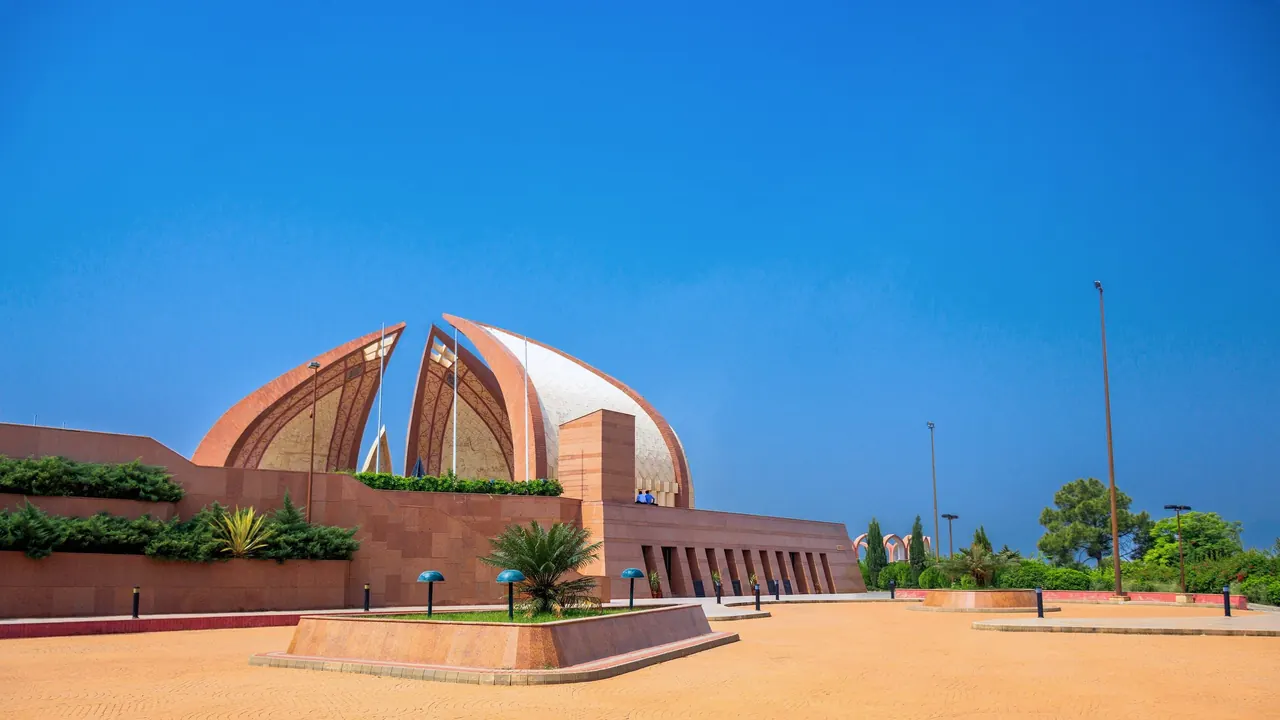
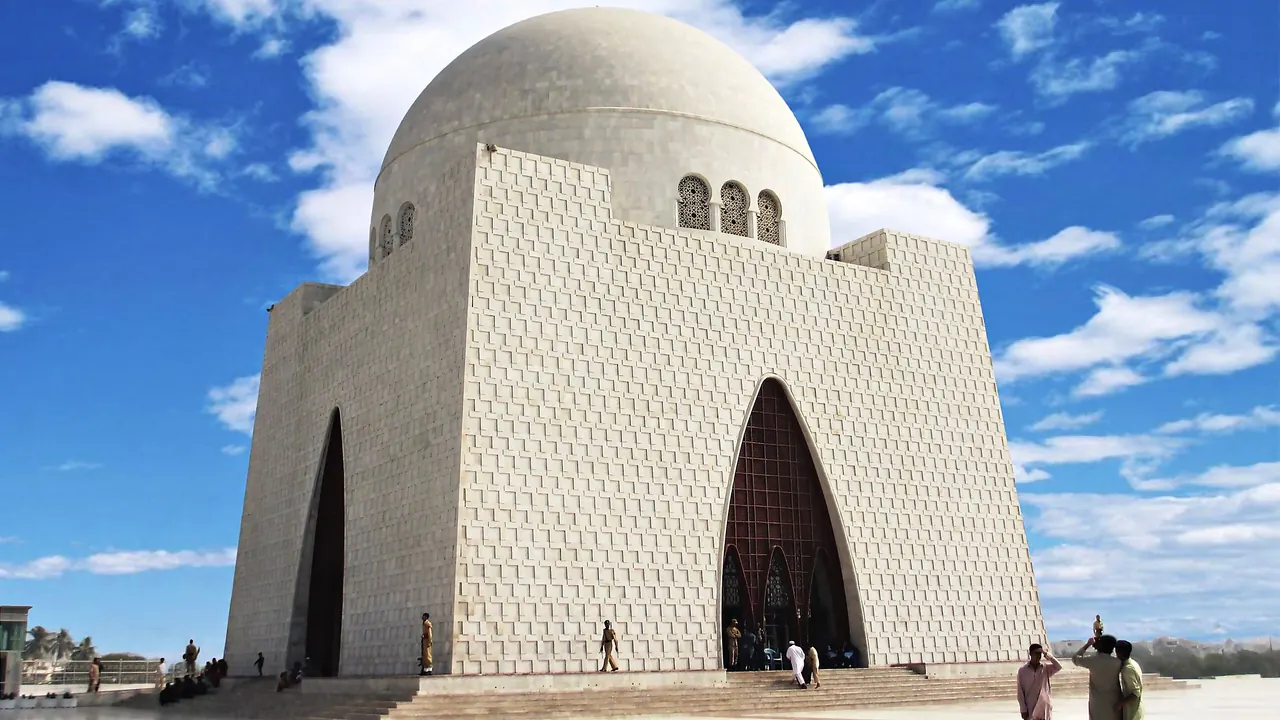
Photos: Islamabad by Fawad4real, CC BY-SA 4.0, cropped; Karachi by M.irfan44, CC BY-SA 4.0, cropped.
Islamabad or Karachi?
Our verdict in twelve categories, each scored against the same fixed benchmark cities, and the climate month by month, so you can choose for your trip.
Choose Islamabad for
- nature and the outdoors
- day trips
- families
Islamabad suits travellers who want a calm, green base with the hills on the doorstep. The Margalla trails start at the edge of the northern sectors, the Gandhara ruins at Taxila are less than an hour away, and Rohtas Fort, Katas Raj and the pine ridges of the Galyat each make a full day out. It is also the easier of the two with children or for anyone who wants quiet evenings. Pick it for walking, ancient history and a gentler pace.
Choose Karachi for
- beaches
- food and drink
- shopping
Karachi is the choice for people who travel to eat and who want a big port city with a coastline. Burns Road, the biryani, the late grills and the seafood at Do Darya make it the stronger food city. It also has the better colonial architecture, the beaches west of town and the great tomb fields of Makli. Expect heavy traffic, crowds and very little calm in return.
Scoreboard
Twelve categories on one fixed scale from 0 to 100. The shaded stretch is the gap between the two.
Your match
Pick a travel style or drag the sliders, and both match scores follow your weighting.
Too close to call, 1 point apart
Wins on nature and the outdoors and day trips with your weighting.
Wins on beaches and food and drink with your weighting.
What matters to you?
Category by category
What the scores mean for a trip.
Beaches & swimming
Islamabad has no beach at all. Rawal Lake is for boating and lakeside walks, so a swim means a hotel pool.
Karachi at least has the sea. The city beaches at Clifton and Sea View are for evening strolls and camel rides rather than swimming, but about an hour west, Hawke's Bay, Sandspit and French Beach have warm, swimmable water and beach huts for hire by the day. Dress is modest and most people swim fully clothed, so think of it as a day by the sea, not a sunbathing vacation.
Food & drink
Both cities serve hearty grills, kebabs and nihari, but Karachi's cooking is broader. Its migrant population brought dishes from across South Asia, so you get the old-city stalls of Burns Road, a spicy local biryani with potatoes, bun kebabs late at night and fish and prawns cooked to order at Do Darya. Clifton and Defence add a café and restaurant scene that Islamabad cannot match.
Islamabad leans towards Punjabi and Pashtun food: karahi cooked in iron pans, chapli kebabs, and grill houses in each sector market, some with views from Saidpur Village and the foothills. For older street food you cross into Rawalpindi's bazaars. Neither city serves alcohol in public, so in both, tea, lassi and juice take the place of drinks.
Culture & sights
Karachi has a little more to see, and it has more layers of history. The white marble Mazar-e-Quaid, the colonial sandstone of Frere Hall, Empress Market and the Sindh High Court, Mohatta Palace and the National Museum's Indus and Gandhara galleries trace a colonial port that became the first capital. The drawback is that they are spread across an enormous city.
Islamabad was only built in the 1960s, so its sights are modern ones. The Faisal Mosque below the Margallas is the outstanding one, and Lok Virsa is the best place to learn about the country's regional crafts and music. Two days covers it, and the older history is out at Taxila.
Nightlife
Neither city has bars or clubs, so a night out in either means food and company rather than drinks. Karachi has more going on after dark. Late dinners turn into chai at roadside dhabas, drives along the Clifton seafront and walks on the promenades, with crowds out well past midnight. Islamabad's evenings are quieter and centre on families eating ice cream and drinking tea in the sector markets.
Nature & outdoors
This is Islamabad's great strength. The Margalla Hills rise straight behind the city, with forest trails, monkeys and birds of prey, and early-morning walks are a local habit. The cooler Galyat ridge around Nathia Gali offers longer hikes and snow in winter.
Karachi's outdoors is all about the sea and the land just beyond the city. You can take night crabbing trips in the mangrove creeks, watch green turtles nest at Hawke's Bay and snorkel off Churna Island, or drive to Kirthar National Park and the lakes at Haleji and Keenjhar. It is interesting in the cool months, but the city itself has little green space.
Day trips
Islamabad has more day trips, and they are closer. Taxila's Gandhara monasteries and sculpture museum are under an hour away, and Rohtas Fort, the temple pools of Katas Raj, the hill station at Murree and the Khewra salt mine each make a full day.
Karachi has one excellent route east along the National Highway. It takes in the carved tombs of Makli, Thatta's tiled Shah Jahan Mosque, the Chaukhandi tombs and the ruins of Banbhore. That route is the highlight, and the options thin out quickly after it.
Good for families
Children are warmly welcomed in both cities, but Islamabad is far easier to manage with them. It is calm and green, with Fatima Jinnah Park and Lake View Park, the dinosaurs at the natural history museum and easy trails in the lower hills.
Karachi offers camel and pony rides on Clifton beach, play areas in the malls, a zoo and a safari park. The long drives, traffic, rare pavements and humid summers wear families out, so it suits people visiting relatives better than a family vacation.
Getting around
Both cities are built for cars, and most visitors rely on ride-hailing apps. Islamabad is the easier of the two. Its grid of lettered sectors is simple to follow, traffic is lighter and the Metro Bus runs usefully to Rawalpindi, although the wide avenues make walking tiring. In Karachi the distances are longer, the traffic is heavier and more chaotic, and walking is practical only in parts of Saddar and the old city.
Shopping & style
Karachi is the better city for clothes. The Zamzama and Clifton boutiques sell embroidered lawn and wedding wear, tailors work quickly, and Zainab Market, Bohri Bazaar and Empress Market give you crowded bazaar shopping inside the city. Sindhi ajrak prints and rilli quilts make distinctive souvenirs.
Islamabad's markets are tidier and specialise in crafts. Look for carpets, Kashmiri shawls, onyx and truck-art pieces in Jinnah Super and around Lok Virsa. For a real bazaar you go next door to Rawalpindi.
Affordability
Both are very cheap for visitors, and the difference between them is small. Grills, street food and ride-hailing cost little in either city. The one big expense is the same in both: international hotels charge close to global rates. Islamabad is the most expensive city in Pakistan, though guesthouses in its sectors stay modest. In Karachi, many first-time visitors pay extra for a hotel in a secure compound.
Live music & performing arts
A visitor hoping to catch a play or a concert has the better chance in Karachi, though neither city has a steady programme. Islamabad's national arts council hosts occasional plays and exhibitions, and Lok Virsa holds folk music and dance festivals at intervals through the year.
Karachi's Arts Council and National Academy of Performing Arts stage Urdu theatre, classical music and dance, with concerts in the cooler months. In both cities the performance most worth seeking out is qawwali, at Bari Imam on Islamabad's edge or at Karachi's shrines on Thursday evenings.
Wellness & relaxation
Islamabad is the place to slow down. Tree-lined avenues, quiet residential sectors and early walks in the Margalla foothills give it a calm that Karachi lacks, even if spa treatments are mostly left to the big hotels.
Karachi is loud, humid and crowded from morning to night. Its one bathing tradition is the hot sulphur springs beside the shrine of Pir Mangho at Manghopir, long used by pilgrims for skin complaints, but it is a rough folk remedy rather than a place to unwind. Otherwise pampering means hotel spas, salons in Clifton and Defence, and a head massage from a traditional barber.
When should you go?
Pick your month. The climate figures are measured averages, not a forecast.
Islamabad in July
Karachi in July
Daytime high, °C
Rainfall in the month, mm
Temperature and rainfall are climate normals, averaged over the years shown. Islamabad: 1991-2020 (sunshine 1961-1990) normals, Islamabad Airport (10.8 km from centre). Karachi: 1991-2020 (sunshine 1961-1990) normals, Karachi Airport (13.2 km from centre).
Islamabad has real seasons. March and April, and again October and November, are the comfortable months for walking the city and the Margalla trails. From May the plains bake, with highs near 38°C in June. July and August bring the monsoon, with August rainfall above 300mm, so trails turn muddy and the air turns sticky. Winter days are cool but bright, around 18°C in January, which suits sightseeing if you pack a jacket.
Karachi is warm all year and nearly dry outside a short monsoon. December to February is the best time to be there, with mild days, plenty of sunshine and the best conditions for outings to Makli or the mangroves. From April to October it is hot and humid. The sea stays warm all year, close to 28°C from spring to autumn, but the strong currents of June to August make April, May, October and November the better months for a beach day out west of the city.
Which traveller are you?
On an outdoors trip, Islamabad wins easily. Numbered trails climb the Margalla Hills straight from the city to Daman-e-Koh and Pir Sohawa, and the forested Galyat ridge, with the Mushkpuri and Miranjani hikes, is within two hours' drive. Karachi's flat, dry plain cannot compare.
For a food and nightlife trip, choose Karachi. Neither city has bars, but Karachi's migrant cooking, from nihari on Burns Road to seafood at Do Darya, keeps going past midnight, and the Clifton seafront drives and roadside chai make the late hours livelier.
On a family trip with children, Islamabad is the safer choice, best timed for spring or autumn, when the heat eases enough for young legs to manage a morning outdoors. Karachi works best for families when relatives are there to do the hosting.
Before you go
| Measure | Islamabad | Karachi |
|---|---|---|
| Official language | Urdu, English | Urdu, English |
| Currency | Pakistan Rupee (PKR) | Pakistan Rupee (PKR) |
| Sockets | CGM230 V, 50 Hz | CGM230 V, 50 Hz |
| Driving side | Left | Left |
| Time zone | UTC+5 | UTC+5 |
| Emergency number | Police 15, ambulance 1122, fire 16 | Police 15, ambulance 1122, fire 16 |
| Elevation | 490 m | 8 m |
| Main airport | Islamabad International Airport (ISB)26 km from centre43 non-stop destinations | Jinnah International Airport (KHI)16 km from centre36 non-stop destinations |
By the numbers
| Measure | Islamabad | Karachi |
|---|---|---|
| Population | 1,014,825 | 14,910,352 |
| People per km² | 1,120 | 4,227 |
| Museums within 10 km | 5 | 9 |
| UNESCO World Heritage sites within 50 km | 1 | 0 |
| Swim season, months above 21 °C | - | 12 months |
Where else could you go?
Every comparison below shares a destination with this one, so you can follow Islamabad or Karachi somewhere new.
- Lahorevs Islamabad
- Amritsarvs Islamabad
- Lehvs Islamabad
- Jaisalmervs Karachi
- Delhivs Islamabad
- Mumbaivs Karachi