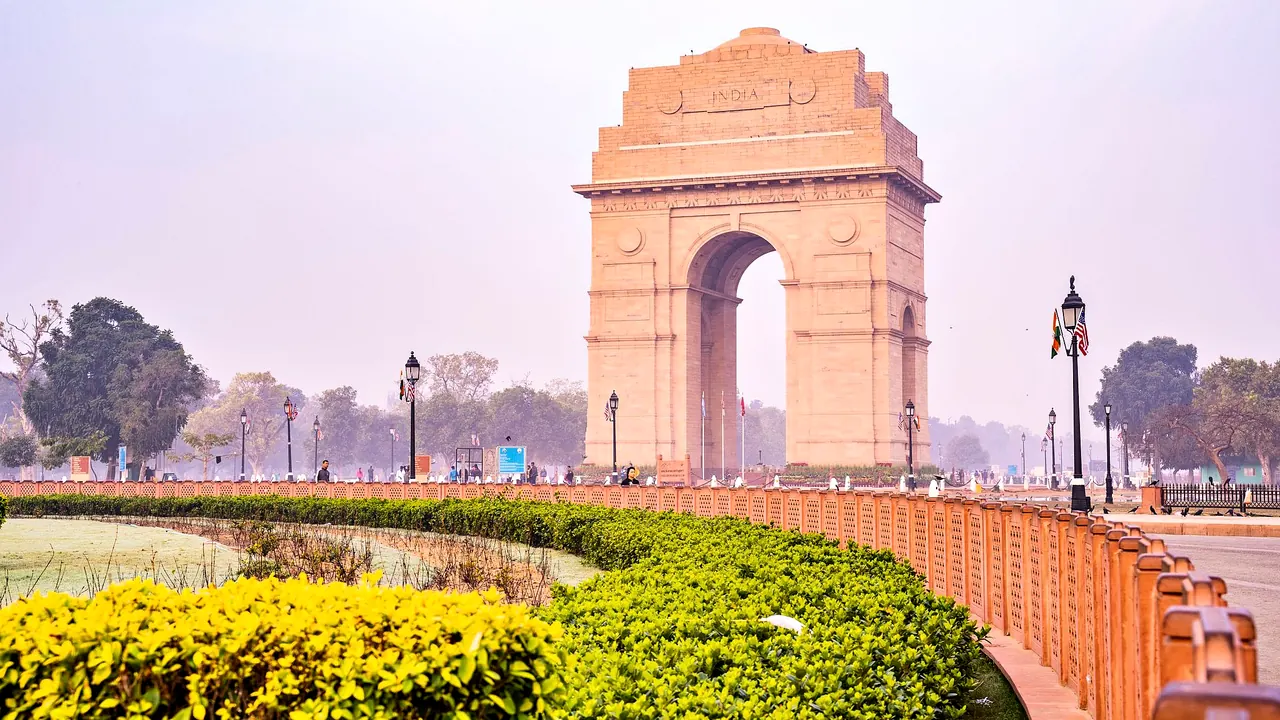
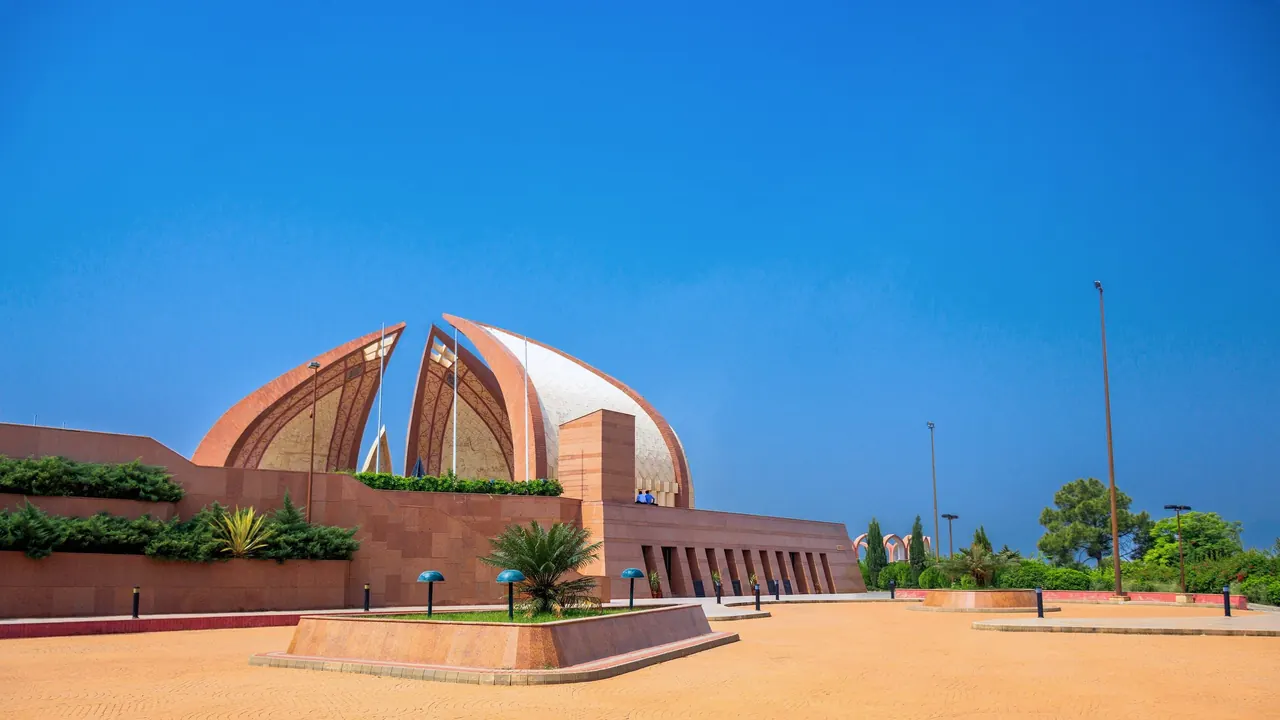
Photos: Delhi by shalender kumar, Pexels License; Islamabad by Fawad4real, CC BY-SA 4.0, cropped.
Delhi or Islamabad?
Our verdict in twelve categories, each scored against the same fixed benchmark cities, and the climate month by month, so you can choose for your trip.
Choose Delhi for
- culture and sights
- nightlife
- live music and the arts
Delhi is the trip for travellers who want history, food and markets in large measure. Mughal tombs, the Red Fort and Old Delhi's bazaars fill several days, the street food is among the best in India, and Agra and the Taj Mahal are an easy train ride away. In return you get noise, crowds and long journeys between sights.
Choose Islamabad for
- nature and the outdoors
- families
- wellness
Islamabad is better for someone who would rather spend the morning on a forest trail than in a monument queue. It is a planned, green, calm capital with the Margalla Hills rising straight from its streets and the pine ridges of the Galyat within reach. The city's own sights take a couple of days, and there are no bars, but walkers and anyone tired of crowded cities will find it restful.
Scoreboard
Twelve categories on one fixed scale from 0 to 100. The shaded stretch is the gap between the two.
Your match
Pick a travel style or drag the sliders, and both match scores follow your weighting.
Wins on culture and sights and nightlife with your weighting.
Wins on nature and the outdoors and families with your weighting.
What matters to you?
Category by category
What the scores mean for a trip.
Beaches & swimming
Neither city is a beach destination. Both sit far inland, and swimming in either means a hotel pool. Delhi's river is not fit for swimming, while Islamabad has Rawal Lake for a waterside walk or a boat trip, though not for bathing. For sand, travellers usually fly on from Delhi to Goa or Kerala, and from Islamabad to Karachi on the coast.
Food & drink
Delhi is one of India's great food cities, and the gap here is wide. Old Delhi's stalls serve parathas, nihari and kebabs, you can try butter chicken and dal makhani in the city where they were created, and the restaurants run from regional kitchens to modern tasting menus.
Islamabad eats well but more narrowly. It specialises in karahi, charcoal kebabs and tandoor bread at the sector markets, and Rawalpindi next door has the busier street food. There is no alcohol, so you drink tea, lassi and fresh juice rather than wine or cocktails.
Culture & sights
The cities have very different pasts. Delhi has been rebuilt as one capital after another over many centuries, which leaves you the Red Fort, Humayun's Tomb, the Qutb Minar, Jama Masjid and the imperial avenue of New Delhi, easily a week of sightseeing.
Islamabad was built in the 1960s, so its landmarks are modern: the striking Faisal Mosque, the Pakistan Monument and the Lok Virsa museum of regional crafts. Two days covers them, and its ancient history lies outside the city at sites such as Taxila.
Nightlife
Delhi has a real night out, even if it is spread across the city: rooftop bars above the reservoir at Hauz Khas Village, pubs under the colonnades of Connaught Place and larger clubs in Gurugram, mostly busy at weekends and reached by taxi.
Islamabad has essentially no bars or clubs. Its evenings are still lively in their own way, with families eating late and lingering over ice cream and tea in the sector markets, especially in summer and during Ramadan.
Nature & outdoors
Here Islamabad is far ahead. The Margalla Hills start at the northern edge of the city, with trails through pine and scrub up to viewpoints at Daman-e-Koh and Pir Sohawa. The cool forests and hikes around Nathia Gali are close enough for a day out.
Delhi sits on a flat plain, and its green spaces are gardens such as Lodhi Gardens and Sunder Nursery, plus patches of Ridge forest. Its strength is winter birdwatching at Okhla and Sultanpur. For real hiking, Delhi visitors have to go to the Himalayan hill stations.
Day trips
Delhi has the stronger day trip, simply because Agra and the Taj Mahal are under two hours away by express train. Mathura, Vrindavan and Fatehpur Sikri are further options.
Islamabad's trips are fewer but rewarding: the Gandhara ruins and sculpture museum at Taxila under an hour away, Rohtas Fort, the Katas Raj temples and the cool air of Murree. Almost all of them need a car and driver, whereas from Delhi the train is often the easier way to go.
Good for families
Islamabad is the easier of the two with children, mostly because it is calmer and greener. Its large parks have space and rides, the natural history museum has dinosaurs, and the lower Margalla trails suit older children.
Delhi has more organised attractions, including the Rail Museum's steam engines, the zoo, and water parks in Noida and Gurugram. However, its traffic, smog and missing pavements make days out harder work. In both cities summer heat is the main thing to plan around.
Getting around
Delhi's metro makes the real difference. It is air-conditioned, signed in English and has stations near most major monuments plus an express line to the airport. Distances are still huge and traffic is heavy, but you rarely need a car.
Islamabad has no comparable network beyond the Metro Bus to Rawalpindi. Its wide grid of sectors is easy to read on a map but tiring to walk, so most journeys are by ride-hailing app or taxi, which at least are cheap and plentiful.
Shopping & style
Delhi sells crafts from all over India. Dilli Haat and the state emporiums are good for textiles and woodwork, Khari Baoli is a huge spice market, and Shahpur Jat and Khan Market are where to find Indian designers and boutique fashion.
Islamabad's shopping is smaller but has its own strengths: carpets, Kashmiri shawls, onyx and tailored shalwar kameez in Jinnah Super and Kohsar Market. For a crowded bazaar, go to Rawalpindi.
Affordability
Both are very cheap for most visitors, with inexpensive local food, cheap transport and plenty of modest guesthouses. The difference lies in the details. Delhi's major monuments charge foreigners a higher entry fee, and its grand hotels and imported drinks can push a budget up. Islamabad's sights cost little or nothing, and its main extra expense is a car and driver for trips out of town.
Live music & performing arts
Delhi has a proper performance season. Through the cooler months the halls around Mandi House stage Hindustani music and Kathak and Bharatanatyam dance. The National School of Drama makes Delhi India's theatre capital, though most plays are in Hindi.
Islamabad offers occasional concerts at the national arts council and folk festivals at Lok Virsa. Both cities share qawwali, heard at Nizamuddin in Delhi and at the Bari Imam shrine on Islamabad's edge.
Wellness & relaxation
Neither is a spa destination. The difference is in the setting. Delhi has Ayurvedic treatments and yoga centres in the big hotels and in South Delhi, but outside them you face noise and traffic. Islamabad has fewer treatments, though its quiet, tree-lined sectors and early-morning hill walks make it the calmer place simply to unwind.
When should you go?
Pick your month. The climate figures are measured averages, not a forecast.
Delhi in July
Islamabad in July
Daytime high, °C
Rainfall in the month, mm
Temperature and rainfall are climate normals, averaged over the years shown. Delhi: 1991-2020 normals, New Delhi / Safdarjung (9.4 km from centre). Islamabad: 1991-2020 (sunshine 1961-1990) normals, Islamabad Airport (10.8 km from centre).
Neither city has a beach, so the real question is when it is comfortable to walk around. Delhi heats up early. By May afternoons reach about 40°C, far too hot for walking between monuments, and the monsoon rains run from July to September. October is dry but still warm. November to March is the sightseeing season, mostly dry, with pleasant days of around 20°C in January. Winter is also when Delhi sees the least sun, and December is the dullest month of the year.
Islamabad is a few degrees cooler for much of the year and sunnier in most months. It is also wetter. Its monsoon is heavier than Delhi's, with about 308mm in August, and late-winter rain makes February and March damp. October and November are the best months for the Margalla trails, with clear skies and little rain. October afternoons still reach around 31°C, so set off early, but November is properly mild. April is the other good window, warm and fairly dry before the summer heat arrives.
Which traveller are you?
On a culture and arts trip, Delhi is the clear choice. Three UNESCO monuments, the national collections, classical music and dance recitals in the cooler months, and qawwali at Nizamuddin give you far more to see than Islamabad's short list of modern landmarks.
For an outdoors trip, choose Islamabad. Numbered trails climb into the Margalla Hills from the edge of town, and longer hikes on the Galyat ridge are a short drive away. Delhi's open spaces are mostly gardens, and smog and heat often make it a poor place to exercise outdoors.
On a food and nightlife trip, Delhi wins on both counts. Old Delhi's lanes and a serious restaurant scene give you plenty to eat, and Hauz Khas and Gurugram offer rooftop bars and clubs. Islamabad's evenings are spent over grills and tea, and there is no alcohol.
Before you go
| Measure | Delhi | Islamabad |
|---|---|---|
| Official language | Hindi, English | Urdu, English |
| Currency | Indian Rupee (INR) | Pakistan Rupee (PKR) |
| Sockets | CM230 V, 50 Hz | CGM230 V, 50 Hz |
| Driving side | Left | Left |
| Time zone | UTC+5:30 | UTC+5 |
| Emergency number | 108 or 112 | Police 15, ambulance 1122, fire 16 |
| Elevation | 221 m | 490 m |
| Main airport | Indira Gandhi International Airport (DEL)17 km from centre145 non-stop destinations | Islamabad International Airport (ISB)26 km from centre43 non-stop destinations |
By the numbers
| Measure | Delhi | Islamabad |
|---|---|---|
| Population | 26,495,000 | 1,014,825 |
| People per km² | 18,962 | 1,120 |
| Museums within 10 km | 23 | 5 |
| UNESCO World Heritage sites within 50 km | 4 | 1 |
Where else could you go?
Every comparison below shares a destination with this one, so you can follow Delhi or Islamabad somewhere new.