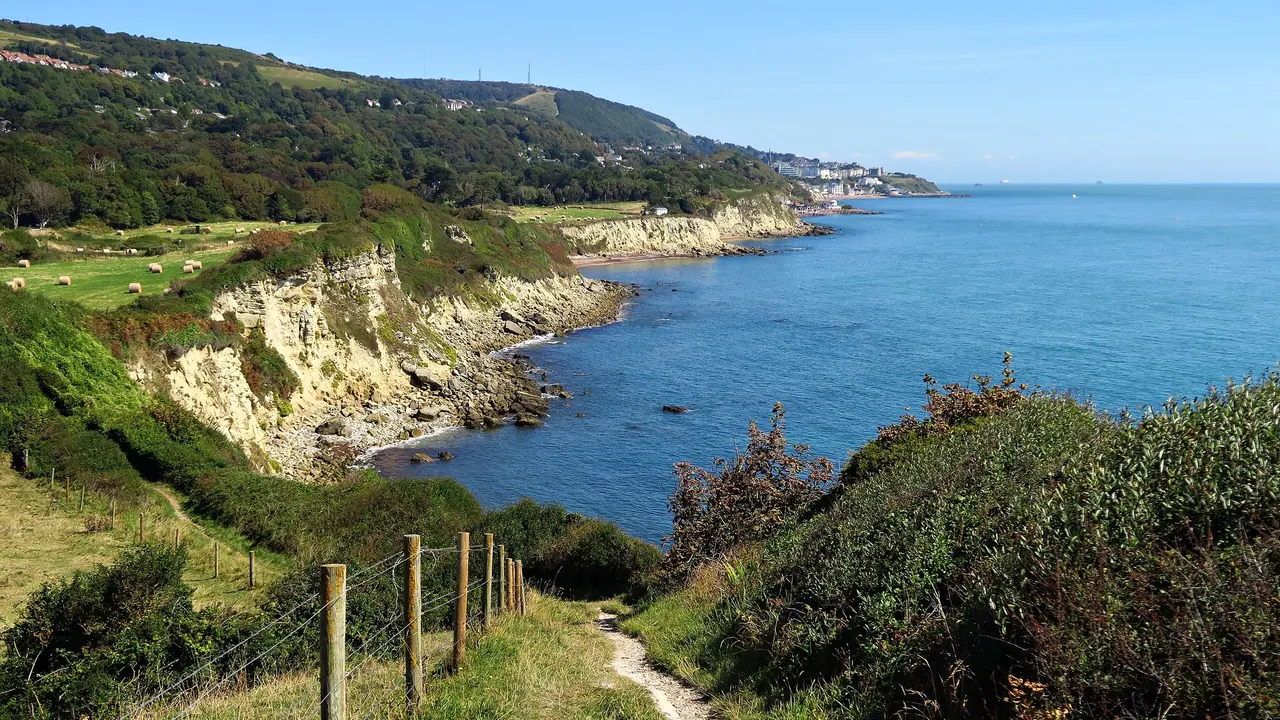
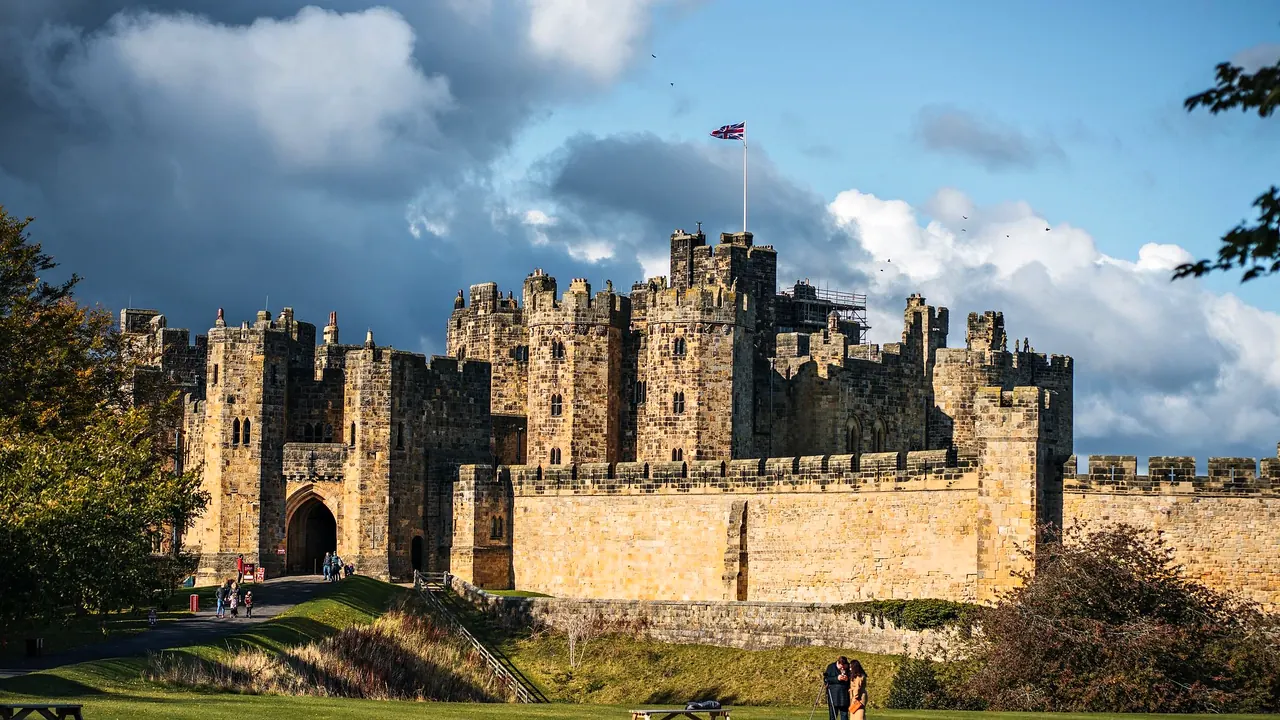
Photos: Isle of Wight by Michael Coppins, CC BY-SA 4.0, cropped; Northumberland by Clément Proust, Pexels License.
Isle of Wight or Northumberland?
Our verdict in twelve categories, each scored against the same fixed benchmark cities, and the climate month by month, so you can choose for your trip.
Choose Isle of Wight for
- beaches
- families
- getting around
The Isle of Wight is the better pick for a classic seaside vacation, especially with children. Sandown Bay has sheltered sand that shelves gently, attractions such as Blackgang Chine are built around children, and the island is small enough that buses and the Ryde-to-Shanklin railway make a car optional. Summers are also a little warmer and sunnier than on the North Sea, and the sea is milder for swimming.
Choose Northumberland for
- culture and sights
- day trips
- nature and the outdoors
Northumberland suits travellers who want history and open space more than a bucket and spade. Its castles, Hadrian's Wall and Holy Island give it far more to see, the Farne Islands and the Cheviots give it wilder country, and Edinburgh, Durham and Newcastle are all within a day trip. Expect to drive, and to treat its magnificent beaches as places to walk rather than swim.
Scoreboard
Twelve categories on one fixed scale from 0 to 100. The shaded stretch is the gap between the two.
Your match
Pick a travel style or drag the sliders, and both match scores follow your weighting.
Too close to call, 2 points apart
Wins on beaches and families with your weighting.
Wins on culture and sights and day trips with your weighting.
What matters to you?
Category by category
What the scores mean for a trip.
Beaches & swimming
The Isle of Wight is the place to actually swim. Sandown Bay is sheltered and shelves gently, Compton Bay has surf, and the Channel is a few degrees warmer than the North Sea, though even here swimming belongs to July to September.
Northumberland's sands are arguably grander, from Bamburgh below its castle to Embleton Bay below Dunstanburgh, and they stay quiet even in August. But the water is cold, the wind is brisk and there are few lifeguards, so these are beaches for walking, flying kites and a quick paddle.
Food & drink
Both places eat in the same way: pubs and good local produce rather than restaurants worth travelling for, with crab sandwiches the standard lunch on either coast. What sets the island apart is its garlic, tomatoes, small vineyards and cream teas in Godshill, and its more ambitious kitchens are in Cowes and Ventnor.
Northumberland's food leans on smoke and the hills: Craster kippers, Lindisfarne oysters, upland lamb and game, and griddled singin' hinnies. Kitchens in the small places close early, but Newcastle is close enough when you want a wider choice.
Culture & sights
The Isle of Wight has one sight of national standing, Osborne House. Beyond it are Carisbrooke Castle and a scattering of half-day visits such as Brading Roman Villa and Tennyson's Farringford.
Northumberland's list is far deeper. Its castles at Bamburgh, Alnwick, Dunstanburgh and Lindisfarne, the Hadrian's Wall forts of Housesteads and Vindolanda, Holy Island's priory and Cragside give a history lover days of sightseeing, though the sites are spread out and you need a car.
Nightlife
Neither is a place for going out, and both are mostly quiet by eleven. The island has slightly more, with a few late bars and a small club in Newport and Ryde, and Cowes comes alive during its August regatta week. In Northumberland an evening means a village inn or a hotel bar in Alnwick or Hexham, and anyone who wants a real night out takes the train to Newcastle.
Nature & outdoors
The island's outdoors is pretty and gentle: chalk downs, the Needles seen from Tennyson Down, the landslipped woods of the Undercliff and a coast path of about 110km. The Solent is one of the world's great sailing waters, and red squirrels in the woods are a bonus.
Northumberland is bigger and emptier. Seabird colonies and seal pups on the Farne Islands, real hill walking in the Cheviots, and Kielder's forest trails and dark night skies give it a wildness that the island, with no true hills, cannot match.
Day trips
On the Isle of Wight, most days out are visits to other island towns such as Yarmouth or Ventnor. Any trip to the mainland starts with a ferry. Portsmouth's Historic Dockyard is the easy one, while the New Forest and Winchester take more planning.
Northumberland is within reach of three cities that could each headline a trip: Edinburgh is under an hour by train from Berwick, and Newcastle's quayside and Durham's cathedral are easy from the south of the county. Add the abbeys of the Scottish Borders and Beamish, and you get more variety with no water to cross.
Good for families
The Isle of Wight is made for a traditional family week by the sea. It has gentle sand at Sandown, the old-style amusement park at Blackgang Chine, Robin Hill, a zoo, a steam railway, fossil hunts and the Needles chairlift, all close together.
Northumberland suits children who prefer castles and boats to rides, with broomstick training at Alnwick Castle, puffin trips to the Farnes and the tidal crossing to Holy Island. But you need a car and there is little to do on wet days, which tips families with young children towards the island.
Getting around
The island is compact, about 37km from end to end, and unusually easy without a car. Buses link every town, open-top buses climb to the Needles in summer, and the railway from Ryde Pier serves the east-coast resorts. The catch is that every arrival is by ferry.
Northumberland has good rail links at its edges, on the east coast main line and the Tyne Valley line to Hadrian's Wall, but buses between the villages are infrequent, so most visitors drive. The roads are quiet, though the drive to Holy Island has to be timed to the tides.
Shopping & style
Shopping is a sideline in both, and nobody should plan a trip around it. On the island it has a nautical flavour, with chandlers and sailing clothes in Cowes, plus glassblowers, potters and bottles of coloured Alum Bay sand. Northumberland has the better market towns in Hexham and Alnwick, and the huge second-hand bookshop in Alnwick's old railway station is worth a detour on its own.
Affordability
Neither is cheap in summer, and the extra costs fall in different places. On the island it is the ferry, which is expensive with a car, though foot passengers who use the buses avoid most of it. Spring and early autumn are much cheaper than the school summer break.
In Northumberland the extra cost is the car you will almost certainly need. On the other hand, the beaches and much of Hadrian's Wall are free, and the inland market towns are cheaper places to stay than the coast.
Live music & performing arts
Both are quiet for live performance most of the year. The island's big moment is the Isle of Wight Festival, a major rock and pop weekend each June, and otherwise there is Shanklin's Victorian theatre and the arts centre on Newport's quay. Northumberland's strength is folk music: you can hear the Northumbrian smallpipes at pub sessions and small festivals, and Newcastle and Gateshead are close by for orchestras and big concerts.
Wellness & relaxation
Ventnor gives the Isle of Wight its own kind of calm. It is an old Victorian health resort, chosen for its mild, sheltered air, with clifftop benches facing the sea and the monks' gardens at Quarr Abbey a short trip away.
Northumberland's calm comes from emptiness instead: little traffic, villages that go to sleep early and cottage days set by the tides. If you want treatments, look elsewhere. Neither place has thermal baths, and in both the spas are limited to a few hotels.
When should you go?
Pick your month. The climate figures are measured averages, not a forecast.
Isle of Wight in July
Northumberland in July
Daytime high, °C
Rainfall in the month, mm
Where the figures come from
Isle of Wight's temperatures are measured 39 km from the centre, at Bournemouth Airport.
Isle of Wight has no rain gauge within 25 km of the centre, so its rainfall comes from a gridded climate dataset read at the destination rather than from a gauge further away.
Northumberland has no rain gauge within 25 km of the centre, so its rainfall comes from a gridded climate dataset read at the destination rather than from a gauge further away.
Temperature and rainfall are climate normals, averaged over the years shown. Isle of Wight: 1991-2020 normals, Bournemouth Airport (38.9 km from centre). Northumberland: 1991-2020 normals, Boulmer (7 km from centre).
Both have cool northern summers, but the Isle of Wight is a few degrees warmer all year. Highs there reach 22°C in July and August and the sea peaks at around 18°C in August. June and July are the sunniest months and have little rain, so July to early September is the time for the beach. Rain sets in properly from October, and November is the wettest month. May and September are pleasant for walking the coast path.
Northumberland reaches only about 18°C in high summer and its sea about 15°C, so most visitors paddle rather than swim. Its summer is less dry too: August is one of its wettest months, at 86mm. That makes May, June and September just as good as July for walking and visiting castles. Winters are raw in both places, with daytime highs in single figures from December to February.
Which traveller are you?
On a beach and sun trip, the Isle of Wight gives you what Northumberland cannot: a few summer weeks warm enough to actually swim, sunnier days and resort towns with the sand at the end of the street. Northumberland's beaches are lovely, but you would mostly stay on the shore.
For a culture and arts trip, Northumberland is the place. Its castles, Roman frontier and early Christian history can fill a week, with Edinburgh and Durham within a day's reach. On the island you would see the main sights in two or three days.
On an outdoors trip, Northumberland gives you more space and wildlife, with real hill country where you can walk all day and meet almost no one. The island suits gentler walks and cycling, and above all anyone who wants to sail or paddle on sheltered water.
Before you go
| Measure | Isle of Wight | Northumberland |
|---|---|---|
| Official language | English | English |
| Currency | Pound Sterling (GBP) | Pound Sterling (GBP) |
| Sockets | G230 V, 50 Hz | G230 V, 50 Hz |
| Driving side | Left | Left |
| Time zone | UTC, UTC+1 in summer | UTC, UTC+1 in summer |
| Emergency number | 112 or 999 | 112 or 999 |
| Main airport | Southampton Airport (SOU)15 non-stop destinations | Newcastle International Airport (NCL)80 non-stop destinations |
| Public holidays this year | 8 days | 8 days |
By the numbers
| Measure | Isle of Wight | Northumberland |
|---|---|---|
| Population | 140,459 | 323,820 |
| People per km² | 369 | 65 |
| Swim season, months above 21 °C | None | None |
Where else could you go?
Every comparison below shares a destination with this one, so you can follow Isle of Wight or Northumberland somewhere new.
- Jurassic Coastvs Isle of Wight
- Edinburghvs Northumberland
- Cotswoldsvs Isle of Wight
- Lake Districtvs Northumberland
- Yorkshire Dalesvs Northumberland
- Devonvs Isle of Wight