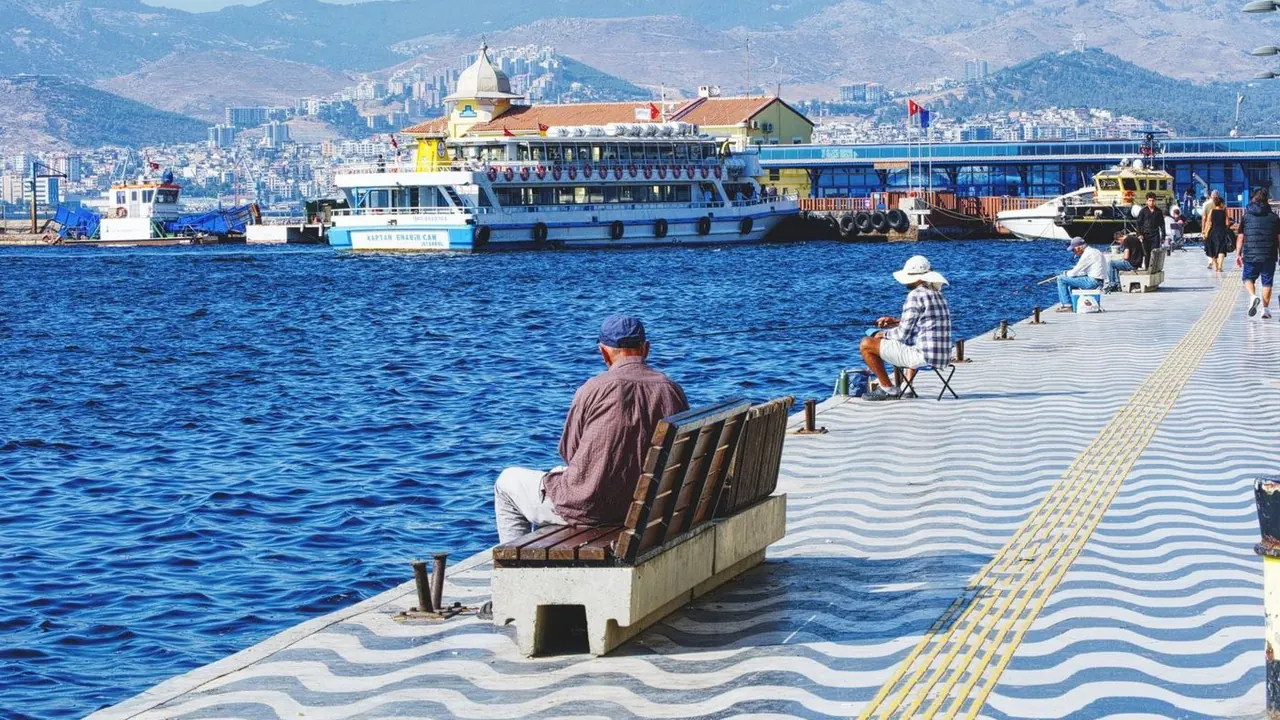
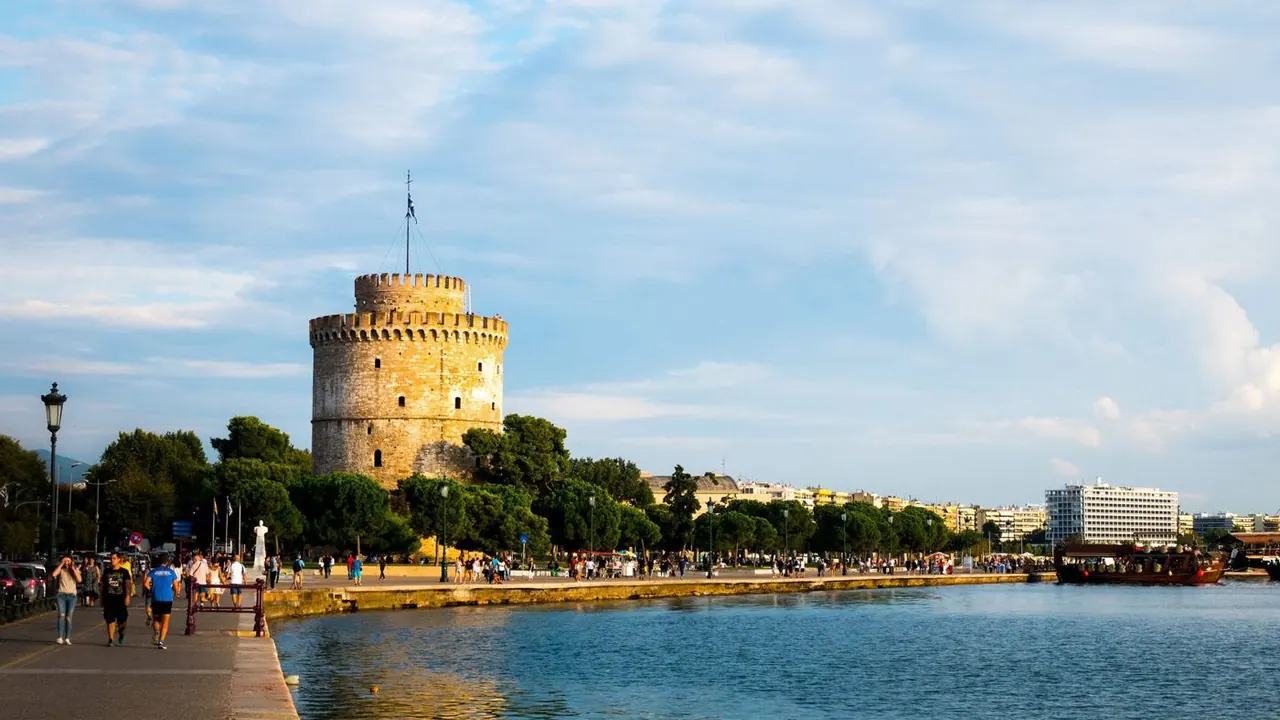
Photos: Izmir by Toygar Par, Pexels License; Thessaloniki by Destinygreece, CC BY-SA 4.0, cropped.
Izmir or Thessaloniki?
Our verdict in twelve categories, each scored against the same fixed benchmark cities, and the climate month by month, so you can choose for your trip.
Choose Izmir for
- wellness
- day trips
- beaches
Izmir suits travellers who want sun, sea and the ancient Aegean within easy reach. It is the better base for day trips, with Ephesus, Pergamon and the Ionian ruins all close by. Its thermal springs, old hammams and the beaches of the Cesme peninsula make it the easier place to unwind between sites.
Choose Thessaloniki for
- culture and sights
- nightlife
- food and drink
Choose Thessaloniki when the city itself is the point of the trip. Its Byzantine churches and museums give you more to see on foot, its nights out run later and fuller, and its everyday eating is among the best in Greece. Vergina and Olympus are there for a day away.
Scoreboard
Twelve categories on one fixed scale from 0 to 100. The shaded stretch is the gap between the two.
Your match
Pick a travel style or drag the sliders, and both match scores follow your weighting.
Too close to call, 1 point apart
Wins on wellness and day trips with your weighting.
Wins on culture and sights and nightlife with your weighting.
What matters to you?
Category by category
What the scores mean for a trip.
Beaches & swimming
Neither city swims off its own waterfront, but Izmir has more beaches within reach. Ilica's shallow sand on the Cesme peninsula is about an hour west, with wilder coves at Altinkum. Closer in, Urla and Seferihisar have smaller pebble-and-sand beaches, and Gumuldur and Ozdere to the south have long sandy strips. The summer wind keeps the water feeling fresh and makes the peninsula a windsurfing coast too.
Thessaloniki's nearby beaches at Perea and Nea Michaniona have shallow, ordinary water, used mainly for a local evening dip. Its prize is Halkidiki, whose clear coves are among the best in Greece. Kassandra, though, is an hour's drive away and works better as a stop on the way somewhere else than as a daily outing.
Food & drink
Both are serious eating cities built around the meze table, so the difference is one of flavour. Izmir's Aegean cooking is lighter and greener, with olive oil, wild herbs, grilled fish and raki. Its street food is boyoz, gevrek and kumru, and Urla wines are on the list.
Thessaloniki's cooking is richer and spicier, and its Ottoman, Sephardic and Anatolian refugee roots show in soutzoukakia and in peppers and aubergines cooked many ways. Tsipouro comes with plates at the ouzeri and bougatsa at breakfast. With tavernas tucked between the stalls of the Kapani and Modiano markets, it is the slightly better city for grazing through a day.
Culture & sights
Thessaloniki has far more to see inside the city. Its UNESCO-listed Byzantine churches, including the Rotunda with its mosaics and Agios Dimitrios, can fill several days. So can the Arch of Galerius, the Macedonian gold in the Archaeological Museum and the Museum of Byzantine Culture, with Ano Poli's lanes and walls above them.
Izmir lost most of its old city in the fire of 1922, and what remains is a shorter list: the Roman Agora, the views from Kadifekale, the Clock Tower and the hans of Kemeraltı. Its great antiquities are outside the city at Ephesus and Pergamon, not in it.
Nightlife
Thessaloniki is the stronger night out by some distance. A large student population and late Greek hours keep Ladadika, the bars around Valaoritou and the tables of the Bit Bazaar busy until well past three, weeknights included. In summer there are also big open-air clubs on the edge of the city.
Izmir's evenings are easy-going but smaller: sunset drinks on the Kordon, then the packed bar lanes of Alsancak. For the bigger summer nights, people drive an hour west to Alaçatı and Çeşme.
Nature & outdoors
Both have a long, flat seafront for walking and cycling and bigger landscapes a drive away, but the character is different. Izmir's outdoors is about wind and water: flamingos on the salt pans of the Gediz Delta, the cliffs and olive groves of Karaburun, and Alaçatı's famous windsurfing and kitesurfing.
Thessaloniki is the better choice for mountains. The Seich Sou pine forest starts right behind the old town, and Mount Olympus, Greece's highest peak, is about an hour and a half away for the Enipeas gorge and hut-to-hut hiking.
Day trips
Izmir puts a whole region of ruins within a day's reach. Ephesus is about an hour by train to Selçuk, with Şirince's stone houses on the hill above, and Pergamon and Sardis are about two hours away. Priene, Miletus and Didyma fill another full day to the south, while Alaçatı, Urla and Old Foça suit lighter outings. Beyond Selçuk and Manisa, though, a hire car or a tour is the easier way to go.
Thessaloniki's circuit of ancient Macedonia is superb at its heart: the royal tombs at Vergina, Alexander's birthplace at Pella and Dion beneath Olympus. Edessa's waterfalls, Veria's old quarter and the Mount Athos coast add variety, and intercity buses reach most of it. Still, its list of major sites runs out sooner than Izmir's.
Good for families
Neither city is built around children, though both welcome them warmly, and there is little between them. Izmir has a bit more to do in town: the Wildlife Park at Sasalı, the small fun fair in Kültürpark, bay ferry rides, and Ilica's shallow sand for small swimmers.
Thessaloniki has the Noesis science centre and planetarium and the seafront playgrounds. Its narrow pavements, often blocked by cars, and steep Ano Poli make days with a pushchair harder.
Getting around
Izmir is strung out round its gulf, so you cover it by water and rail as much as on foot. The flat walk from Konak to Alsancak and the lanes of Kemeraltı take care of the centre, and the İZBAN railway runs the length of the bay. The ferries to Karşıyaka and Bostanlı are the most pleasant way across, while the coastal roads clog at rush hour.
Thessaloniki packs what a visitor wants into one flat strip by the water. The White Tower, the markets, Ladadika and the main churches are all within half an hour's walk of each other. A metro line runs under the centre, but buses crawl in traffic, and the climb to Ano Poli is easiest by taxi.
Shopping & style
Neither is a shopping destination, and in both the best things to buy are local. Izmir has more atmosphere in Kemeraltı, a working bazaar of hans and courtyards that sells copperware, leather, olive oil soaps and evil eye beads to locals rather than tourists.
In Thessaloniki the best shopping is food: spices, cheeses, loukoumi and tsipouro from Kapani and Modiano. Tsimiski has the chains, and the Bit Bazaar has a few antique stalls.
Affordability
In Izmir the bills climb at the dinner table and on the coast. Street breakfasts, lokanta meals and the bay ferries cost little. Alcohol is heavily taxed, though, so a long meyhane or seafood dinner adds up, and in summer the Cesme peninsula charges resort prices. Entry to Ephesus and the other big sites mounts up too.
Thessaloniki is easiest on the budget after dark. Prices are set for students and locals, so a night of tsipouro, meze and bars stays gentle, and museums and transport are inexpensive. The main extra cost is car hire for day trips.
Live music & performing arts
Neither draws visitors for its stages, and both have state companies that perform mostly in the local language. Izmir's highlight is the International Izmir Festival, which holds summer concerts in the ancient theatre at Ephesus, alongside opera and ballet at the Elhamra.
In Thessaloniki the best live music is informal: rebetiko and laika at tavernas late into the night. The State Orchestra plays at the Concert Hall on the waterfront.
Wellness & relaxation
Izmir has a bathing culture you can still join, and Thessaloniki does not. The Balçova springs, known in antiquity as the Baths of Agamemnon, feed thermal pools on the edge of the city. Ilıca has warm springs by the shore, and a few old hammams in Kemeraltı still offer a scrub and steam.
In Thessaloniki, Ottoman baths such as the Bey Hamam survive only as monuments, which leaves the simple springs at Lagadas and hotel spas. The city's calm comes from long iced coffees on the seafront rather than from anything you book.
When should you go?
Pick your month. The climate figures are measured averages, not a forecast.
Izmir in July
Thessaloniki in July
Daytime high, °C
Rainfall in the month, mm
Temperature and rainfall are climate normals, averaged over the years shown. Izmir: 1991-2020 normals, Izmir (3.4 km from centre). Thessaloniki: 1991-2020 normals, Thessaloniki Airport (14 km from centre).
Izmir is the hotter and sunnier of the two. July and August reach 34°C with almost no rain, so summer sightseeing means early mornings and afternoons by the sea. The sea is warm enough for swimming from June to September. May and from late September into October are the best months for walking the city and the ruins. Winter is the real drawback: from November to February the rain is heavy, up to 127mm in December.
Thessaloniki runs a few degrees cooler and peaks at 32°C. Its rain is spread thinly through the year, so it has no sharp wet season but no truly dry month either. Its sea warms further, to 27°C in August against Izmir's 24°C, which favours late-summer swimming. Spring and autumn suit both cities for walking. Thessaloniki's winters are chillier than Izmir's but much drier.
Which traveller are you?
For a culture and arts trip, Thessaloniki is the better choice. Its UNESCO-listed Byzantine churches, Roman arch and two first-rate museums are all inside the city. Izmir's greatest antiquities lie a train or car ride away, and its own centre was largely rebuilt after 1922.
On a food and nightlife trip, Thessaloniki again comes out ahead. You will eat superbly in both, but its ouzeri, market tavernas and student-priced bars in Ladadika and Valaoritou run late every night. Izmir's bigger summer nights are an hour away on the coast.
For a relaxing and wellness trip, Izmir is the clear pick. Thermal pools at Balçova, warm springs at Ilıca and working hammams in Kemeraltı give it a bathing culture you can join. Thessaloniki keeps its hammams only as monuments and cannot match that.
Before you go
| Measure | Izmir | Thessaloniki |
|---|---|---|
| Official language | Turkish | Greek |
| Currency | Turkish Lira (TRY) | Euro (EUR) |
| Sockets | CF230 V, 50 Hz | CF230 V, 50 Hz |
| Driving side | Right | Right |
| Time zone | UTC+3 | UTC+2, UTC+3 in summer |
| Emergency number | 112 | 112 |
| Elevation | 2 m | 6 m |
| Main airport | Adnan Menderes International Airport (ADB)13 km from centre120 non-stop destinations | Thessaloniki Macedonia International Airport (SKG)14 km from centre91 non-stop destinations |
| Public holidays this year | 14 days | 15 days |
By the numbers
| Measure | Izmir | Thessaloniki |
|---|---|---|
| City population | 4,493,242 | 309,617 |
| People per km² | 4,760 | 16,042 |
| Museums within 10 km | 29 | 32 |
| UNESCO World Heritage sites within 50 km | 0 | 1 |
| Swim season, months above 21 °C | 5 months | 5 months |
Where else could you go?
Every comparison below shares a destination with this one, so you can follow Izmir or Thessaloniki somewhere new.