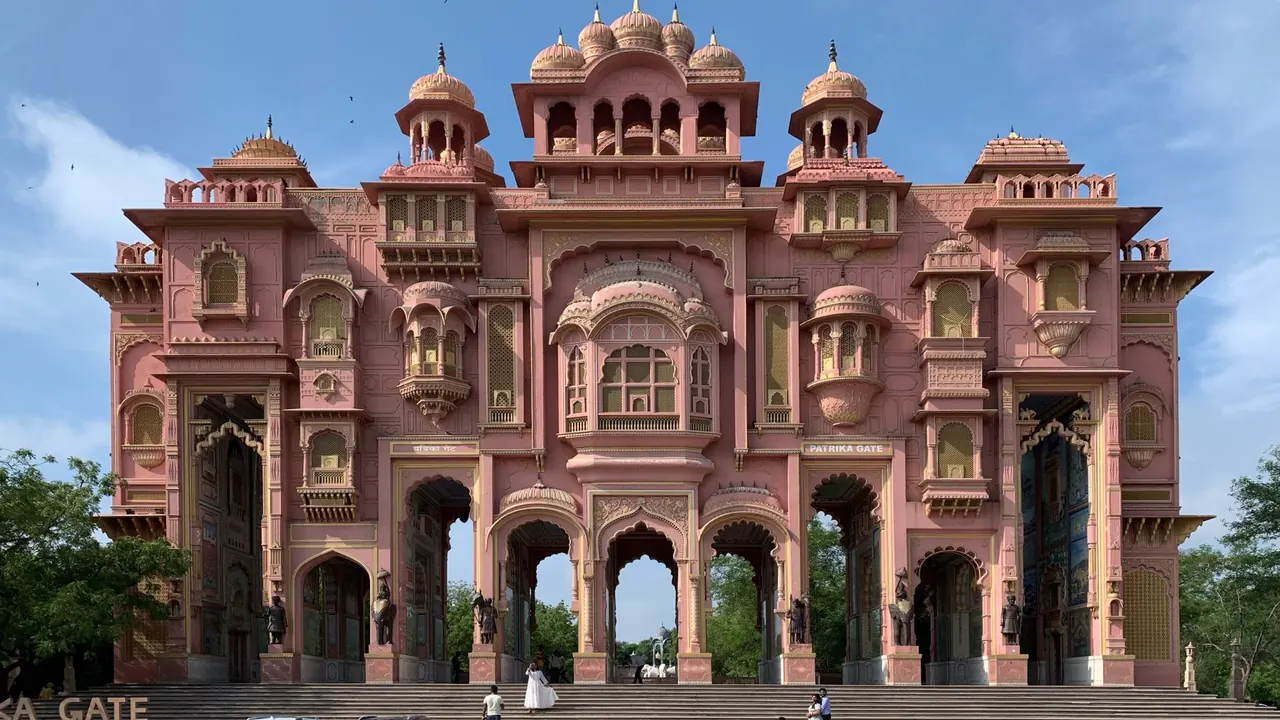
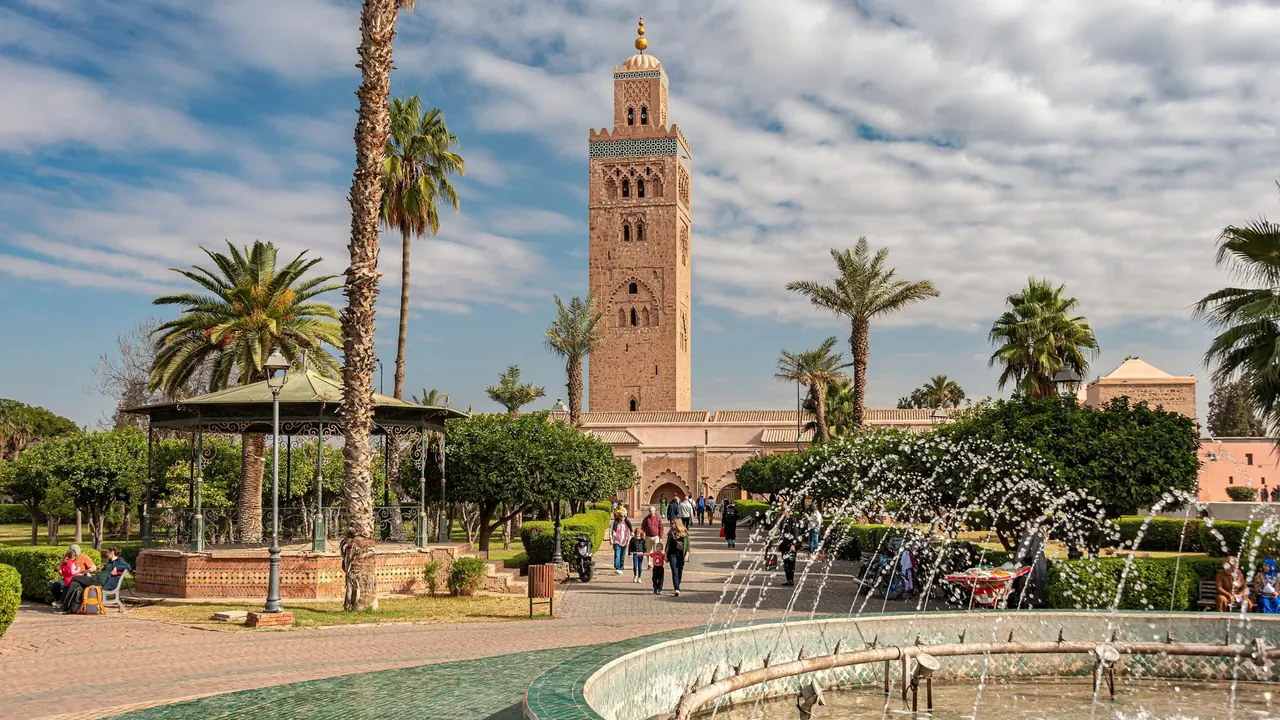
Photos: Jaipur by Chainwit., CC BY-SA 4.0, cropped; Marrakech by Jorge Franganillo, CC BY 2.0, cropped.
Jaipur or Marrakech?
Our verdict in twelve categories, each scored against the same fixed benchmark cities, and the climate month by month, so you can choose for your trip.
Choose Jaipur for
- day trips
- prices
- live music and the arts
Jaipur suits travellers who want forts, palaces and craft bazaars on a modest budget, and who don't mind long days on the road. The Abhaneri stepwell, Pushkar and even the Taj Mahal at Agra can all be done from here. It is the cheaper of the two, and folk music and puppet shows are easier to find. The trade-off is quiet evenings and a city that offers little rest outside the hotel.
Choose Marrakech for
- wellness
- nature and the outdoors
- nightlife
Choose Marrakech for a trip that combines the medina with the High Atlas and the Agafay desert, at a slower pace between sights. Hammams and courtyard riads make rest part of every day, and the mountains are an easy drive away. The trade-off is that Morocco's other famous towns need overnight stays rather than day outings.
Scoreboard
Twelve categories on one fixed scale from 0 to 100. The shaded stretch is the gap between the two.
Your match
Pick a travel style or drag the sliders, and both match scores follow your weighting.
Wins on day trips and prices with your weighting.
Wins on wellness and nature and the outdoors with your weighting.
What matters to you?
Category by category
What the scores mean for a trip.
Beaches & swimming
Neither city is a place for the sea. Both lie far inland, so in either one swimming means a hotel pool or the plunge pool of a riad, and that pool matters most in the hot months. Marrakech can at least reach open water, with a lakeside afternoon at Lalla Takerkoust about 40km away or the windy Atlantic beaches at Essaouira on a long day out. Jaipur has nothing beyond the pool.
Food & drink
Both cities are strong on their own regional cooking rather than on variety. Jaipur's food leans vegetarian and spicy, from dal baati churma and ker sangri to the fiery laal maas. Breakfast is kachori and lassi from street stalls around Johari Bazaar and MI Road, and the sweet shops are a reason to visit in themselves.
Marrakech is about slow cooking and the evening scene: tagines, tanjia cooked in the embers of a hammam furnace, and the grill stalls of Jemaa el-Fna at dusk. Its menus start to repeat sooner, and the best meals tend to be home cooking in riads. In both cities, alcohol is served mostly in hotels and licensed places.
Culture & sights
Both are walled historic cities with UNESCO listings, and each fills two or three days, but the sights are of a different kind. Jaipur's are grand monuments spread over a wide area: the planned grid of the Pink City, the City Palace, the giant stone instruments of Jantar Mantar, then Amber Fort and Nahargarh on the ridges above. You need transport to link them.
In Marrakech the medina itself is the main sight, with its lanes, carved doorways and fountains. The Bahia Palace, the Ben Youssef Madrasa and the Saadian Tombs are all within walking distance, and the Jardin Majorelle adds a twentieth-century chapter. Jaipur has more big sights, while Marrakech has more atmosphere at street level.
Nightlife
Marrakech has more to do once dinner is over, though a long night out is not really the point of either city. In Jaipur the evening usually ends after a rooftop dinner facing the lit-up forts. Drinking is limited to hotel bars, a few rooftop lounges in the old city and a small club scene in C-Scheme, which gets busier mainly at weekends and in the wedding season.
Evenings in Marrakech begin in the crowds of Jemaa el-Fna, where just walking the square after dark is an outing in itself. If you want to carry on, the lounge bars and DJ clubs of Hivernage and Gueliz in the new town stay open late. A sunset cocktail on a medina rooftop suits the city better than a night of bar-hopping.
Nature & outdoors
Marrakech is much the stronger of the two outdoors. The High Atlas is within an hour and a half, with walks in the Ourika valley, village trails from Imlil, the climb of Toubkal and winter skiing at Oukaimeden. The stony Agafay desert is even closer, for camel rides and nights under clear skies.
Jaipur's landscape is lower and drier: the Aravalli hills, the view from Nahargarh and the birdlife at Sambhar. Its one standout is the leopard safari at Jhalana on the edge of the city, which Marrakech has nothing to match. For walking and scenery, though, the Moroccan city is far ahead.
Day trips
Jaipur is the better base for visiting other places. Abhaneri's stepwell, the painted palace at Samode, the ruins of Bhangarh and the block-printing villages of Sanganer and Bagru are all easy outings. Pushkar, Ajmer and the Taj Mahal at Agra can each be done in a long day.
Trips from Marrakech mostly head into the mountains and desert rather than to other towns. Essaouira is a long day and better with a night there, and Ait Benhaddou needs an overnight stay. Closer to the city there is little besides the village souks at Asni and Amizmiz and the old mosque at Tinmel.
Good for families
Crowds, persistent sellers and heat make each of these cities hard work with children. In both, families do best in the cooler months with a pool at the hotel, and older children enjoy them more than young ones.
What appeals to children differs. Jaipur has forts with ramparts and secret passages, puppet shows and a jeep safari at Jhalana. Marrakech has camel rides in the palm grove, a water park and the snake charmers and acrobats of Jemaa el-Fna, and a riad with a plunge pool makes a calm, enclosed base.
Getting around
Marrakech is the easier of the two to get around, mainly because its medina is compact enough to walk. The unnamed alleys mean you will get lost now and then, and you share the lanes with motorbikes and carts. Petit taxis cover the hop to Gueliz and Majorelle, though you often need to agree the fare first.
Jaipur's sights are much more spread out, from the Pink City to Amber about 11km north. Most visitors use auto-rickshaws, ride-hailing taxis or a car with driver. The short metro line misses most of the sights, and traffic, cows and missing pavements make walking slow.
Shopping & style
Shopping is one of the main reasons to visit either city, and in both you bargain and put up with some pressure from sellers. Jaipur's strengths are gems and silver on Johari Bazaar, lac bangles, and textiles, above all the hand block-printed cottons of Sanganer and Bagru, along with blue pottery and rugs. Buy gems with care, because scams aimed at tourists are common.
Marrakech is the place for leather, babouches, lanterns, carpets and argan oil, sold in souks grouped by trade north of Jemaa el-Fna. The design showrooms of Sidi Ghanem suit anyone furnishing a home. Both cities also have boutiques in their newer districts, C-Scheme and Gueliz, that give local crafts a modern cut.
Affordability
Your money goes further in Jaipur. Street food, thalis, rickshaw rides and simple guesthouses cost very little, and even a car with driver for the day is cheap, so a comfortable trip need not be expensive.
Marrakech is cheap by European standards but costs more than Jaipur. It has a large luxury tier of boutique riads and smart restaurants, and what you pay in the souks depends on how patiently you bargain. In both cities alcohol is the one thing that feels expensive.
Live music & performing arts
Jaipur has a little more to go and see. Kathak, Kalbeliya dance and string puppetry are easy to find, though usually as evening shows in hotels and cultural villages. Jawahar Kala Kendra and Ravindra Manch also stage classical music, dance and theatre.
In Marrakech, most performance is free and outdoors. Each evening Jemaa el-Fna fills with gnawa musicians, drummers and storytellers, a tradition that UNESCO lists as intangible heritage. Beyond the square there is little to attend apart from dinner shows aimed at tourists.
Wellness & relaxation
Marrakech is by far the better place to slow down. The hammam is part of daily life, from neighbourhood steam baths with black soap and a kessa glove to marble spas offering argan oil massages. Back at a riad, the courtyard with its fountain and orange trees shuts out the noise of the lanes.
Jaipur has no bathing tradition, and rest depends on where you stay. Havelis and palace hotels offer shaded courtyards, pools, Ayurvedic massage and yoga, but the city itself is a place of early starts and long sightseeing days.
When should you go?
Pick your month. The climate figures are measured averages, not a forecast.
Jaipur in July
Marrakech in July
Daytime high, °C
Rainfall in the month, mm
Where the figures come from
Jaipur has no rain gauge within 25 km of the centre, so its rainfall comes from a gridded climate dataset read at the city rather than from a gauge further away.
Temperature and rainfall are climate normals, averaged over the years shown. Jaipur: 1993-2020 (rainfall 1991-2020) normals, Jaipur / Sanganer (11.1 km from centre). Marrakech: 1991-2020 normals, Marrakech (5.1 km from centre).
Jaipur has a short, clear best season from November to February. The days are dry and pleasantly warm, around 23°C in January, so walking the bazaars and climbing to Amber is comfortable. From April to June the heat builds to about 42°C, which leaves only early mornings and evenings for sightseeing. The monsoon follows from July to September, and August is the wettest month at about 226mm.
Marrakech is comfortable for more of the year. Spring from March to May and autumn in October and November bring warm, sunny days for the medina and the Atlas. Winter is mild at around 19°C with light rain, and summer is long, sunny and almost dry, reaching 38°C in July. Neither city has a beach season at any time of year, so swimming means a pool in either place.
Which traveller are you?
For a relaxing and wellness trip, Marrakech is the clear choice. Its hammams, from neighbourhood steam baths to marble spas, and its inward-facing riads around quiet courtyards make rest part of every day. In Jaipur, calm depends entirely on your hotel.
On an outdoors trip, Marrakech is again the better pick. Village walks from Imlil, the Ourika valley, the climb of Toubkal and the Agafay desert are all close by. Jaipur has the leopard safari at Jhalana but little country for walking.
On a trip on a tight budget, Jaipur gives you more for your money. Street breakfasts, vegetarian thalis, rickshaw rides and simple guesthouses cost very little. A car with driver is cheap enough that day trips to Abhaneri or Pushkar stay within reach.
Before you go
| Measure | Jaipur | Marrakech |
|---|---|---|
| Official language | Hindi, English | Arabic, Standard Moroccan Tamazight |
| Currency | Indian Rupee (INR) | Moroccan Dirham (MAD) |
| Sockets | CM230 V, 50 Hz | CE50 Hz |
| Driving side | Left | Right |
| Time zone | UTC+5:30 | UTC+1 |
| Emergency number | 108 or 112 | Police 19/112, ambulance 15, fire 15 |
| Elevation | 431 m | 465 m |
| Main airport | Jaipur International Airport (JAI)10 km from centre27 non-stop destinations | Marrakesh Menara Airport (RAK)6 km from centre113 non-stop destinations |
| Public holidays this year | - | 11 days |
By the numbers
| Measure | Jaipur | Marrakech |
|---|---|---|
| City population | 3,073,350 | 1,002,697 |
| People per km² | - | 4,360 |
| Museums within 10 km | 6 | 14 |
| UNESCO World Heritage sites within 50 km | 3 | 1 |
Where else could you go?
Every comparison below shares a destination with this one, so you can follow Jaipur or Marrakech somewhere new.