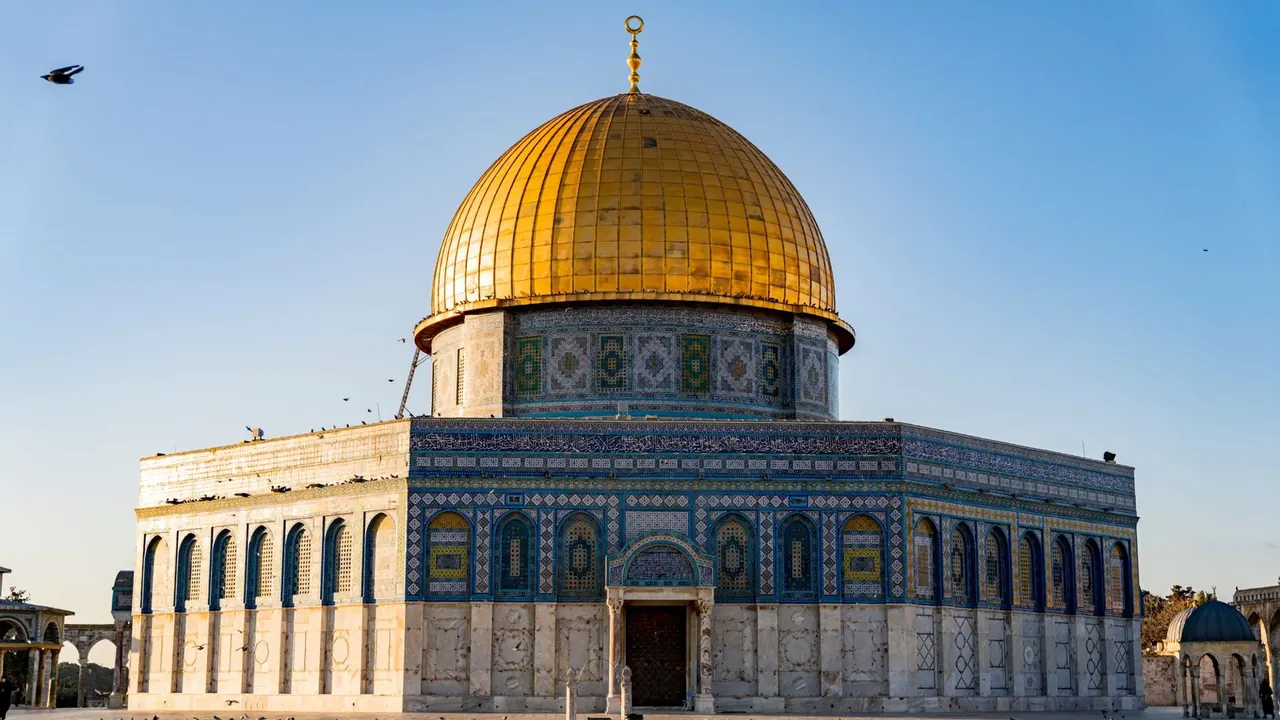
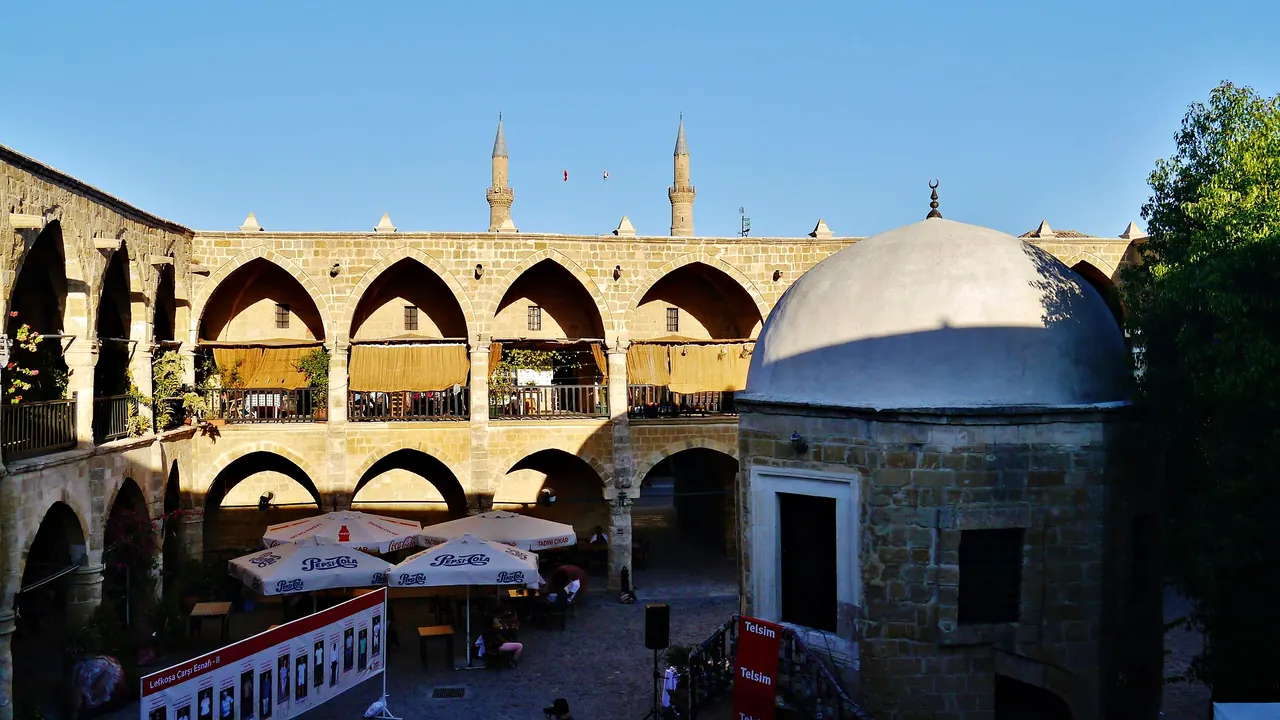
Photos: Jerusalem by Yasir Gürbüz, Pexels License; Nicosia by Zairon, CC BY-SA 4.0, cropped.
Jerusalem or Nicosia?
Our verdict in twelve categories, each scored against the same fixed benchmark cities, and the climate month by month, so you can choose for your trip.
Choose Jerusalem for
- culture and sights
- families
- getting around
Jerusalem is for a traveller who wants history and faith at full strength. The Old City, the Israel Museum and Yad Vashem give it a depth few places can match. The light rail and the fast train mean you can manage without a car, and Masada, Bethlehem and Tel Aviv are all close. It suits a trip planned around sights rather than a budget, as long as you plan around the weekly Shabbat pause.
Choose Nicosia for
- prices
- nightlife
Nicosia makes more sense if you want a slower, cheaper few days in a divided capital, eating meze in the old town and walking across the Green Line between its two halves. Its sights are smaller in scale, but meals cost far less, and with a hire car the rest of the island, from Kyrenia to the painted churches of the Troodos, is within reach for day trips.
Scoreboard
Twelve categories on one fixed scale from 0 to 100. The shaded stretch is the gap between the two.
Your match
Pick a travel style or drag the sliders, and both match scores follow your weighting.
Wins on culture and sights and families with your weighting.
Wins on prices and nightlife with your weighting.
What matters to you?
Category by category
What the scores mean for a trip.
Beaches & swimming
Neither city has a beach of its own, and from either one the sea is a full day out. From Jerusalem the fast train makes Tel Aviv's long sandy shore easy to reach without a car. The Dead Sea adds something different: you float on very salty water off a rocky shore.
Nicosia's beaches at Larnaca or around Kyrenia are a little closer by road, but in practice you need a car, and there is nothing like the Dead Sea to compare. In late summer the water is about equally warm on both coasts.
Food & drink
Jerusalem has more variety. Mahane Yehuda is a market by day and a place for grills and drinks at night. The city's Arab cooking, with its hummus and knafeh, sits beside Kurdish, Iraqi and Yemenite Jewish dishes. Plan around kosher menus and the Friday-to-Saturday closures in the west.
Nicosia offers less choice but does its own food well: long meze evenings in the old town lanes, souvla from the grill, and Turkish Cypriot kebabs and pastries a short walk across the Green Line. Beyond Cypriot cooking the choice thins out quickly.
Culture & sights
This is where the two cities differ most. Jerusalem's Old City holds the Western Wall, the Church of the Holy Sepulchre and the Dome of the Rock within one square kilometre, with excavations underneath that go back to the Bronze Age. The Israel Museum and Yad Vashem would each be worth the journey on their own, and the city needs several days.
Nicosia is rewarding on a smaller scale: its ring of Venetian walls, the antiquities in the Cyprus Museum, and the Selimiye Mosque, a Gothic cathedral with minarets added, just across the Green Line. Two or three days cover it well, but none of its sights has the international weight of Jerusalem's holy places.
Nightlife
Neither city is a place for a big night out, and in both the serious clubbing happens elsewhere, in Tel Aviv or on the Cypriot coast. Jerusalem's evenings revolve around the Mahane Yehuda stalls, which turn into bars after dark, and the pubs around Nahalat Shiva. Much of the west is quiet on Friday nights for Shabbat.
In Nicosia, going out mostly means drinking late on the pavement. The bars around Faneromeni Square only fill up towards midnight, and warm summer nights outdoors are the best part of it.
Nature & outdoors
Jerusalem has the edge if you like contrast. The pine-covered Judean Hills lie to the west and the Wadi Qelt canyon and the desert to the east. The waterfalls of Ein Gedi and the dawn climb to Masada are about an hour or so away.
Nicosia's own plain is flat and dry in summer, so the walking starts at the ridge trails of the Kyrenia range or in the Troodos. There, pine forest, cool summer air and peaks near 2,000m give Nicosia something Jerusalem lacks: real mountains, with snow on the top in winter.
Day trips
Both make excellent bases, but Jerusalem's day trips carry more weight. Bethlehem is just to the south, Masada and Qumran are by the Dead Sea, Tel Aviv and Jaffa are a short train ride away, and Caesarea, Acre and the Baha'i gardens in Haifa are about two hours out. Some West Bank sites mean a checkpoint, so a guide helps.
From Nicosia most of the small island is within reach, from Kyrenia harbour and Bellapais to Famagusta, Salamis and the painted churches of the Troodos. For most of these trips, though, you will need a hire car.
Good for families
Jerusalem is the better choice with children, mainly because it has places made for them: the Biblical Zoo, the aquarium beside it and the Bloomfield Science Museum. Older children also enjoy the ramparts and Hezekiah's Tunnel. The Old City's steps make a stroller useless, though.
Nicosia welcomes families and feels safe, but it has no zoo or aquarium of note, the beaches need a car, and the heat of July and August is hard on young children. It works better as a day out from a base on the coast.
Getting around
Jerusalem is easier to manage without a car. The light rail runs from the Old City walls out to Yad Vashem, buses cover the rest, and a fast train reaches Tel Aviv and the airport. Public transport stops completely for Shabbat, though, and the hills make for steep walking.
In Nicosia the walled old town is compact, and crossing to the north at Ledra Street takes only minutes. Outside the walls there is no rail and the buses are of little use to visitors, so most people hire a car. Traffic drives on the left.
Shopping & style
Jerusalem's shopping is more distinctive. The Old City souq sells olive wood, spices and embroidery, the Armenian Quarter has hand-painted ceramics, and the shops around Ben Yehuda Street sell Judaica in silver and glass. Mamilla has the familiar international brands.
Nicosia's shopping is more of an ordinary high street, with chain stores on Ledra Street and designer labels on Makarios Avenue. For local goods there is Lefkara lace at the Handicraft Centre, and spices and copperware in the Bandabulya market across the line. Neither city is a place to shop for fashion.
Affordability
Nicosia is clearly the cheaper of the two. A meze dinner or a souvla lunch fills you up for little, coffee is cheap and the northern half costs less again. The main extra cost is the hire car most visitors need.
Jerusalem is expensive by Mediterranean standards. Hotels cost a lot, especially during festivals and pilgrimage seasons, and restaurant meals and drinks are priced high. The free holy sites, cheap hummus and falafel, and meals in the Arab neighbourhoods help, but only up to a point.
Live music & performing arts
Both scenes are small and mostly local, and Jerusalem's is a little fuller. It has the Jerusalem Symphony Orchestra, the Jerusalem Theatre, the yearly Israel Festival and summer concerts at the Sultan's Pool below the walls, though most plays are in Hebrew.
Nicosia has the Cyprus Symphony Orchestra and theatre in Greek. For a visitor its strength is the informal music: rebetiko, folk and jazz in the old town bars, and open-air concerts in the moat in summer.
Wellness & relaxation
Jerusalem's calm mostly lies outside the city. An hour away at the Dead Sea there are mineral mud, sulphur pools and the dense, buoyant water. In town, the holy sites feel charged rather than restful, and the real pause comes each week when Shabbat empties the streets of West Jerusalem.
Nicosia's calm is part of everyday life in the old town: long coffee breaks in shaded squares, a quiet lull on summer afternoons, and steam and massage in Ottoman bathhouses such as the Omeriye Hammam. For a longer rest, the cool pine villages of the Troodos are close by.
When should you go?
Pick your month. The climate figures are measured averages, not a forecast.
Jerusalem in July
Nicosia in July
Daytime high, °C
Rainfall in the month, mm
Where the figures come from
Jerusalem has no rain gauge within 25 km of the centre, so its rainfall comes from a gridded climate dataset read at the city rather than from a gauge further away.
Nicosia's temperatures are measured 40 km from the centre, at Larnaca Airport.
Nicosia's station stands 218 m below the city centre, so the centre is likely a little cooler than the figures say.
Nicosia has no rain gauge within 25 km of the centre, so its rainfall comes from a gridded climate dataset read at the city rather than from a gauge further away.
Temperature and rainfall are climate normals, averaged over the years shown. Jerusalem: 1991-2020 (sunshine 1981-2010) normals, Jerusalem (1.8 km from centre). Nicosia: 1991-2020 normals, Larnaca Airport (40.4 km from centre).
The two climates differ most in winter. Jerusalem sits high in the hills, so its winters are cool and wet, with daytime highs around 12°C in January and about 109mm of rain that month. Nicosia's winter is milder and drier, which makes it the better of the two for walking around sights between December and February. Both are sunny for most of the year, and both are almost completely dry from June to September.
Summer turns the comparison around. On the open plain Nicosia reaches 33°C in July and August, too hot for walking in the middle of the day, while Jerusalem stays a few degrees cooler. For both cities the nearest sea is a day trip away, and on both coasts the water is warm enough to swim from late spring, reaching about 28°C in August and staying pleasant into October. April, May and October are the best months for sightseeing in both.
Which traveller are you?
For a culture and arts trip, Jerusalem is the clear choice. Three faiths and three thousand years of history fill a week without repeating themselves, and a summer concert below the walls rounds off a day of sights. Nicosia's two halves make a fine long weekend, but little more.
On a trip on a tight budget, Nicosia lets you eat out properly every night and see its museums for little, as long as you stay on foot inside the walls. Jerusalem's holy sites cost nothing, but the hotel bill soon cancels that out.
On a family trip with young children, Jerusalem gives them days of their own between the holy sites, and older ones never forget floating in the Dead Sea. Plan the Shabbat day ahead. In Nicosia children are welcome at late taverna tables, but little is built for them.
Before you go
| Measure | Jerusalem | Nicosia |
|---|---|---|
| Official language | Hebrew | Turkish, Greek, Modern Greek |
| Currency | New Israeli Sheqel (ILS) | Euro (EUR) |
| Sockets | CHM230 V, 50 Hz | G240 V, 50 Hz |
| Driving side | Right | Left |
| Time zone | UTC+2, UTC+3 in summer | UTC+2, UTC+3 in summer |
| Emergency number | Police 100, fire 102 | 112 |
| Elevation | 754 m | 220 m |
| Main airport | Ben Gurion International Airport (TLV)42 km from centre111 non-stop destinations | Larnaca International Airport (LCA)41 km from centre112 non-stop destinations |
| Public holidays this year | - | 17 days |
By the numbers
| Measure | Jerusalem | Nicosia |
|---|---|---|
| City population | 1,050,151 | 56,848 |
| People per km² | 8,374 | 1,112 |
| Museums within 10 km | 69 | 19 |
| UNESCO World Heritage sites within 50 km | 7 | 2 |
| Swim season, months above 21 °C | 7 months | 6 months |
Where else could you go?
Every comparison below shares a destination with this one, so you can follow Jerusalem or Nicosia somewhere new.
- Larnacavs Nicosia
- Tel Avivvs Jerusalem
- Limassolvs Nicosia
- Ammanvs Jerusalem
- Paphosvs Nicosia
- Petravs Jerusalem