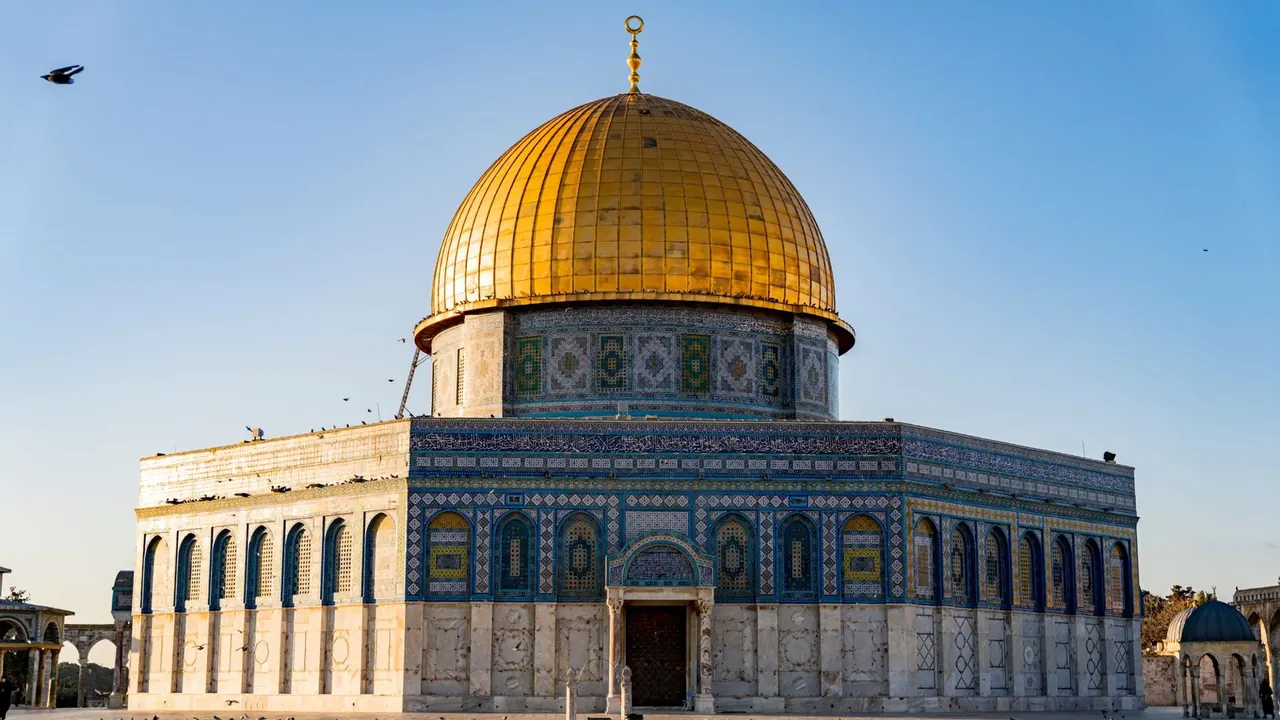
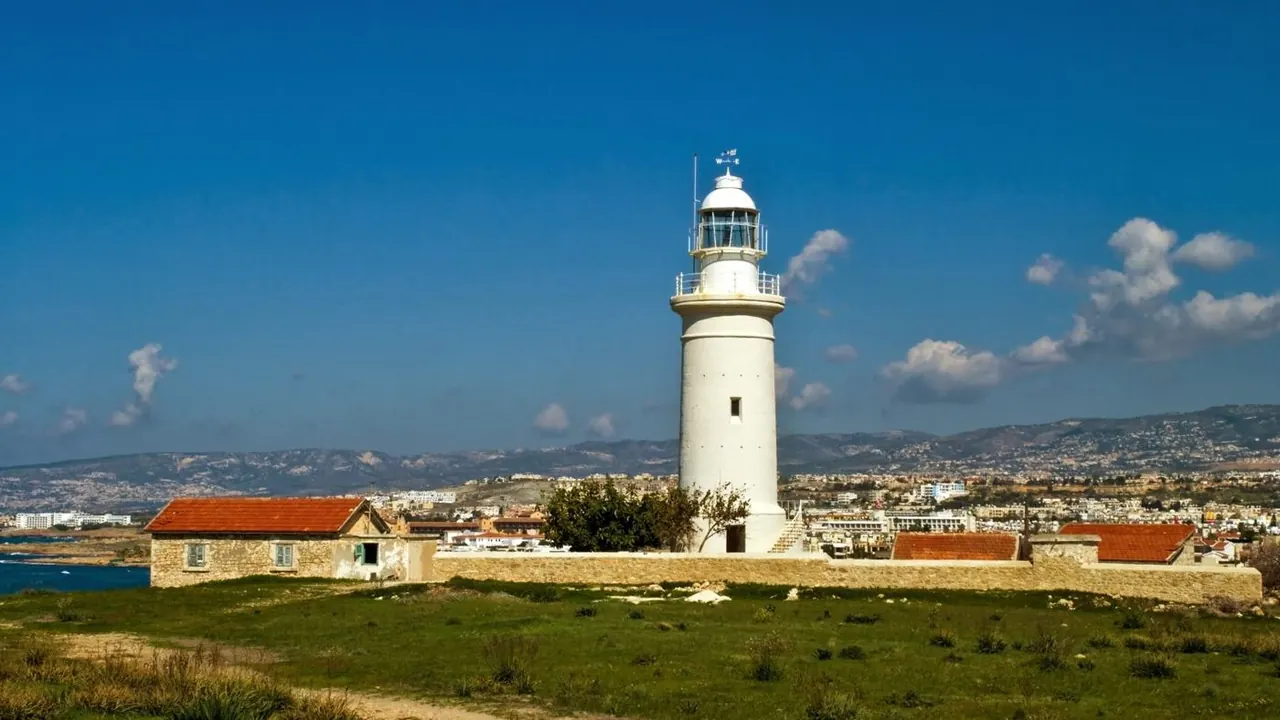
Photos: Jerusalem by Yasir Gürbüz, Pexels License; Paphos by Nikodem Nijaki, CC BY-SA 3.0, cropped.
Jerusalem or Paphos?
Our verdict in twelve categories, each scored against the same fixed benchmark cities, and the climate month by month, so you can choose for your trip.
Choose Jerusalem for
- culture and sights
- shopping
- food and drink
Jerusalem is the choice for a trip built around history, faith and ideas. The walled Old City, the Israel Museum and Yad Vashem give several days of serious sightseeing, Mahane Yehuda feeds you well, and Bethlehem, Masada and the Dead Sea are all within a day's reach. Expect high costs, steep stone lanes and a city that asks for your attention rather than letting you rest.
Choose Paphos for
- beaches
- prices
- families
For a slower week of sea, sun and easy evenings, Paphos makes more sense. Coral Bay and the Akamas coast give proper beach days, the Roman mosaics fill a morning or two, and resort hotels with pools make life simple with children. It is easier on the wallet than Jerusalem, though you will almost certainly want a hire car.
Scoreboard
Twelve categories on one fixed scale from 0 to 100. The shaded stretch is the gap between the two.
Your match
Pick a travel style or drag the sliders, and both match scores follow your weighting.
Wins on culture and sights and shopping with your weighting.
Wins on beaches and prices with your weighting.
What matters to you?
Category by category
What the scores mean for a trip.
Beaches & swimming
There is no swimming in Jerusalem itself. The choice is between Tel Aviv's long sandy beaches, about an hour away door to door, and the Dead Sea, where you float off a rocky, salt-crusted shore. Both are excursions that take a whole day.
Paphos is built around the sea. The town beaches are only short strips of sand and shingle with rocky entries, but Coral Bay, about 13km north, is a proper sandy crescent with shallow water, and Lara Bay offers an undeveloped coast. You can be in the water before breakfast, which Jerusalem can never offer.
Food & drink
Jerusalem eats far more interestingly. Mahane Yehuda goes from spice and halva stalls by day to grills after dark, the Old City has morning hummus counters and ka'ak carts, and Kurdish, Iraqi and Yemenite Jewish cooking adds a further layer. Kosher menus and the Shabbat closures in the west take some planning.
Paphos has one strong suit, the Cypriot meze, with halloumi, kleftiko and charcoal grills best eaten in Ktima or the hill villages with a Laona wine. Down on the harbour and resort strip, much of the food is pitched at package tourists.
Culture & sights
Jerusalem's history is stacked in layers on one ridge and still in daily use. The Western Wall runs along the foot of the Temple Mount with the Dome of the Rock above it, the Holy Sepulchre stands a few lanes away in the Christian Quarter, and the City of David and the tunnels go down to the Bronze Age. Outside the walls, the Israel Museum and the churches and tombs of the Mount of Olives would each be the main sight in most other cities, so sightseeing sets the shape of the whole trip.
Paphos has one compact ancient site, but it is a very good one. The Roman mosaics of the House of Dionysus and the sunken Hellenistic Tombs of the Kings lie close together along the shore of Kato Paphos, so they fit easily between mornings at the beach. These are quiet ruins next to a modern resort, not a working holy city, and once you leave them the town has little more to show you.
Nightlife
Neither is a place for a big night out, but the evenings differ. Jerusalem's are low-key and run all year: market stalls in Mahane Yehuda turn into bars, there are pubs around Nahalat Shiva, and students keep a few spots going on weeknights. Friday nights go quiet, and anyone wanting clubs takes the train to Tel Aviv.
Paphos packs its going out into Bar Street, with karaoke, pubs and a few late clubs suited to groups in summer. From November to March most of it closes.
Nature & outdoors
Paphos has more outdoors on its doorstep. The roadless Akamas peninsula, the limestone walls of Avakas Gorge, mouflon in the Paphos Forest and pine trails in the Troodos make for varied walking, and the sea adds wreck diving, snorkelling and kayaking.
Jerusalem's appeal is the contrast between the green terraces of the Judean Hills around Sataf and the desert falling east to Wadi Qelt, Ein Gedi and a dawn climb to Masada. There is no water sport, and summer limits the desert to sunrise.
Day trips
From Jerusalem, the day trips are famous names in their own right: Bethlehem just south, Masada with Qumran, Jericho, old Jaffa by train, and Caesarea, Acre and the Baha'i gardens in Haifa further out. Some West Bank sites involve a checkpoint, so a guide helps.
Paphos gives you a pleasant run along the coast to Kouklia, cliff-top Kourion and Limassol, plus the painted Byzantine churches of the Troodos and divided Nicosia. These make good outings but are less remarkable, and nearly all of them need a car.
Good for families
Children are warmly received in Jerusalem, and the Biblical Zoo, the aquarium and the Bloomfield Science Museum are good for a day or two. Older children will enjoy wading through Hezekiah's Tunnel. Still, the solemn holy sites and stepped lanes, where a stroller is useless, make it a city for adults.
Paphos is far easier with children. Coral Bay's shallow water, hotels with kids' clubs, a water park and a flat promenade for pushchairs set up a relaxed family week, though the heat and the need for a car remain.
Getting around
Jerusalem is easier without a car. The Old City, Jaffa Road and the market are within walking distance of each other, a light rail line runs out to Yad Vashem, and a fast train reaches Tel Aviv and the airport. Everything stops for Shabbat, though, and the hills and stone steps tire the legs.
In Paphos, the promenade in Kato Paphos is flat and easy, but hotels stretch along the coast and buses don't reach most villages or gorges. Most visitors hire a car and drive on the left.
Shopping & style
Jerusalem offers more to buy and more character in the buying. You can haggle in the Old City souq for olive wood and embroidery, find hand-painted ceramics in the Armenian Quarter and silver Judaica near Ben Yehuda Street, and browse the brands along Mamilla.
Paphos has little beyond the covered market in Ktima and beachwear on the seafront. The best finds are lace, pottery, honey and carob products bought in the villages where they are made.
Affordability
Jerusalem is the dearer of the two by a clear margin. Hotels, restaurant meals and drinks are all expensive, and only the free holy sites, the cheap transport and the hummus and falafel lunches keep costs down.
Paphos is priced like an ordinary eurozone resort. Its meze dinners give plenty of food for the money, and the shoulder and winter months are noticeably cheaper. July hotel rates and car hire are what push up the bill.
Live music & performing arts
Jerusalem has the steadier programme. Its symphony orchestra and the Jerusalem Theatre perform through the year, the Israel Festival brings dance and music, and summer concerts are held in the Sultan's Pool below the walls. Most drama is in Hebrew, though.
In Paphos, a normal evening's entertainment is folk dancing at a taverna. The one event to plan around is the open-air Aphrodite Festival opera, staged in front of the harbour castle in early autumn.
Wellness & relaxation
Both are about equal for rest, but in different ways. In Jerusalem, wellness means a day trip to the Dead Sea for mud, sulphur pools and floating. Within the city, the calm comes from the weekly hush of Shabbat and the quiet gardens on the Mount of Olives.
Paphos has hotel spas, and it is restful in its everyday pace: promenade strolls, long lunches and sleepy inland villages, all at their best once the summer crowds have left.
When should you go?
Pick your month. The climate figures are measured averages, not a forecast.
Jerusalem in July
Paphos in July
Daytime high, °C
Rainfall in the month, mm
Where the figures come from
Jerusalem has no rain gauge within 25 km of the centre, so its rainfall comes from a gridded climate dataset read at the city rather than from a gauge further away.
Paphos has no rain gauge within 25 km of the centre, so its rainfall comes from a gridded climate dataset read at the city rather than from a gauge further away.
Temperature and rainfall are climate normals, averaged over the years shown. Jerusalem: 1991-2020 normals, Jerusalem (1.8 km from centre). Paphos: 1991-2020 normals, Paphos Airport (8.4 km from centre).
Jerusalem stands high in the hills, so its winters are cool and wet: January tops out around 12°C, with about 110mm of rain. April, May and October are the best months for walking the Old City. From June to September not a drop falls, but afternoons run past 30°C and sightseeing is best done early. The Mediterranean coast an hour away is warm enough to swim from late spring into autumn.
Paphos has the milder winter, with days near 17°C, so December to February suit walkers and ruin-hunters who don't mind some heavy rain. The beach season runs from June to October, when the sea reaches 28°C, and the water stays swimmable into November. Both places peak at about 31°C in August, when hiking and long days on foot become hard going.
Which traveller are you?
On a beach and sun trip, Paphos is the obvious pick. The sandy crescent of Coral Bay and the wild shore at Lara Bay are a short ride away, whereas from Jerusalem reaching the Mediterranean means a train to Tel Aviv and a full day out.
For a culture and arts trip, Jerusalem is in another league. The Old City's four quarters, the excavations beneath them, the Dead Sea Scrolls and Yad Vashem fill several days, while the mosaics and tombs of Paphos are covered in two or three.
On a trip with a tight budget, Paphos stretches money further. Meze in village tavernas is generous, the buses and ancient sites are cheap and the off-season is clearly cheaper, while Jerusalem's hotels and sit-down meals add up quickly even with falafel lunches.
Before you go
| Measure | Jerusalem | Paphos |
|---|---|---|
| Official language | Hebrew | Turkish, Greek, Modern Greek |
| Currency | New Israeli Sheqel (ILS) | Euro (EUR) |
| Sockets | CHM230 V, 50 Hz | G240 V, 50 Hz |
| Driving side | Right | Left |
| Time zone | UTC+2, UTC+3 in summer | UTC+2, UTC+3 in summer |
| Emergency number | Police 100, fire 102 | 112 |
| Elevation | 754 m | 72 m |
| Main airport | Ben Gurion International Airport (TLV)42 km from centre111 non-stop destinations | Paphos International Airport (PFO)8 km from centre58 non-stop destinations |
| Public holidays this year | - | 17 days |
By the numbers
| Measure | Jerusalem | Paphos |
|---|---|---|
| City population | 1,050,151 | 35,961 |
| People per km² | 8,374 | 1,987 |
| Museums within 10 km | 69 | 4 |
| UNESCO World Heritage sites within 50 km | 7 | 2 |
| Swim season, months above 21 °C | 7 months | 6 months |
Where else could you go?
Every comparison below shares a destination with this one, so you can follow Jerusalem or Paphos somewhere new.