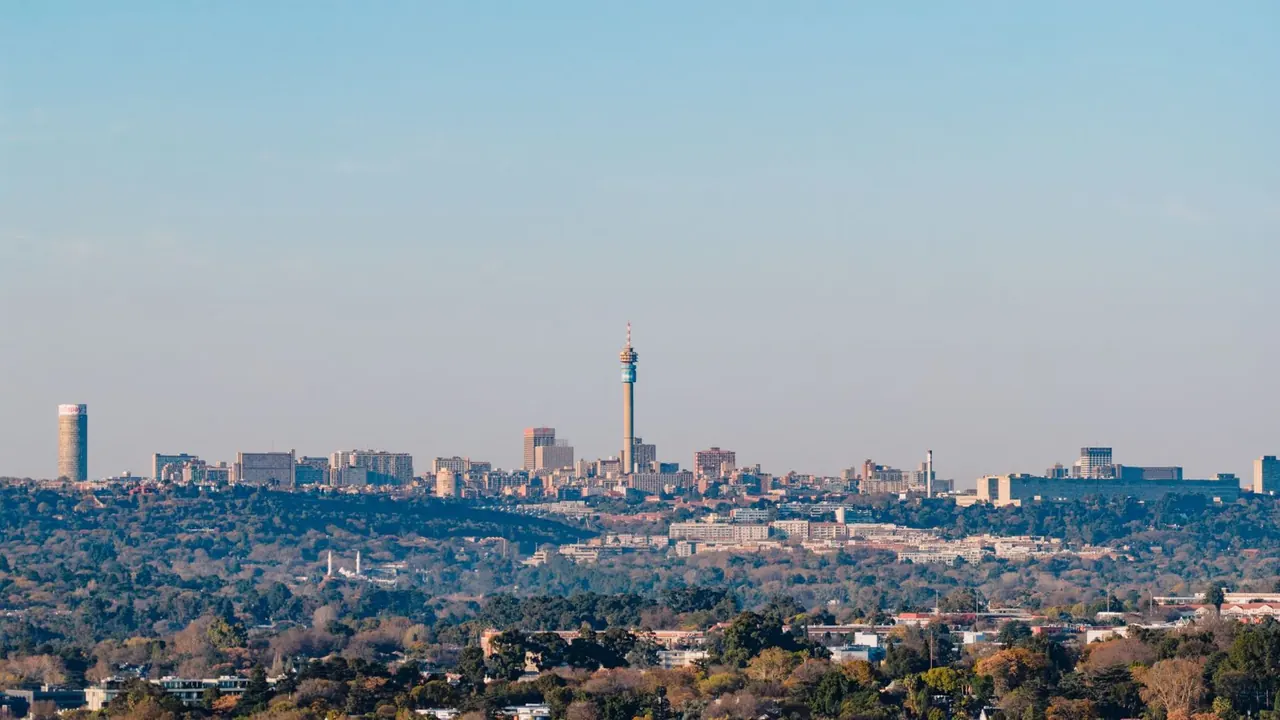
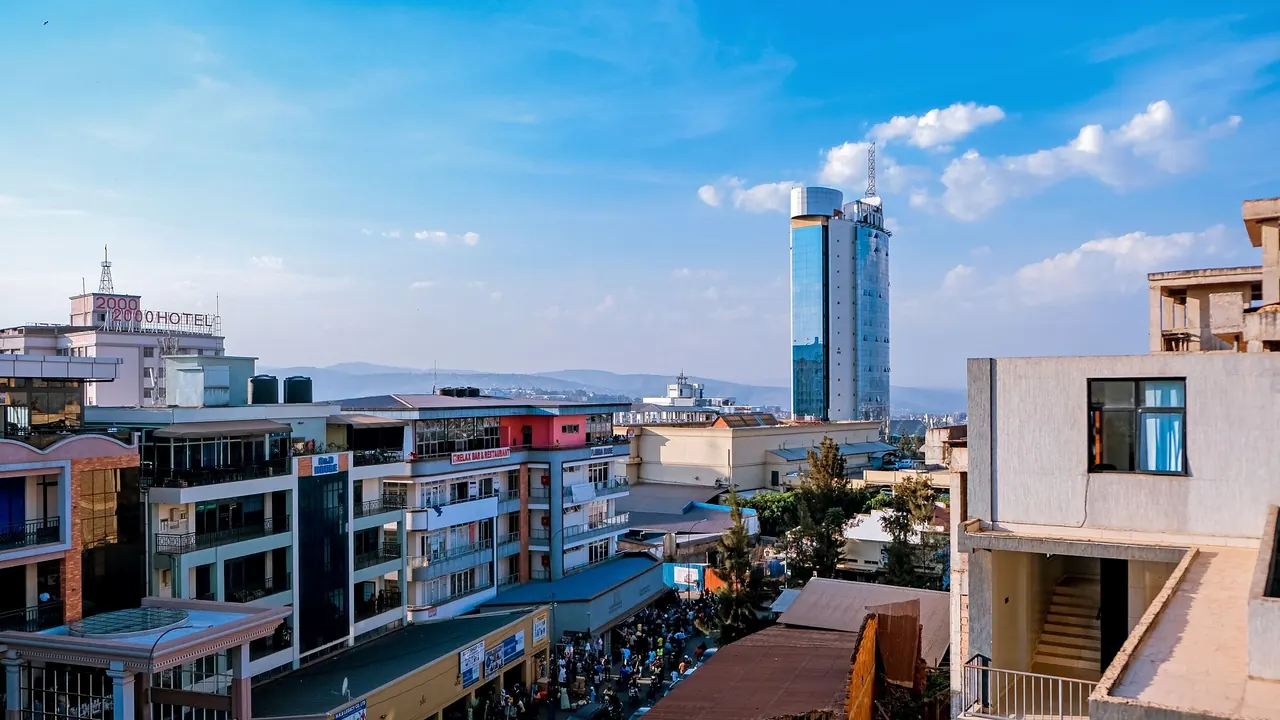
Photos: Johannesburg by K, Pexels License; Kigali by Jax pexels, Pexels License.
Johannesburg or Kigali?
Our verdict in twelve categories, each scored against the same fixed benchmark cities, and the climate month by month, so you can choose for your trip.
Choose Johannesburg for
- live music and the arts
- shopping
- culture and sights
Johannesburg suits travellers who want a big city with plenty to fill both days and nights. You get the Apartheid Museum and Soweto, the Market Theatre and the jazz clubs, shisa nyama grills, Sandton's malls and amapiano dance floors that run late. In return you will do almost everything by car or ride-hailing app, but a longer stay pays off, and the city pairs well with Pilanesberg or the Cradle of Humankind.
Choose Kigali for
- getting around
- wellness
- beaches
If you want a calmer, smaller trip, Kigali is the easier choice. Its clean, orderly streets and green ridges make a gentle base, and the Genocide Memorial gives a visit its weight. Two or three days cover the sights before most people head out to Akagera or the gorilla volcanoes. There is less to eat, see and do in the city itself, but getting about is far simpler.
Scoreboard
Twelve categories on one fixed scale from 0 to 100. The shaded stretch is the gap between the two.
Your match
Pick a travel style or drag the sliders, and both match scores follow your weighting.
Wins on live music and the arts and shopping with your weighting.
Wins on getting around and wellness with your weighting.
What matters to you?
Category by category
What the scores mean for a trip.
Beaches & swimming
Neither city is a beach destination. The difference is where the water lies. From Johannesburg, the nearest swimming outside a pool is at the dams around Hartbeespoort, and the coast needs a flight. From Kigali you can reach Lake Muhazi in about an hour for lunch by the water, and Lake Kivu at Rubavu has real lake beaches about three hours away, best done with a night's stay.
Food & drink
Johannesburg gives you much more to eat. There is meat grilled to order at Soweto shisa nyamas, bunny chow and kotas on the street, Indian and Middle Eastern cooking in Fordsburg, and Portuguese peri-peri. The northern suburbs add fine dining and Cape wines, though reaching them usually means a drive.
Kigali's table is simpler: lunchtime buffets of beans, plantain and isombe, then goat brochettes with cold beer on open-air terraces in the evening. Its real strength is highland coffee, brewed with care in Kiyovu and Kacyiru, and the diplomatic community supports a decent spread of Indian, Ethiopian and Italian kitchens.
Culture & sights
Both are young cities with no old town, and both are defined by recent history. Johannesburg tells that story with more depth and range. The Apartheid Museum, Constitution Hill and Vilakazi Street in Soweto make up several days of serious visiting, and the Origins Centre and the Art Deco inner city add more.
In Kigali, the Genocide Memorial in Gisozi is the one essential visit, and it is deeply affecting. The Campaign Against Genocide Museum, Kandt House and the contemporary galleries of Kacyiru and Kimihurura round it out, but the list ends sooner.
Nightlife
Johannesburg goes out harder and later. South African house and amapiano fill Sandton's clubs and the Soweto afternoon sessions that run into the night, with student rooftops in Braamfontein and the bars of Melville's 7th Street in between. The price is planning every ride, because the scenes are spread out and nobody walks between them after dark.
Kigali is more orderly and comes alive mainly at weekends. Evenings begin with brochettes and beer or a rooftop drink above the lit hills. On Fridays and Saturdays the clubs in Kimihurura and Nyarutarama play Afrobeats and Congolese rumba well past midnight, but weeknights are quiet.
Nature & outdoors
The two are evenly matched, but the outdoors feels different in each. Johannesburg sits on open Highveld grassland with a dry, sunny winter. Black eagles nest in the Walter Sisulu Botanical Garden, the Magaliesberg hills an hour away offer ballooning and kloofing, and Pilanesberg's volcanic crater holds lions, elephants and rhino.
Kigali is greener and hillier, and the city itself is part of the outing: you can climb Mount Kigali or follow the boardwalks of the Nyandungu wetland. Akagera works as a long day's safari, and the gorilla volcanoes are its rarer prize, though the long rains turn the trails muddy.
Day trips
Johannesburg has the longer list of day trips. Pretoria's Union Buildings and Voortrekker Monument are an easy Gautrain ride away, and the Cradle of Humankind's Sterkfontein Caves are about an hour out. Cullinan's diamond mine and Sun City make two more days out.
Kigali's day trips are fewer and heavier. The memorial churches at Nyamata and Ntarama in the Bugesera countryside are the main outing, and the thatched King's Palace at Nyanza is the other. Beyond those, Huye and Lake Kivu need overnight stops.
Good for families
Johannesburg has more built for children: Gold Reef City's rides around an old gold mine, the zoo, the Sci-Bono Discovery Centre and lion parks where young children can see big animals without a long safari. The drawback is that every outing is a car journey, and the streets do not suit pushchairs.
Kigali is clean, safe and mild, so it is the more relaxed place to be with children. There is no zoo, theme park or science centre, though, and the main sight is not for young children, so days revolve around hotel pools, the wetland park and perhaps Akagera for older children.
Getting around
Kigali is clearly the easier city to move around. The central districts have good pavements and feel safe on foot. Licensed moto-taxis with numbered vests and spare helmets, along with app-booked cars, make journeys short because traffic is light, though steep valleys separate neighbourhoods.
Johannesburg is built for cars. The Gautrain linking the airport, Sandton, Rosebank and Pretoria is the one simple option. Elsewhere, visitors rely on ride-hailing or a hired car and keep walking to Rosebank, Braamfontein or Melville in daylight.
Shopping & style
Johannesburg is the far bigger shopping city. Sandton's malls around Nelson Mandela Square carry the continent's widest spread of luxury brands, Rosebank's Sunday rooftop market gathers crafts from across southern Africa, and Parkhurst has local design studios. Expect to shop mall by mall rather than stroll a high street.
Kigali's appeal is narrower and more personal. You can find agaseke baskets and imigongo panels in the craft cooperatives, and Kimironko market sells kitenge cloth that its tailors will make into clothes within days. Its malls serve residents rather than visitors.
Affordability
Johannesburg is the better value overall. Meals, Cape wine and comfortable northern-suburb guesthouses cost well under Western European levels, so the extra spending goes on ride-hailing and guided tours of Soweto or the inner city.
Kigali can be very cheap if you live locally: buffet lunches, brochettes, moto-taxis and free entry to the Genocide Memorial. International hotels and private drivers are priced for diplomats, though, and park fees and gorilla permits can take over the budget of anyone who heads beyond the city.
Live music & performing arts
Johannesburg has a real stage culture. The Market Theatre in Newtown, known for its protest plays under apartheid, still stages South African drama. Jazz runs back to Sophiatown and lives on in clubs and the Joy of Jazz festival, and the Philharmonic and the big northern theatres add musicals and ballet.
Kigali's standout is intore dance, with leaping warriors in grass headdresses performing to drums. Otherwise, performance depends on festivals, arena concerts or the odd open-mic night, so you would need to time a visit to find something on.
Wellness & relaxation
Neither city has a bathing tradition, and they are broadly level for rest. The difference is where you find it. In Johannesburg you go looking for it: reasonably priced day spas in the northern suburbs, or a retreat in the Magaliesberg or a bush lodge away from the city's business pace. In Kigali the calm comes from the city itself, with quiet clean streets, garden hotels, yoga in Kiyovu and coffee on a terrace above green hills.
When should you go?
Pick your month. The climate figures are measured averages, not a forecast.
Johannesburg in July
Kigali in July
Daytime high, °C
Rainfall in the month, mm
Temperature and rainfall are climate normals, averaged over the years shown. Johannesburg: 2005-2019 (sunshine 1991-2020, rainfall 1991-2020) normals, Johannesburg B / Roosevelt Park (7.3 km from centre). Kigali: 1991-2020 normals, Kigali (1.6 km from centre).
Johannesburg's year turns on a dry winter and a wet summer. From October to March days are warm, and afternoon thunderstorms bring the heaviest rain in December and January, about 135mm a month, which is also when a hotel pool feels most welcome. April, May and September are the easiest months for getting around the sights: dry, sunny and comfortably warm. June to August is the driest stretch, with July almost rainless and August the sunniest month of the year, though daytime highs fall to about 19°C in June and July.
Kigali stays in the high twenties all year, so the question there is rain, not temperature. June to August is the clear dry season, with July down to about 17mm, which makes it the best time for walking the ridges and for trips to Akagera. The long rains peak at about 140mm in April, and a second wet spell peaks at about 148mm in November. December to February is a lighter lull between them. Mid-year is dry in both cities, so it suits a trip that takes in both, though Johannesburg will be noticeably cooler.
Which traveller are you?
On a food and nightlife trip, Johannesburg is the stronger choice. Soweto shisa nyamas, Fordsburg curries and northern-suburb steakhouses with Cape wine lead into amapiano clubs and Melville bars that run late, where Kigali offers plainer cooking and quiet weeknights.
For a short city break, Kigali works better. Two or three days take in the memorial, the galleries and a coffee crawl around Kiyovu. The central streets are safe to walk and rides are short, while Johannesburg spreads its sights across a car-bound city.
For gorilla trekkers, Kigali is the obvious gateway. The volcanoes where the mountain gorillas live are about two and a half hours away, with a night near the park for the early start. Johannesburg's wildlife trips lead to lions and rhino, not great apes.
Before you go
| Measure | Johannesburg | Kigali |
|---|---|---|
| Official language | English, Zulu, Xhosa, Afrikaans, Venda, Northern Sotho, Swazi, Tswana, Tsonga, Sesotho, Southern Ndebele, South African Sign Language | French, English, Swahili, Kinyarwanda |
| Currency | Rand (ZAR) | Rwanda Franc (RWF) |
| Sockets | CMN230 V, 50 Hz | CEG230 V, 50 Hz |
| Driving side | Left | Right |
| Time zone | UTC+2 | UTC+2 |
| Emergency number | 112 | Police 112, ambulance 912, fire 112 |
| Elevation | 1,753 m | 1,567 m |
| Main airport | O.R. Tambo International Airport (JNB)22 km from centre83 non-stop destinations | Kigali International Airport (KGL)3 km from centre24 non-stop destinations |
| Public holidays this year | 13 days | 13 days |
By the numbers
| Measure | Johannesburg | Kigali |
|---|---|---|
| City population | 4,803,262 | 1,745,555 |
| People per km² | 2,922 | 2,391 |
| Museums within 10 km | 14 | 4 |
| UNESCO World Heritage sites within 50 km | 2 | 1 |
Where else could you go?
Every comparison below shares a destination with this one, so you can follow Johannesburg or Kigali somewhere new.
- Durbanvs Johannesburg
- Arushavs Kigali
- Nairobivs Kigali
- Victoria Fallsvs Johannesburg
- Livingstonevs Johannesburg
- Mombasavs Kigali