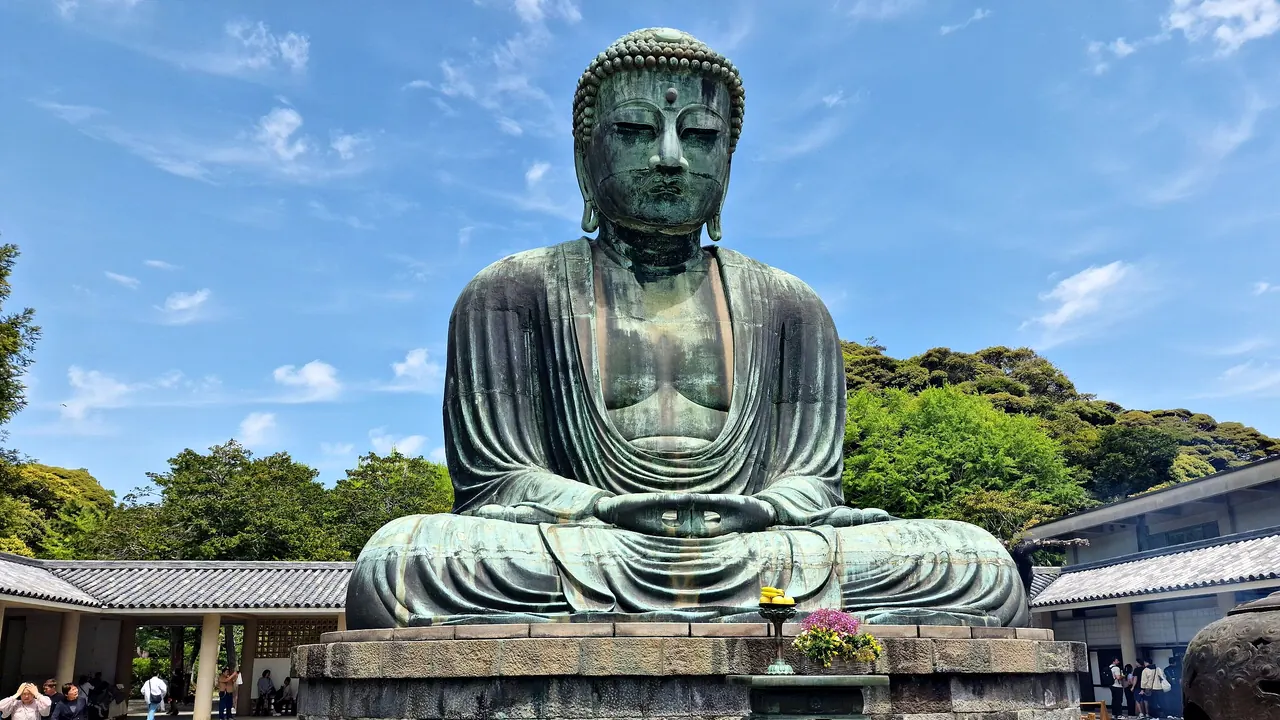
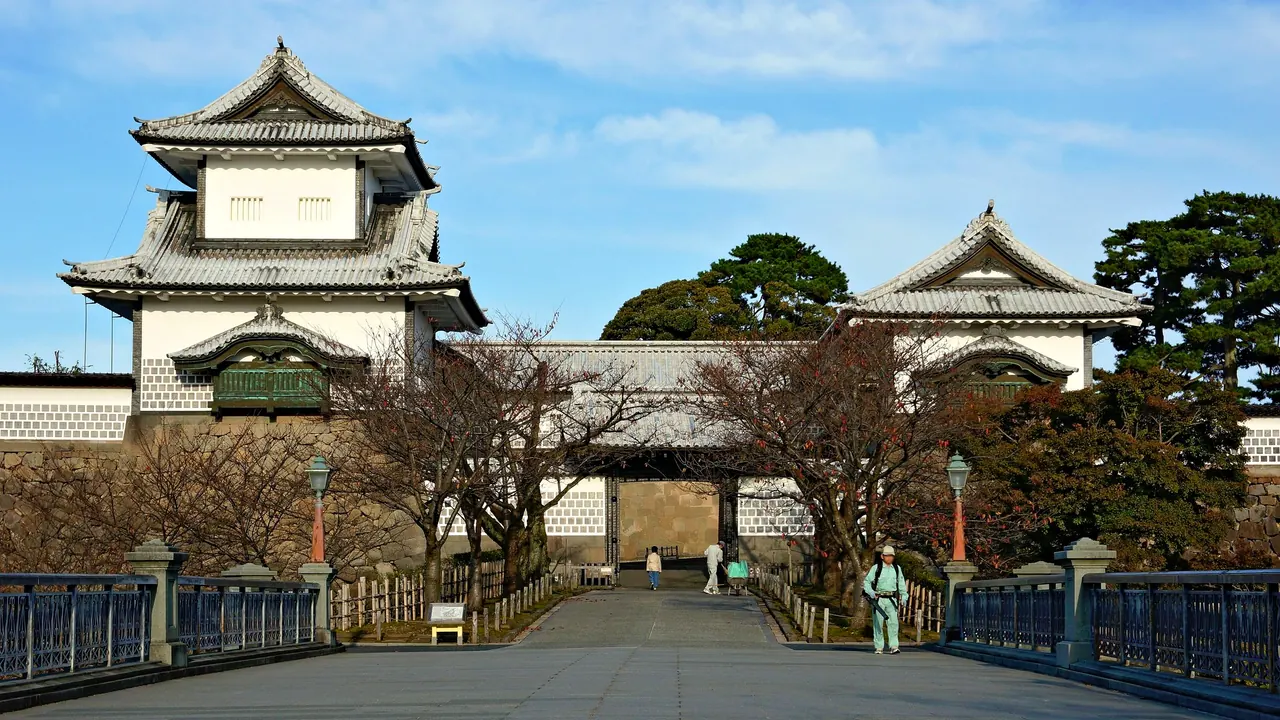
Photos: Kamakura by Anagoria, CC BY-SA 4.0, cropped; Kanazawa by 663highland, CC BY 2.5, cropped.
Kamakura or Kanazawa?
Our verdict in twelve categories, each scored against the same fixed benchmark cities, and the climate month by month, so you can choose for your trip.
Choose Kamakura for
- beaches
- nature and the outdoors
- getting around
Kamakura suits travellers who want temples, wooded ridge walks and a summer swim in the same few days, with Tokyo and Yokohama an easy train ride away for everything the town lacks after dark. It is the easier choice with children and without a car. The centre is walkable, and the Enoden and JR lines run to the coast, Enoshima and the big cities.
Choose Kanazawa for
- food and drink
- live music and the arts
- shopping
If eating well and the slower pleasures matter more, Kanazawa is the better base. It offers Omicho seafood, Kaga cooking, sake bars in Katamachi, hot-spring villages within an hour, and Noh or chamber music if you pick the right evening. It is also cheaper to stay in and a far better place to buy serious crafts. The trade-off is that its beaches and most of its wilder country take more effort to reach.
Scoreboard
Twelve categories on one fixed scale from 0 to 100. The shaded stretch is the gap between the two.
Your match
Pick a travel style or drag the sliders, and both match scores follow your weighting.
Wins on beaches and nature and the outdoors with your weighting.
Wins on food and drink and live music and the arts with your weighting.
What matters to you?
Category by category
What the scores mean for a trip.
Beaches & swimming
Kamakura really is a seaside town. A long curve of dark volcanic sand at Yuigahama and Zaimokuza starts a short walk from the temples, and in summer it fills with beach houses, families and surfers. Kanazawa's sandy shores at Uchinada and Chirihama, where cars drive on the beach, mean a bus or a drive and make only a half-day outing.
Both have warm water in high summer and neither has clear water or white sand. Still, Kamakura's beaches fit easily around sightseeing, and Zushi and Hayama offer calmer swimming nearby. Kanazawa's coast plays almost no part in a visit outside July and August.
Food & drink
Food is where these two differ most clearly. Kamakura is a good place for lunch, while Kanazawa is worth the journey for its cooking alone. Kamakura's table is small and focused: shirasu whitebait on rice near the beach, refined shojin ryori by the Zen temples and snacks along Komachi-dori. For sushi, ramen or an evening of izakaya, most visitors take the train to Yokohama or Tokyo.
Kanazawa draws on the Sea of Japan and an old tea-ceremony culture. Omicho Market serves seafood bowls, sweet shrimp and winter snow crab, and Kaga cooking runs from duck jibuni at plain counters to full kaiseki. In the chaya teahouses, matcha comes with gold-dusted wagashi. Add sake from the Kaga plain and you have a few days of serious eating.
Culture & sights
Both towns have outstanding history packed into two or three days, but of different kinds. Kamakura was the seat of Japan's first warrior government, so its heritage is religious and medieval. It means the open-air Great Buddha, Tsurugaoka Hachimangu and the great Zen temples of Kita-Kamakura, spread through wooded valleys.
Kanazawa escaped wartime bombing, and its strength is a whole Edo-period townscape: Kenroku-en, the castle walls, the latticed teahouses of Higashi Chaya and the samurai lanes of Nagamachi. It also has a modern side that Kamakura lacks, in the 21st Century Museum and the D.T. Suzuki Museum.
Nightlife
Neither is a place for clubs, but Kanazawa at least has an evening. Katamachi and Kigura-machi form a dense grid of izakaya, sake bars and whisky bars that stays busy late at weekends. Kamakura empties when the day-trippers leave. A few bars near the station are fine for a drink after dinner, and anyone wanting more takes the hour-long train to Yokohama or Tokyo.
Nature & outdoors
In Kamakura the outdoors starts in town. Trails such as the Daibutsu and Tenen routes follow forested ridges between the temples, and the bay offers surfing, paddling and, on clear winter days, a view of Mount Fuji. All of it is on foot or a short train ride away.
Kanazawa's surroundings are grander but further off. Within the city there are pleasant walks along the Sai and Asano rivers. Beyond it lie the alpine trails of Mount Hakusan, about two hours away, and the rugged Noto coast, both hard to reach without a car. Skiers will find more here in winter than Kamakura can offer.
Day trips
Kamakura's position is hard to beat. Yokohama is under half an hour away, Tokyo about an hour by direct train, and Enoshima a short ride on the Enoden. Hakone's hot springs and Lake Ashi make a longer day, so outings range from big-city neighbourhoods to island shrines.
Kanazawa's best trips go into the mountains. The thatched farmhouses of Shirakawa-go and Gokayama are the highlight, and Takayama, Eihei-ji and the Kaga spa towns follow. They are memorable but mostly longer bus or Shinkansen days, with no great city within easy reach.
Good for families
Both have the safety and cleanliness of Japan, but Kamakura has more for children within the town itself. They can climb inside the Great Buddha, ride the little Enoden along the sea, swim gently in summer and visit the Sagami Bay aquarium at Katase. The catch is steep temple staircases and weekend crowds.
In Kanazawa, children love the 21st Century Museum's pool installation and the trick doors of the ninja temple, and Kenroku-en gives them room to run. After that, the zoo, the beaches and Fukui's dinosaur museum all mean a drive, and the gardens and teahouses can feel slow to young children.
Getting around
Both centres are compact. Kamakura is easier because trains do the work: Kita-Kamakura is one JR stop away, the Great Buddha and Hase-dera are on the Enoden, and the same lines reach Enoshima, Yokohama and Tokyo. Its weak points are gridlocked roads at weekends and temples up steep valleys.
Kanazawa's sights lie along a flat band of about 2km from the station, which is good walking country. There is no metro or tram, though, so you depend on loop buses that can be slow and crowded, or on bike-share. Winter snow makes getting about on foot harder.
Shopping & style
Kanazawa is the stronger craft town. Almost all of Japan's gold leaf comes from here, and alongside it you can buy Kutani porcelain, Kaga yuzen silk and Ohi tea bowls, some made by serious makers. Korinbo and Tatemachi add department stores and fashion boutiques that Kamakura lacks altogether.
Kamakura's shopping is an afternoon on Komachi-dori and Wakamiya-oji. You will find sweets, tenugui and temple souvenirs, and the one craft worth seeking out is carved Kamakura-bori lacquerware.
Affordability
Kanazawa is the easier town on the budget, mostly because it has plenty of fairly priced business hotels near the station. Costs rise only when you splurge on kaiseki, snow crab or a ryokan night in the spa towns. Kamakura has few hotels and they are in demand from Tokyo weekenders, so many visitors stay in Yokohama or Fujisawa instead. In both towns, temple fees and simple lunches stay reasonable.
Live music & performing arts
Kanazawa has a living traditional stage. There is regular Noh at the prefectural theatre, geisha dance and shamisen in some chaya teahouses, and the Orchestra Ensemble Kanazawa plays a full season beside the station.
Kamakura offers little on an ordinary evening beyond occasional Noh at a small private stage. Its performances come with the shrine festivals, such as spring dance at Tsurugaoka Hachimangu and autumn yabusame horseback archery. For concerts or theatre, you go to Yokohama or Tokyo.
Wellness & relaxation
Kanazawa has hot springs close at hand: Yuwaku Onsen half an hour into the hills, the Kaga spa towns about an hour away, and baths in many city hotels. With quiet mornings in Kenroku-en and teahouse matcha as well, it is the more restful stay.
Kamakura has no onsen, and its calm is a Zen one, found in public zazen at Engaku-ji and Kencho-ji and the moss gardens of Kita-Kamakura. That calm needs an early start or a weekday, and a proper soak means the journey to Hakone.
When should you go?
Pick your month. The climate figures are measured averages, not a forecast.
Kamakura in July
Kanazawa in July
Daytime high, °C
Rainfall in the month, mm
Where the figures come from
Kamakura's sunshine is measured 45 km from the centre, at Tokyo.
Temperature and rainfall are climate normals, averaged over the years shown. Kamakura: 1991-2020 normals, Yokosuka Fwf (11.6 km from centre). Kanazawa: 1991-2020 normals, Kanazawa (3.2 km from centre).
Kamakura is the gentler town in winter. December to February are dry, sunny and mild enough for walking the temple valleys, and clear days show Mount Fuji across the bay. Spring is pleasant, early summer turns damp, and the heaviest rain falls in September and October, at around 211mm in October. Kanazawa's winter is the opposite: cold, dark and very wet, with about 301mm of rain and snow in December and slush underfoot. Its best walking seasons are April and May, a drier and brighter stretch for the gardens, and October, when the rain briefly eases.
Summer is much the same in both, hot and humid at around 30°C, which makes long afternoons on foot tiring, though August is Kanazawa's sunniest month. It is also the only real swimming season. From July to September the sea is warm off both coasts, reaching about 26°C off Kamakura in August and a degree more off Kanazawa. After that, Kanazawa's coast turns grey and windswept, while Kamakura's beaches stay pleasant for walkers and surfers.
Which traveller are you?
On a beach and sun trip, Kamakura is the clear choice. Yuigahama and Zaimokuza are a walk from the station, the Enoden runs to more sand at Enoshima, and winter brings plenty of sunshine. Kanazawa's beaches are further out and only work in midsummer.
For a food and nightlife trip, choose Kanazawa. Omicho Market, Kaga dishes like jibuni and nodoguro, winter snow crab and local sake give it real depth, and Katamachi stays busy late. Kamakura is lovely at lunch but goes quiet in the evening.
On a relaxing and wellness trip, Kanazawa has the hot water Kamakura lacks. Yuwaku Onsen is half an hour away, the Kaga spa towns are about an hour, and many hotels have their own baths. Kamakura's calm comes from zazen and moss gardens instead.
Before you go
| Measure | Kamakura | Kanazawa |
|---|---|---|
| Official language | Japanese | Japanese |
| Currency | Yen (JPY) | Yen (JPY) |
| Sockets | AB100 V, 50 and 60 Hz depending on the region | AB100 V, 50 and 60 Hz depending on the region |
| Driving side | Left | Left |
| Time zone | UTC+9 | UTC+9 |
| Emergency number | Police 110, fire 119 | Police 110, fire 119 |
| Elevation | 17 m | 28 m |
| Main airport | Tokyo Haneda International Airport (HND)34 km from centre98 non-stop destinations | Komatsu Airport / JASDF Komatsu Air Base (KMQ)29 km from centre7 non-stop destinations |
| Public holidays this year | 16 days | 16 days |
By the numbers
| Measure | Kamakura | Kanazawa |
|---|---|---|
| City population | 172,929 | 462,479 |
| People per km² | 4,356 | 989 |
| Museums within 10 km | 18 | 27 |
| UNESCO World Heritage sites within 50 km | 1 | 1 |
| Swim season, months above 21 °C | 5 months | 4 months |
Where else could you go?
Every comparison below shares a destination with this one, so you can follow Kamakura or Kanazawa somewhere new.
- Yokohamavs Kamakura
- Hakonevs Kamakura
- Tokyovs Kamakura
- Takayamavs Kanazawa
- Nikkovs Kamakura
- Kyotovs Kanazawa