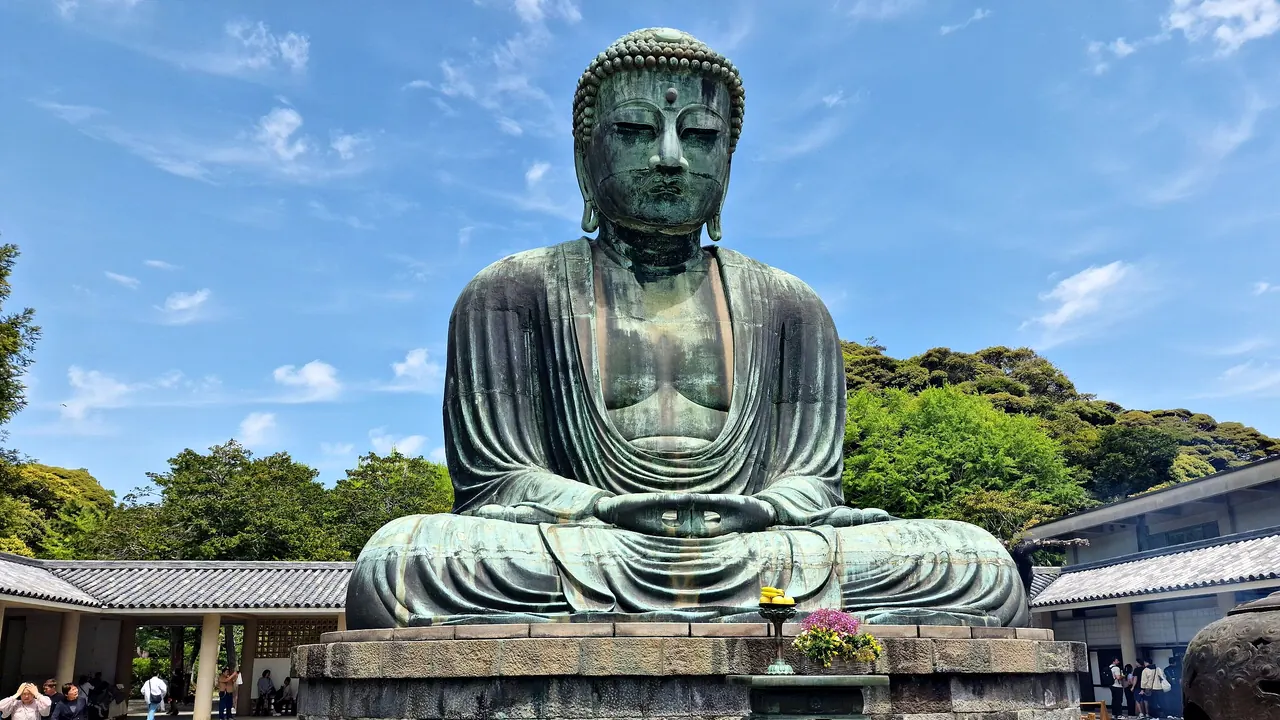
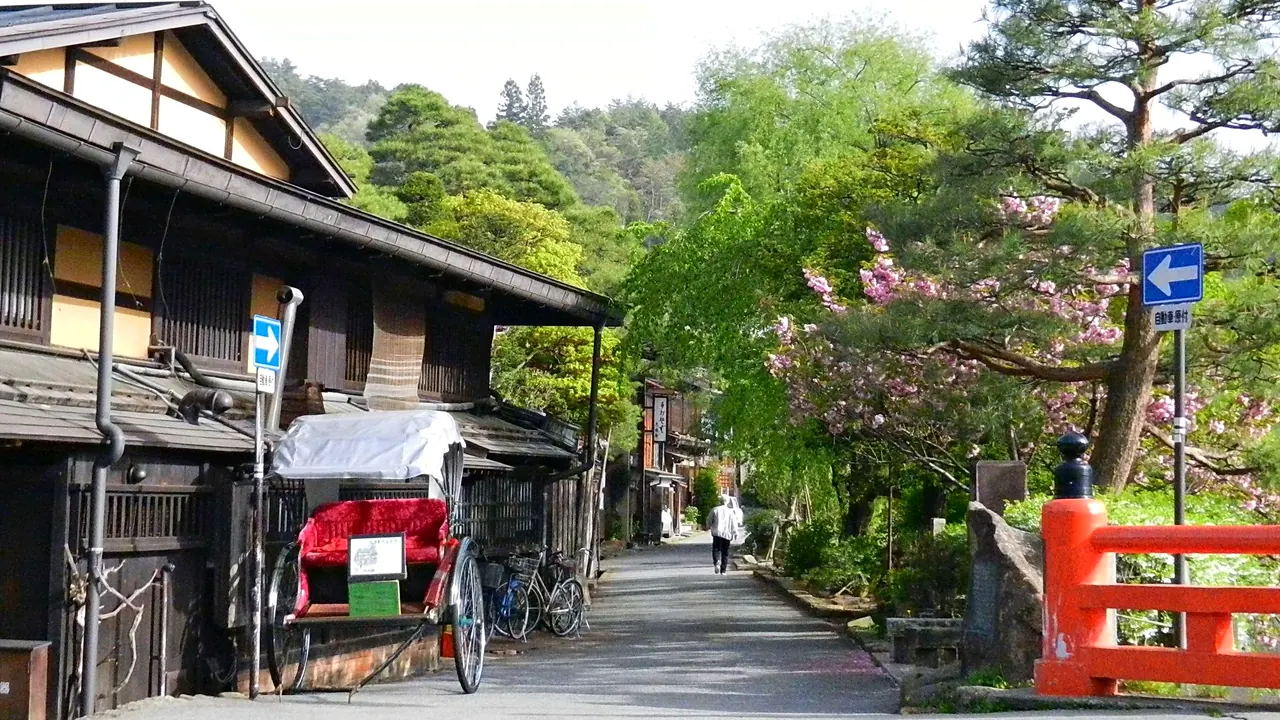
Photos: Kamakura by Anagoria, CC BY-SA 4.0, cropped; Takayama by lienyuan lee, CC BY 3.0, cropped.
Kamakura or Takayama?
Our verdict in twelve categories, each scored against the same fixed benchmark cities, and the climate month by month, so you can choose for your trip.
Choose Kamakura for
- beaches
- families
- day trips
Kamakura suits a traveller who wants history, sea and Tokyo all within easy reach of one base. The Great Buddha and the Zen temples of Kita-Kamakura carry more weight than anything in Takayama. Summer adds real beaches, and the Enoden coast and Enoshima keep children busy. It is also the stronger base for outings, with Yokohama, Tokyo and Hakone close by train.
Choose Takayama for
- wellness
- prices
- nature and the outdoors
Choose Takayama to slow down in the mountains. Ryokan baths fed by hot springs, the open-air pools of Okuhida and nearby Gero Onsen give it a bathing culture that Kamakura has to borrow from Hakone. The Northern Alps are a bus ride away. It is also the gentler of the two on the budget, and its Edo-period merchant lanes hang together well, even if it has fewer sights.
Scoreboard
Twelve categories on one fixed scale from 0 to 100. The shaded stretch is the gap between the two.
Your match
Pick a travel style or drag the sliders, and both match scores follow your weighting.
Wins on beaches and families with your weighting.
Wins on wellness and prices with your weighting.
What matters to you?
Category by category
What the scores mean for a trip.
Beaches & swimming
Kamakura's beaches are town beaches rather than postcard ones. Yuigahama and Zaimokuza curve along the bay a short walk from the station, with dark volcanic sand and water that is pleasant to swim in but seldom clear. In July and August wooden beach houses go up and Tokyo families fill the sand at weekends. For more room, the Enoden runs west to Koshigoe and Katase, Zushi and Hayama to the east are quieter, and out of season the shore is left to surfers and walkers.
Takayama has nothing comparable. Its basin lies deep in the Hida mountains, and Toyama Bay, the nearest shore, is far enough away that reaching it is a separate journey rather than an afternoon out. On a route that takes in both towns, plan any time by the sea for the Kamakura leg, ideally in July or August.
Food & drink
Both towns eat well within a narrow range and both wind down early, so the difference lies in what is on the plate. Kamakura's food comes from the bay and the temples: shirasu whitebait over rice near the beach, refined shojin ryori vegetarian cooking around the Zen temples, and snacks along Komachi-dori.
Takayama's cooking is meatier and more rustic, built on Hida beef grilled on a magnolia leaf with hoba miso or seared on skewers, soy-glazed dango and pickles from the riverside morning markets. Its old breweries offer sake tastings, which Kamakura cannot match. For wider choice, Kamakura has Yokohama and Tokyo close by train.
Culture & sights
Kamakura carries more historical weight. As the seat of Japan's first warrior government, it has the open-air Great Buddha, the Minamoto shrine of Tsurugaoka Hachimangu and the great Zen temples of Kita-Kamakura. Smaller pleasures include the hydrangea hillside at Hase-dera and the bamboo grove at Hokoku-ji, and two or three days covers it well.
Takayama's appeal lies in its streets rather than its monuments: the dark-timbered merchant lanes of Sanmachi Suji, the old government office at Takayama Jinya, the thatched farmhouses of Hida Folk Village and the festival floats. It is coherent and full of atmosphere but smaller in scope, and a day or two is enough. Neither town is a place for major museums.
Nightlife
Neither town offers a real night out. Kamakura keeps a few izakaya and bars near the station and towards the beach, summer evenings on the sand are a little livelier, and Yokohama and Tokyo are an hour away for anything more. Takayama is quieter still after dark: most visitors dine at their ryokan, a handful of bars by the station and east of the river close early, and no big city is within an easy evening's reach.
Nature & outdoors
Takayama has the bigger landscapes. It is a gateway to the Northern Alps, with the Shin-Hotaka ropeway rising towards peaks near 3,000m, the flat riverside trails of Kamikochi, summer walking on Norikura and skiing in winter. The catch is planning around bus connections, and Kamikochi closes in the cold months.
Kamakura's nature is gentler and closer at hand. The Daibutsu and Tenen trails follow wooded ridges between the temples, Fuji appears across the water on clear winter days, and the bay suits surfing and paddleboarding. It suits someone who wants a few hours of hills and coast straight from the door rather than high mountains.
Day trips
Kamakura has the richer list, simply because of where it sits. Yokohama is under half an hour away, Tokyo about an hour, and Enoshima a short ride on the Enoden. Hakone, Odawara and the Miura Peninsula can fill any remaining days.
Takayama's outings are fewer but distinctive. The thatched farmhouses of Shirakawa-go are under an hour by bus, the storehouses and carp canals of Hida-Furukawa are a short train ride away, and Gero Onsen makes an easy spa day. Kanazawa works better as an onward stop than a return trip, and beyond these the surroundings are mostly mountains.
Good for families
Kamakura gives children more to do. Climbing inside the Great Buddha, the rattling Enoden along the sea, the caves of Enoshima, the aquarium at Katase and gentle summer swimming can fill several days. Temple steps, weekend crowds and small hotel rooms take some managing.
Takayama is flat, safe and easy, and its markets, street snacks, folk village and winter snow appeal for a while. With no aquarium, zoo or theme park, and an old town made up of craft shops, it works best as a day or two within a wider trip.
Getting around
Both towns are compact and need no car, but they get around differently. Kamakura's centre is walkable, and the Enoden and the JR line link the Great Buddha, Kita-Kamakura and Enoshima and run straight to Yokohama and Tokyo. The drawbacks are hills, temple stairs, packed trains and gridlocked roads at weekends.
Takayama's centre is flat, with everything within a fifteen-minute walk of the station, which is easier on the legs. Its weakness is reaching the surroundings, where regional buses to Shirakawa-go and the Okuhida valleys need planning around connections.
Shopping & style
Neither town is a shopping destination, and anyone after fashion or department stores has to look elsewhere. Kamakura's shopping is concentrated on crowded Komachi-dori, with sweets, tenugui and temple souvenirs. Quieter craft shops line Wakamiya-oji, where Kamakura-bori carved lacquerware is the thing to look for.
Takayama goes deeper into craft, with amber-toned Shunkei lacquer, carvings in yew, Hida bentwood furniture and sake from the breweries, plus pickles and miso at the morning markets. Kamakura's advantage is that Yokohama and Tokyo are close for everything else.
Affordability
Takayama is easier on the wallet. Guesthouses and business hotels near the station are fair value, and ramen and market food keep eating cheap. A ryokan with a full dinner, a serious Hida beef meal and the festival weeks all push costs up.
Kamakura's day-to-day costs are reasonable, but hotels are few and Tokyo weekenders compete for them, so accommodation drives the bill. Many visitors get round this by staying in Yokohama or Fujisawa and coming in by train.
Live music & performing arts
Both towns are known for their festivals rather than their stages. Kamakura has a little more through the year: a small Noh theatre with occasional performances, touring concerts at the arts hall in Ofuna, and Yokohama and Tokyo within reach for opera and orchestras. Its shrine calendar adds traditional dance in spring and yabusame horseback archery in autumn.
Takayama's one great show is its spring and autumn festival, with ornate floats, karakuri puppets and lantern-lit processions. Outside those days there is nothing to attend.
Wellness & relaxation
Takayama is the place to unwind. Many ryokan pipe hot-spring water into their indoor and open-air baths, so a soak before dinner and an evening in a yukata come with the room. The riverside pools of Okuhida and the spa town of Gero Onsen are each about an hour away or less.
Kamakura has no hot springs, and its calm comes from zazen sessions at Engaku-ji and Kencho-ji and the moss gardens in the valleys of Kita-Kamakura. That quiet depends on going early or on weekdays, and proper onsen bathing means a trip to Hakone.
When should you go?
Pick your month. The climate figures are measured averages, not a forecast.
Kamakura in July
Takayama in July
Daytime high, °C
Rainfall in the month, mm
Where the figures come from
Kamakura's sunshine is measured 45 km from the centre, at Tokyo.
Takayama's sunshine is measured 65 km from the centre, at Matsumoto.
Temperature and rainfall are climate normals, averaged over the years shown. Kamakura: 1991-2020 normals, Yokosuka Fwf (11.6 km from centre). Takayama: 1971-2000 (sunshine 1991-2020, rainfall 1981-2010) normals, Takayama (0.5 km from centre).
Kamakura has the milder year. Winters are cool rather than cold, dry and often bright, so December to February suits temple walks and clear views of Fuji across the bay. Swimming belongs to July to September, when Sagami Bay warms to about 26°C at its peak. Early summer is humid and grey, and autumn brings the heaviest rain, with October the wettest month at around 211mm. Spring and November are the most comfortable months for walking.
Takayama has a mountain climate with sharper seasons. Winter highs sit around 3°C and the town lies under snow, which is beautiful at Shirakawa-go but cold for long days outside. July and September are very wet, with July reaching about 273mm, so high trails need careful timing. May is mild and one of the sunniest months, though showers are common, while October is cooler, clear and much drier than the summer. In August both towns reach about 30°C, so long walks through the streets are hard work in either.
Which traveller are you?
On a beach and sun trip, Kamakura is the only real option. Yuigahama and Zaimokuza offer warm summer swimming a short walk from the station, and there are more beaches along the Enoden. Takayama sits deep in the mountains, about two hours from any coast.
For a relaxing and wellness trip, Takayama is the clear choice. Hot-spring water fills many ryokan baths, the riverside pools of Okuhida and the spa town of Gero Onsen are close, and evenings are quiet. Kamakura offers zazen and moss gardens but sends bathers to Hakone.
On a family trip with children, Kamakura holds their attention for longer. They can climb inside the Great Buddha, ride the little seaside Enoden, explore Enoshima's caves and visit the Katase aquarium. Takayama's markets, floats and folk village please for a day, but nothing there is made for children.
Before you go
| Measure | Kamakura | Takayama |
|---|---|---|
| Official language | Japanese | Japanese |
| Currency | Yen (JPY) | Yen (JPY) |
| Sockets | AB100 V, 50 and 60 Hz depending on the region | AB100 V, 50 and 60 Hz depending on the region |
| Driving side | Left | Left |
| Time zone | UTC+9 | UTC+9 |
| Emergency number | Police 110, fire 119 | Police 110, fire 119 |
| Elevation | 17 m | 573 m |
| Main airport | Tokyo Haneda International Airport (HND)34 km from centre98 non-stop destinations | Chubu Centrair International Airport (NGO)149 km from centre43 non-stop destinations |
| Public holidays this year | 16 days | 16 days |
By the numbers
| Measure | Kamakura | Takayama |
|---|---|---|
| City population | 172,929 | 85,199 |
| People per km² | 4,356 | 39 |
| Museums within 10 km | 18 | 14 |
| UNESCO World Heritage sites within 50 km | 1 | 1 |
| Swim season, months above 21 °C | 5 months | - |
Where else could you go?
Every comparison below shares a destination with this one, so you can follow Kamakura or Takayama somewhere new.
- Yokohamavs Kamakura
- Hakonevs Kamakura
- Tokyovs Kamakura
- Kanazawavs Takayama
- Nikkovs Kamakura
- Kyotovs Takayama