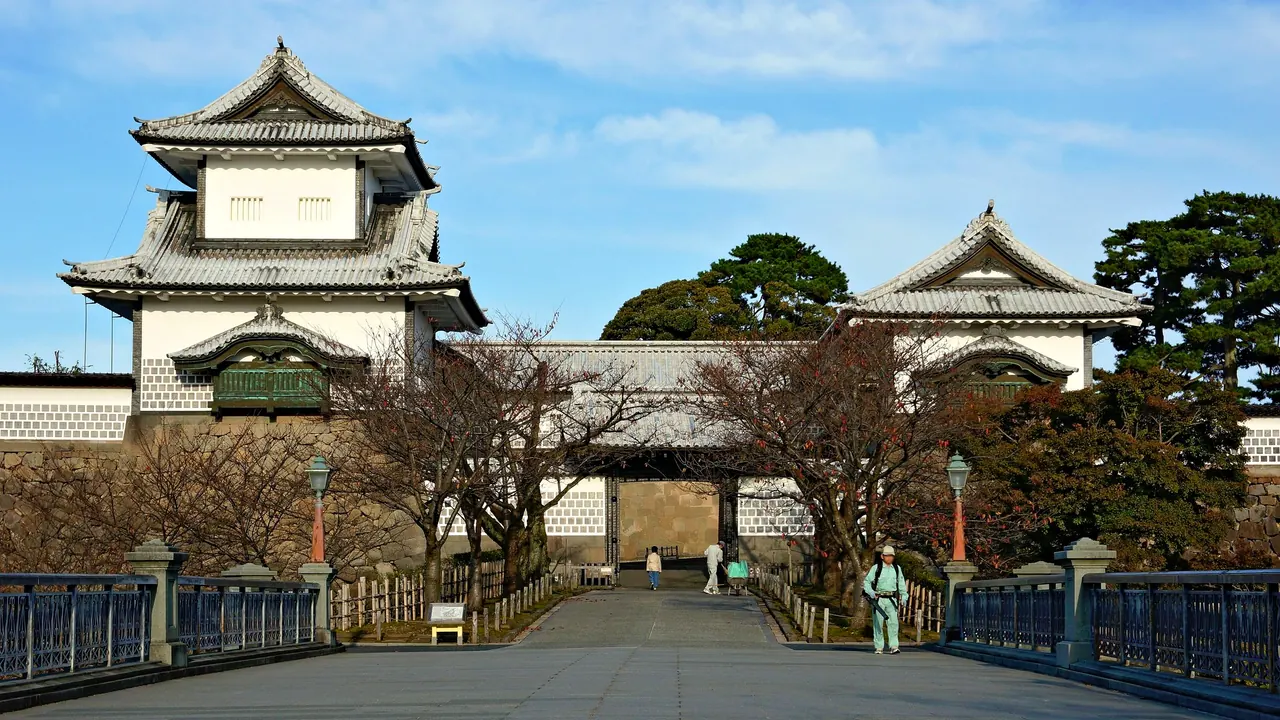
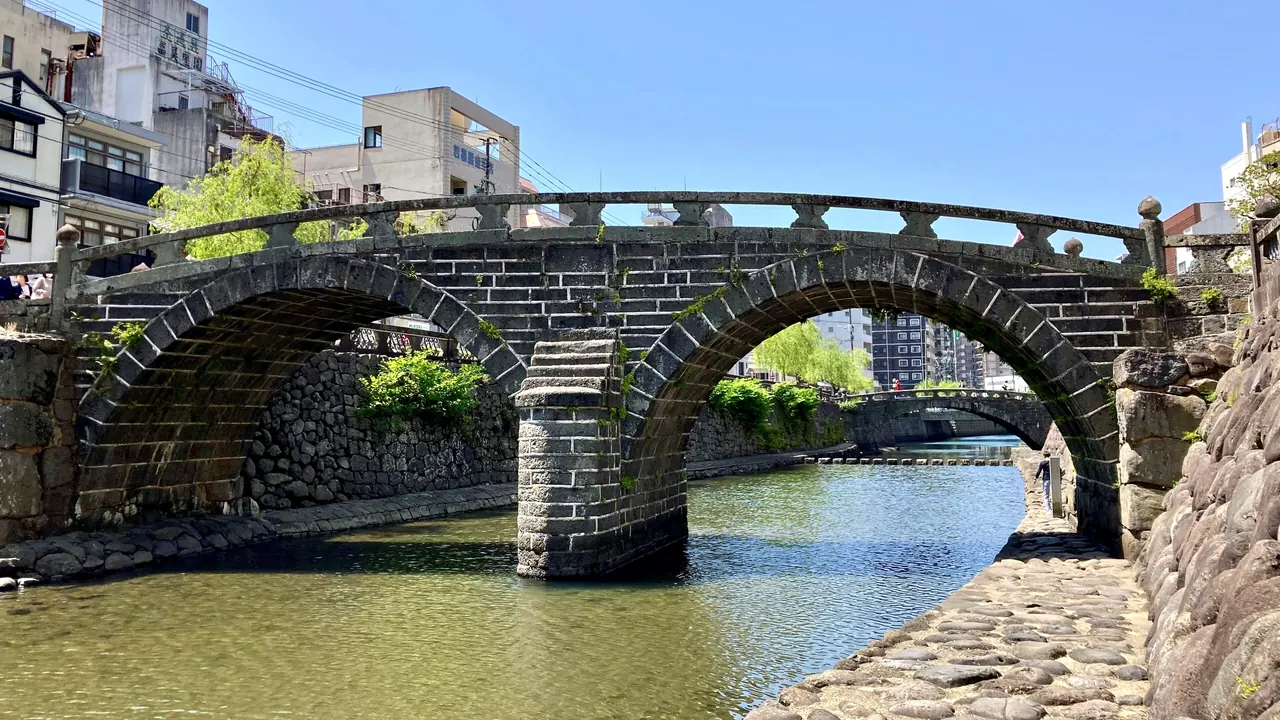
Photos: Kanazawa by 663highland, CC BY 2.5, cropped; Nagasaki by Dudva, CC0.
Kanazawa or Nagasaki?
Our verdict in twelve categories, each scored against the same fixed benchmark cities, and the climate month by month, so you can choose for your trip.
Choose Kanazawa for
- shopping
- wellness
- live music and the arts
Kanazawa suits the traveller who wants refinement and depth from a small city. Its food is the stronger of the two, from Omicho's seafood counters to Kaga cooking and teahouse sweets, and it adds real hot-spring towns within easy reach, a craft-shopping scene built on gold leaf, lacquer and porcelain, Noh and geisha performances, and the thatched villages of Shirakawa-go as an outing. Choose it for a slower, more polished trip, ideally outside the snowy winter.
Choose Nagasaki for
- getting around
- beaches
- nature and the outdoors
Nagasaki is the better pick for a trip built around history and a harbour setting. Its sights tell the story of the atomic bomb and of centuries of Dutch, Portuguese and Chinese contact, and the tram network makes them simple to string together without planning. The cooking is more homely and the evenings quieter, but the city is easy to move around, kind to a moderate budget, and milder in winter.
Scoreboard
Twelve categories on one fixed scale from 0 to 100. The shaded stretch is the gap between the two.
Your match
Pick a travel style or drag the sliders, and both match scores follow your weighting.
Wins on shopping and wellness with your weighting.
Wins on getting around and beaches with your weighting.
What matters to you?
Category by category
What the scores mean for a trip.
Beaches & swimming
Neither is a beach city, but Nagasaki makes a swim slightly easier. Takahama on the Nomo coast is a clean sandy bay facing the open sea, and Iojima's small resort beach is just a ferry ride from the harbour, with a season running into early September.
Kanazawa's long, plain sands at Uchinada and Chirihama are close by, yet they only really work in July and August and turn windswept and grey for the rest of the year.
Food & drink
Kanazawa is the richer food city. Omicho Market's seafood bowls, winter snow crab, nodoguro and jibuni duck stew run from simple counters to kaiseki tables, and its tea-ceremony past brings wagashi and serious Kaga sake.
Nagasaki's cooking is more distinctive than refined: champon, sara udon, castella and the shippoku banquet carry the city's Chinese and European past. It is easy and satisfying to eat there, but the range is narrower and fine dining is scarce.
Culture & sights
Both cities hold two or three days of first-rate sights, but they speak to very different interests. Kanazawa escaped wartime bombing, so its appeal is the intact Edo-period townscape: Kenroku-en, the castle walls, Higashi Chaya's teahouses and Nagamachi's samurai lanes, with contemporary art at the 21st Century Museum.
Nagasaki is about history of a heavier kind: the Atomic Bomb Museum and Peace Park, Dejima's Dutch trading post, Glover Garden and Oura Cathedral, plus Chinese temples and Chinatown. One is beauty and craft; the other is memory and encounter.
Nightlife
Evenings are quiet in both, built around izakaya and small bars rather than clubs. Kanazawa's Katamachi and Kigura-machi lean towards sake and whisky bars, with a few in old wooden houses by the river. Nagasaki's Shianbashi has more karaoke and regulars-only snack bars, and many visitors trade a bar crawl for the night view from Mount Inasa.
Nature & outdoors
The outdoors is close in quality but different in shape. Nagasaki's is part of the city itself: a steep green harbour bowl, the ropeway up Mount Inasa, and the volcanic peaks and steaming hells of Unzen about two hours off.
Kanazawa's city nature is gentler, river paths along the Sai and Asano and low wooded hills, with the alpine country of Mount Hakusan and the Noto coast further out and mostly needing a car. Its snowy winters bring skiing, which Nagasaki lacks.
Day trips
Kanazawa has the stronger list of outings. Shirakawa-go's thatched gassho farmhouses lie an hour and a quarter away by bus, Gokayama and Takayama follow, and the Shinkansen brings Takaoka's Zuiryu-ji within half an hour, with Eihei-ji and the Kaga spa towns also in reach.
Nagasaki's headline is the boat out to Hashima's concrete ruins, which depends on the weather. Shimabara, Unzen, Huis Ten Bosch and the porcelain towns of Arita and Imari round it out, but several are long days.
Good for families
Both are safe, clean and easy with children, and the difference lies in the details. Kanazawa offers the playful 21st Century Museum and the ninja temple's trick doors, but its gardens and teahouses can feel slow to the young.
Nagasaki has more built-in fun, with trams, the Inasa ropeway, the Penguin Aquarium and Huis Ten Bosch, yet its stairway streets are hard work with a pushchair and the bomb museum needs care with younger children.
Getting around
Nagasaki is the easier city to get around. Its flat-fare trams run along the valley floor past nearly every sight, so a car is pointless; the effort comes only when you leave the trams for the hillside steps.
Kanazawa's sights sit within a walkable 2km band on level streets, but there is no tram or metro, and the loop buses can be slow and crowded. Snow makes winter walking harder, though bike-share helps the rest of the year.
Shopping & style
Kanazawa is much the better place to shop. Nearly all of Japan's gold leaf comes from here, and the chaya districts and the prefectural craft centre sell Kutani porcelain, Kaga yuzen silk, Ohi tea bowls and lacquer from serious makers, with Tatemachi and Korinbo for fashion.
Nagasaki's Hamanomachi arcade covers everyday needs, and the worthwhile buys are castella, glassware and porcelain from Hasami, Mikawachi and Arita.
Affordability
Costs are much alike, with spotless business hotels and cheap lunches in both. Nagasaki's spending builds up around the Hashima boats, the ropeway and sashimi evenings, while in Kanazawa it is kaiseki dinners, snow crab and ryokan stays in the spa towns, plus Shinkansen and Shirakawa-go fares.
Live music & performing arts
Kanazawa has far more to see on stage. Noh plays regularly at the prefectural theatre, geisha dance and shamisen can be seen in the chaya districts, and the Orchestra Ensemble Kanazawa gives a full chamber season beside the station.
Nagasaki's great performances are festivals rather than a programme: Kunchi at Suwa Shrine every October and the Lantern Festival around Chinese New Year. Outside those dates there is little to plan an evening around.
Wellness & relaxation
For bathing and calm, Kanazawa has the advantage. Yuwaku Onsen is half an hour into the hills, the Kaga spa towns are about an hour away, and many hotels have their own hot-spring baths for a daily soak.
Nagasaki's real onsen, Obama's seaside footbath and the mountain spa of Unzen, are on the Shimabara peninsula and best done overnight. In the city itself, quiet hillside temples and harbour walks set the slower pace.
When should you go?
Pick your month. The climate figures are measured averages, not a forecast.
Kanazawa in July
Nagasaki in July
Daytime high, °C
Rainfall in the month, mm
Temperature and rainfall are climate normals, averaged over the years shown. Kanazawa: 1991-2020 normals, Kanazawa (3.2 km from centre). Nagasaki: 1991-2020 normals, Nagasaki (2.2 km from centre).
Kanazawa is at its best in spring and autumn, from April to May and again in October, when days are mild and the gardens have blossom or red maples. Winter is the hard season: cold, grey, short on sunshine and very wet, with December bringing around 300mm as rain and heavy snow. Summer turns hot and sticky, reaching 31°C in August, though that is also the only stretch when the Sea of Japan is warm enough for a swim.
Nagasaki is milder and drier through the winter, with January highs near 11°C and far more sun than Kanazawa, so it makes the better cold-season city break. Its weak spot is early summer: June is the rainy season, at around 334mm, and July stays wet and humid. The sea is warmest in August at about 28°C, and October and November give dry, comfortable weather for climbing the hillsides.
Which traveller are you?
On a relaxing and wellness trip, Kanazawa is the clear choice. Yuwaku Onsen is half an hour away and the Kaga spa towns make an easy overnight stay, while Kenroku-en mornings and teahouse matcha set a calm pace that Nagasaki, whose onsen lie hours away on the Shimabara peninsula, cannot quite match.
For a shopping trip, Kanazawa wins comfortably. Gold leaf, Kutani porcelain, Kaga yuzen silk and lacquer are sold by serious makers in the chaya districts and the craft centre, whereas Nagasaki offers castella, glassware and a modest covered arcade.
For a short city break, Nagasaki is easier. A simple flat-fare tram links the station, Peace Park, Dejima, Chinatown and Glover Garden, so two days cover its unique history with little effort, and the winter months stay milder and sunnier than in snowy Kanazawa.
Before you go
| Measure | Kanazawa | Nagasaki |
|---|---|---|
| Official language | Japanese | Japanese |
| Currency | Yen (JPY) | Yen (JPY) |
| Sockets | AB100 V, 50 and 60 Hz depending on the region | AB100 V, 50 and 60 Hz depending on the region |
| Driving side | Left | Left |
| Time zone | UTC+9 | UTC+9 |
| Emergency number | Police 110, fire 119 | Police 110, fire 119 |
| Elevation | 28 m | 105 m |
| Main airport | Komatsu Airport / JASDF Komatsu Air Base (KMQ)29 km from centre7 non-stop destinations | Nagasaki Airport (NGS)19 km from centre10 non-stop destinations |
| Public holidays this year | 16 days | 16 days |
By the numbers
| Measure | Kanazawa | Nagasaki |
|---|---|---|
| City population | 462,479 | 404,656 |
| People per km² | 989 | 996 |
| Museums within 10 km | 27 | 26 |
| UNESCO World Heritage sites within 50 km | 1 | 2 |
| Swim season, months above 21 °C | 4 months | 6 months |
Where else could you go?
Every comparison below shares a destination with this one, so you can follow Kanazawa or Nagasaki somewhere new.