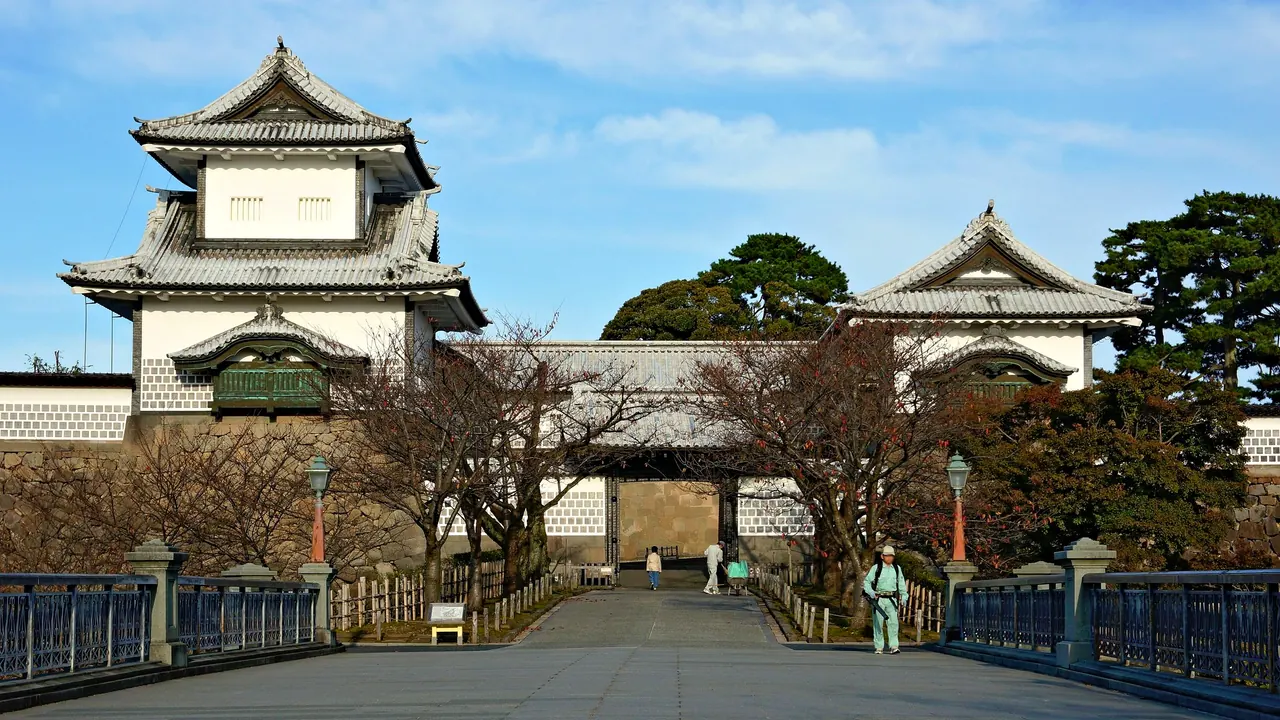
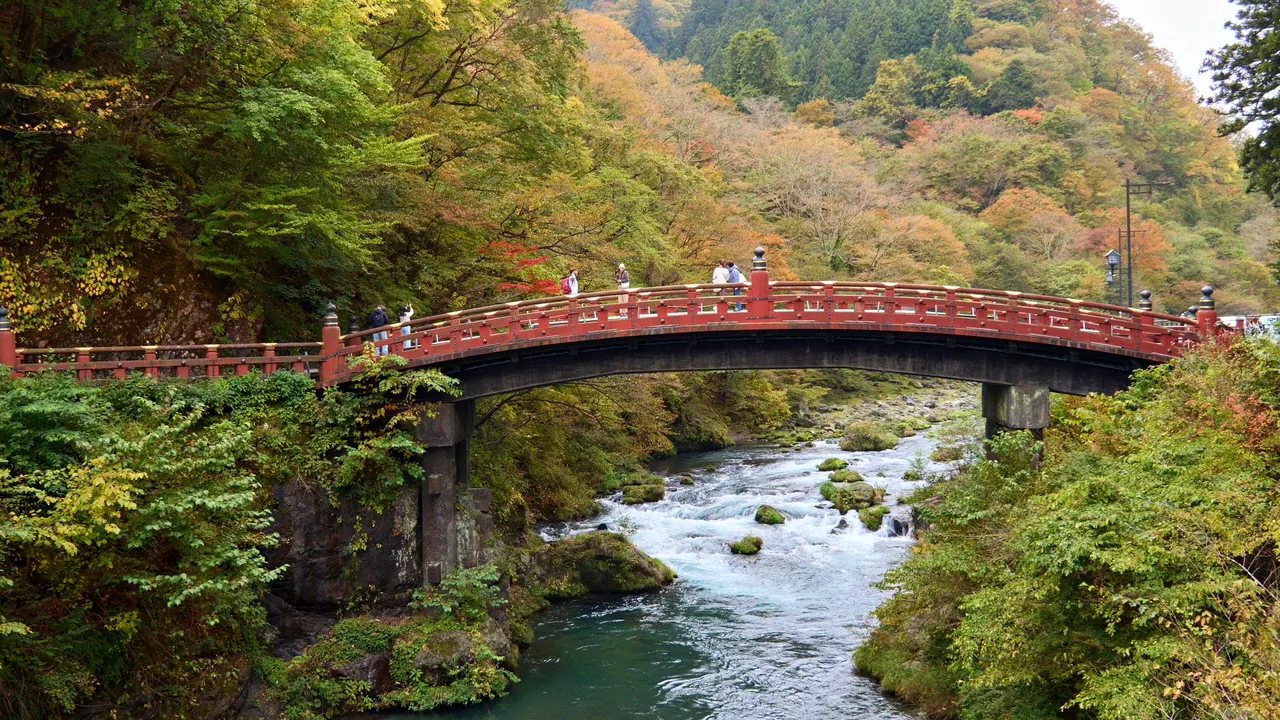
Photos: Kanazawa by 663highland, CC BY 2.5, cropped; Nikko by lumoplank, CC0.
Kanazawa or Nikko?
Our verdict in twelve categories, each scored against the same fixed benchmark cities, and the climate month by month, so you can choose for your trip.
Choose Kanazawa for
- food and drink
- shopping
- live music and the arts
Kanazawa suits the traveller who wants a complete small city: Edo-period streets and gardens, one of Japan's best seafood markets, craft shops worth carrying things home from, and evenings in Katamachi's sake bars. With the Shinkansen at the station and Shirakawa-go a bus ride away, it is also the better base for several days of varied outings.
Choose Nikko for
- nature and the outdoors
- wellness
Choose Nikko for forest, mountains and hot water. Its cedar-shaded shrines hold their own against anything in Kanazawa, but the real draw is higher up: Lake Chuzenji, Kegon Falls, the Senjogahara boardwalks and onsen inns where the evening is a long dinner and a soak. It is a place to slow down, not to eat out or shop.
Scoreboard
Twelve categories on one fixed scale from 0 to 100. The shaded stretch is the gap between the two.
Your match
Pick a travel style or drag the sliders, and both match scores follow your weighting.
Wins on food and drink and shopping with your weighting.
Wins on nature and the outdoors and wellness with your weighting.
What matters to you?
Category by category
What the scores mean for a trip.
Beaches & swimming
Neither is a beach destination, but only Kanazawa has a coast at all. The long sandy beaches at Uchinada and along Chirihama, where you can drive on the hard sand, make a decent half-day swim in July and August.
Nikko sits far inland among mountains, and Lake Chuzenji and Lake Yunoko are for boating and fishing, not swimming. In summer, the closest thing to a dip there is an outdoor hot spring.
Food & drink
Food is one of the widest gaps between the two. Kanazawa eats from the Sea of Japan, and Omicho Market, winter snow crab, Kaga dishes such as jibuni duck stew and a deep teahouse sweets culture give several days of very good meals, from plain counters to kaiseki.
Nikko has a short but distinctive list built around yuba from the old temple cooking, with soba and grilled river fish beside it. Its best meal is usually dinner at your ryokan, because the main street empties once the day visitors leave.
Culture & sights
Both are first-rate for sights, in different ways. Kanazawa's appeal is a whole surviving townscape: Kenroku-en, the white castle walls, the teahouse lanes of Higashi Chaya and the samurai streets of Nagamachi. Its modern side is strong too, with the 21st Century Museum and the D.T. Suzuki Museum.
Nikko's culture is concentrated in one UNESCO-listed shrine precinct among giant cedars, and Toshogu's gilded, carved Yomeimon gate is more lavish than anything in Kanazawa. Beyond the shrines, the Shinkyo bridge and the Jizo statues of Kanmangafuchi, there are few museums, so it needs fewer days.
Nightlife
Kanazawa has a modest but real evening scene in Katamachi and Kigura-machi, a dense grid of izakaya, sake bars and small whisky bars that stays busy at weekends, though clubs are scarce. Nikko has almost nothing: the town goes dark early, and a night out means your inn's dining room and bath.
Nature & outdoors
Nikko is far stronger outdoors. The national park climbs straight from town up the Irohazaka road to Lake Chuzenji beneath Mount Nantai, Kegon Falls and the Senjogahara marshland. Walks range from level boardwalks to steep summit climbs, and buses reach most trailheads.
Kanazawa's own green space is the riverside paths along the Sai and Asano and the low hills to the east. Mount Hakusan is about two hours away, and like the Noto coast it is fine country but hard to reach without a car.
Day trips
Kanazawa has the richer choice. The thatched farmhouses of Shirakawa-go and Gokayama, Takayama's merchant streets, Takaoka's Zen temple by Shinkansen and the Kaga hot-spring towns offer a different kind of outing each day.
From Nikko the obvious long day is Tokyo, about two hours away, with Mashiko's kilns and Utsunomiya's gyoza on the way. Beyond those, and the thatched post town of Ouchi-juku at the edge of a long day, the choices are mostly mountains and lakes rather than towns.
Good for families
Both are safe, clean and easy with children, and neither is built around them. Kanazawa's best family moments are in the city itself: the pool installation at the 21st Century Museum, room to run in Kenroku-en and the trick doors of the ninja temple.
Nikko's child-friendly side is outdoors and at Kinugawa, with the Edo theme village, the miniature world park, boats on the lake and the boardwalks. The shrine staircases and long bus journeys between sights are harder going with toddlers.
Getting around
Kanazawa is a little easier to get around. Its main sights sit in a level, walkable band near the station, with loop buses, bike-share outside winter and a Shinkansen stop for onward trips.
Nikko's town is a single 2km road running gently uphill, which is fine on foot. The lakes and falls, though, depend on the bus up the Irohazaka road, which can crawl for hours on autumn weekends.
Shopping & style
Kanazawa is by far the better place to shop, and the reason is craft. It has gold leaf on lacquer and sweets, Kutani porcelain, Kaga yuzen silk and Ohi tea bowls, plus department stores in Korinbo and the boutiques of Tatemachi.
Nikko has one street of souvenir and food shops. Its own crafts, Nikko-bori wood carving and straw-soled geta, are worth a look, but anything more has to wait for Tokyo.
Affordability
Costs are much the same in both. Everyday meals, local buses and entry to the gardens and shrines are moderate, and the money goes on the classic splurge.
In Kanazawa that means kaiseki, snow crab and Omicho's best seafood, plus Shinkansen and Shirakawa-go fares, with plenty of fairly priced business hotels to balance it. In Nikko it is the ryokan with dinner, dearest by the lake and in autumn, though guesthouses and hostels give budget travellers an easy way round it.
Live music & performing arts
Kanazawa has real traditional arts for a city of its size. There is Noh at the prefectural theatre, geisha dance and shamisen in the chaya districts, and the Orchestra Ensemble Kanazawa plays a regular season beside the station.
Nikko has no theatre or concert life. Its one great spectacle is the Toshogu festival in spring and autumn, a procession of armoured samurai with horseback archery, and it is worth timing a visit around.
Wellness & relaxation
Nikko is the stronger choice for unwinding. Kinugawa's riverside inns and the milky sulphur water of Yumoto on Lake Yunoko are right in the area, and the whole day bends towards a late-afternoon soak and an early night.
Kanazawa offers the same bathing culture at more of a distance, with Yuwaku Onsen half an hour out and the Kaga hot-spring towns an hour away. Its calm comes as much from mornings in the garden and matcha in a teahouse as from hot water.
When should you go?
Pick your month. The climate figures are measured averages, not a forecast.
Kanazawa in July
Nikko in July
Daytime high, °C
Rainfall in the month, mm
Where the figures come from
Nikko has no weather station within reach, so its figures come from a gridded climate model rather than a measured record, and read a broad area rather than the city itself.
Temperature and rainfall are climate normals, averaged over the years shown. Kanazawa: 1991-2020 normals, Kanazawa (3.2 km from centre). Nikko: 2001-2020 normals, NASA POWER reanalysis grid, no weather station within 90 km.
Kanazawa is wet in every month and wettest in winter. Grey skies, snow and over 300mm of rain in December make walking the old districts hard work then. Spring and October are the best times for its gardens and streets, with mild days and long spells of sun in May. July and August are hot and humid for sightseeing, but they are the only months for the beaches, with the sea reaching 27°C in August.
Nikko is a few degrees cooler all year, and its rain follows the opposite pattern. Winters are cold, around 3°C by day in January, but fairly dry, and the rain gathers from June to October. Late spring and October are the best months for walking. The lakes and marshland above the town are cooler again than the town itself, so a summer visit is more comfortable there than in Kanazawa.
Which traveller are you?
For a food and nightlife trip, Kanazawa is the clear choice. Omicho Market, Kaga cooking, seasonal sweets with matcha and the izakaya and sake bars of Katamachi fill both days and evenings. Nikko's restaurants mostly serve lunch to day visitors and close early.
On an outdoors trip, Nikko wins easily. The national park begins at the edge of town, with waterfalls, highland lakes, the Senjogahara boardwalks, climbs of Mount Nantai and rafting in the Kinugawa gorge, and buses reach most of it. Kanazawa's mountains mostly need a car.
For a relaxing and wellness trip, Nikko is again the better pick. Kinugawa and Yumoto onsen, open-air baths facing forest or river and quiet weekday evenings make soak, dinner and early night an easy rhythm. Kanazawa has good baths too, but its best hot-spring towns are an hour away.
Before you go
| Measure | Kanazawa | Nikko |
|---|---|---|
| Official language | Japanese | Japanese |
| Currency | Yen (JPY) | Yen (JPY) |
| Sockets | AB100 V, 50 and 60 Hz depending on the region | AB100 V, 50 and 60 Hz depending on the region |
| Driving side | Left | Left |
| Time zone | UTC+9 | UTC+9 |
| Emergency number | Police 110, fire 119 | Police 110, fire 119 |
| Elevation | 28 m | 660 m |
| Main airport | Komatsu Airport / JASDF Komatsu Air Base (KMQ)29 km from centre7 non-stop destinations | Tokyo Haneda International Airport (HND)134 km from centre98 non-stop destinations |
| Public holidays this year | 16 days | 16 days |
By the numbers
| Measure | Kanazawa | Nikko |
|---|---|---|
| City population | 462,479 | 77,027 |
| People per km² | 989 | 53 |
| Museums within 10 km | 27 | 5 |
| UNESCO World Heritage sites within 50 km | 1 | 1 |
| Swim season, months above 21 °C | 4 months | - |
Where else could you go?
Every comparison below shares a destination with this one, so you can follow Kanazawa or Nikko somewhere new.