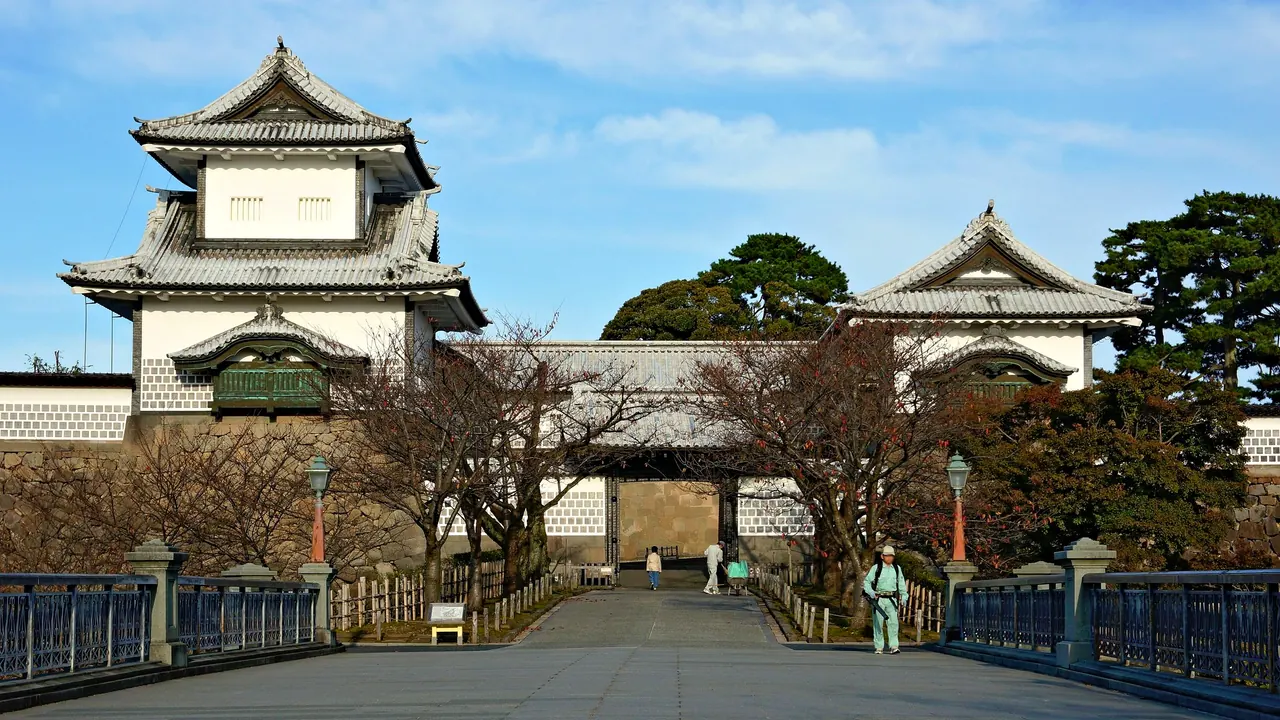
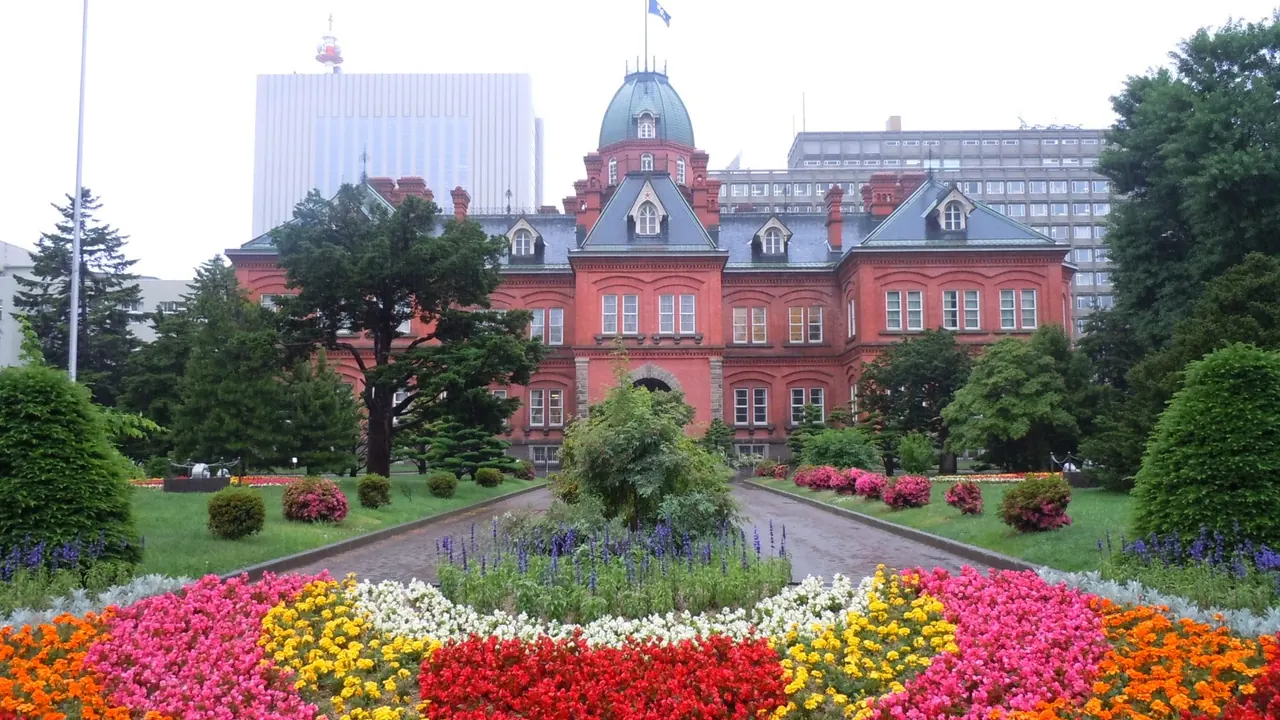
Photos: Kanazawa by 663highland, CC BY 2.5, cropped; Sapporo by Feri88, CC BY 3.0, cropped.
Kanazawa or Sapporo?
Our verdict in twelve categories, each scored against the same fixed benchmark cities, and the climate month by month, so you can choose for your trip.
Choose Kanazawa for
- culture and sights
- day trips
- beaches
Kanazawa suits the traveller who wants old Japan at an unhurried pace. Kenroku-en, the latticed teahouses of Higashi Chaya and the samurai lanes of Nagamachi survived the war intact, and the city's gold leaf, Kutani porcelain and tea-and-sweets culture give it a refinement Sapporo can't match. It is also the better base for day trips, with the thatched villages of Shirakawa-go and the Kaga hot-spring towns close by. Expect quiet evenings.
Choose Sapporo for
- nightlife
- nature and the outdoors
- getting around
Sapporo is the better pick if your trip is about what lies beyond the buildings and what ends up on your plate. It has ski slopes inside the city limits, Niseko powder two hours away, Shikotsu's caldera lake in summer and open-air baths at Jozankei. Back in town there's miso ramen, soup curry, jingisukan and the late bars of Susukino. It has far less history to see, but children have more to do and the subway makes the city simpler to get around.
Scoreboard
Twelve categories on one fixed scale from 0 to 100. The shaded stretch is the gap between the two.
Your match
Pick a travel style or drag the sliders, and both match scores follow your weighting.
Wins on culture and sights and day trips with your weighting.
Wins on nightlife and nature and the outdoors with your weighting.
What matters to you?
Category by category
What the scores mean for a trip.
Beaches & swimming
Neither city is a beach destination, and both have only long, plain sand on the Sea of Japan. Kanazawa has the slight edge. Uchinada is only a few kilometres from town, the water is warmer in August, and Chirihama, where you can drive along the hard sand, makes a novel half-day out.
Sapporo's swimming at Ishikari or near Otaru means a longer trip out of an inland city. The season there is a few weeks of cooler water, so it works best combined with a day in Otaru.
Food & drink
Both are serious eating cities, each with a seafood market and winter crab, but Sapporo has more to keep you eating. It has three dishes of its own, miso ramen, soup curry and lamb grilled at the table, as well as the red-brick beer halls, Susukino's ramen counters and department-store food halls full of Hokkaido dairy and sweets.
Kanazawa is more refined but narrower. You'll find seafood bowls at Omicho, Kaga dishes such as duck jibuni and blackthroat seaperch, kaiseki dinners and a culture of matcha with wagashi in old teahouses that Sapporo has no equivalent of. A few days covers the best of it.
Culture & sights
This is where the two differ most. Kanazawa escaped wartime bombing and still feels like a castle town: Kenroku-en beside the castle walls, the teahouses of Higashi Chaya, the canals of Nagamachi and the trap doors of the ninja temple. The circular contemporary art museum and the D.T. Suzuki Museum give it a modern side too.
Sapporo was laid out on a grid in the 1870s, so its landmarks are pioneer-era buildings such as the wooden Clock Tower and the red-brick government office, plus Ainu history at the Hokkaido Museum. Its standout is Noguchi's Moerenuma Park, which is a landscape work rather than a historic site.
Nightlife
Sapporo is the place for a night out. Susukino is a whole district of neon towers with tiny bars stacked floor upon floor, karaoke, standing bars and late ramen, and it stays busy past midnight even in deep winter. The side streets are easier than the corners where touts wait.
Kanazawa's Katamachi has izakaya, sake bars and a few whisky bars, but it is small and mostly local. Its best evening is a long dinner and a quiet drink in a wooden chaya house. Neither city has much clubbing.
Nature & outdoors
Sapporo is far stronger for the outdoors, and much of it starts in town. Teine and Kokusai ski areas lie inside the city limits, Mount Moiwa and Maruyama are short climbs from the centre, and snowshoe trails begin at the city's edge. In summer, Shikotsu-Toya National Park and the flower fields of Furano and Biei are within reach.
Kanazawa offers riverside paths along the Sai and Asano, and cherry blossom and maple colour in its gardens. Its real mountains, Hakusan with alpine hiking and skiing, and the terraced coast of Noto, take two hours or so and are hard to reach without a car.
Day trips
Kanazawa has the richer choice of outings. Shirakawa-go's thatched farmhouses and quieter Gokayama are a bus ride away, Takayama's merchant streets make a long but rewarding day, and the Shinkansen puts Takaoka's Zen temple within half an hour. The Kaga onsen towns, Kutani pottery villages and the monastery of Eihei-ji round it out.
Sapporo's best trip is Otaru's canal and glass workshops, which you can combine with the Yoichi whisky distillery. Upopoy's Ainu museum and Noboribetsu are also good days out. Beyond those, trips mostly lead to lakes and farmland rather than more towns.
Good for families
Both are safe, clean Japanese cities, but Sapporo gives children much more to do. In winter there are the snow sculptures and slides of the Snow Festival and beginner ski lessons on the city's own hills. Maruyama Zoo's polar bears are a subway ride away, and in summer Moerenuma Park has fountains and playground hills. The underground walkway helps with small children in bad weather.
Kanazawa has the hands-on 21st Century Museum and the ninja temple for older children. Most of its other attractions for children are a drive out of town, and gardens and teahouses can feel slow to young children.
Getting around
Kanazawa's main sights sit in a compact band near the station, and that band is pleasant to walk. There is no metro or tram, though, so you rely on loop buses that get crowded and slow, or on the bike share outside the snowy months.
Sapporo is the easier city to get around. Its numbered grid makes addresses readable, three subway lines and a streetcar loop cover what visitors need on one IC card, and in winter a long underground walkway links the station to Susukino. Icy pavements are still a hazard in midwinter.
Shopping & style
The two are equally good for shopping but want different things from you. Kanazawa is a craft city: gilded lacquer and gold-leaf goods in the chaya districts, Kutani porcelain, Kaga yuzen silk and Ohi tea bowls, with serious makers' work at the prefectural craft centre.
Sapporo is better for mainstream shopping, with department stores stacked above the station and the long covered Tanukikoji arcade for snowy days. What you take home from Sapporo is mostly food, such as Hokkaido chocolate, butter biscuits and cheese, plus Ainu woodcarving. Neither city is strong on luxury fashion.
Affordability
Costs are much the same, and both cities are cheaper than Japan's biggest tourist centres, with plenty of fairly priced business hotels and cheap noodle lunches. What changes is where the money goes. In Kanazawa it is kaiseki dinners, top Omicho seafood, ryokan nights in the Kaga onsen towns and transport to Shirakawa-go.
In Sapporo, many of the main sights are free parks and buildings, but ski passes, crab and sea-urchin dinners push spending up. Central hotels become scarce and expensive during the February Snow Festival.
Live music & performing arts
The two are about equal here, with stages of different kinds. Kanazawa has the traditional arts: regular Noh at the prefectural Noh theatre, geisha dance and shamisen in the chaya teahouses, plus the Orchestra Ensemble Kanazawa, a leading chamber orchestra.
Sapporo's strength is Western classical music at Kitara, home of the Sapporo Symphony Orchestra and of the Pacific Music Festival in July. It also has a large theatre for touring shows, and the Yosakoi Soran dance teams fill the streets in June. In both cities, most theatre is in Japanese, so plan around concerts and dance.
Wellness & relaxation
Sapporo is the better place to unwind, mostly because of its hot springs. Jozankei is a forested gorge of open-air baths inside the city limits, where you can soak with snow falling or leaves turning. Noboribetsu, with its several mineral springs, is one of Japan's best-known onsen towns and close enough for a day or a night.
Kanazawa has hot water nearby too: Yuwaku is a stream-side village half an hour away, and the Kaga towns are good for an overnight stay. Its calm comes as much from early mornings in Kenroku-en and matcha in quiet teahouses.
When should you go?
Pick your month. The climate figures are measured averages, not a forecast.
Kanazawa in July
Sapporo in July
Daytime high, °C
Rainfall in the month, mm
Temperature and rainfall are climate normals, averaged over the years shown. Kanazawa: 1991-2020 normals, Kanazawa (3.2 km from centre). Sapporo: 1991-2020 normals, Sapporo (2.2 km from centre).
Kanazawa is the warmer and much wetter of the two. High summer is hot and sticky, reaching about 31°C in August, and July and August are the months when the sea is warm enough for a proper swim, peaking at 27°C. It stays pleasant into early September. Rain is heavy all year and heaviest in winter, when December brings over 300mm of rain and snow under grey skies with little sunshine. For walking the gardens and old districts, aim for April to May or October, when it is mild, sunnier and without the summer heat.
Sapporo is far colder in winter, with daytime highs around 0°C from December to February. That cold brings steady snow, and winter skies are a little brighter than in Kanazawa. Summer is Sapporo's other good season. June to September stays mild and peaks near 26°C, so sightseeing never feels oppressive, though the sea is only warm enough to swim in for a few weeks. Late summer and early autumn are Sapporo's wettest stretch, but even then it gets far less rain than Kanazawa. Early spring and late autumn are cool in both cities.
Which traveller are you?
For a culture and arts trip, Kanazawa is the clear choice. It kept its Edo-period townscape, with one of Japan's great gardens, a geisha district of wooden teahouses and samurai streets. It also has a striking contemporary art museum and Noh performances, while Sapporo's heritage is mostly Meiji-era.
On an outdoors trip, choose Sapporo. You can ski at Teine and Kokusai inside the city and reach Niseko for powder, then canoe and hike around Shikotsu's caldera lake in summer. Kanazawa's mountains, Hakusan and the Noto coast, lie further out and really need a car.
On a food and nightlife trip, Sapporo gives you more. Miso ramen, soup curry and jingisukan sit alongside beer halls and morning seafood bowls, and Susukino's thousands of tiny bars stay open well past midnight. Kanazawa's food is excellent but more refined and narrower, and its evenings wind down early.
Before you go
| Measure | Kanazawa | Sapporo |
|---|---|---|
| Official language | Japanese | Japanese |
| Currency | Yen (JPY) | Yen (JPY) |
| Sockets | AB100 V, 50 and 60 Hz depending on the region | AB100 V, 50 and 60 Hz depending on the region |
| Driving side | Left | Left |
| Time zone | UTC+9 | UTC+9 |
| Emergency number | Police 110, fire 119 | Police 110, fire 119 |
| Elevation | 28 m | 5 m |
| Main airport | Komatsu Airport / JASDF Komatsu Air Base (KMQ)29 km from centre7 non-stop destinations | New Chitose Airport (CTS)42 km from centre42 non-stop destinations |
| Public holidays this year | 16 days | 16 days |
By the numbers
| Measure | Kanazawa | Sapporo |
|---|---|---|
| City population | 462,479 | 1,959,313 |
| People per km² | 989 | 1,747 |
| Museums within 10 km | 27 | 33 |
| UNESCO World Heritage sites within 50 km | 1 | 1 |
| Swim season, months above 21 °C | 4 months | 1 month |
Where else could you go?
Every comparison below shares a destination with this one, so you can follow Kanazawa or Sapporo somewhere new.