Photos: Kandy by xiquinhosilva, CC BY 4.0, cropped; Kochi by Vis M, CC BY-SA 4.0, cropped.
Kandy or Kochi?
Our verdict in twelve categories, each scored against the same fixed benchmark cities, and the climate month by month, so you can choose for your trip.
Choose Kandy for
- nature and the outdoors
- day trips
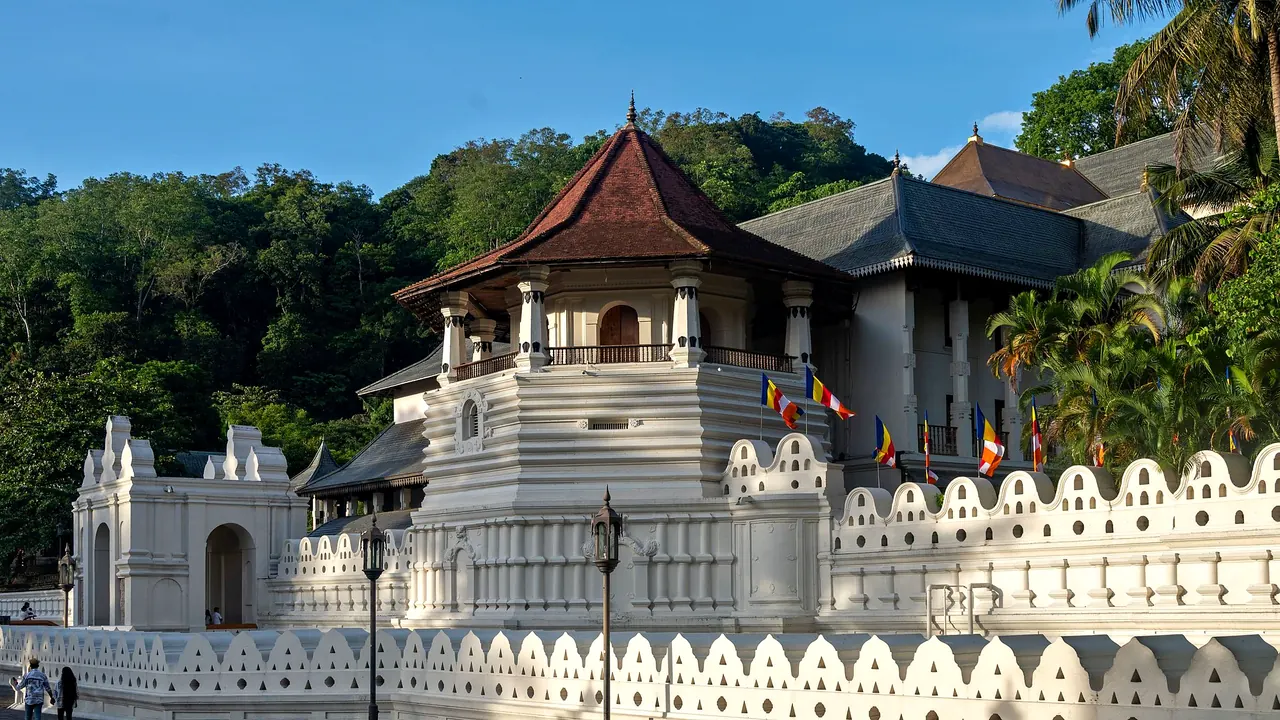
Kandy suits travellers who come for hills, history and a busy itinerary. The Temple of the Sacred Tooth Relic, forest trails above town, tea estates and easy access to Dambulla and Sigiriya make it the better base for an active trip with a car and driver. You'll be out early and back by dinner.
Choose Kochi for
- beaches
- food and drink
- wellness
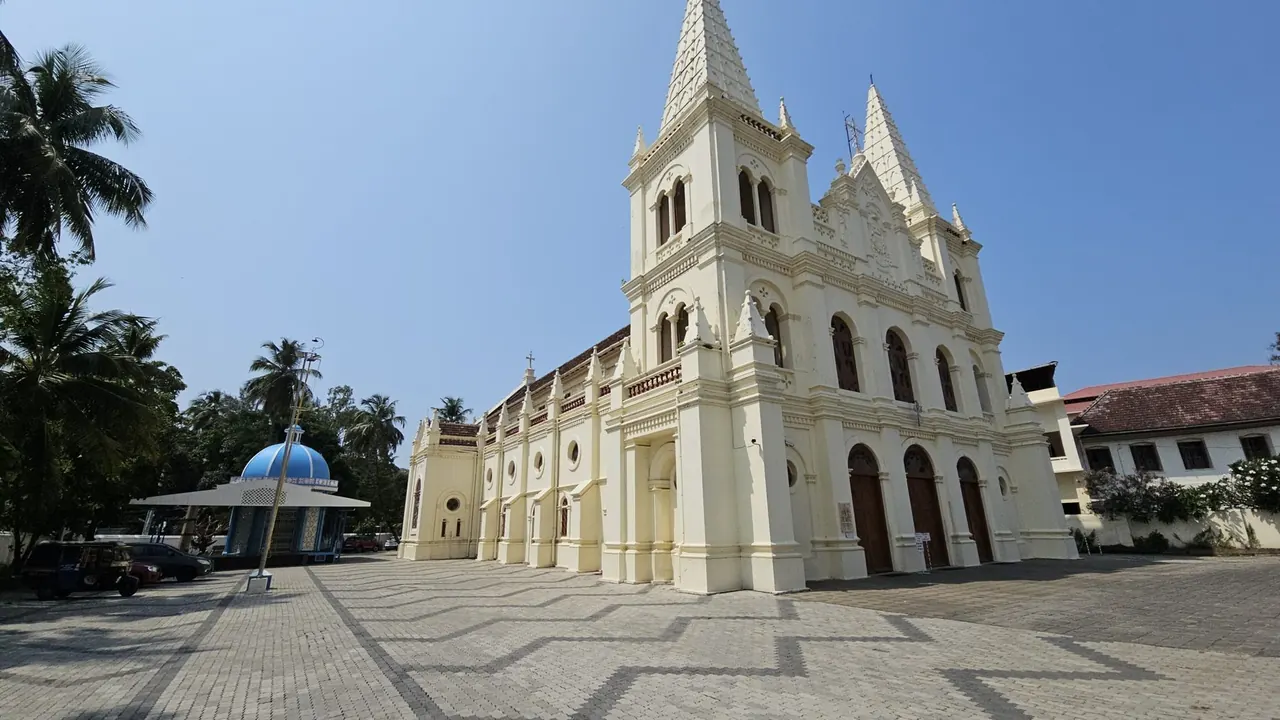
If you'd rather slow down by the water and eat well, choose Kochi. Kerala cooking is the richer of the two, and Ayurveda is a living medical tradition here. The spice-trade lanes of Fort Kochi and Mattancherry are flat and easy to wander, and there is a proper beach an hour away in the dry months.
Scoreboard
Twelve categories on one fixed scale from 0 to 100. The shaded stretch is the gap between the two.
Your match
Pick a travel style or drag the sliders, and both match scores follow your weighting.
Wins on nature and the outdoors and day trips with your weighting.
Wins on beaches and food and drink with your weighting.
What matters to you?
Category by category
What the scores mean for a trip.
Beaches & swimming
Neither is a beach destination, but only Kochi has the sea within reach. Kandy is three hours from any coast, its lake is ornamental and its rivers are unsafe, so swimming means a hotel pool looking over the hills.
Kochi's waterfront at Fort Kochi is for evening walks past the fishing nets rather than swimming. Cherai, on Vypeen island about an hour north, is a long, palm-backed beach with warm water and a lagoon behind it. Plan it for November to March, because monsoon surf makes the sea unsafe in the middle of the year.
Food & drink
Kochi is the place to eat well. Kerala cooking is built on coconut, curry leaf and pepper, and it is at its best with seafood, such as pearl spot fried in a banana-leaf wrap. Add the Syrian Christian and Muslim kitchens and you get a range Kandy can't match, from the catch cooked by the fishing nets to the meals halls of Ernakulam.
Kandy's strength is honest rice and curry, plus hoppers and kottu from plain eating houses near the clock tower, with tea tastings in the hills. It is good everyday food, but there are few ambitious restaurants, so many visitors end up eating at their hotel.
Culture & sights
Both have a strong historic core, but of different kinds. Kandy centres on one great working shrine, the Temple of the Sacred Tooth Relic, inside a royal city on the UNESCO list. The drumming, the pilgrims in white and the setting by the lake make it an experience of living faith rather than a round of museums.
Kochi spreads its history across Fort Kochi and Mattancherry: St Francis Church, the tiled Paradesi Synagogue, the murals of the Mattancherry Palace and the merchant houses of the spice trade. It is a many-faith port to explore slowly over two or three days, while Kandy is a deeper set of sights covered in a day.
Nightlife
Both are early-night places, but Kochi gives you slightly more. Hotel bars and a few licensed lounges in Ernakulam offer somewhere for a drink, and in Fort Kochi the evening stretches to a sunset walk and a long dinner.
Kandy is quieter still. It is a sacred town where the streets by the lake empty after dinner, and a drink on a hotel terrace above the hills is about as far as it goes. Save any real night out for Colombo or the coast.
Nature & outdoors
Kandy has the stronger outdoors, with green hills all round the town. Udawatta Kele forest is a walk from the temple, Peradeniya's botanic gardens are a short ride away, and the Knuckles Range offers serious cloud-forest hiking past villages and waterfalls.
Kochi's landscape is flat and full of water. Kayaks and country boats wind through the Kumbalangi canals, herons gather in the Mangalavanam mangroves and birdwatchers head to Thattekad. Mountain trekking around Munnar is four hours away, and the heat and the long monsoon cut more outdoor plans short than in the hills.
Day trips
From Kandy, the famous sights are within reach. The painted caves of Dambulla, the rock fortress at Sigiriya and a circuit of medieval temples at Embekke and Lankatilaka make it the natural gateway to the Cultural Triangle. Tea factories and the elephants at Pinnawala are gentler outings.
From Kochi, the best day out is the backwaters from Alappuzha. The ancient Muziris port sites and the temple town of Thrissur are quieter alternatives. They are rewarding but far less celebrated. Roads are slow around both cities, so expect a hired driver and an early start.
Good for families
Neither city is built for children, though both welcome them warmly. The difference is in the outings. Kandy has the lawns, monkeys and fruit bats of Peradeniya, elephant visits and the scenic train into the tea country, but its centre is cramped and the temple asks for quiet.
In Kochi, the outings are on the water: ferry crossings, backwater boats and the fishing nets being hauled in, plus a large amusement and water park on the city's edge. The constant heat is harder on small children, so in either place a hotel with a pool does much of the work.
Getting around
Kochi is the easier city to get around. Fort Kochi is flat and compact enough to walk or cycle. Ferries and the water metro turn the harbour crossing to Ernakulam into part of the day, and a metro line runs through the commercial centre.
Kandy's centre is small too, but walking is hard work. Traffic squeezes through a narrow valley, pavements are broken and many hotels sit up steep climbs, so tuk-tuks fill the gap. Its great asset is the railway, including the famous line through the tea country to Ella.
Shopping & style
Kochi gives shoppers more to browse. The old Jew Town warehouses in Mattancherry are full of antique dealers, and spice merchants still sell pepper and cardamom by the sack. Kerala handloom such as kasavu cloth is worth buying, and a large mall covers international brands.
Kandy sticks to local products: tea from the hill estates, spices, batik, lacquerware and carved masks. The fixed-price government craft shop is the safest place to buy. Be wary of gem showrooms that drivers steer you towards, since they earn a commission.
Affordability
Both are cheap for most visitors. Family-run guesthouses or homestays, local meals and rickshaw rides cost very little in either city, so the difference is in what pushes the budget up.
In Kandy, the main costs are the much higher entry fees for foreigners at the temple, the gardens and the ancient sites to the north, plus a car and driver for day trips. In Kochi, most sights are free or nearly so, and the big costs are ones you can choose to skip: heritage hotels, private houseboats and residential Ayurveda.
Live music & performing arts
Each city stages one classical form every evening for visitors, and Kochi's makes the fuller night out. At the Kathakali theatres in Fort Kochi you can watch the performers apply their green-and-red make-up before the show. The same stages often add Mohiniyattam dance and Kalaripayattu martial art, and temple drumming fills the festival season.
Kandy's evenings of Kandyan dance, with drummers and fire walkers, are a shorter programme. The town does have one great annual spectacle, the Esala Perahera in July or August, when elephants, dancers and torch bearers parade through the streets.
Wellness & relaxation
Kochi is the stronger choice for rest and treatment. Kerala is the home of Ayurveda, and here it ranges from small clinics to doctor-led courses lasting one to three weeks, with shirodhara widely offered. Fort Kochi's shaded lanes and evenings by the water are calming in themselves.
Kandy has Ayurveda too, in town and at hillside retreats that add yoga and views over the tea estates. The town itself is noisy, though, so calm is found out on the hills. For real stillness, both cities send you out of the centre: into the hills from Kandy, and to the backwater resorts from Kochi.
When should you go?
Pick your month. The climate figures are measured averages, not a forecast.
Kandy in July
Kochi in July
Daytime high, °C
Rainfall in the month, mm
Where the figures come from
Kandy has no weather station within reach, so its figures come from a gridded climate model rather than a measured record, and read a broad area rather than the city itself.
Kochi has no weather station within reach, so its figures come from a gridded climate model rather than a measured record, and read a broad area rather than the city itself.
Temperature and rainfall are climate normals, averaged over the years shown. Kandy: 2001-2020 normals, NASA POWER reanalysis grid, no weather station within 90 km. Kochi: 2001-2020 normals, NASA POWER reanalysis grid, no weather station within 90 km.
Kandy is warm all year without real extremes. Its hottest spell is April, at around 32°C, and its driest months are June to August, when the hill trails are at their best. January to March is also pleasant, with only modest rain. The wet season arrives in October and lasts to December, peaking at about 279mm in November, when downpours are frequent and paths turn slippery.
Kochi follows almost the opposite pattern. From December to March it is nearly dry but very hot, reaching 33°C in February and March, which is uncomfortable for long walks around the old quarter in the middle of the day. This is also the season when the sea at Cherai is calm enough to swim. From May to October the monsoon takes over and June is the wettest month, with around 494mm. Rough surf then makes the sea unsafe, even though the water stays close to 29°C all year. The two cities fit together well: Kandy is at its driest while Kochi is at its wettest, and Kochi dries out in December, while Kandy is still deep in its rains.
Which traveller are you?
For an outdoors trip, Kandy is the better base. Forest trails start right above the temple and Peradeniya's gardens are close by. The Knuckles Range and the tea hills offer real hiking, while Kochi's nature is mostly boat trips on flat water.
For a relaxing and wellness trip, choose Kochi. Ayurveda is a medical tradition here, with treatment courses that run for weeks, and Fort Kochi's slow, shaded lanes help you unwind. Kandy has treatments too, but its centre is too congested for real rest.
On a food and nightlife trip, Kochi wins clearly on the food: Kerala seafood, appam with coconut stew, and Syrian Christian and Malabar cooking. Neither city goes out late, but Kochi's toddy shops and Ernakulam lounges are more than Kandy offers.
Before you go
| Measure | Kandy | Kochi |
|---|---|---|
| Official language | Tamil, Sinhala | Hindi, English |
| Currency | Sri Lanka Rupee (LKR) | Indian Rupee (INR) |
| Sockets | GM230 V, 50 Hz | CM230 V, 50 Hz |
| Driving side | Left | Left |
| Time zone | UTC+5:30 | UTC+5:30 |
| Emergency number | Police 119, ambulance 110, fire 110 | 108 or 112 |
| Elevation | 500 m | 0 m |
| Main airport | Bandaranaike International Colombo Airport (CMB)84 km from centre57 non-stop destinations | Cochin International Airport (COK)24 km from centre36 non-stop destinations |
By the numbers
| Measure | Kandy | Kochi |
|---|---|---|
| City population | 120,087 | 677,381 |
| People per km² | 4,214 | 7,138 |
| Museums within 10 km | 6 | 4 |
| UNESCO World Heritage sites within 50 km | 2 | 0 |
| Swim season, months above 21 °C | - | 12 months |
Where else could you go?
Every comparison below shares a destination with this one, so you can follow Kandy or Kochi somewhere new.