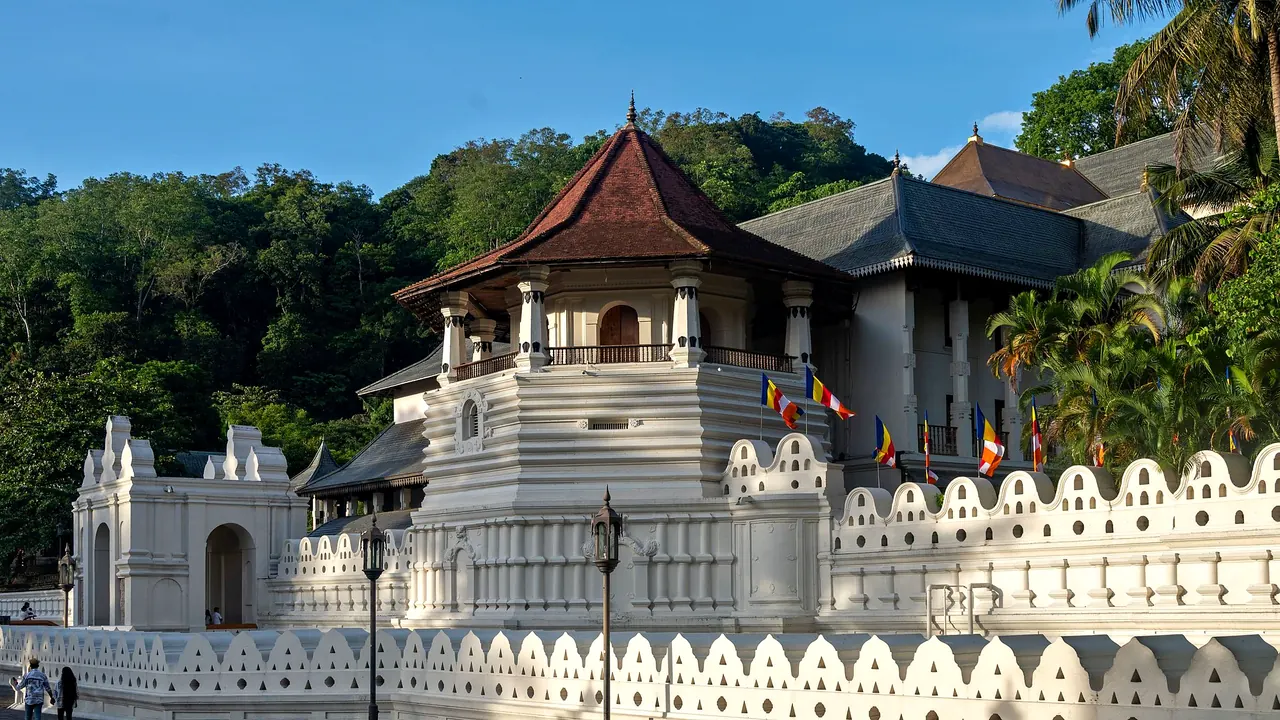
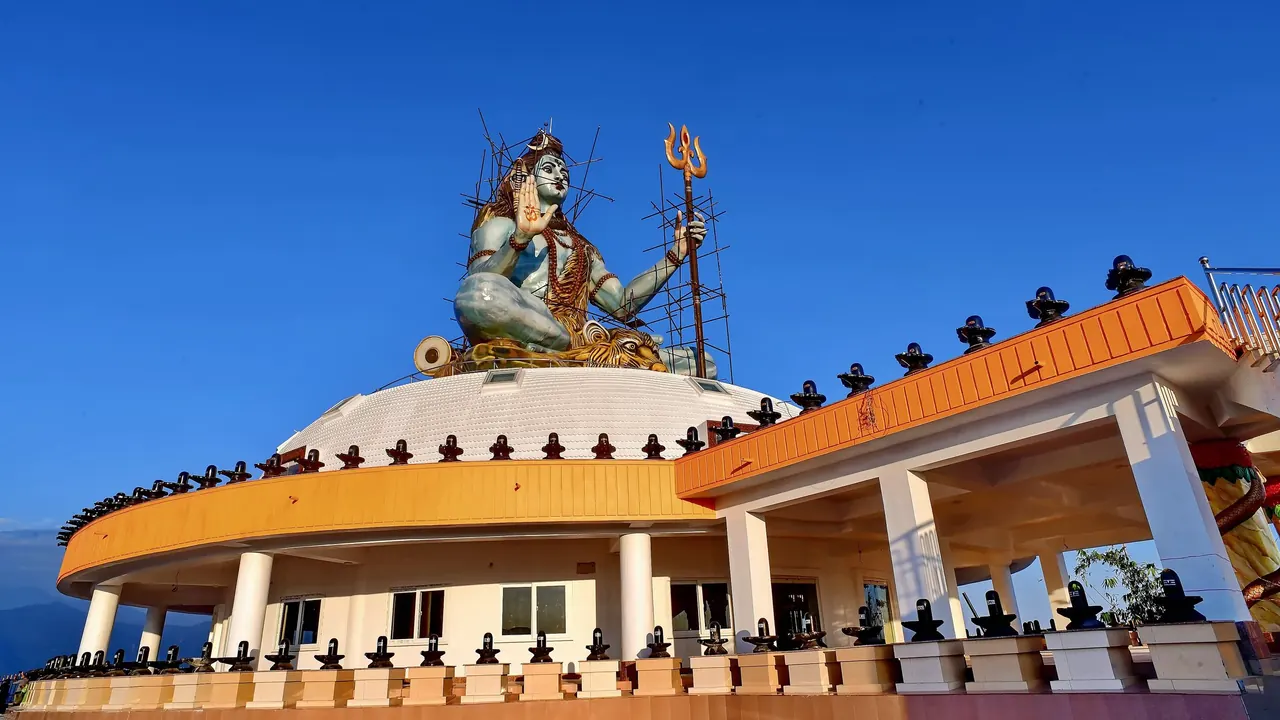
Photos: Kandy by xiquinhosilva, CC BY 4.0, cropped; Pokhara by Rajesh Dhungana, CC BY-SA 4.0, cropped.
Kandy or Pokhara?
Our verdict in twelve categories, each scored against the same fixed benchmark cities, and the climate month by month, so you can choose for your trip.
Choose Kandy for
- day trips
- culture and sights
- live music and the arts
Kandy suits a traveller who wants Sri Lanka's Buddhist heritage and hill country from one base. You get the Temple of the Sacred Tooth Relic and the old royal city by the lake, Kandyan dance in the evenings, and day trips north to Dambulla, Sigiriya and the medieval village temples. Most of the time here goes on looking and learning, and the town fits naturally into a longer tour of the island.
Choose Pokhara for
- nature and the outdoors
- nightlife
- prices
Pokhara is the choice when the mountains are the point. The Annapurnas fill the sky above Phewa Lake, treks begin an hour or two away, and the days in between go on paragliding, kayaking and ridge walks. It costs even less than Kandy, its evenings are a little livelier and its pace is slower. It has far less to show in temples and history.
Scoreboard
Twelve categories on one fixed scale from 0 to 100. The shaded stretch is the gap between the two.
Your match
Pick a travel style or drag the sliders, and both match scores follow your weighting.
Too close to call, 1 point apart
Wins on day trips and culture and sights with your weighting.
Wins on nature and the outdoors and nightlife with your weighting.
What matters to you?
Category by category
What the scores mean for a trip.
Beaches & swimming
Neither city is a beach stop. Kandy is about three hours by road from the sea. Its lake is ornamental and its rivers are unsafe, so swimming means a hotel pool, ideally one looking over the forested hills. Adding a few nights on the south or east coast is an easy extension from here.
Landlocked Nepal offers no such option from Pokhara, but Phewa Lake at least puts you on the water in a painted rowing boat, and Begnas Lake allows an occasional quiet dip.
Food & drink
Both cities eat best at their simplest tables, and neither has a dining scene worth planning a trip around. In Kandy that means rice and curry with many small dishes, hoppers at breakfast and kottu at night in plain eating houses near the clock tower. Tea from the surrounding estates is the drink to try.
Pokhara's Lakeside caters to trekkers with pizza, Israeli plates and apple pie, so you have to look a little harder for the Nepali food: Thakali dal bhat, momos and charcoal-grilled sekuwa. It does have the better breakfasts, with bakeries and lake-view cafés serving coffee from Nepal's hills.
Culture & sights
Kandy has far more to see. The whole old city is a World Heritage Site, and the Temple of the Sacred Tooth Relic is a working shrine where drumming, offerings and pilgrims in white make a visit about more than architecture. Around it are the palace buildings, the royal lake, the garrison cemetery and the white Buddha on the hill.
Pokhara's sights fill a day or two: the island temple of Tal Barahi, the Peace Pagoda, the old bazaar and the International Mountain Museum, which explains the region's climbers and peoples. People come for the mountains, not the monuments.
Nightlife
Pokhara has the livelier evenings, modest as they are. Lakeside's rooftop bars fill with trekkers celebrating a finished circuit, cover bands play rock standards, and a couple of small dance bars keep going until around midnight.
Kandy is a sacred city and goes quiet soon after dinner. A night out there means a drink on a hotel terrace or in one of a few old-fashioned bars, so anyone wanting more should save it for Colombo.
Nature & outdoors
Kandy's landscape is soft and green: a bowl of hills at about 500m, monkeys and birds in Udawatta Kele just above the temple, and walking paths through the tea estates of the Hantana hills. The Knuckles Range adds serious hiking through cloud forest.
Pokhara is in another league. Machhapuchhre and the Annapurna range rise above Phewa Lake, Sarangkot offers sunrise views and world-class paragliding, and treks to Poon Hill, Mardi Himal or Annapurna Base Camp begin an hour or two away by road.
Day trips
Kandy is much the better base for outings. It is the southern gateway to the Cultural Triangle. The painted caves of Dambulla are about two hours away and Sigiriya is a long day out beyond them. Closer in, the medieval temples of Embekke, Lankatilaka and Gadaladeniya make a half-day circuit, with tea factories and spice gardens nearby.
From Pokhara the only easy day out is Bandipur, the car-free Newar hill town about two hours away. Gurung villages such as Ghandruk are really trekking stops, and Gorkha and Tansen work better as overnight stops on the way to Kathmandu or Lumbini.
Good for families
Both are warm towards children but have little built for them, so the difference is which ages each suits. Kandy's best moments for younger children involve animals and trains: the lawns and fruit bats of Peradeniya, the elephants at Pinnawala and the hill-country railway. The congested centre and the hush expected at the temple are harder going.
Pokhara's quiet lakeshore and rowing boats make for easy family afternoons. It comes into its own with outdoorsy teenagers, who can do the Peace Pagoda walk, explore the caves and try tandem paragliding.
Getting around
Kandy's centre is compact but hard on foot, while Pokhara's Lakeside is flat, quiet and pleasant to walk or cycle. In Kandy the temple, lake and market are only minutes apart, but traffic is squeezed through a narrow valley, fumes build at rush hour, pavements are broken and many hotels sit up steep hillsides. Tuk-tuks do most of the work, and day trips mean a car and driver. The railway makes up for some of this, with trains to Colombo and the scenic line through the tea country to Ella.
In Pokhara, guesthouses, restaurants and boat jetties along the shore are a short stroll apart, and a rented bicycle covers the rest of the strip. Beyond Lakeside it is harder going: Sarangkot, the caves, the old bazaar and the trailheads need a taxi, a scooter or a hired driver, on roads that are rough and slow.
Shopping & style
From Kandy you take home tea, spices and island crafts. From Pokhara it is trekking gear and Himalayan handicrafts. In Kandy, tea comes from estate shops in the hills and dealers in town, and the central market is good for spices. Batik, lacquerware, brass and carved masks are the crafts to look for, and the government craft shop sells them at fixed prices. Be careful in gem showrooms, especially when a driver takes you there.
Pokhara's Lakeside rents and sells down jackets, boots and poles, mostly local copies of big brands that will do for a single trek. Between those shops are pashminas, singing bowls, thangkas and prayer flags. Tibetan carpets and jewellery come from the refugee settlements on the edge of town, where you can visit the carpet workshops. Neither city has fashion streets or boutiques.
Affordability
Both are cheap, but Pokhara makes a budget go further. Kandy is inexpensive for guesthouses, rice and curry and tuk-tuks. Foreign visitors pay much higher entrance fees at the temple, Peradeniya and the ancient sites, though, and day trips usually mean hiring a car and driver. Rooms also cost more during the Esala Perahera.
In Pokhara, lakeside guesthouses with mountain views cost little, dal bhat with refills is cheap and even the Western menus are modest. The main extra costs are paragliding, guided treks and Annapurna permits.
Live music & performing arts
Kandy has a classical tradition of its own. Kandyan dance, with its drummers, fire walkers and silver headdresses, is performed every evening in halls near the lake, and drumming accompanies the daily offerings at the temple. In July or August the Esala Perahera brings elephants and torch-lit processions through the streets over several nights.
Pokhara has cover bands in the Lakeside bars and dinner shows of Gurung and Magar dances, which are pleasant but put on for visitors. Neither city has a theatre or concert season.
Wellness & relaxation
Kandy's strength is Ayurveda, with oil massages, herbal steam baths and longer programmes with prescribed diets. The town itself is noisy, though, so calm is found in the hillside retreats rather than in the centre.
Pokhara is the easier place to slow down. Lakeside is unhurried, there are yoga and meditation retreats on the quieter hillsides and the far shore, and massages for sore trekking legs are on every street. The famous hot springs at Jhinu Danda are a long way off on the trails.
When should you go?
Pick your month. The climate figures are measured averages, not a forecast.
Kandy in July
Pokhara in July
Daytime high, °C
Rainfall in the month, mm
Where the figures come from
Kandy has no weather station within reach, so its figures come from a gridded climate model rather than a measured record, and read a broad area rather than the city itself.
Pokhara has no weather station within reach, so its figures come from a gridded climate model rather than a measured record, and read a broad area rather than the city itself.
Temperature and rainfall are climate normals, averaged over the years shown. Kandy: 2001-2020 normals, NASA POWER reanalysis grid, no weather station within 90 km. Pokhara: 1991-2020 normals, TerraClimate 4 km grid at the town, no weather station within 90 km.
Kandy is warm all year, with daytime highs from 27°C in winter to 32°C in April, so rain matters more than heat. October to December is the wettest stretch, with close to 280mm in November. June to August and February to March are the drier spells for sightseeing and hill walks. April's heat makes walking around town at midday tiring.
Pokhara's seasons are much sharper. The monsoon from June to September is heavy, with about 674mm in July, and cloud often hides the peaks. October and November are dry, warm and clear, the best months for views and trekking. December to February also stay dry, but highs fall to around 19°C in January. The two cities complement each other: Kandy's driest months fall in Pokhara's monsoon, and Pokhara's best season is Kandy's wettest.
Which traveller are you?
For a culture and arts trip, Kandy is the clear pick. The Temple of the Sacred Tooth Relic and the old royal city form a World Heritage Site, Kandyan dance is staged every evening, and Dambulla and Sigiriya are within a day's drive.
On an outdoors trip, Pokhara has few rivals. The Annapurna range stands over the lake, treks to Poon Hill and Mardi Himal start close by, and paragliders launch from Sarangkot. Kandy's forest trails and the Knuckles Range are rewarding, but on a far smaller scale.
For a food and nightlife trip, neither city is a destination, but Pokhara does better. Lakeside bars with cover bands stay busy with trekkers until around midnight, and momos and dal bhat are easy to find. Kandy empties soon after dinner.
Before you go
| Measure | Kandy | Pokhara |
|---|---|---|
| Official language | Tamil, Sinhala | Nepali |
| Currency | Sri Lanka Rupee (LKR) | Nepalese Rupee (NPR) |
| Sockets | GM230 V, 50 Hz | CM230 V, 50 Hz |
| Driving side | Left | Left |
| Time zone | UTC+5:30 | UTC+5:45 |
| Emergency number | Police 119, ambulance 110, fire 110 | Police 100, ambulance 102, fire 101 |
| Elevation | 500 m | 900 m |
| Main airport | Bandaranaike International Colombo Airport (CMB)84 km from centre57 non-stop destinations | Pokhara International Airport (PHH)4 km from centre9 non-stop destinations |
By the numbers
| Measure | Kandy | Pokhara |
|---|---|---|
| City population | 120,087 | 353,841 |
| People per km² | 4,214 | 762 |
| Museums within 10 km | 6 | 2 |
| UNESCO World Heritage sites within 50 km | 2 | 0 |
Where else could you go?
Every comparison below shares a destination with this one, so you can follow Kandy or Pokhara somewhere new.