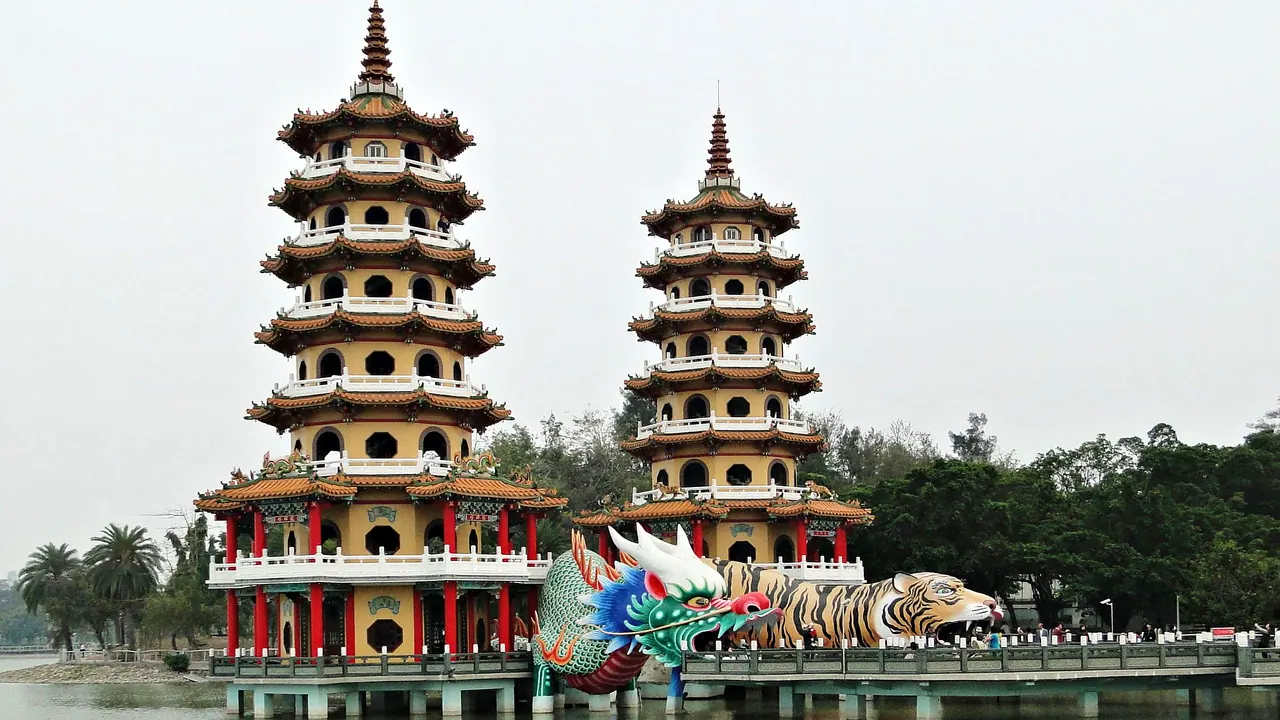
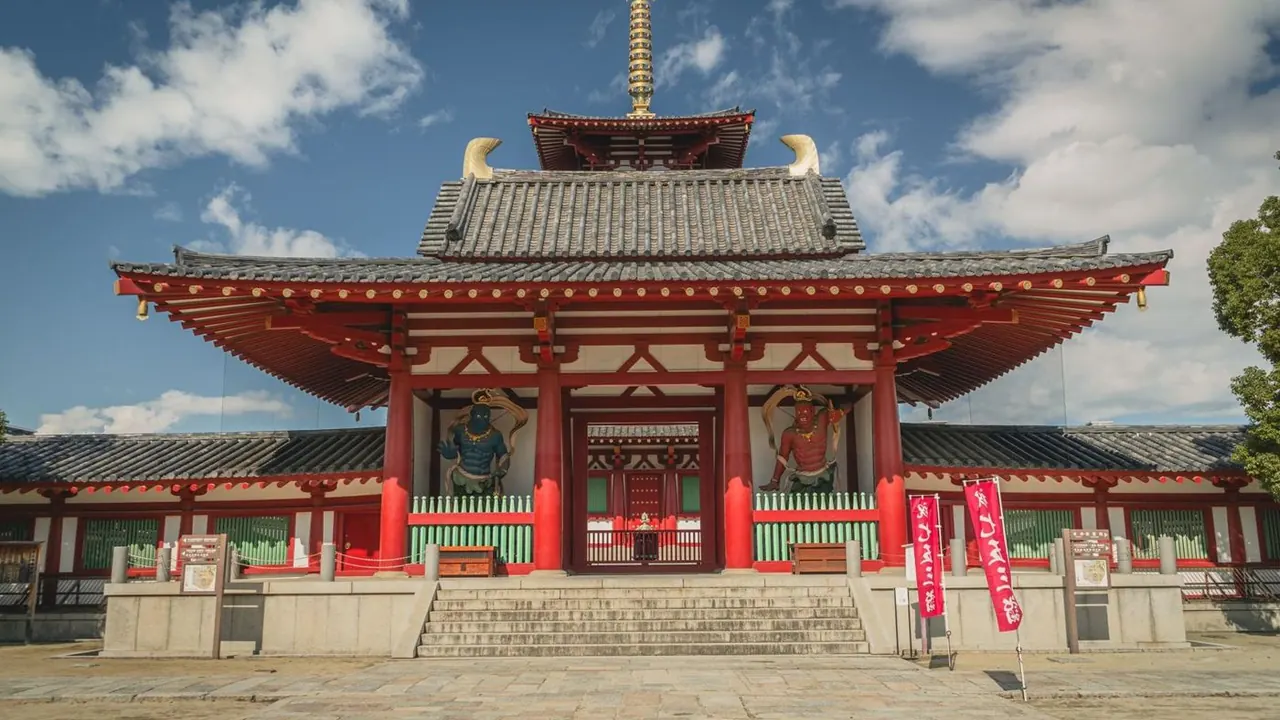
Photos: Kaohsiung by Bernard Gagnon, CC BY-SA 3.0, cropped; Osaka by Sarmat Batagov, Pexels License.
Kaohsiung or Osaka?
Our verdict in twelve categories, each scored against the same fixed benchmark cities, and the climate month by month, so you can choose for your trip.
Choose Kaohsiung for
- prices
- beaches
- nature and the outdoors
Kaohsiung suits the traveller who wants a warm, unhurried winter escape that costs little. Its dry season brings mild sunny days, the sea stays warm enough to swim most of the year, and the city works well as a base for southern Taiwan: Tainan's temples and food, the monastery at Fo Guang Shan and the turtle coves of Xiaoliuqiu. Expect a quiet port city rather than a big night out.
Choose Osaka for
- nightlife
- shopping
- day trips
Osaka is the stronger choice for almost everything else. It is one of the great eating and drinking cities of Asia, it is easy and rewarding with children, and its trains put Kyoto, Nara, Himeji and Kobe within an easy day. Pick it for a varied, busy trip where every evening and every day out is covered, and accept that it costs a little more and has no real beach.
Scoreboard
Twelve categories on one fixed scale from 0 to 100. The shaded stretch is the gap between the two.
Your match
Pick a travel style or drag the sliders, and both match scores follow your weighting.
Wins on prices and beaches with your weighting.
Wins on nightlife and shopping with your weighting.
What matters to you?
Category by category
What the scores mean for a trip.
Beaches & swimming
Neither city is a beach destination, but Kaohsiung has a modest edge. Cijin's dark sand is a ferry hop from the centre, Sizihwan has a sheltered seasonal swimming bay, and the sea is warm for much of the year, although currents and typhoon swells often keep people out. Its real asset is Xiaoliuqiu, where you can snorkel with sea turtles in small coral coves.
Osaka's beaches, at Suma or towards Wakayama, are each about an hour away by train, suburban and coarse-sanded, and open only for July and August. They make a summer outing rather than a reason to come.
Food & drink
Both are cities where cheap, informal eating is the best of it, but Osaka plays in a higher league. Kaohsiung's southern Taiwanese cooking is sweeter and built on seafood: milkfish congee in the morning, oyster omelettes and grilled squid at Ruifeng night market, and catch-of-the-day dinners on Cijin. Fine dining is thin.
Osaka has its own repertoire of takoyaki, okonomiyaki and kushikatsu, Kuromon Market for grazing, and izakaya packed into the alleys of Ura-Namba and Tenma. It also reaches the very top, with the kaiseki and sushi counters of Kitashinchi, so it serves a serious food trip from street stall to special occasion.
Culture & sights
Both are working port cities whose heritage comes in pieces rather than old quarters, and each takes two or three days. Kaohsiung's sights are the temples and pagodas around Lotus Pond, the red-brick former British Consulate above the harbour and the warehouse galleries of Pier-2, more pleasant than profound.
Osaka has more weight: the great stone walls and moats of Osaka Castle, the ancient foundations of Shitennoji and Sumiyoshi Taisha, and the fine Korean and Chinese ceramics on Nakanoshima. In both cities the deeper history lies next door, in Tainan for one and Kyoto and Nara for the other.
Nightlife
This is where the two differ most. Osaka is famous across Japan for its sociable evenings: neon Dotonbori, standing bars in Ura-Namba, small clubs in Amerikamura and tiny bars around Umeda, with strangers chatting at the counter and many staying out until the morning trains.
Kaohsiung's nights are quieter and mostly local. The classic evening is a stir-fry hall with seafood and crates of Taiwan Beer, perhaps followed by craft beer near Pier-2 or a drink on the Love River. Clubs in Sinsing and Lingya fill only at weekends.
Nature & outdoors
The two are broadly level outdoors, but the landscapes differ. Kaohsiung has wild ground right in town, with macaques on the Shoushan trails above the harbour, and stranger country within reach: the mudstone badlands of Moon World, mud volcanoes, the butterfly valleys of Maolin and coral reefs off Xiaoliuqiu.
Osaka itself is flat concrete, but a short train ride brings the forest trail to the Minoo waterfall, ridge walks in the Rokko mountains and gentle wooded hills to the east. Its draw is seasonal, cherry blossom and autumn maples, rather than the subtropical oddities of southern Taiwan.
Day trips
Kaohsiung has good outings: Tainan's forts, temples and food are about half an hour by high-speed rail, the vast Buddhist complex of Fo Guang Shan is close inland, and Meinong, Xiaoliuqiu and Chiayi for the Alishan tea country add variety.
Osaka is in another class as a base. Kyoto, Nara, Himeji Castle and Kobe are all within roughly an hour, followed by Koyasan's monastery stays, the tea town of Uji and Lake Biwa. Frequent trains mean you could spend two weeks on day trips and never change hotel.
Good for families
Kaohsiung keeps children happy with simple pleasures: the short ferry across to Cijin, a ride round the harbour on the light rail and the Ferris wheel on the roof of a harbourside mall. The National Science and Technology Museum is large and hands-on, and the theme park in Dashu or the small zoo on Shoushan can fill a day. After that the list runs thin.
Osaka gives a family much more to choose from, and it is the better pick for a longer stay. Besides its famous theme park and aquarium, there is Tennoji Zoo, a science museum, the Ferris wheel at Tempozan and the wide lawns of Expo '70 Commemorative Park beneath the giant Tower of the Sun. The main trial is weekend crowds, and spring or autumn make the easiest visit.
Getting around
Osaka's network is dense and quick: the Midosuji line runs through every central district, the JR loop and other subway lines fill the gaps, and the same IC card takes you on to Kyoto, Nara and Kobe. The only real trial is changing lines in the underground maze of Umeda.
Kaohsiung has clean, calm trains, but only two metro lines and a harbour light rail loop for a widely spread city. Many places are a bus ride or a long, hot walk from a station, so taxis and bike-share do more of the work.
Shopping & style
Osaka is the better shopping trip by some way. Shinsaibashi-suji's long covered arcade, generations-old department stores in Umeda, flagships on Midosuji, vintage in Amerikamura and anime and electronics in Den Den Town cover most tastes, and the kitchen knives of Doguyasuji make a memorable purchase.
Kaohsiung is mainly malls and department stores around Sanduo, plus youth fashion in Xinjuegang and cheap goods at the night markets. Its best take-home items are edible: tea, pineapple cakes and dried mullet roe.
Affordability
Kaohsiung is the cheaper of the two. Market breakfasts, noodle shops and night-market snacks cost very little, transport is low-priced, and business hotels stay fair outside long weekends and festivals.
Osaka is fair rather than cheap. Its food is generous for the money, but rooms rise sharply in cherry-blossom and autumn-leaf seasons, and big tickets such as Universal Studios add up. Staying a little outside Namba or Umeda helps.
Live music & performing arts
Kaohsiung's showpiece is Weiwuying, a huge wave-roofed arts centre with an opera house and concert hall hosting touring companies and the city orchestra, while glove puppetry and Taiwanese opera turn up at temple festivals. Small-venue music is scarce.
Osaka offers more for a visitor: full seasons of bunraku with English guides at the National Bunraku Theatre, Festival Hall and Symphony Hall for orchestras, rock and jazz live houses in Minami and Umeda, and the Takarazuka Revue a short train ride away. Its manzai comedy is lively but entirely in Japanese.
Wellness & relaxation
Osaka has a bathing culture that Kaohsiung lacks. Neighbourhood sento and large super sento complexes make a long soak an easy evening, and Arima Onsen, one of Japan's oldest spa towns, is about an hour away, though the city itself is fast and noisy.
Kaohsiung's version of relaxation is skilled, inexpensive foot reflexology and massage on ordinary streets, and slow walks by the Love River or Chengcing Lake. Its nearest hot springs need a long drive and an overnight stay.
When should you go?
Pick your month. The climate figures are measured averages, not a forecast.
Kaohsiung in July
Osaka in July
Daytime high, °C
Rainfall in the month, mm
Where the figures come from
Kaohsiung has no rain gauge within 25 km of the centre, so its rainfall comes from a gridded climate dataset read at the city rather than from a gauge further away.
Temperature and rainfall are climate normals, averaged over the years shown. Kaohsiung: 1991-2020 normals, Kaohsiung International Airport (6.4 km from centre). Osaka: 1991-2020 normals, Osaka (1.8 km from centre).
The two cities run on almost opposite calendars. Kaohsiung is at its best from October to April, when it is dry and warm, still around 24°C by day in January, and the sea stays warm enough for a swim even in winter. From May the monsoon and typhoon season sets in, peaking at about 480mm of rain in August, with heavy heat and humidity that push sightseeing into early mornings and evenings. The sea is at its warmest then, near 29°C, but swells and closures limit swimming.
Osaka has real seasons. Winters are cold for walking, around 10°C in January, while spring and late autumn are the comfortable months for streets, temples and hills. The rainy season comes in June, and July and August are hot and sticky, reaching 34°C, though August is also the sunniest month and the only time the bay is warm enough for a comfortable swim. For a winter trip choose Kaohsiung; for spring or autumn, Osaka.
Which traveller are you?
For a food and nightlife trip, Osaka wins clearly. Its counter food, izakaya alleys and top-end kaiseki outclass Kaohsiung's night markets, and after dinner the bars of Minami and Umeda keep going until the first train, where Kaohsiung offers mostly beer halls and riverside drinks.
On a family trip with children, Osaka is the easier and richer choice. Universal Studios Japan, the Kaiyukan aquarium and Kids Plaza fill days, and stations have lifts and baby rooms, while Kaohsiung's attractions are fewer and its scooter-blocked pavements and summer heat make outings harder work.
On a trip with a tight budget, Kaohsiung stretches money further. Market breakfasts and night-market snacks cost very little, business hotels stay fairly priced, and temples, parks and the Pier-2 harbour district are free, whereas Osaka's rooms climb in blossom and autumn-leaf seasons.
Before you go
| Measure | Kaohsiung | Osaka |
|---|---|---|
| Official language | Taiwanese Sign Language, Amis, Taiwanese Hokkien, Rukai, Bunun, Kanakanavu, Standard Taiwanese Mandarin, Paiwan, Yami, Atayal, Saaroa, Kavalan, Tsou, Seediq, Puyuma, Saisiyat, Sakizaya, Taiwanese Hakka, Truku, Matsu dialect, Kinmen dialect, Wuqiu dialect | Japanese |
| Currency | New Taiwan Dollar (TWD) | Yen (JPY) |
| Sockets | AB110 V, 60 Hz | AB100 V, 50 and 60 Hz depending on the region |
| Driving side | Right | Left |
| Time zone | UTC+8 | UTC+9 |
| Emergency number | 110 or 112 or 119 | Police 110, fire 119 |
| Elevation | 9 m | 20 m |
| Main airport | Kaohsiung International Airport (KHH)7 km from centre35 non-stop destinations | Kansai International Airport (KIX)38 km from centre62 non-stop destinations |
| Public holidays this year | - | 16 days |
By the numbers
| Measure | Kaohsiung | Osaka |
|---|---|---|
| City population | 2,713,032 | 2,751,862 |
| People per km² | 919 | 12,340 |
| Museums within 10 km | 20 | 44 |
| UNESCO World Heritage sites within 50 km | 0 | 6 |
| Swim season, months above 21 °C | 12 months | 5 months |
Where else could you go?
Every comparison below shares a destination with this one, so you can follow Kaohsiung or Osaka somewhere new.