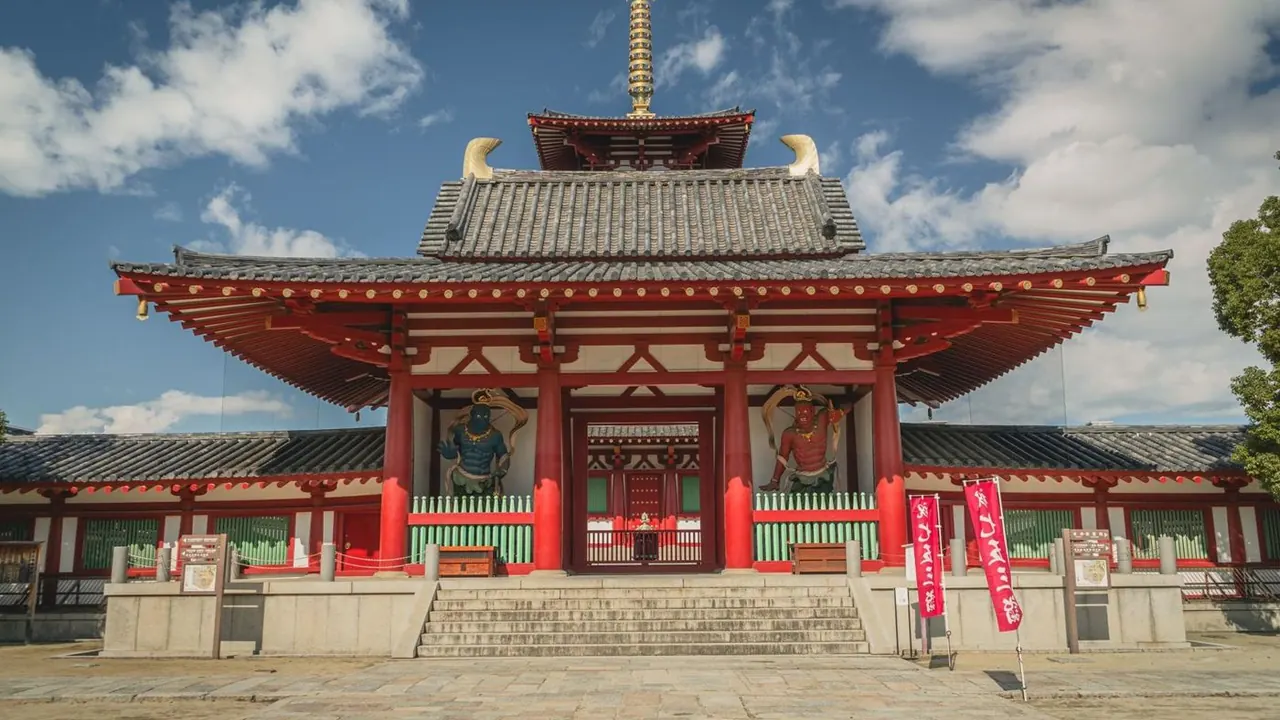
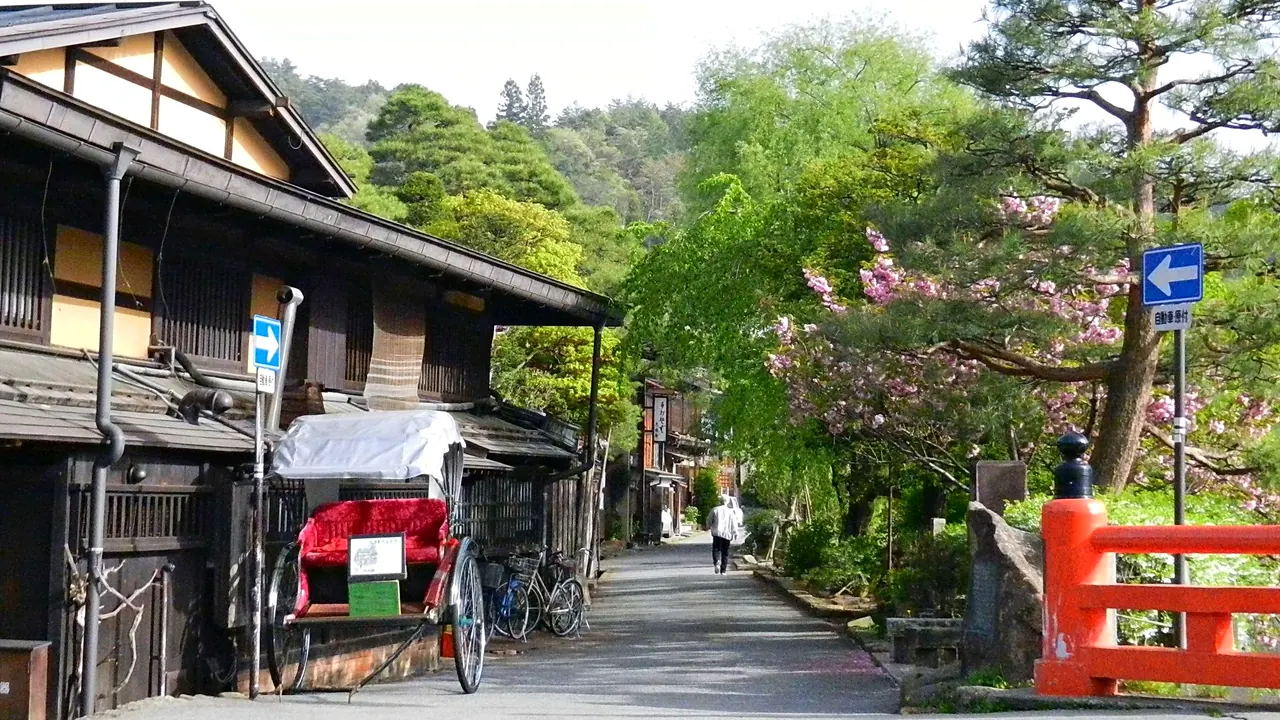
Photos: Osaka by Sarmat Batagov, Pexels License; Takayama by lienyuan lee, CC BY 3.0, cropped.
Osaka or Takayama?
Our verdict in twelve categories, each scored against the same fixed benchmark cities, and the climate month by month, so you can choose for your trip.
Choose Osaka for
- nightlife
- live music and the arts
- food and drink
Osaka is the better choice for travellers who want energy, variety and ease. It is one of the great eating cities of Japan, its bars stay lively until the first morning train, and it suits families well with its aquarium and theme park. The rail network also makes Kyoto, Nara, Himeji and Kobe simple day outings, so a single hotel can cover a week of very different days.
Choose Takayama for
- nature and the outdoors
- wellness
Takayama suits a slower trip that puts atmosphere and landscape first. Its lanes of dark-timbered merchant houses, ryokan with their own hot-spring baths and quiet evenings make it a place to rest, and the Northern Alps, Kamikochi and Shirakawa-go are all close by. Most people give it two or three nights in a longer Japan route rather than make it their base.
Scoreboard
Twelve categories on one fixed scale from 0 to 100. The shaded stretch is the gap between the two.
Your match
Pick a travel style or drag the sliders, and both match scores follow your weighting.
Wins on nightlife and live music and the arts with your weighting.
Wins on nature and the outdoors and wellness with your weighting.
What matters to you?
Category by category
What the scores mean for a trip.
Beaches & swimming
Neither is a beach destination, but Osaka at least offers a summer swim. In July and August Suma or the beaches towards Wakayama are about an hour away by train and the water is warm, even if the sand is coarse and the setting suburban.
Takayama is deep in the mountains, about two hours from Toyama Bay, so swimming would mean a separate stop on the coast.
Food & drink
For eating, Osaka is far ahead. Its range runs from griddled takoyaki in Dotonbori and grilled scallops at Kuromon Market to the basement food halls of Umeda and the refined kaiseki counters of Kitashinchi, and good value holds across all of it.
Takayama does a few things very well: Hida beef on a magnolia leaf with hoba miso, soy-glazed dango and sake tastings in the old breweries. But the choice is narrow and the town stops serving early, so after a few days the meals start to repeat.
Culture & sights
On sights the two are close, but the kind of visit is very different. Osaka has separate landmarks in a modern city: the castle on its original walls, Shitennoji, Sumiyoshi Taisha and stronger museums such as the Museum of Oriental Ceramics and the Nakanoshima art quarter.
Takayama is a complete historic townscape, with intact Edo-period lanes in Sanmachi Suji, the old Jinya government office and the gassho farmhouses of Hida Folk Village. It is better for wandering through the past and weaker for museums.
Nightlife
After dark the gap is very wide. Osaka has the neon of Dotonbori, standing bars in Ura-Namba, small clubs and DJ bars in Amerikamura and tiny bars around Ohatsutenjin, and many people stay out until the first morning train.
In Takayama, most visitors eat dinner at their ryokan and the old town is quiet by nightfall. There are a few izakaya near the station for a sake after dinner and nothing much after eleven.
Nature & outdoors
Takayama is the town for the mountains. Within about an hour and a half by bus you can be on Kamikochi's flat trails beneath the Hotaka range, riding the Shin-Hotaka ropeway or walking high on Norikura, and winter brings snow and skiing.
Osaka itself is flat concrete. Its outdoors means day walks to the Minoo waterfall, the Rokko ridges above Kobe or the wooded slopes of Mount Ikoma, which are pleasant but have no high country.
Day trips
As a base, Osaka is far ahead. Kyoto and Nara are both well under an hour by train, and Himeji Castle, Kobe and the temple mountain of Koyasan are easy too, so each day can be a different kind of outing from the same hotel. Trains run often and need little planning, which makes it simple to decide each morning where to go.
Takayama has one outing that people travel for: Shirakawa-go, the village of steep thatched farmhouses about fifty minutes away by bus. The canal town of Hida-Furukawa makes a shorter extra. After that the choice gives way to mountain country, so Takayama's day trips are used up within a few days, while Osaka's list runs on well beyond most itineraries.
Good for families
Osaka is much easier with children. Universal Studios Japan, the whale sharks at Kaiyukan, the Tempozan Ferris wheel, Tennoji Zoo and the Expo '70 park fill days without effort, and stations have lifts and baby rooms.
Takayama is safe and compact, and children like the market snacks, the folk village and winter snow. With nothing built for them, though, a day or two is usually enough.
Getting around
Osaka has a full urban network: the Midosuji line, the JR loop and one IC card that also works on trains to Kyoto, Nara and Kobe. Its one real trial is the long underground walk between lines at Umeda.
Takayama needs no network to speak of. The old town is a short walk from the station, but trips into the mountains depend on regional buses that have to be planned around and can fill up in busy seasons.
Shopping & style
Osaka is far stronger for general shopping. It has the long Shinsaibashi-suji arcade, generations-old department stores in Umeda, flagship stores on Midosuji, Den Den Town for electronics and anime, and kitchen knives on Doguyasuji.
Takayama has no fashion or department stores, but it beats Osaka on traditional craft. Its amber Shunkei lacquer, yew carvings and Hida bentwood furniture are the kind of objects Osaka is thin on.
Affordability
Osaka is somewhat easier on a budget, mainly because cheap, good food is everywhere and transport costs little. Rooms and Universal Studios are the costly parts.
Takayama's everyday costs are moderate too, but what people come for adds up: a ryokan night with a full dinner, a proper Hida beef meal and rooms in festival weeks.
Live music & performing arts
Osaka has a real stage life. Bunraku puppet theatre has its national home in Nippombashi with English guides, Festival Hall and Symphony Hall host orchestras, and manzai comedy, live houses and the nearby Takarazuka Revue add more.
Takayama's performance comes almost entirely from its spring and autumn festivals, with karakuri puppets on the floats and lantern-lit processions. Outside those days there is little to see.
Wellness & relaxation
Takayama is the better place to slow down. Many ryokan have their own spring-fed baths, the town goes to bed early, and the riverside open-air pools of Okuhida and the spa town of Gero are both within an hour.
Osaka has its own bathing culture in neighbourhood sento and large super sento, and Arima Onsen is an hour away. The city around them stays fast and noisy, so a soak there is a break in the day rather than the rhythm of the stay.
When should you go?
Pick your month. The climate figures are measured averages, not a forecast.
Osaka in July
Takayama in July
Daytime high, °C
Rainfall in the month, mm
Where the figures come from
Takayama's sunshine is measured 65 km from the centre, at Matsumoto.
Temperature and rainfall are climate normals, averaged over the years shown. Osaka: 1991-2020 normals, Osaka (1.8 km from centre). Takayama: 1971-2000 (sunshine 1991-2020, rainfall 1981-2010) normals, Takayama (0.5 km from centre).
Both towns are at their best in spring and autumn, when the cherry blossom and the red leaves come out and the walking is comfortable. Summer works against Osaka. July and August reach about 34°C with heavy humidity, which makes sightseeing on foot tiring, although that is also the only time its suburban beaches are worth a visit, with the sea near 27°C in August. June is the wettest month there. Winter in Osaka is cool, dry and fine for city walking.
Takayama is around four degrees cooler through the summer, which makes July and August easier for walking. It also gets much more rain, with about 273mm in July and nearly as much in September, so mountain days need some flexibility. Winter is a different trip altogether: highs of about 3°C, snow over the town and Shirakawa-go, and the strongest pull of a hot bath, though Kamikochi closes for the cold months.
Which traveller are you?
On a food and nightlife trip, Osaka wins easily. Takoyaki stalls, okonomiyaki, the izakaya alleys of Ura-Namba and Tenma and bars where strangers chat until the first train leave Takayama's early nights and short menu far behind.
On a family trip with children, Osaka is the stronger base. Universal Studios Japan, the Kaiyukan aquarium, the zoo and Kids Plaza give children days built for them. Takayama has no attractions of that kind and works best as a short stop.
On an outdoors trip, Takayama is the place to stay. Kamikochi's riverside trails, the Shin-Hotaka ropeway up towards 3,000m peaks and winter snow are all close by, while Osaka offers only wooded day hikes such as Minoo and the Rokko ridges.
Before you go
| Measure | Osaka | Takayama |
|---|---|---|
| Official language | Japanese | Japanese |
| Currency | Yen (JPY) | Yen (JPY) |
| Sockets | AB100 V, 50 and 60 Hz depending on the region | AB100 V, 50 and 60 Hz depending on the region |
| Driving side | Left | Left |
| Time zone | UTC+9 | UTC+9 |
| Emergency number | Police 110, fire 119 | Police 110, fire 119 |
| Elevation | 20 m | 573 m |
| Main airport | Kansai International Airport (KIX)38 km from centre62 non-stop destinations | Chubu Centrair International Airport (NGO)149 km from centre43 non-stop destinations |
| Public holidays this year | 16 days | 16 days |
By the numbers
| Measure | Osaka | Takayama |
|---|---|---|
| City population | 2,751,862 | 85,199 |
| People per km² | 12,340 | 39 |
| Museums within 10 km | 44 | 14 |
| UNESCO World Heritage sites within 50 km | 6 | 1 |
| Swim season, months above 21 °C | 5 months | - |
Where else could you go?
Every comparison below shares a destination with this one, so you can follow Osaka or Takayama somewhere new.