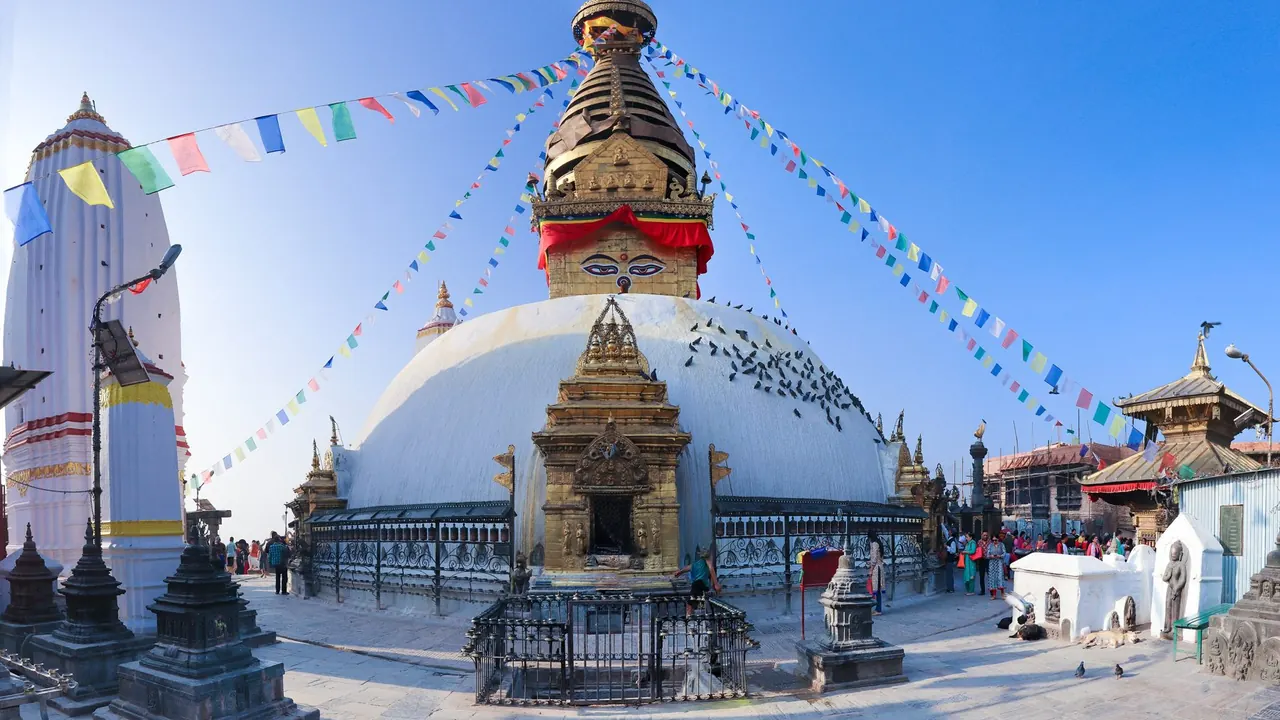
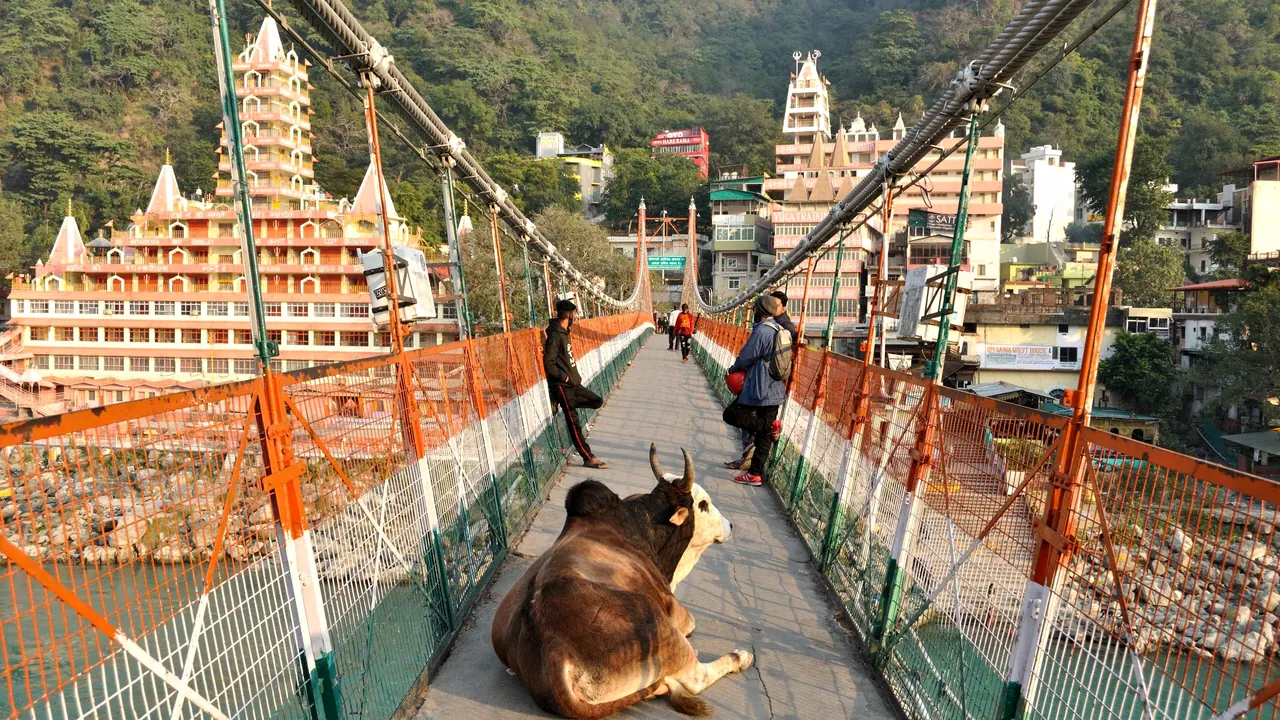
Photos: Kathmandu by Nabin K. Sapkota, CC BY-SA 4.0, cropped; Rishikesh by Dey.sandip, CC BY-SA 4.0, cropped.
Kathmandu or Rishikesh?
Our verdict in twelve categories, each scored against the same fixed benchmark cities, and the climate month by month, so you can choose for your trip.
Choose Kathmandu for
- culture and sights
- nightlife
- shopping
Kathmandu suits the traveller who wants to spend their days among living monuments: the Durbar Squares of Kathmandu and Patan, the great stupas of Boudhanath and Swayambhunath, and the open riverbank rites at Pashupatinath. It also has better food, thanks to Newari cooking, Thamel for a drink after dark, and a wider choice of crafts to bring home. It is also the starting point for Himalayan treks and mountain flights.
Choose Rishikesh for
- wellness
- getting around
- beaches
Rishikesh is for a trip where the aim is to slow down. The town is organised around yoga, meditation and Ayurveda, with ashrams offering everything from a drop-in class to a residential course, and the day runs from dawn practice to the evening aarti. The river and forest are right at the edge of town, with rafting, safaris and waterfall walks close by. Anyone hoping for bars, varied cooking or a long list of sights will find it thin.
Scoreboard
Twelve categories on one fixed scale from 0 to 100. The shaded stretch is the gap between the two.
Your match
Pick a travel style or drag the sliders, and both match scores follow your weighting.
Wins on culture and sights and nightlife with your weighting.
Wins on wellness and getting around with your weighting.
What matters to you?
Category by category
What the scores mean for a trip.
Beaches & swimming
Neither place offers a swim worth travelling for, but Rishikesh at least has a river shore to enjoy. White sand banks run along the Ganges, and the rafting camps upstream near Shivpuri pitch their tents on river beaches. The water is cold and fast, though, so a ritual dip at the ghats, holding the chains, is as far as most people go.
Kathmandu has nothing of the kind. Its valley rivers are not fit for bathing, and the mountain rivers are for rafting, so a hotel pool is the only way to swim.
Food & drink
Kathmandu gives you more to explore. Newari cooking, with choila, bara pancakes, yomari dumplings and rice beer, is worth seeking out in the old bazaars, Patan and Kirtipur. Momos are on every corner, and the Tibetan quarter at Boudhanath adds noodle soup and butter tea. Thamel's tourist menus are uneven.
Rishikesh is a holy town, so it is vegetarian and has no alcohol. Thalis at simple dhabas and jalebi with chai by the bridges are good and cheap, and the Tapovan café terraces over the river are lovely places to sit. Their menus are much the same from one café to the next, though, and after a week the range starts to feel narrow.
Culture & sights
Here the two are far apart. Kathmandu has a dense heritage that is still in daily use: Durbar Square with the house of the Kumari, Swayambhunath on its hill, the huge stupa at Boudhanath circled by pilgrims at dusk, and cremations on the riverbank at Pashupatinath. Patan has the finest of the valley's squares and a museum that explains Newari craft.
Rishikesh offers atmosphere more than monuments. You can walk across Ram Jhula to the painted ashrams of Swarg Ashram, watch the evening aarti at Triveni Ghat and wander through the overgrown Beatles ashram. Without museums or much old architecture, it doesn't take long to see.
Nightlife
Kathmandu has a modest night out, but it is a real one. In Thamel, trekkers fill the rooftop bars, pool halls and a few dance clubs until about midnight, and Jhamsikhel has the odd lounge bar.
Rishikesh has nothing comparable. Alcohol is not sold, and there are no bars or clubs. An evening there means the aarti on the ghats, a long dinner and perhaps a chant session before an early night.
Nature & outdoors
In Rishikesh, the outdoors is right at the edge of town. You can raft serious rapids from the camps at Shivpuri, walk to the Neer Garh waterfall, or take a jeep safari in Rajaji National Park in search of elephants and perhaps a leopard. Bungee jumping, ziplining and kayaking fill out the list.
From Kathmandu the big mountains are closer. You can watch the sunrise over the snow peaks from Nagarkot or Dhulikhel, walk the oak and rhododendron forest of Shivapuri, or take an hour's flight past Everest. Langtang and longer treks also start here. Its rafting rivers, though, are around three hours away.
Day trips
Both have a similar number of outings, but they differ in kind. Kathmandu has one outstanding day out: Bhaktapur, a former royal town of brick squares and tiered temples, which you can combine with Changu Narayan. After that, Kirtipur, Bungamati and Panauti are quieter variations on the same Newari theme.
Rishikesh offers more variety. There is the great aarti at Haridwar, the Forest Research Institute and Mindrolling monastery in Dehradun, the hill station of Mussoorie and the river confluence at Devprayag.
Good for families
Neither is easy with small children, but Rishikesh does a little better with teenagers. They can go rafting (minimum ages apply), take jeep safaris in Rajaji and try the ziplines, and the vegetarian food is gentle on young stomachs. The fast river, steep lanes and food-snatching macaques still need watching.
In Kathmandu, children will enjoy the monkeys at Swayambhunath and the prayer wheels at Boudhanath. Beyond that there is only a small zoo, and traffic, dust and winter air make the days tiring. It works best for families heading on to a trek.
Getting around
Rishikesh is easier to get around. Its districts are strung along the river, joined by footbridges, riverside paths and a ferry near Ram Jhula, and shared vikrams run along the main road. The walking is often uphill, and you need a taxi for the waterfalls and rafting put-ins.
Kathmandu's old city and Thamel are walkable, but once you leave them, the traffic takes over. The minibuses are hard to work out, so most visitors use taxis or ride-hailing motorbikes, and getting across to Patan or Boudhanath can take a surprisingly long time.
Shopping & style
Kathmandu has much more to buy. Thamel sells pashmina, felt and trekking gear, though much of it is copies. Boudhanath sells Tibetan carpets and thangka paintings, and Patan's workshops cast their own bronze and copper statues.
In Rishikesh, almost everything ties back to yoga: cotton practice clothes, malas, incense, Ayurvedic oils and philosophy books around the two jhulas. Both places sell singing bowls, and you are expected to bargain in both.
Affordability
Both are very cheap, and day-to-day spending barely registers in either. What differs is where the bigger costs come from. In Kathmandu, foreigners pay entry fees at the Durbar Squares, Pashupatinath and Bhaktapur, and trekking permits and mountain flights take most of the budget. In Rishikesh, ashram rooms and drop-in classes cost little, and the expensive items are rafting, multi-week trainings and the upmarket riverside retreats.
Live music & performing arts
Neither has a formal stage, but Kathmandu has a little more to choose from. Bands play rock covers and Nepali folk in Thamel, and dinner shows stage regional dances. During Indra Jatra the streets fill with masked dancers, and an autumn jazz festival has been running for many years.
Rishikesh's music is almost all devotional. There is the singing and drumming of the aarti, kirtan sessions where visitors join in, and the occasional sitar or bansuri recital. It is a good place to take lessons yourself.
Wellness & relaxation
This is what Rishikesh is for. Dozens of ashrams offer daily yoga, silent meditation and teacher trainings, Ayurvedic clinics run multi-day treatments, and an international yoga festival is held each spring. With dawn practice and no alcohol, the whole town keeps the same rhythm, though the bridges and main road are noisy.
Kathmandu is more about meditation than retreat. Kopan and the other monasteries above Boudhanath teach Buddhist courses, and cheap massage is everywhere in Thamel. Because the city is so loud and dusty, though, finding calm means getting away from it, to a garden, a monastery or a hill retreat on the valley rim.
When should you go?
Pick your month. The climate figures are measured averages, not a forecast.
Kathmandu in July
Rishikesh in July
Daytime high, °C
Rainfall in the month, mm
Where the figures come from
Rishikesh has no weather station within reach, so its figures come from a gridded climate model rather than a measured record, and read a broad area rather than the city itself.
Temperature and rainfall are climate normals, averaged over the years shown. Kathmandu: 1991-2020 normals, Kathmandu Airport (4.7 km from centre). Rishikesh: 2001-2020 normals, NASA POWER reanalysis grid, no weather station within 90 km.
October and November are the best months in both places: the monsoon has gone, the air has cleared and the days are warm without being hot. Both are much alike in midwinter, with mild sunny afternoons around 20°C, and both are soaked from June to September, when July brings about 384mm to Kathmandu and almost as much to Rishikesh. The rafting season on the Ganges stops while the river is high.
The big difference is spring. At Kathmandu's altitude, April and May stay pleasant for walking at around 29°C, with plenty of sunshine before the rains. In Rishikesh it is already hot by April, and by May it reaches 39°C, too hot to spend the middle of the day out on the ghats or the bridges. For Rishikesh, aim for October to March. Kathmandu works well from October right through to May.
Which traveller are you?
On a culture and arts trip, Kathmandu is the clear choice. It has three royal squares packed with temples, the Patan Museum for Newari bronze and woodwork, and the great stupas. Rishikesh has its riverside ashrams and the Beatles' ashram, and most visitors have seen them in two or three days.
For a relaxing and wellness trip, choose Rishikesh. Dozens of ashrams run daily yoga, silent meditation and long trainings, and Ayurvedic clinics offer full treatments. With no alcohol and early nights, the whole town keeps that rhythm. Kathmandu's monastery courses are serious, but the city around them is loud.
On a food and nightlife trip, Kathmandu wins easily. You can eat Newari buffalo choila with rice beer, momos and Tibetan thukpa, then spend the evening in Thamel's rooftop bars and small clubs. Rishikesh is vegetarian and sells no alcohol, so its evenings end early.
Before you go
| Measure | Kathmandu | Rishikesh |
|---|---|---|
| Official language | Nepali | Hindi, English |
| Currency | Nepalese Rupee (NPR) | Indian Rupee (INR) |
| Sockets | CM230 V, 50 Hz | CM230 V, 50 Hz |
| Driving side | Left | Left |
| Time zone | UTC+5:45 | UTC+5:30 |
| Emergency number | Police 100, ambulance 102, fire 101 | 108 or 112 |
| Elevation | 1,300 m | 372 m |
| Main airport | Tribhuvan International Airport (KTM)4 km from centre38 non-stop destinations | Dehradun Jolly Grant Airport (DED)14 km from centre13 non-stop destinations |
By the numbers
| Measure | Kathmandu | Rishikesh |
|---|---|---|
| City population | 845,767 | 70,499 |
| People per km² | 17,121 | 133 |
| Museums within 10 km | 9 | 0 |
| UNESCO World Heritage sites within 50 km | 1 | 0 |
Where else could you go?
Every comparison below shares a destination with this one, so you can follow Kathmandu or Rishikesh somewhere new.
- Pokharavs Kathmandu
- Delhivs Rishikesh
- Agravs Rishikesh
- Varanasivs Kathmandu
- Amritsarvs Rishikesh
- Jaipurvs Rishikesh