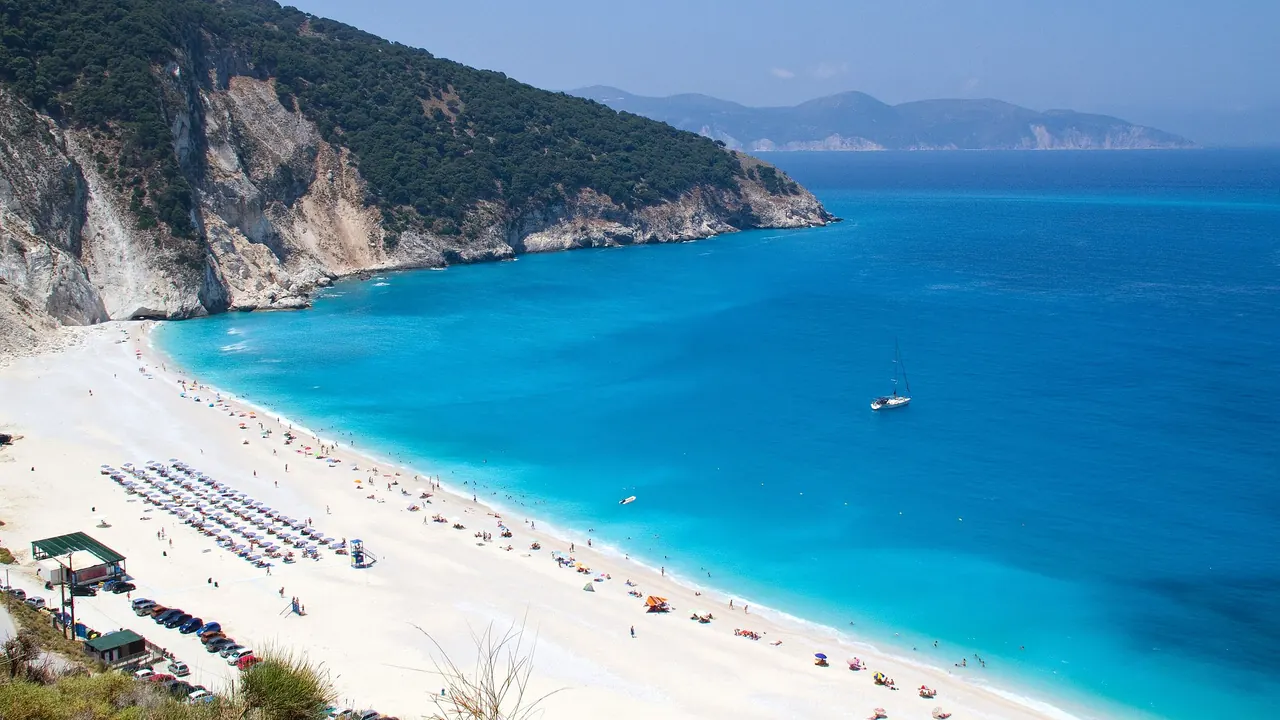
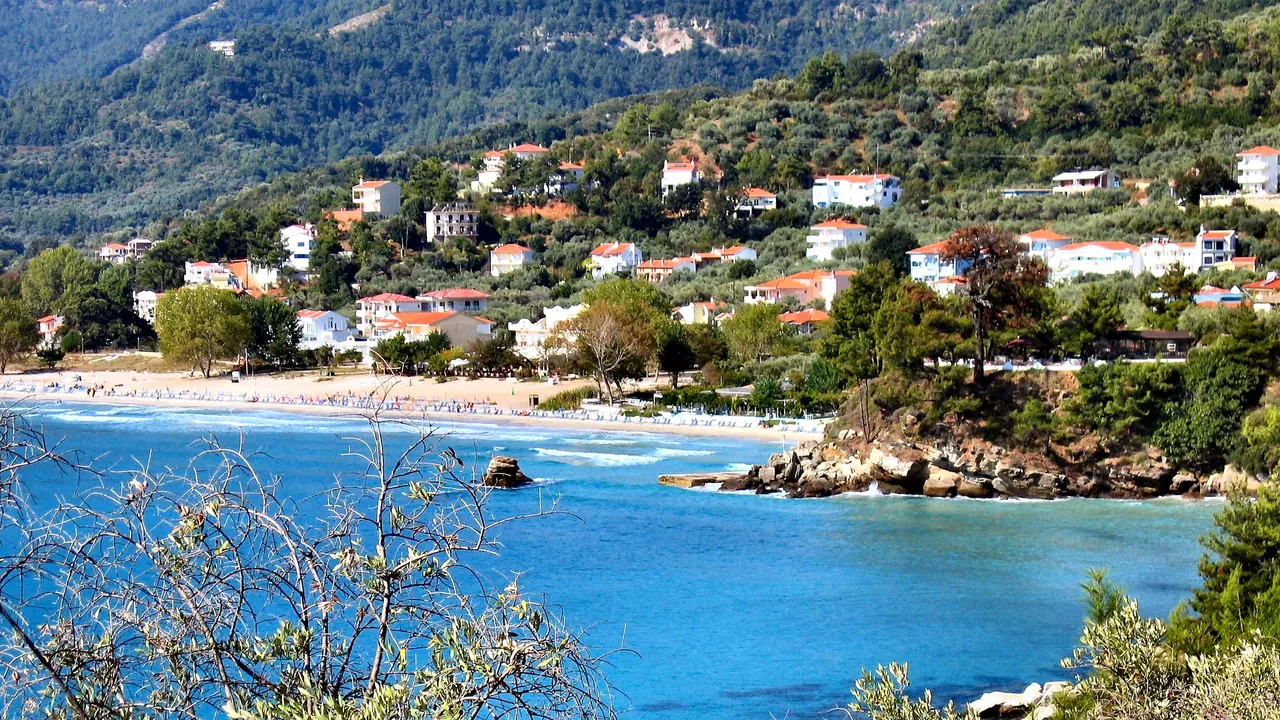
Photos: Kefalonia by Tony Hisgett from Birmingham, UK, CC BY 2.0, cropped; Thassos by Ronald Saunders from Warrington, UK, CC BY-SA 2.0, cropped.
Kefalonia or Thassos?
Our verdict in twelve categories, each scored against the same fixed benchmark cities, and the climate month by month, so you can choose for your trip.
Choose Kefalonia for
- food and drink
- nature and the outdoors
- day trips
Kefalonia suits travellers who want scenery as much as sand. It is the bigger and wilder island, with Mount Ainos and its fir forest, the Melissani and Drogarati caves, and beaches spread over several coasts. Its food has more of a local character, from Robola wine to meat pie, and Ithaca is an easy ferry ride away. The price is a lot of driving on winding roads and a bill that runs higher, especially around Fiskardo and Assos.
Choose Thassos for
- getting around
- prices
- culture and sights
Thassos is the easier and cheaper choice. One coastal road loops the whole island, so no beach is far away, the family-run studios and tavernas keep costs down, and the ancient town at Limenas gives it more history to walk through. Evenings in Limenas and Potos are a little livelier too. It has less drama in its landscape and a thinner list of outings, but for a relaxed beach vacation that doesn't stretch the budget it is hard to fault.
Scoreboard
Twelve categories on one fixed scale from 0 to 100. The shaded stretch is the gap between the two.
Your match
Pick a travel style or drag the sliders, and both match scores follow your weighting.
Too close to call, 1 point apart
Wins on food and drink and nature and the outdoors with your weighting.
Wins on getting around and prices with your weighting.
What matters to you?
Category by category
What the scores mean for a trip.
Beaches & swimming
Both islands are true beach destinations, and the beaches differ more in style than in quality. Kefalonia has the more dramatic coast. Myrtos and Petani are pale pebble beaches below cliffs and green slopes, the water is unusually clear, and the sand is mostly in the south at Skala and Lourdas and at Xi on Paliki.
On Thassos the sand is softer and easier to reach. Golden Beach is a long sweep of fine sand, Paradise and Aliki are coves backed by pines, and Saliara has white marble pebbles. Its beaches also lie on one ring road, so you can try a different cove every day without choosing a base for it, as you have to on Kefalonia.
Food & drink
Kefalonia has more to eat that you won't find elsewhere. There is meat pie with rice and spices, bourbourelia bean soup and aliada garlic sauce with salt cod, and there are Robola tastings at the Omala valley wineries. Argostoli adds a waterfront fish market and the widest choice of places to eat.
Thassos keeps things simpler: grilled octopus at the harbours of Limenaria and Potos, slow-roasted goat in Theologos, and tsipouro with small plates. Many kitchens close outside summer. Neither island has any real fine dining.
Culture & sights
Thassos has the better sights, because its ancient city survives. You can follow the agora, the theatre in the pines, the acropolis and the gated walls around Limenas, with the outsized kouros in the museum, then see Aliki's marble quarries running down into the sea.
On Kefalonia the 1953 earthquake removed most of the old towns. What is left is scattered: pastel Fiskardo, the Venetian fortress at Assos, the castle of Agios Georgios and the tholos tomb at Tzanata. Neither island is a reason to travel for culture alone.
Nightlife
On Kefalonia the evening is really the dinner, stretched out. In Argostoli you might finish with a late walk through the main square and along the Lithostroto, or take a cocktail at Lassi just outside town. Elsewhere it is a harbour table at Fiskardo or Skala that you leave when the taverna empties. The towns lie far apart on winding roads, so a night out mostly stays wherever you are based.
Thassos gives you a reason to stay out after the meal. In high summer the bars at Potos and on Golden Beach draw a younger crowd and play music late, and the resorts are small enough to walk between bars and back to your room. Neither island has a club scene, and both go quiet once the peak weeks are over.
Nature & outdoors
Kefalonia's landscape is on a larger scale. Mount Ainos rises to about 1,628m inside a national park of Greek fir with semi-wild horses, the west coast drops in white cliffs, and the karst below holds the Melissani lake cave and Drogarati. Loggerhead turtles in Argostoli harbour add one more reason to look around.
Thassos is green too, with pine and chestnut climbing to Ypsario at about 1,200m. It offers gentler pleasures: mule tracks between villages, waterfalls near Kallirachi and Maries, mountain-bike trails, and snorkelling and diving in the clear coves.
Day trips
Kefalonia has the better outings. Ithaca, with Vathy, Kioni and its Odysseus sites, is a short ferry ride from Sami, and in summer boats also cross to Zakynthos and Lefkada. Fiskardo, Assos and Paliki make good days out on the island itself.
From Thassos, every outing starts with a ferry to the mainland. Kavala's castle and Ottoman quarter, with Philippi just beyond, fit easily into one day, and Xanthi needs a car. After that, most visitors stay on the island.
Good for families
Thassos has a slight edge with children. Its resorts are small and easy to manage, the calm, gently shelving bays at Golden Beach, Skala Prinou and Pefkari are all on the ring road, and the drives are short.
Kefalonia works well if you base yourselves in the south at Skala or Lourdas, or at Xi, rather than near the steep pebble beaches of the north-west. Melissani and the turtles are a good draw for children, but you need patience for the long, winding drives. Neither island has theme parks or zoos.
Getting around
This is one of the clearest differences between the two. On Thassos one coastal road circles the island, so nothing is far, and a scooter or quad bike will do as well as a car. The ferry from Keramoti takes well under an hour, though the queues can be long on summer weekends.
Kefalonia is large and mountainous, and its best beaches and caves lie on different coasts. Reaching them means winding roads over ridges and along cliffs, about an hour and a half from Argostoli to Fiskardo, and parking is tight at Myrtos and Assos. Buses on both islands run too rarely for beach-hopping.
Shopping & style
Neither island is a shopping destination, and on both the best things to take home are edible. On Kefalonia that means Robola wine, thyme honey and mandoles, with a little more choice along Argostoli's Lithostroto and in Fiskardo's boutiques. On Thassos it means pine honey, olives and spoon sweets, plus carvings from the few workshops that work the island's white marble.
Affordability
Thassos is clearly the cheaper island. Its studios and tavernas are priced for families driving down from the Balkans rather than for luxury travellers, and even its busiest resorts stay modest. The ferry and a hire car are the main extras.
Kefalonia is middling for a Mediterranean island. Skala, Lourdas and Lassi offer fair value, but Fiskardo and Assos cost noticeably more because of the yachting crowd, and car hire is hard to avoid. On both islands, June and September cost less than high summer.
Live music & performing arts
Neither island has a regular programme of theatre or concerts, but what each does offer is different. Kefalonia has its own sound in the kantades, harmonised serenades with guitar and mandolin, and in Argostoli's philharmonic band tradition, both heard at festivals and open-air concerts in the squares. Thassos has summer plays and concerts in the ancient theatre above Limenas, and music and dancing at the village feasts in mid-August.
Wellness & relaxation
Kefalonia makes slowing down a little easier. It has more resort hotels with spas around Lassi, Skala and Fiskardo, and there are quiet corners on the Paliki peninsula and the north-east coast, with harbour evenings in Assos. Thassos offers rest rather than pampering: a few hotel spas, the odd yoga class, and long lunches under the plane trees in Theologos or Panagia. Neither island has a spa or bathing tradition.
When should you go?
Pick your month. The climate figures are measured averages, not a forecast.
Kefalonia in July
Thassos in July
Daytime high, °C
Rainfall in the month, mm
Where the figures come from
Kefalonia's temperatures are measured 59 km from the centre, at Zakinthos / Agrilia.
Kefalonia has no rain gauge within 25 km of the centre, so its rainfall comes from a gridded climate dataset read at the destination rather than from a gauge further away.
Thassos has no rain gauge within 25 km of the centre, so its rainfall comes from a gridded climate dataset read at the destination rather than from a gauge further away.
Temperature and rainfall are climate normals, averaged over the years shown. Kefalonia: 1991-2020 normals, Zakinthos / Agrilia (58.6 km from centre). Thassos: 1997-2020 (rainfall 1991-2020) normals, Chrysoupoli Airport (24.5 km from centre).
Both islands have the same swimming season, from June to September, and in August the sea is about as warm at both. Kefalonia is the hotter of the two. Its July and August afternoons reach 33°C, which makes walking and hiking hard work after mid-morning, and its sea stays warm well into October. Thassos peaks a couple of degrees cooler in midsummer, but its sea cools faster in autumn and its winters are noticeably colder, with highs around 10°C.
The two differ most in the rain. Kefalonia is almost dry from May to August and very sunny, but the rain sets in hard from October, and November is its wettest month at around 159mm. Thassos gets less rain overall, but it is spread more evenly through the year, with some showers even in early summer. Late May, June and September are the best months on either island, warm enough to swim without the worst of the heat.
Which traveller are you?
On a trip on a tight budget, choose Thassos. On Kefalonia a hire car is close to essential for the long drives, and its prettiest harbours cost the most. Thassos stays modest even in its busiest resorts, and no drive on the ring road is long.
For an outdoors trip, Kefalonia is the stronger pick. A real mountain inside a national park, caves under the karst and a sailing channel to Ithaca give you a different kind of day each time. Thassos suits gentle walking and biking, but its hills are lower.
On a culture and arts trip, Thassos is the better base, though neither island is a strong choice. Kefalonia's history comes in fragments that are long drives apart. On Thassos a whole ancient city lies within walking distance of the port, and in summer its theatre still stages plays.
Before you go
| Measure | Kefalonia | Thassos |
|---|---|---|
| Official language | Greek | Greek |
| Currency | Euro (EUR) | Euro (EUR) |
| Sockets | CF230 V, 50 Hz | CF230 V, 50 Hz |
| Driving side | Right | Right |
| Time zone | UTC+2, UTC+3 in summer | UTC+2, UTC+3 in summer |
| Emergency number | 112 | 112 |
| Main airport | Kefalonia International Airport "Anna Pollatou" (EFL)41 non-stop destinations | Kavala Alexander the Great International Airport (KVA)15 non-stop destinations |
| Public holidays this year | 15 days | 15 days |
By the numbers
| Measure | Kefalonia | Thassos |
|---|---|---|
| Population | 36,064 | 13,100 |
| People per km² | 49 | 35 |
| Swim season, months above 21 °C | 5 months | 4 months |
Where else could you go?
Every comparison below shares a destination with this one, so you can follow Kefalonia or Thassos somewhere new.
- Zakynthosvs Kefalonia
- Lefkadavs Kefalonia
- Paxosvs Kefalonia
- Halkidikivs Thassos
- Corfuvs Kefalonia
- Skopelosvs Thassos