Greece
Thassos
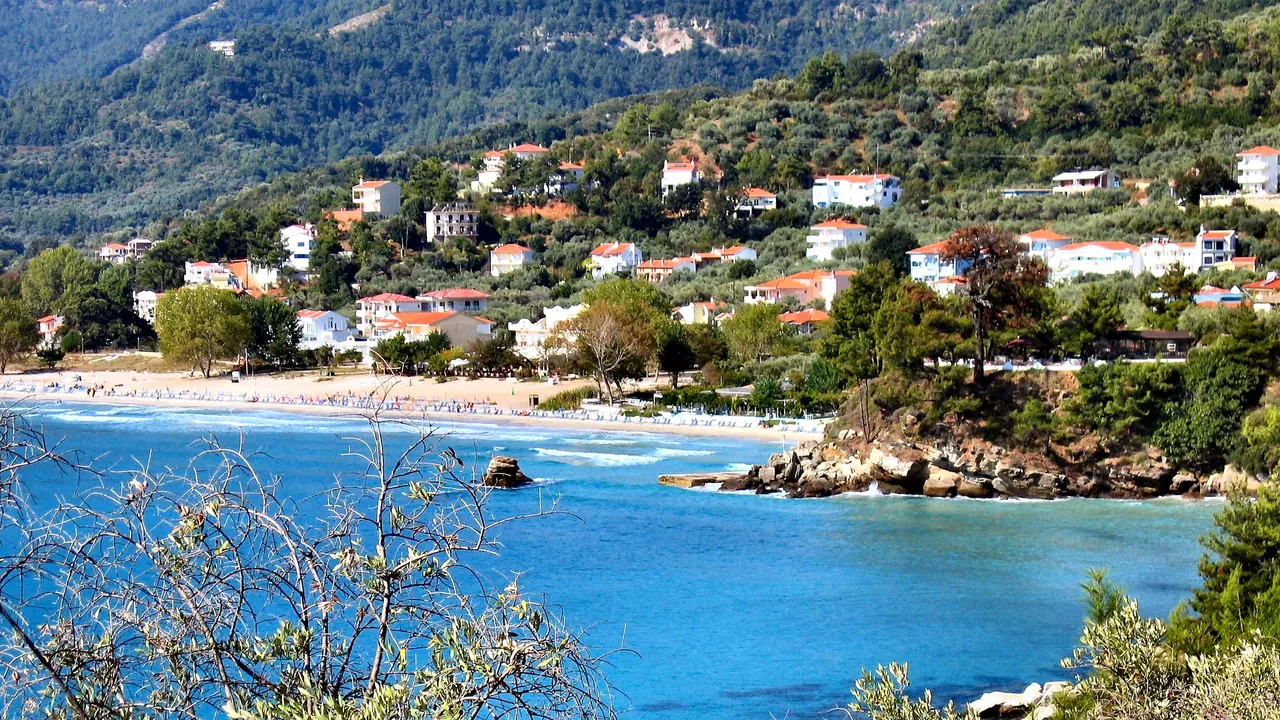
The turquoise bay at Golden Beach and Skala Panagia
- Beaches82
- Affordability68
- Families58
Photo: Ronald Saunders from Warrington, UK, CC BY-SA 2.0, cropped
Match
44
Every category weighted equally
- Beach & sun50
- Culture & arts39
- Food & nightlife39
- Family trip52
- Outdoors48
- Relax & unwind47
- Shopping & style38
- On a budget47
Thassos in twelve categories
Our verdict on each, scored 0 to 100 against the same fixed benchmark cities, so a score means the same thing on every page.
Beaches & swimming. Scores 82 out of 100.
Food & drink. Scores 42 out of 100.
Culture & sights. Scores 40 out of 100.
Nightlife. Scores 30 out of 100.
Nature & outdoors. Scores 56 out of 100.
Day trips. Scores 34 out of 100.
Good for families. Scores 58 out of 100.
Getting around. Scores 55 out of 100.
Shopping & style. Scores 17 out of 100.
Affordability. Scores 68 out of 100.
Live music & performing arts. Scores 13 out of 100.
Wellness & relaxation. Scores 32 out of 100.
Thassos category by category
Beaches & swimming
82Beaches are the reason most people come to Thassos, and the island has a good spread of them around its coast. The east side has the most varied choice: Golden Beach at Skala Potamia is a long curve of fine sand under the mountain, and further south Paradise Beach and Aliki sit in pine-backed coves with very clear water. Near Limenas, Saliara is known for its white marble pebbles, and on the south coast Psili Ammos, Pefkari and Potos have sand and easy entry.
The sea is warm enough to swim from June to late September, at about 24°C to 25°C in August, a touch cooler than in the southern Aegean. Giola, a natural pool cut into the rocks near Astris, is a popular swim. Some beaches have sunbeds and tavernas, others are left wild, and quieter coves are easy to find by car, even in high summer.
Food & drink
42Eating on Thassos means Greek island tavernas: grilled fish and octopus by the water at Limenaria, Skala Marion and Potos, and mountain tavernas in Theologos and Panagia serving slow-roasted goat and lamb under plane trees. The island is known for its pine honey, its black olives and its spoon sweets made from walnuts, figs and bitter orange, all sold in village shops. A glass of tsipouro with a few small plates is the usual way to end an afternoon.
The cooking is honest and fresh rather than ambitious. Menus in the resorts repeat themselves, fine dining barely exists, and outside summer many kitchens close. Food lovers get the most from the hill villages and the quieter fishing harbours.
Culture & sights
40Thassos was a rich Greek city-state, and its remains lie around and above the port town of Limenas. The ancient agora sits beside the harbour, a hillside path climbs past a theatre in the pines to the acropolis, and long stretches of the old city wall survive with carved gate reliefs. The archaeological museum holds finds from the site, including an outsized kouros carrying a ram.
Elsewhere on the island, Aliki has the ruins of a sanctuary and early Christian basilicas beside ancient marble quarries that run down to the water. Theologos, the old inland capital, has stone houses with slate roofs, and the Archangel Michael monastery stands on a cliff above the south coast. It is a pleasant set of sights for a beach vacation, not a reason to travel on its own.
Nightlife
30Evenings on Thassos revolve around long dinners and drinks by the water. Limenas has the most bars, spread along its harbour and old port, and Potos on the south-west coast has a lively strip of bars that fill with younger visitors in high summer. Beach bars at Golden Beach and a few other bays play music into the night in July and August.
There is no real club scene, and outside the peak weeks most villages are quiet soon after midnight. It suits people who like a cocktail at sunset and a late taverna table, not anyone who wants to go out dancing.
Nature & outdoors
56Thassos is greener than most Greek islands, with forests of pine, plane and chestnut running from the shore up to Mount Ypsario, at about 1,200m the island's summit. Walking paths and old mule tracks link the hill villages, the climb to Ypsario gives wide views over the Aegean to the mainland and Mount Athos, and inland streams cut small gorges and waterfalls near Kallirachi and Maries.
The coast is rocky and indented, good for sea kayaking around the coves of the east and south, and the clear water suits snorkelling and diving. Mountain biking on the forest tracks is popular. Spring and early autumn are the best times to walk, as midsummer heat makes the climbs hard going.
Day trips
34The best day out is across the water to the mainland. Kavala, with its Byzantine castle, Ottoman quarter, aqueduct and harbour, is a short ferry ride away, and the ancient city of Philippi, where Saint Paul preached, lies about 15km beyond it. Both fit comfortably into one day.
The old town of Xanthi, with its mansions and Saturday bazaar, is a longer trip for those with a car. Otherwise most outings stay on the island itself, moving between villages and beaches. A short crossing to the mainland is part of every excursion, so few visitors make more than one or two.
Good for families
58Thassos works well for a relaxed family beach vacation. Several bays shelve gently into calm water, notably Golden Beach, Skala Prinou and Pefkari, and the resorts are small, safe and easy to manage, with tavernas that welcome children at any hour. The short ferry crossing is part of the fun rather than an ordeal.
What the island lacks is anything built for children: there are no big water parks, zoos or aquariums, so days are spent on the sand, in the sea and on boat trips around the coast. Some of the prettiest coves are reached by steep paths, and the inland villages involve winding roads, so families with small children tend to base themselves on a sandy bay.
Getting around
55Thassos is easy to move around once you understand its shape. One coastal road circles the island, and every resort, beach and village is on it or a short climb above it, so no drive is long. Ferries cross from Keramoti, near Kavala airport, to Limenas in well under an hour, and from Kavala to Prinos in a little over an hour.
Buses run around the ring road, but they are not frequent enough to rely on for beach-hopping, so most visitors hire a car, scooter or quad bike. Within each resort everything is walkable. The roads up to the mountain villages are narrow and winding, and the ferry queues can be long on summer weekends.
Shopping & style
17Shopping on Thassos is mostly for things to eat. Village shops and roadside stalls sell the island's pine honey, olives, olive oil, walnut and fig spoon sweets and herbs, and these make the best souvenirs. Limenas has a short shopping street of beachwear, jewellery and souvenir shops, and a few workshops carve the local white marble. There is nothing for fashion or design shopping.
Affordability
68Thassos is one of the more affordable Greek islands. Accommodation is mostly family-run studios and small hotels, and taverna meals are modestly priced, even in the busiest resorts. The island draws many visitors who drive down from the Balkans, and its prices are set for them rather than for luxury travellers.
The main extra costs are the ferry and a hire car, which most visitors need to reach the beaches. Prices peak in late July and August, when the best-placed rooms book out early. June and September give the same sea for noticeably less.
Live music & performing arts
13Live performance on Thassos is occasional. In summer the ancient theatre above Limenas hosts some plays and concerts as part of a regional festival, and village feast days, above all around mid-August, bring traditional music and dancing in the squares. Beyond that there are no theatres or concert venues, and anyone wanting a programme of performances will not find one here.
Wellness & relaxation
32Thassos has no spa or bathing tradition of its own. Wellness means a handful of hotel spas in the larger resorts and the occasional yoga session. What the island does offer is a slow pace: long lunches under plane trees in Theologos or Panagia, quiet bays on the south-east coast, and evenings that rarely get loud outside Limenas and Potos. Visitors come here to rest, but not to be pampered.
Where to stay in Thassos
Limenas, the port town where ferries from Keramoti arrive, is the easiest base for a first visit. The ancient agora, theatre and museum are on its doorstep, its harbour has the island's widest choice of bars and tavernas, and the marble pebbles of Saliara are close by, though the best sandy beaches are a drive away.
On the east coast, Skala Potamia suits families and beach days, with the long, gently shelving sand of Golden Beach and the mountain tavernas of Panagia just above. On the south-west coast, Potos is the liveliest resort, with a strip of bars that fills with younger visitors in summer. Nearby Pefkari is calmer and good for small children, and Limenaria has fishing-harbour tavernas for anyone who travels for food. Skala Prinou, where the Kavala ferry lands, is another easy family bay. Couples who want a quiet stay can look to the south-east, near Aliki and Paradise Beach, where the coves are backed by pines and evenings stay calm.
One road circles the island and no drive on it is long, so a single base and a hire car cover everything. Moving between bases is rarely worth it. Walkers who come in spring or autumn may prefer to stay up in Theologos or Panagia.
When should you go?
Pick a month to see what it is like. The climate figures are measured averages, not a forecast.
Thassos in July
Daytime high, °C
Rainfall in the month, mm
The whole year
Shaded against this destination’s own year: the deepest cell is its best month for that figure and the palest its weakest.
Where the figures come from
Thassos has no rain gauge within 25 km of the centre, so its rainfall comes from a gridded climate dataset read at the destination rather than from a gauge further away.
Temperature and rainfall are climate normals, averaged over the years shown. Thassos: 1997-2020 (rainfall 1991-2020) normals, Chrysoupoli Airport (24.5 km from centre).
Before you go
| Measure | Thassos |
|---|---|
| Official language | Greek |
| Currency | Euro (EUR) |
| Sockets | CF230 V, 50 Hz |
| Driving side | Right |
| Time zone | UTC+2, UTC+3 in summer |
| Emergency number | 112 |
| Main airport | Kavala Alexander the Great International Airport (KVA)15 non-stop destinations |
| Public holidays this year | 15 days |
By the numbers
| Measure | Thassos |
|---|---|
| Population | 13,100 |
| People per km² | 35 |
| Swim season, months above 21 °C | 4 months |
Compare Thassos with
Every comparison with a written verdict behind it.
- Aegina
- Corfu
- Crete
- Folegandros
- Halkidiki
- Hydra
- Ios
- Kefalonia
- Kos
- Lefkada
- Milos
- Mykonos
- Naxos
- Paros
- Paxos
- Peloponnese
- Rhodes
- Samos
- Santorini
- Sifnos
- Skiathos
- Skopelos
- Zakynthos