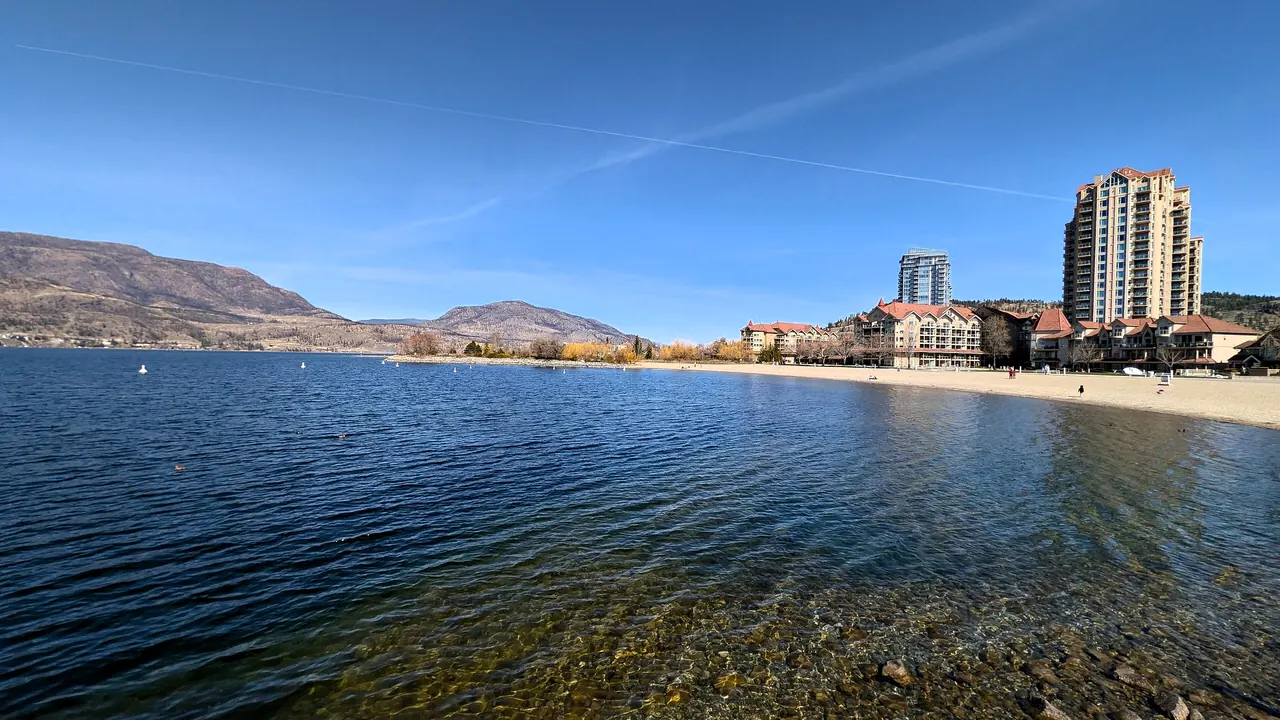
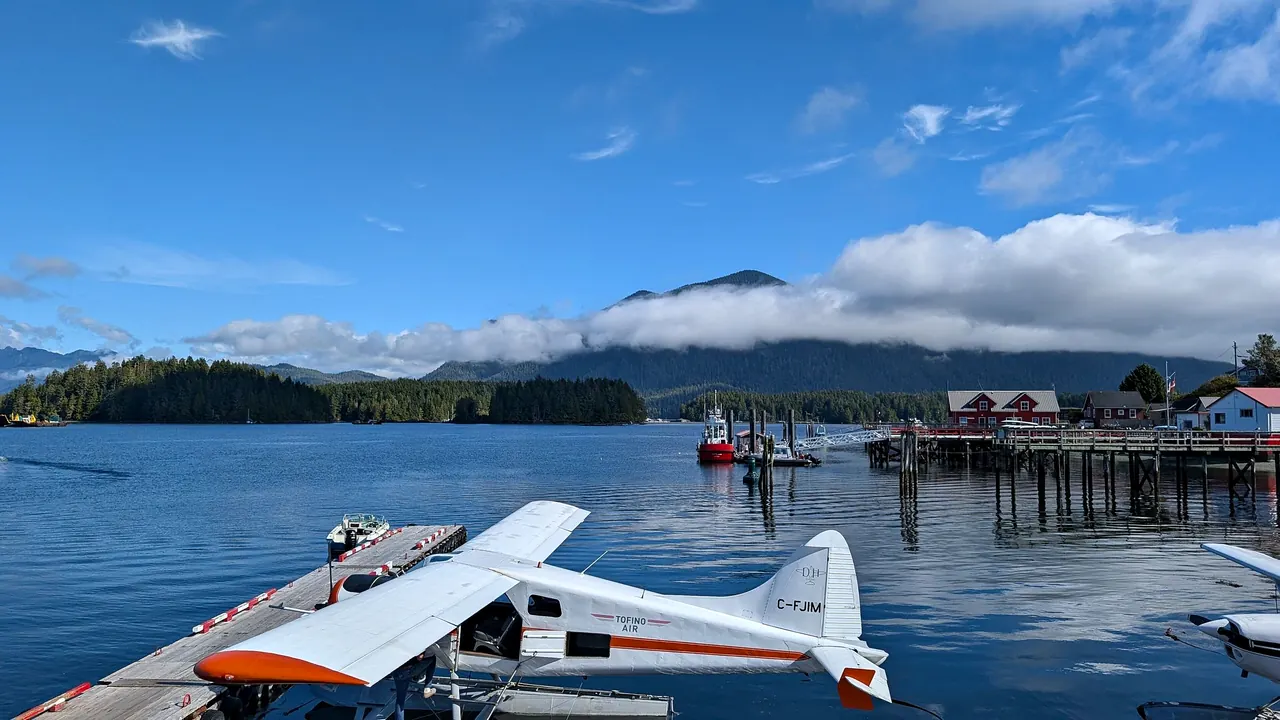
Photos: Kelowna by Joli Rumi, CC BY-SA 4.0, cropped; Tofino by গীতাশ্ৰী গগৈ আপ্তে, CC0.
Kelowna or Tofino?
Our verdict in twelve categories, each scored against the same fixed benchmark cities, and the climate month by month, so you can choose for your trip.
Choose Kelowna for
- day trips
- beaches
- prices
Kelowna suits a summer trip built around warm water and wine. Okanagan Lake is warm enough for proper swimming in high summer, the beaches start at the edge of downtown, and the wineries on the surrounding benches give both days and evenings a focus. There is also a livelier patio scene on Bernard Avenue and a wider circuit of valley towns to drive out to. It is the easier pick for a family and slightly less punishing on the budget.
Choose Tofino for
- nature and the outdoors
- wellness
- getting around
Tofino is the place for the wild coast. The rainforest of Clayoquot Sound, whales and bears seen from a boat, surf at Cox Bay and winter storms breaking on the headlands make it the stronger outdoors trip by a distance. The slow rhythm of tides, hot tubs and Hot Springs Cove also makes it the better place to switch off. In return, expect cold water, heavy rain outside summer, quiet evenings and a high cost for staying there.
Scoreboard
Twelve categories on one fixed scale from 0 to 100. The shaded stretch is the gap between the two.
Your match
Pick a travel style or drag the sliders, and both match scores follow your weighting.
Wins on day trips and beaches with your weighting.
Wins on nature and the outdoors and wellness with your weighting.
What matters to you?
Category by category
What the scores mean for a trip.
Beaches & swimming
For swimming, Kelowna wins easily. Okanagan Lake warms right up in high summer, and the sandy beaches at City Park, Gyro and Rotary are within walking or cycling distance of downtown. The fresh, calm water is good for paddleboards and long swims.
Tofino's beaches are grander, from the long sweep of Long Beach to the surf at Cox Bay and the tide flats at Chesterman. The Pacific stays so cold, though, that people go in to surf in thick wetsuits, not for a dip. Go to Tofino for beach walks, fires and surf lessons, and to Kelowna for lying on the sand and swimming.
Food & drink
Kelowna has more to eat and drink, mostly because of the wine country around it. There are winery terraces above the lake, orchard fruit from the farm stands, and cideries, breweries and distilleries. Downtown has a fair spread of restaurants, though the choice thins out quickly beyond it.
Tofino is smaller and narrower, but its seafood from Clayoquot Sound gives it a clear identity: spot prawns, Dungeness crab and oysters, served from food trucks or in a few ambitious tasting-menu kitchens. A seafood lover will be happy there, but Kelowna has more choice over a week and more to do with a glass in hand.
Culture & sights
Neither town is a sightseeing destination, and each one takes an afternoon at most. The difference is in kind. Kelowna has a small museum and art gallery in its downtown cultural district, plus the 1860s log buildings of Father Pandosy Mission, which tell Syilx and settler history. Tofino's culture is living Nuu-chah-nulth art: carving galleries, carvers you may see at work and the Kwisitis Visitor Centre, which tells the story of the coast and its peoples.
Nightlife
Kelowna at least has a going-out scene. There are pubs, taprooms, patio bars and a couple of clubs around Bernard Avenue, busy with students and lake-weekend groups on summer nights, though it goes quiet out of season.
Tofino has no clubs and nothing stays open late. A pub, a brewery taproom or a beach fire is the whole evening, and most people go to bed early so they can be up for the morning tide.
Nature & outdoors
Both are outdoor places, but Tofino is the more remarkable one. You get old-growth cedar rainforest on the boardwalk trails and on Meares Island, grey whales, black bears and sea otters from a boat, sea kayaking among the islands of the sound and surf all year. Kelowna has nothing as wild.
Kelowna's strength is variety in a drier, gentler landscape: boating and wakeboarding on the lake, the trestles of Myra Canyon, mountain biking in the hills and skiing at Big White in winter. It is easier going, and the better choice if you want lake sports or snow rather than rain gear.
Day trips
Kelowna is the better base for getting out and about, as long as you drive. The rest of the Okanagan makes a wine-led circuit of small towns: Penticton and the Naramata Bench, the vineyards of Oliver and Osoyoos, and the Nk'Mip desert cultural centre.
From Tofino there is almost nowhere to go by road except Ucluelet's lighthouse loop down the peninsula, because everything else lies over a long mountain road. Its outings are boat trips into Clayoquot Sound, which are more about nature than visiting places.
Good for families
Kelowna is easier with children, mainly because the water is warm. Shallow lake beaches, lakeshore playgrounds, boat and paddleboard rentals, pick-your-own orchards and the flat Myra Canyon trail fill summer days, and Big White is a family ski option in winter.
Tofino gives children tide pools, driftwood forts, junior surf lessons and whale spotting, and many will remember those longer. But the cold water cuts splashing short, there is little to do indoors on rainy days, and the winding road in is hard on young passengers.
Getting around
Kelowna's walkable downtown and lakeside path are pleasant, but the city spreads out along Highway 97. The wineries, Myra Canyon and the ski hill are hard to reach without driving or joining a tour.
Tofino is a little easier without a car, though most visitors still bring one. The small village is walkable, and a paved path runs from town towards the national park, so a hired bike covers the beaches. The best outings go by water taxi, boat or floatplane anyway.
Shopping & style
Neither place is worth a shopping trip, though Kelowna has a little more: boutiques and outdoor shops around Bernard Avenue, a regional mall with the usual Canadian chains, and wine, cider and preserves from cellar doors and farm stands. Tofino's best buys are Nuu-chah-nulth carvings, silver jewellery and prints from its galleries, along with surf shops. It is the place to buy one good piece of art rather than to browse.
Affordability
Kelowna is expensive in July and August, and car hire adds to the bill, but it is the easier of the two on your budget. Outside summer and the ski weeks, rooms there are much more reasonable, and the beaches, parks and trails are free.
Tofino is harder on the wallet. Rooms are scarce, groceries come in over the mountains and boat tours carry a remote-resort premium, so summer rates are steep. Camping or a stormy visit between November and March are the ways to keep costs down.
Live music & performing arts
Kelowna has a modest but real programme. The Okanagan Symphony Orchestra and local theatre play at the Kelowna Community Theatre and the Rotary Centre for the Arts, touring acts come to the downtown arena, and there are free summer concerts in the lakeside park. Tofino has no theatre or regular venue, only the odd band at a pub and a few small summer festivals, so evenings there are not built around performances.
Wellness & relaxation
Tofino is the better place to unwind. The tides and the weather set the pace, a cabin with a fire or a hot tub is the usual end to the day, and resort spas use local seaweed and cedar. Hot Springs Cove has natural rock pools that run down into the sea, a full day out by boat or floatplane.
Kelowna has no hot springs. Its calm comes from resort spas, long lunches on vineyard terraces and quiet mornings on the lake, and it is most restful away from the busy summer weeks.
When should you go?
Pick your month. The climate figures are measured averages, not a forecast.
Kelowna in July
Tofino in July
Daytime high, °C
Rainfall in the month, mm
Temperature and rainfall are climate normals, averaged over the years shown. Kelowna: 1991-2020 normals, Kelowna Mws0 (8.4 km from centre). Tofino: 2011-2024 (rainfall 1991-2020) normals, Lennard Island (4.9 km from centre).
Kelowna has an inland climate with sharp seasons. July and August are hot, around 30°C, and dry, and the lake is at its warmest, so this is the beach season. June and September are kinder for walking the waterfront or cycling Myra Canyon. From December to February the highs hover near freezing, which suits the slopes at Big White better than the town itself. Rain is light all year.
Tofino hardly changes temperature through the year. Highs run from about 8°C in winter to 18°C in summer, and the sea never gets much past 14°C, so you need a wetsuit in every season. What does change is the rain. July and August are the driest months, but October to March is very wet, with over 500mm in January, which is storm-watching weather rather than beach weather. For mild, settled days, go between June and September, when both places are at their best.
Which traveller are you?
For a beach and sun trip, Kelowna is the clear choice. Hot, dry summers and a lake warm enough for long swims make its sandy city beaches a place to spend the whole day. Tofino's cold Pacific is for wetsuits and walks.
On an outdoors trip, Tofino stands apart. Old-growth rainforest trails, whale and bear watching, sea kayaking in Clayoquot Sound and surf all year are wilder than anything Kelowna has. Its lake sports, Myra Canyon and Big White are tamer by comparison.
For a food and nightlife trip, Kelowna gives you more. Winery terraces, orchard produce and craft drinks fill the days, and the patios, taprooms and clubs on Bernard Avenue keep summer nights going. Tofino has excellent seafood, but the town goes to bed early.
Before you go
| Measure | Kelowna | Tofino |
|---|---|---|
| Official language | French, English | French, English |
| Currency | Canadian Dollar (CAD) | Canadian Dollar (CAD) |
| Sockets | AB120 V, 60 Hz | AB120 V, 60 Hz |
| Driving side | Right | Right |
| Time zone | UTC-8, UTC-7 in summer | UTC-8, UTC-7 in summer |
| Emergency number | 911 | 911 |
| Elevation | 344 m | 10 m |
| Main airport | Kelowna International Airport (YLW)10 km from centre24 non-stop destinations | Tofino / Long Beach Airport (YAZ)12 km from centre1 non-stop destination |
| Public holidays this year | 11 days | 11 days |
By the numbers
| Measure | Kelowna | Tofino |
|---|---|---|
| City population | 144,576 | - |
| People per km² | 683 | - |
| Museums within 10 km | 0 | 0 |
| UNESCO World Heritage sites within 50 km | 0 | 0 |
| Swim season, months above 21 °C | - | None |
Where else could you go?
Every comparison below shares a destination with this one, so you can follow Kelowna or Tofino somewhere new.
- Victoriavs Tofino
- Vancouvervs Tofino
- Whistlervs Tofino
- Whistlervs Kelowna
- Vancouvervs Kelowna
- Lake Louisevs Kelowna