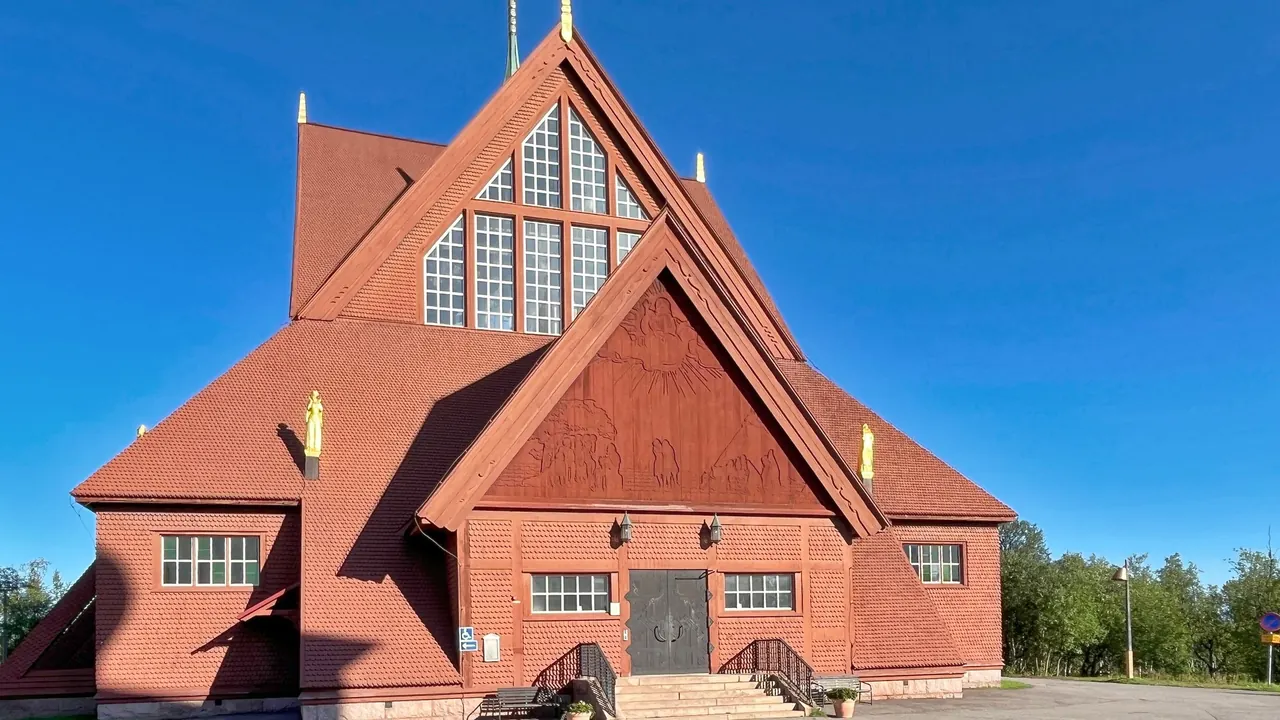
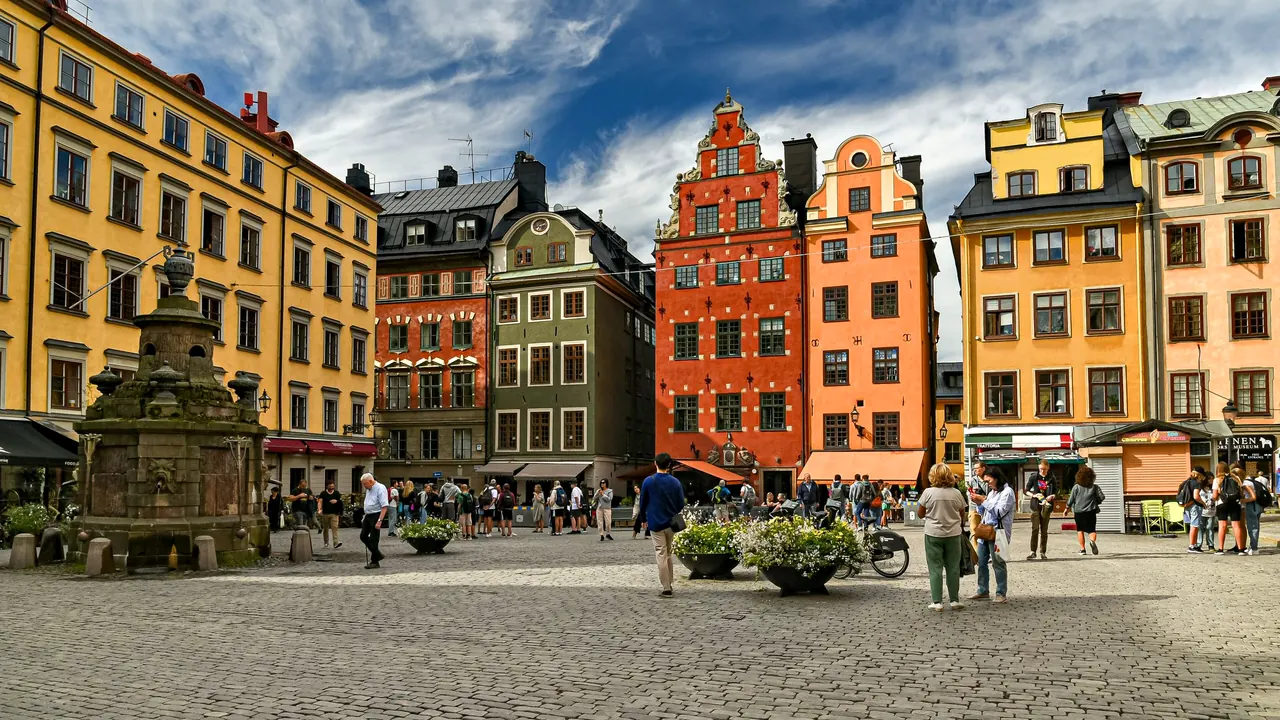
Photos: Kiruna by Steinkatz, CC BY 4.0, cropped; Stockholm by Jorge Franganillo, CC BY 2.0, cropped.
Kiruna or Stockholm?
Our verdict in twelve categories, each scored against the same fixed benchmark cities, and the climate month by month, so you can choose for your trip.
Choose Kiruna for
- nature and the outdoors
Kiruna is the choice for a trip built around wilderness and winter. Travellers come for the northern lights, husky teams across frozen lakes, a night in the ice hotel at Jukkasjärvi and, in summer, midnight-sun hiking towards Abisko and Kebnekaise. The town offers little beyond that: few sights, quiet evenings and a short list of places to eat. Choose it if the landscape is the whole point and you are happy to spend your days on guided excursions in deep cold.
Choose Stockholm for
- shopping
- live music and the arts
- culture and sights
Stockholm suits almost every other kind of trip. It is a full capital spread over islands, with Gamla Stan, the Vasa Museum and Skansen, a serious restaurant scene, opera and concerts, Scandinavian design shops and a metro that makes it all easy. Its nature is gentler, archipelago and forest rather than open fell, but it sits right beside the city. It also works much better for families, first visits to Sweden and anyone who wants culture and comfort along with the outdoors.
Scoreboard
Twelve categories on one fixed scale from 0 to 100. The shaded stretch is the gap between the two.
Your match
Pick a travel style or drag the sliders, and both match scores follow your weighting.
Wins on nature and the outdoors with your weighting.
Wins on shopping and live music and the arts with your weighting.
What matters to you?
Category by category
What the scores mean for a trip.
Beaches & swimming
Neither is a beach destination, but Stockholm at least makes summer swimming part of city life. In July and August people swim from Långholmen's rocks, from Smedsuddsbadet or in the lakes at Hellasgården, and the archipelago adds coves and jetties a ferry ride out.
In Kiruna a swim is a few weeks of cold lake or river water in high summer. For most visitors the only plunge is out of a sauna and into the ice.
Food & drink
Kiruna's best food is Lapland produce such as reindeer, Arctic char and cloudberries, and the most memorable meals are cooked at wilderness lodges and around Jukkasjärvi rather than in town. The town centre has only hotel dining rooms, pizzerias and cafés, so meals soon start to repeat.
Stockholm covers the same Nordic larder with far more range, from tasting menus built on archipelago fish and foraged herbs to meatballs and herring in old-fashioned dining rooms, with the produce laid out at Östermalms Saluhall. Fika is a pleasure in both places, but only Stockholm gives you a different neighbourhood café for every afternoon.
Culture & sights
In Kiruna, culture means the mine. You go underground on a guided visit, then see the Sami-inspired wooden church and the buildings of the old company town, and that takes a day or so. Sami heritage is mostly experienced on excursions rather than in museums.
Stockholm can fill a week. Gamla Stan and the Royal Palace, the Vasa Museum, Skansen, Moderna Museet and the City Hall are all a short walk or ferry apart, and the woodland cemetery of Skogskyrkogården adds a UNESCO site in the suburbs.
Nightlife
A night out is barely an option in Kiruna: a few pubs and hotel bars, and on winter evenings most visitors are outside watching the sky instead. Stockholm offers a real choice between the dressy clubs and strict doors around Stureplan and the easier bars and small dance floors of Södermalm, and it is at its liveliest on light summer nights.
Nature & outdoors
This is where Kiruna wins. It sits in one of the most reliable aurora zones on earth and has winter days of sledding and skiing across frozen lakes, then summer trails into Abisko National Park and up towards Kebnekaise. The scale and emptiness of the land are the reason to go.
Stockholm's outdoors is softer and remarkably easy to reach. You can walk to the oak meadows of Djurgården, take public transport to Tyresta's old pine forest, and kayak or sail among the archipelago islands. It is lovely water and woodland, but flat, with no mountains and nothing as wild as the far north.
Day trips
From Kiruna there is really one outing, Jukkasjärvi with its ice hotel, old wooden church and Sami homestead, plus the train to Gällivare. Beyond that the land around the town is wilderness rather than places to visit.
Stockholm is surrounded by good trips. Uppsala's cathedral and royal mounds and Sigtuna's wooden main street are both easy by train, and Drottningholm Palace is a boat ride away. In summer the boats also run to Viking Birka, Gripsholm Castle and Vaxholm.
Good for families
Kiruna can be the trip of a lifetime for older children who can cope with huskies, snowmobiles, ice rooms and late nights waiting for the aurora. Nothing there is designed for small children, though, and the deep cold makes it a hard trip with toddlers.
Stockholm works for every age. Skansen's moose and seals, Junibacken's Astrid Lindgren world and the rides at Gröna Lund are all on Djurgården, while the science and natural history museums cover rainy days. Buggy-friendly buses and playgrounds in every park make the logistics easy too.
Getting around
In Kiruna you can walk the small centre on icy pavements, but most excursions depend on tour operator pickups, and exploring on your own usually means a hire car and confidence on snow. The railway to Abisko is the useful exception.
Stockholm is simple without a car. The metro, trams, buses and harbour ferries share one ticket, the central islands are easy to walk, and the painted bedrock stations are worth seeing in their own right.
Shopping & style
Kiruna has outdoor gear, supermarkets and souvenirs, and one real find: Sami duodji crafts such as horn-handled knives and birch cups, sold around Jukkasjärvi. Stockholm is a design capital by comparison. Expect minimalist Swedish fashion on Biblioteksgatan, the grand NK department store, and vintage and independent boutiques in SoFo on Södermalm.
Affordability
Both are expensive, but Kiruna is slightly harder on the wallet, because the reason for going is a string of premium guided activities: sledding, snowmobiles, aurora tours and the ice hotel. Self-catering helps, and summer costs less than winter.
Stockholm's costs are mainly in eating and drinking out. Weekday lunch deals, transport passes, free parks, bathing spots and museums soften them, and hotels are cheaper at weekends and in July.
Live music & performing arts
Kiruna has almost no stage life beyond occasional church concerts and some joik singing at the winter festival. Stockholm has the Royal Swedish Opera, the Konserthuset, a long-running jazz scene and touring bands. In summer you can also see baroque opera at Drottningholm's eighteenth-century theatre, which still uses its original stage machinery.
Wellness & relaxation
Relaxing in Kiruna means wood-fired lodge saunas, a plunge through lake ice and a hot tub under the night sky, set against long, demanding days outdoors in the cold. The silence is restorative, but there is little in the way of spas.
Stockholm offers the same sauna-and-ice-hole ritual at Hellasgården and adds historic city bathhouses such as Centralbadet and Sturebadet, plus waterside spa hotels within an hour. With the slow pace of fika as well, it is the easier place to take a proper rest.
When should you go?
Pick your month. The climate figures are measured averages, not a forecast.
Kiruna in July
Stockholm in July
Daytime high, °C
Rainfall in the month, mm
Where the figures come from
Kiruna has no rain gauge within 25 km of the centre, so its rainfall comes from a gridded climate dataset read at the destination rather than from a gauge further away.
Stockholm's sunshine is measured 26 km from the centre, at Stockholm Observatoriet.
Temperature and rainfall are climate normals, averaged over the years shown. Kiruna: 2005-2020 (rainfall 1991-2020) normals, Kiruna Airport (3.8 km from centre). Stockholm: 2003-2020 (sunshine 1991-2020, rainfall 1981-2010) normals, Stockholm Bromma Airport (7.1 km from centre).
Kiruna has two seasons that feel like separate destinations. From November to March daytime highs stay below freezing, around -8°C in January, and the long darkness is what brings people for the aurora, so this is the time for sledding and snow rather than strolling about town. Summer is short and mild, peaking near 17°C in July, but July is also the wettest month, at about 95mm. June to August are the hiking months, with the midnight sun in the early weeks.
Stockholm is milder all year and at its best from late May to early September, when highs reach about 23°C in July. May to July are the sunniest months, with more than 260 hours of sunshine in each. The sea only warms enough for a brisk swim in July and August. Late summer brings more rain, and the stretch from November to January is cold, grey and very short on daylight, though never as harsh as winter in Kiruna.
Which traveller are you?
On an outdoors trip, Kiruna is the stronger pick. It has reliable northern lights, dog-sledding and snowmobiling in winter, and in summer Abisko's trails, Kebnekaise and rafting on the Torne river. That is real wilderness, where Stockholm's archipelago and forests are gentler and close to the city.
For a culture and arts trip, Stockholm is far ahead. It has the medieval lanes of Gamla Stan, the Vasa warship, Skansen and the Nationalmuseum, with opera, ballet and orchestral concerts in the evenings. Kiruna offers a mine tour and a fine wooden church, and very little else.
On a family trip with children, Stockholm is easier at every age. Junibacken, Skansen's animals, Gröna Lund and ferry rides fill the days, and the city is designed around buggies. Kiruna thrills older children with huskies and ice rooms, but the cold and late nights are hard on young ones.
Before you go
| Measure | Kiruna | Stockholm |
|---|---|---|
| Official language | Swedish | Swedish |
| Currency | Swedish Krona (SEK) | Swedish Krona (SEK) |
| Sockets | CF230 V, 50 Hz | CF230 V, 50 Hz |
| Driving side | Right | Right |
| Time zone | UTC+1, UTC+2 in summer | UTC+1, UTC+2 in summer |
| Emergency number | 112 | 112 |
| Elevation | 550 m | 22 m |
| Main airport | Kiruna Airport (KRN)3 km from centre4 non-stop destinations | Stockholm-Arlanda Airport (ARN)36 km from centre174 non-stop destinations |
| Public holidays this year | 16 days | 16 days |
By the numbers
| Measure | Kiruna | Stockholm |
|---|---|---|
| Population | 17,284 | 984,748 |
| People per km² | 1,516 | 5,260 |
| Museums within 10 km | 1 | 266 |
| UNESCO World Heritage sites within 50 km | 0 | 3 |
| Swim season, months above 21 °C | - | None |
Where else could you go?
Every comparison below shares a destination with this one, so you can follow Kiruna or Stockholm somewhere new.
- Tromsovs Kiruna
- Lofotenvs Kiruna
- Turkuvs Stockholm
- Rovaniemivs Kiruna
- Laplandvs Kiruna
- Tallinnvs Stockholm