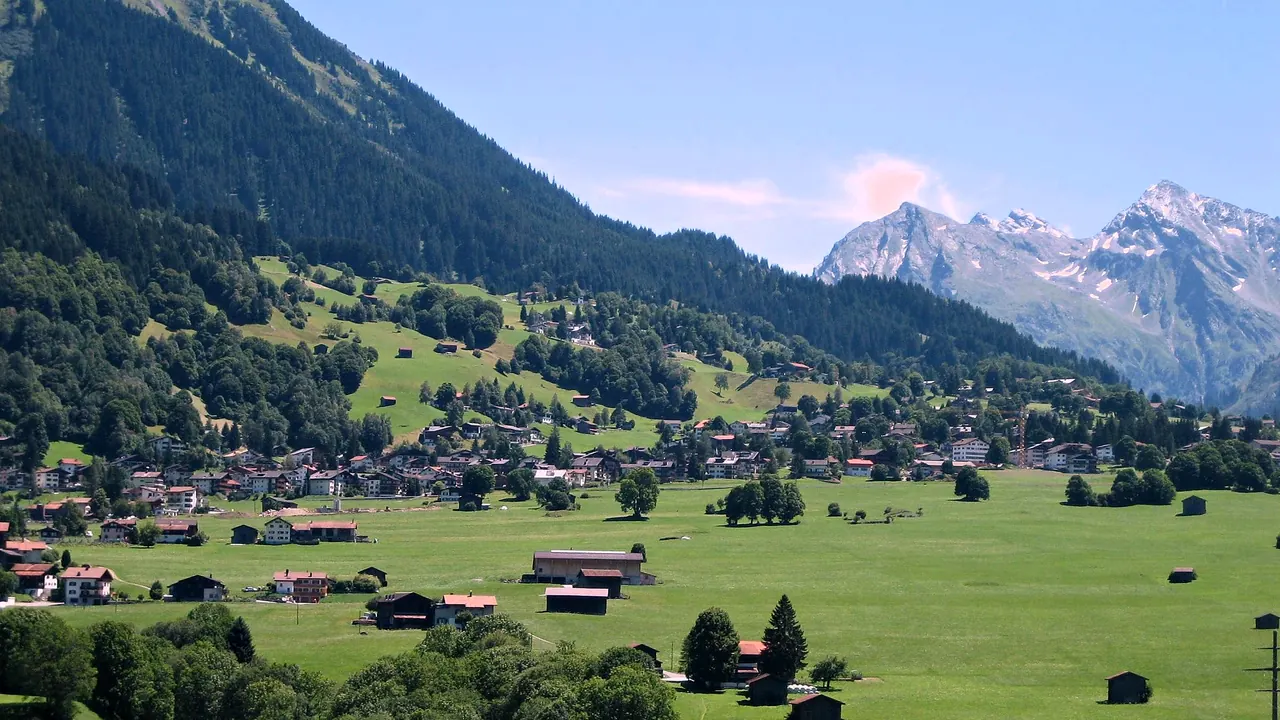
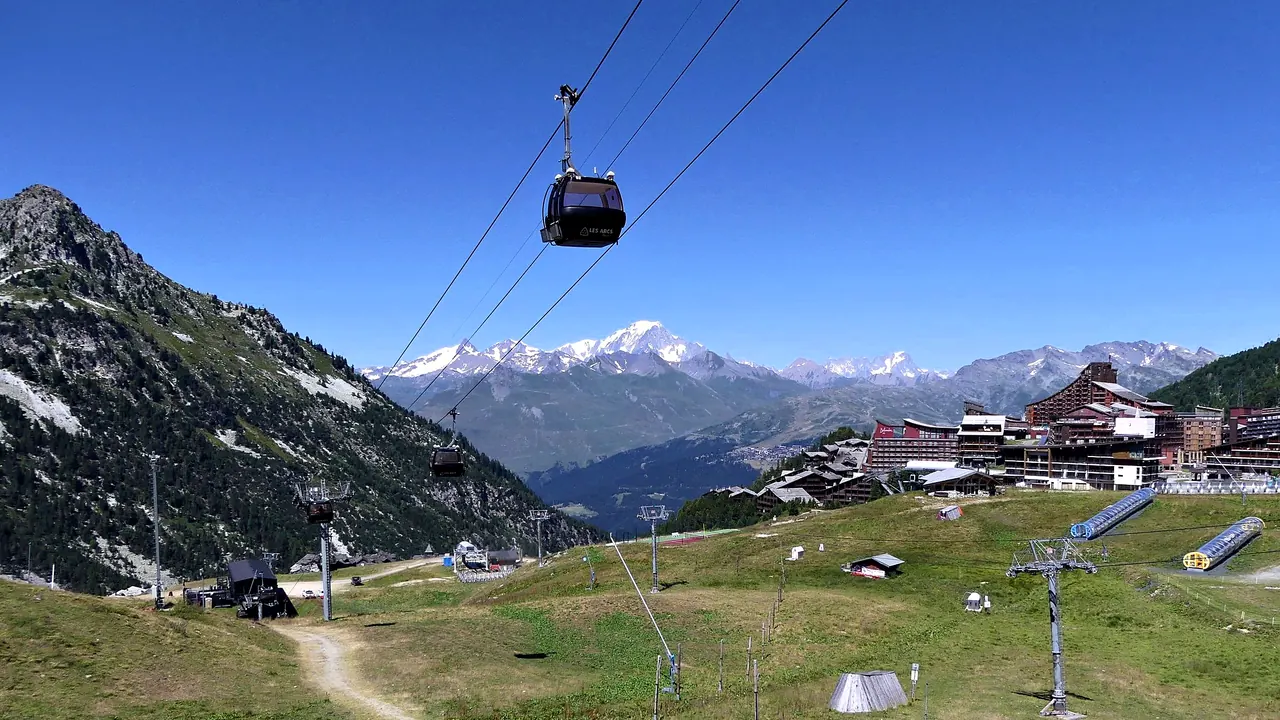
Photos: Klosters by Adrian Michael, CC BY-SA 3.0, cropped; Les Arcs by Florian Pépellin, CC BY-SA 4.0, cropped.
Klosters or Les Arcs?
Our verdict in twelve categories, each scored against the same fixed benchmark cities, and the climate month by month, so you can choose for your trip.
Choose Klosters for
- wellness
- day trips
- getting around
Klosters suits travellers who want a calm, settled Alpine stay. It is a Graubünden village of timber chalets where evenings end early and hotel spas ease tired legs. The Rhaetian Railway makes it easy to go without a car, with Davos, the old town of Chur and the painted houses of the Lower Engadine all within easy reach. It costs a great deal, and it is best for people who value quiet and polish over a lively scene.
Choose Les Arcs for
- prices
- live music and the arts
- nightlife
For an energetic ski week or an active summer, especially with children, Les Arcs is the better pick. Its purpose-built villages are largely car-free and put apartments right on the snow, Paradiski is a huge area to explore, and the après-ski in Arc 1800 has more life in it. Self-catering keeps the bill down. The trade-off is a high, cold resort where outings mostly lead to other mountain places, and calm comes mainly outside the winter weeks.
Scoreboard
Twelve categories on one fixed scale from 0 to 100. The shaded stretch is the gap between the two.
Your match
Pick a travel style or drag the sliders, and both match scores follow your weighting.
Too close to call, 2 points apart
Wins on wellness and day trips with your weighting.
Wins on prices and live music and the arts with your weighting.
What matters to you?
Category by category
What the scores mean for a trip.
Beaches & swimming
Swimming barely features in either place. Klosters has the slightly better options: an outdoor pool in the village and a bathing area on the cool lake at Davos, about half an hour away. From Les Arcs, the nearest proper lake swim means driving roughly two hours to Annecy or Lac du Bourget, so heated pools in the residences are what most people use.
Food & drink
Both serve hearty mountain food built around cheese, but Les Arcs has a little more choice and costs less. Its Savoyard menu of raclette, fondue, tartiflette and Beaufort is backed by pizzerias, crêperies and the markets down in Bourg-Saint-Maurice.
Klosters has more refined Graubünden cooking, with capuns, pizokel and Bündnerfleisch served in panelled stuben and hotel dining rooms, plus Pinot Noir from the Bündner Herrschaft. The range is narrower and prices are higher.
Culture & sights
Neither place is for sightseers, but Les Arcs has something that is its own: the stepped modernist blocks of Arc 1600 and 1800, designed by Charlotte Perriand's team, which draw people interested in twentieth-century design. Baroque chapels and stone hamlets lie further down the Tarentaise.
In Klosters, the main sights are Augusto Giacometti's stained glass in St. Jakob and a small farmhouse museum, along with the chalets themselves.
Nightlife
Les Arcs has the livelier evenings. Terrace bars at the foot of the slopes fill at lift closing, some have DJs and table-dancing, and Arc 1800 has a late bar or two and a small club. Even so, most families in apartments turn in early.
Klosters is discreet by design. Après-ski happens in hotel bars, a couple of late spots get busy only in the peak winter weeks, and anyone wanting more takes the train to Davos.
Nature & outdoors
Both are first-rate mountain bases, so the difference lies in their character. From Klosters the Gotschna cable car leads into the Parsenn, famous for long runs down to the valley, and the gentler Madrisa sits opposite. In summer there are hikes into the Silvretta and the green Prättigau below.
Les Arcs is higher and wilder. Paradiski links it with La Plagne, there are descents from the Aiguille Rouge at over 3,200m and good off-piste, and in summer you get the Vanoise's ibex and marmots, a bike park, rafting on the Isère and via ferrata.
Day trips
Klosters is the better base for outings, because the railway does the work. Davos, the old town of Chur, the wine villages around Maienfeld and Vaduz are all easy rides, and the Vereina tunnel puts the sgraffito houses of Guarda and Scuol under an hour away. The Albula line to St. Moritz makes a longer day.
From Les Arcs, most trips go to other mountain spots such as Bourg-Saint-Maurice, the Beaufortain or Val d'Isère. Annecy and Chambéry are about two hours by road, and the route into Italy is open only in summer.
Good for families
Les Arcs is a little more convenient with children because it was planned for them. Apartments open onto the snow, the villages are largely car-free, ski schools take the very young, and there are pools, skating and snow play areas for afternoons.
Klosters works well too, with the beginner slopes and summer adventure area on the Madrisa and a quiet village. It has even less for a wet day, though, and the family bill rises faster.
Getting around
Klosters is simpler to get around. It has two Rhaetian Railway stations, the Gotschna cable car sits beside the one at Platz, and local buses cover the long valley village, so going without a car feels natural.
Les Arcs is also reachable by train, using the funicular from Bourg-Saint-Maurice, but its four villages are spread out along a winding road. You rely on shuttles that slow in snow, and trips down into the valley really call for a car.
Shopping & style
Klosters has a slightly more polished feel. On the main street around Platz, a few upmarket fashion and interior boutiques for its regular guests sit beside the ski shops and the delicatessens selling Graubünden meats and cheese. Les Arcs sticks to the practical, with rental shops, outdoor gear and small supermarkets in each village, and the things worth taking home are Beaufort and génépi bought down in Bourg-Saint-Maurice.
Affordability
Both are expensive, but Klosters is in a class of its own. Its hotels, meals, lessons and lift passes are aimed at a wealthy regular crowd, and the guest card and self-catering only take the edge off.
Les Arcs is easier to manage. Most beds are in self-catering apartments, avoiding the French school vacation weeks cuts lodging costs a lot, and summer is noticeably cheaper.
Live music & performing arts
Both have a summer classical season and little else, but the one in Les Arcs carries more weight. Its festival, held since the 1970s, brings chamber concerts and a music academy into the resort's halls and chapels each July.
Klosters has a smaller summer series and the occasional church recital. Outside those, live music in either place means a hotel pianist or an après-ski band.
Wellness & relaxation
Klosters is the more restful place. The village itself is slow and quiet, several hotels have proper spas, Davos has a large public pool and sauna complex, and Scuol's thermal baths are through the tunnel.
Les Arcs offers saunas and pools in most residences, with the old spa towns of Brides-les-Bains and Salins-les-Thermes about an hour down the valley. In winter, though, ski week sets a busy pace, so calm comes mainly in summer and the shoulder weeks.
When should you go?
Pick your month. The climate figures are measured averages, not a forecast.
Klosters in July
Les Arcs in July
Daytime high, °C
Rainfall in the month, mm
Where the figures come from
Klosters's temperatures are measured 51 km from the centre, at S. Valentino Alla Muta.
Klosters's station stands 280 m above the city centre, so the centre is likely a little warmer than the figures say.
Klosters has no rain gauge within 25 km of the centre, so its rainfall comes from a gridded climate dataset read at the destination rather than from a gauge further away.
Les Arcs's temperatures are measured 43 km from the centre, at Grand St. Bernard / Grand Saint Bernard.
Les Arcs's station stands 199 m above the city centre, so the centre is likely a little warmer than the figures say.
Les Arcs has no rain gauge within 25 km of the centre, so its rainfall comes from a gridded climate dataset read at the destination rather than from a gauge further away.
Temperature and rainfall are climate normals, averaged over the years shown. Klosters: 1991-2020 normals, S. Valentino Alla Muta (51.4 km from centre). Les Arcs: 1991-2020 normals, Grand St. Bernard / Grand Saint Bernard (43.4 km from centre).
The two places have very different climates. Klosters lies in a green valley and has a real summer, with July and August highs around 20°C that are good for hiking. Those are also its wettest months, at about 140mm, so expect showers, and May and September are mild but still fairly showery. December to February is the cold heart of the year, with highs close to freezing and snow on the slopes. January to April is the driest stretch, and by March and April the valley days turn milder, which makes for pleasant spring skiing and walks in the village. October and November are cool and quiet in between.
The Les Arcs figures come from high on the mountain, where daytime highs stay below freezing from November to March, and even midsummer only reaches about 12°C. Rain and snow are heavy all year and peak in November. Sunshine changes a great deal, though: December gets barely any light, while July gets over 200 hours. For skiing, February and March bring longer, brighter days. July and August are the sunniest and least wet months for hiking.
Which traveller are you?
On a relaxing and wellness trip, Klosters is the better choice. The village is quiet and unhurried, several hotels have good pools and saunas, and the thermal baths at Scuol are under an hour away. Les Arcs is built around the energy of ski week.
On a tight budget, Les Arcs is easier on the wallet. It is mostly self-catering apartments, prices drop in the quieter January and late-March weeks and again in summer, and supermarket cheese counters help with meals. Klosters stays expensive whatever you do.
For a food and nightlife trip, Les Arcs has more to offer. Savoyard fondue, tartiflette and Beaufort on the terraces lead into proper après-ski in Arc 1800 and Arc 2000, with DJs and a small club, whereas evenings in Klosters end by the fire.
Before you go
| Measure | Klosters | Les Arcs |
|---|---|---|
| Official language | French, German, Italian, Romansh | French |
| Currency | Swiss Franc (CHF) | Euro (EUR) |
| Sockets | CJ230 V, 50 Hz | CE230 V, 50 Hz |
| Driving side | Right | Right |
| Time zone | UTC+1, UTC+2 in summer | UTC+1, UTC+2 in summer |
| Emergency number | 112 | 112 |
| Elevation | 1,179 m | 2,273 m |
| Main airport | Zürich Airport (ZRH)120 km from centre226 non-stop destinations | Geneva International Airport (GVA)92 km from centre150 non-stop destinations |
| Public holidays this year | 9 days | 11 days |
By the numbers
| Measure | Klosters | Les Arcs |
|---|---|---|
| Population | 4,499 | - |
| People per km² | 20 | - |
| Museums within 10 km | 3 | 0 |
| UNESCO World Heritage sites within 50 km | 1 | 0 |
Where else could you go?
Every comparison below shares a destination with this one, so you can follow Klosters or Les Arcs somewhere new.
- La Rosièrevs Les Arcs
- Davosvs Klosters
- La Plagnevs Les Arcs
- Tignesvs Les Arcs
- Arosavs Klosters
- Val d'Isèrevs Les Arcs