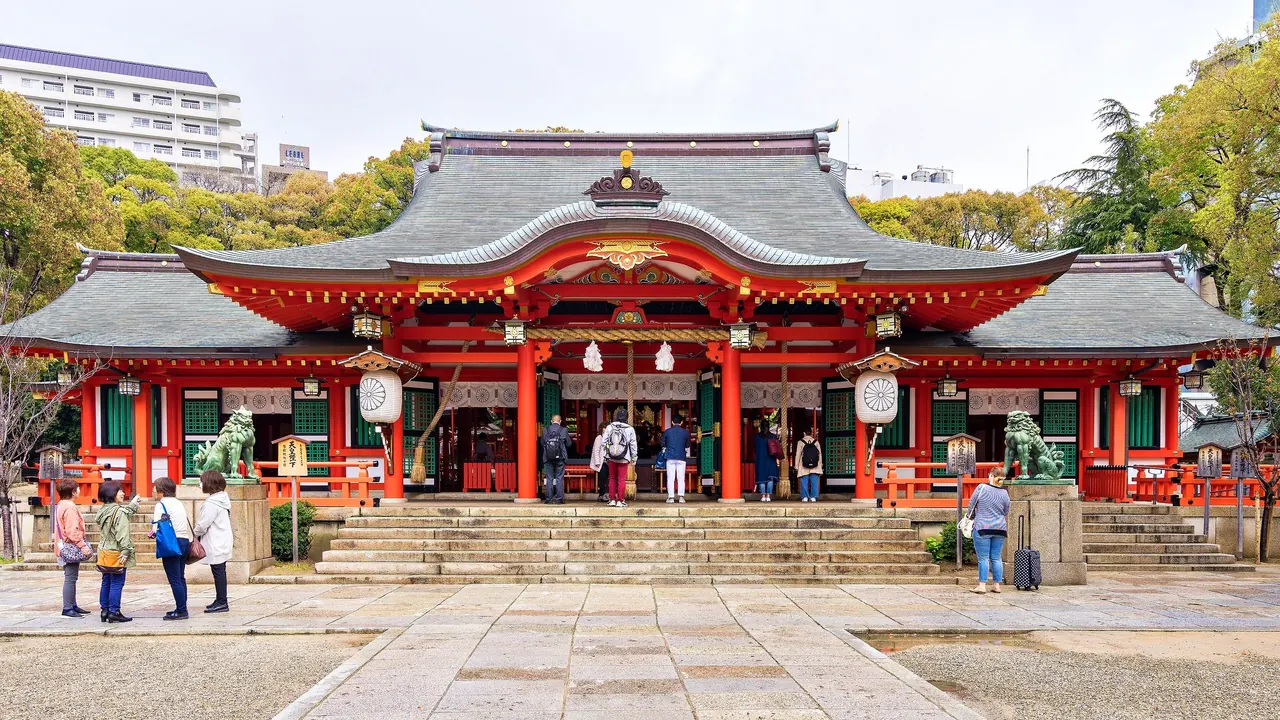
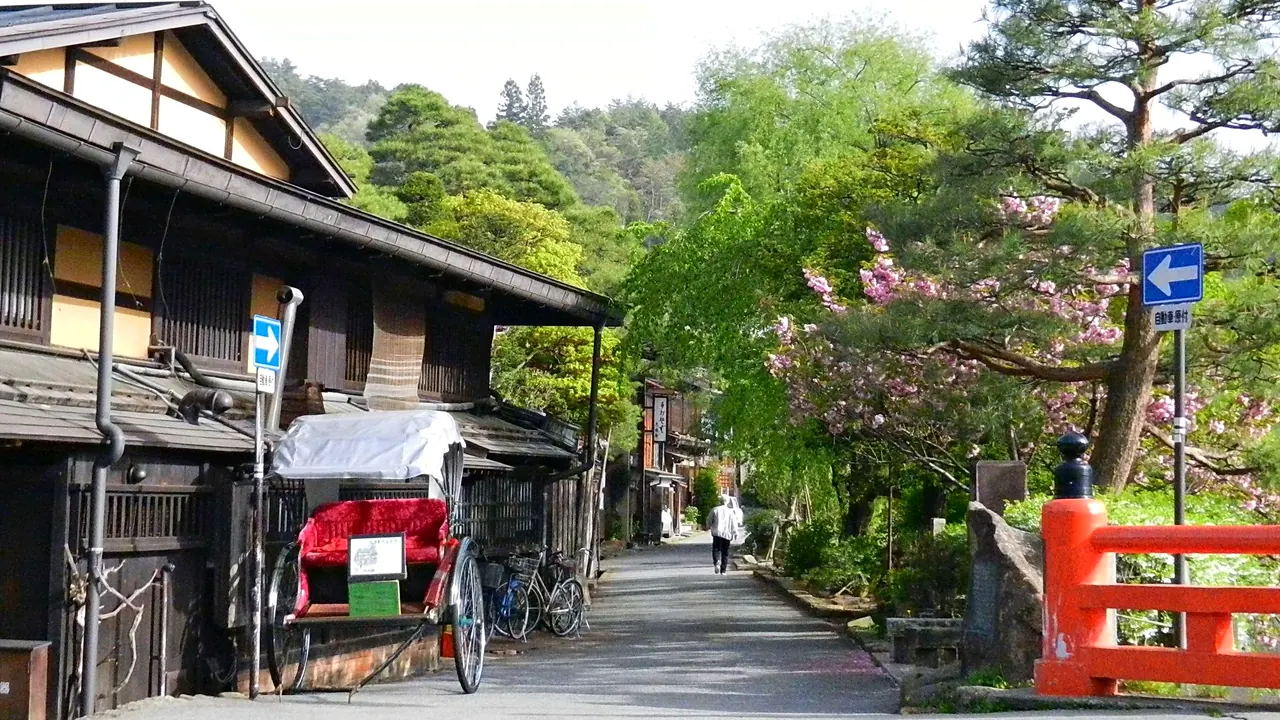
Photos: Kobe by Wei-Te Wong, CC BY-SA 2.0, cropped; Takayama by lienyuan lee, CC BY 3.0, cropped.
Kobe or Takayama?
Our verdict in twelve categories, each scored against the same fixed benchmark cities, and the climate month by month, so you can choose for your trip.
Choose Kobe for
- live music and the arts
- beaches
- families
Kobe suits the traveller who wants one comfortable base and a lot of variety. It sits on the rail line between Himeji, Osaka and Kyoto, so it works well for a week of day trips. It is also the better choice for families and for anyone who cares about eating and evenings out. You get bakeries, Nada sake, jazz bars and Sannomiya's izakaya lanes, with the Rokko mountains and Arima's hot springs on the edge of the city.
Choose Takayama for
- culture and sights
Takayama is for slowing down in the mountains for two or three nights. You walk the dark timber lanes of an Edo-period merchant town in the morning, take a bus into the Northern Alps or out to Shirakawa-go, and end the day in a ryokan bath. It has far less to offer at night and far less for children, so it works best as one stop on a wider route.
Scoreboard
Twelve categories on one fixed scale from 0 to 100. The shaded stretch is the gap between the two.
Your match
Pick a travel style or drag the sliders, and both match scores follow your weighting.
Wins on live music and the arts and beaches with your weighting.
Wins on culture and sights with your weighting.
What matters to you?
Category by category
What the scores mean for a trip.
Beaches & swimming
Kobe at least gives you a swim. Suma's long sandy beach is a short train ride from the centre, and from July to August it has lifeguards and warm bay water. Outside those weeks it is a place for a walk, and for clearer water you have to go over to Awaji Island.
Takayama lies inland in the Hida mountains, about two hours from Toyama Bay, so there is no swimming at all. The nearest thing to bathing there is a hot spring.
Food & drink
Both towns are known for their beef and their sake, but Kobe has much more range. Its port history gave it a baking and coffee-house culture in Motomachi and Kitano. It also has Nankinmachi's steamed buns, the Nada brewing district and casual comfort food like sobameshi.
Takayama does a few things very well: Hida beef grilled on a magnolia leaf with miso, soy-glazed dango, market pickles and tastings at breweries marked with cedar balls. After a few days, though, the menu starts to repeat, and there are few international options.
Culture & sights
Takayama has the slight edge in heritage, because its sights form one coherent old town. Sanmachi Suji's merchant lanes, the Takayama Jinya, the Kusakabe and Yoshijima houses and Hida Folk Village all tell the story of the same mountain merchant world.
Kobe's sights are more scattered and more modern in theme. You get the Western merchants' ijinkan in Kitano, the ancient Ikuta Shrine among the shops, and a moving museum about the 1995 earthquake. The bayside art museum is in a Tadao Ando building. Each town fills a day or two, but Takayama feels more like stepping back in time.
Nightlife
In Kobe the evening has somewhere to go. The lanes north of Sannomiya are full of izakaya, whisky bars and tiny counters, and Harborland is pleasant for a drink by the water. If you want clubs and a late night, Osaka is twenty minutes away.
Takayama mostly goes quiet after dinner at the ryokan. A few bars near the station and east of the river serve a beer or a sake, and there is little open after eleven.
Nature & outdoors
Both have excellent outdoors, but it comes in different forms. In Kobe the mountains start at the edge of the city: you can walk from Shin-Kobe past the Nunobiki falls, ride up Rokko or Maya for the night view over the bay, or scramble along the Suma Alps. All of this is possible with no planning.
Takayama opens onto real high country. The Shin-Hotaka ropeway lifts you towards 3,000m peaks, Kamikochi has riverside trails below the Hotaka range, and there is skiing in winter. The cost is the travel time: you have to time your days around bus connections, and Kamikochi closes for the cold months.
Day trips
Kobe is one of the best bases in Japan for day trips. Himeji Castle is under an hour away and Osaka is next door. Kyoto and Nara are easy days out, and the shinkansen brings Kurashiki and even Hiroshima within a day's reach.
Takayama's trips are fewer but very distinctive. Shirakawa-go's thatched village is under an hour away by bus, and Hida-Furukawa's canals and Gero's spa town are both close by train. Beyond those, the land is mostly mountains, and Kanazawa works better as your next stop than as a day out.
Good for families
With children, Kobe is the easier city. Oji Zoo, the aquarium beside Suma beach, the indoor animal park on Port Island and the Ferris wheel at Harborland all cater to them, and Universal Studios Japan is about an hour away.
Takayama is safe and easy to get around with small legs, and children usually enjoy the market snacks, the festival floats and the winter snow. Beyond that there is no zoo, aquarium or theme park, so a day or two is plenty.
Getting around
Both are easy without a car, but Kobe has the deeper network. Several parallel rail lines and a subway run along its narrow strip, all on one IC card. The Port Liner reaches the island and the airport, and the centre between Sannomiya and Motomachi is easy to walk.
Takayama's centre is smaller and flat, with everything within a fifteen-minute walk of the station. The harder part is getting out of town, because Shirakawa-go and the Alps depend on regional buses that need planning and can fill up.
Shopping & style
Kobe has the wider shopping. There are long covered arcades, the old Daimaru department store and boutiques in the stone buildings of the former foreign settlement, and small fashion shops around Tor Road. Pearls and leather shoes from Nagata are the local specialities.
Takayama is about craft rather than fashion. Look for amber-toned Shunkei lacquer, carvings cut from a single block of yew and Hida bentwood furniture, alongside a lot of souvenir shops and sarubobo charms.
Affordability
Kobe is a little kinder to the budget. Its business hotels rarely fill up, and bakery breakfasts, set lunches and short train rides all cost little. The expensive parts are optional: a Kobe beef teppanyaki dinner and shinkansen trips.
Takayama is also moderate, but more of its costs come with the main reasons to go: a ryokan night with a full dinner, a Hida beef meal, and rooms during the spring and autumn festivals, which book out.
Live music & performing arts
Kobe has a real live-music life. It claims to be the birthplace of Japanese jazz, it has small clubs with resident trios around Sannomiya and Kitano, and the Kobe Jazz Street festival takes over Kitano each autumn. Orchestral concerts are at the Hyogo Performing Arts Center, and the Takarazuka Revue plays nearby.
Takayama's performance happens on its two festivals, when karakuri puppets perform on the floats and lantern-lit processions fill the streets. Outside those days there is almost nothing on stage.
Wellness & relaxation
In Kobe the hot spring is a trip out from the city. Arima Onsen, one of Japan's oldest spa towns, lies within the city limits on the far side of Mount Rokko, about half an hour away by train or ropeway. You go there for an afternoon in the rust-coloured kinsen and clear carbonated ginsen waters, or for a night with a kaiseki dinner. Back in town there are neighbourhood sento and slow evening walks along the harbour at Meriken Park.
In Takayama the soak usually comes with your room, because many ryokan pipe spring water into their own indoor and open-air baths, and the town's whole pace is slow. The riverside pools of Okuhida and the well-known spa town of Gero are each about an hour or less away. Both places are equally good for rest, so the choice is between a spa outing from a city base and a stay where every evening ends in a bath.
When should you go?
Pick your month. The climate figures are measured averages, not a forecast.
Kobe in July
Takayama in July
Daytime high, °C
Rainfall in the month, mm
Where the figures come from
Kobe's sunshine is measured 29 km from the centre, at Osaka.
Takayama's sunshine is measured 65 km from the centre, at Matsumoto.
Temperature and rainfall are climate normals, averaged over the years shown. Kobe: 1971-2000 (sunshine 1991-2020, rainfall 1991-2020) normals, Kobe (1.3 km from centre). Takayama: 1971-2000 (sunshine 1991-2020, rainfall 1981-2010) normals, Takayama (0.5 km from centre).
Kobe is warmer all year and has the sea. In July and August the bay warms to about 27°C, which makes Suma a real beach, but August is also the hottest month at 32°C. The early summer rains peak in July at 226mm, so walking around the city is sticky work. Spring and autumn are the best seasons for the streets and the Rokko trails. Winters are mild and fairly dry, and fine for sightseeing.
Takayama's winters are much colder, with daytime highs around 3°C and snow over the old town and the farmhouse villages. That is lovely to look at but limits mountain trips. The town is wetter than Kobe through the summer, with a second rainy peak in September of 263mm. Late spring and October are the safest months for clear days in the Alps. October also brings the autumn colour.
Which traveller are you?
On a family trip with children, Kobe is the easier choice by some way. It has a zoo, a seaside aquarium at Suma, the Harborland waterfront and cable cars up the mountains. Takayama has nothing built for children, and its craft shops and old houses hold their attention only briefly.
For a food and nightlife trip, Kobe wins clearly. Its beef counters, cake shops, Chinatown snacks and Nada sake give you far more range. After dinner, Sannomiya's small bars keep going, and Osaka is close for a late night. Takayama's dining finishes early, and so does the town.
On a culture and arts trip built around old Japan, Takayama gives the more complete picture: whole lanes of merchant houses, a feudal government office and a folk village of thatched farmhouses. Kobe's treaty-port sights are fewer, though its jazz and concert life is richer.
Before you go
| Measure | Kobe | Takayama |
|---|---|---|
| Official language | Japanese | Japanese |
| Currency | Yen (JPY) | Yen (JPY) |
| Sockets | AB100 V, 50 and 60 Hz depending on the region | AB100 V, 50 and 60 Hz depending on the region |
| Driving side | Left | Left |
| Time zone | UTC+9 | UTC+9 |
| Emergency number | Police 110, fire 119 | Police 110, fire 119 |
| Elevation | 17 m | 573 m |
| Main airport | Kobe Airport (UKB)7 km from centre15 non-stop destinations | Chubu Centrair International Airport (NGO)149 km from centre43 non-stop destinations |
| Public holidays this year | 16 days | 16 days |
By the numbers
| Measure | Kobe | Takayama |
|---|---|---|
| City population | 1,521,707 | 85,199 |
| People per km² | 2,732 | 39 |
| Museums within 10 km | 46 | 14 |
| UNESCO World Heritage sites within 50 km | 3 | 1 |
| Swim season, months above 21 °C | 5 months | - |
Where else could you go?
Every comparison below shares a destination with this one, so you can follow Kobe or Takayama somewhere new.