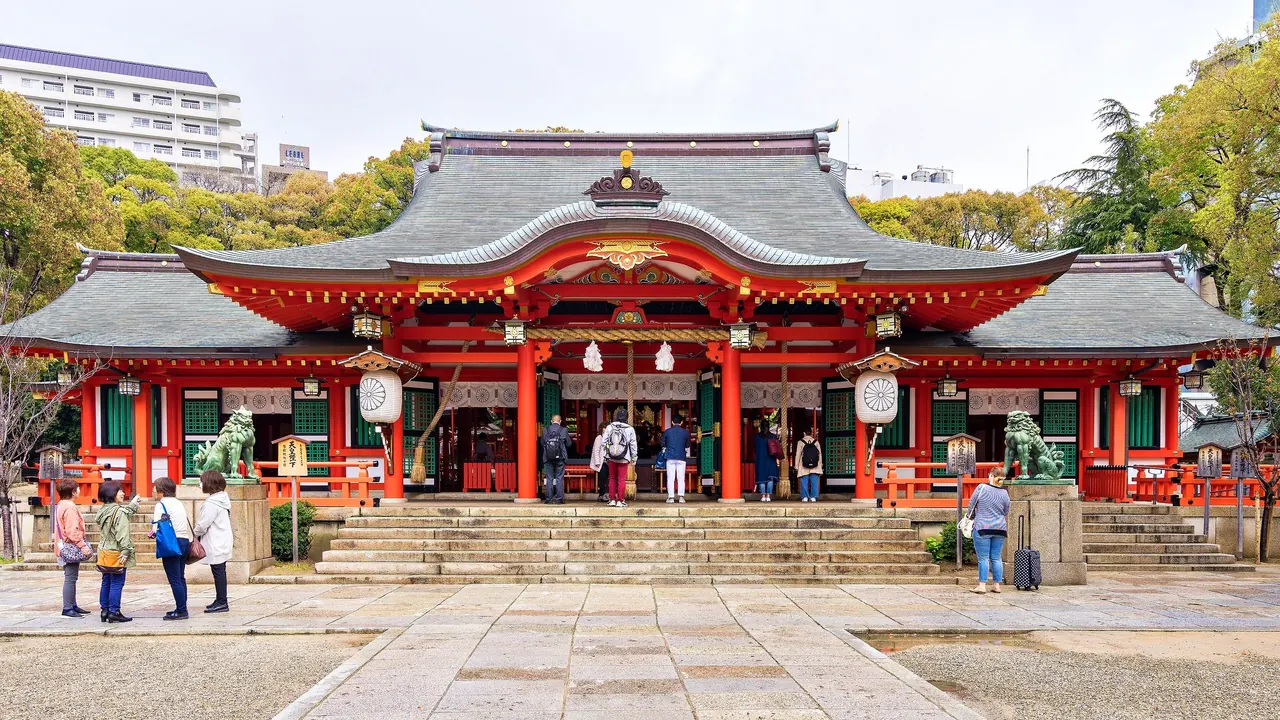
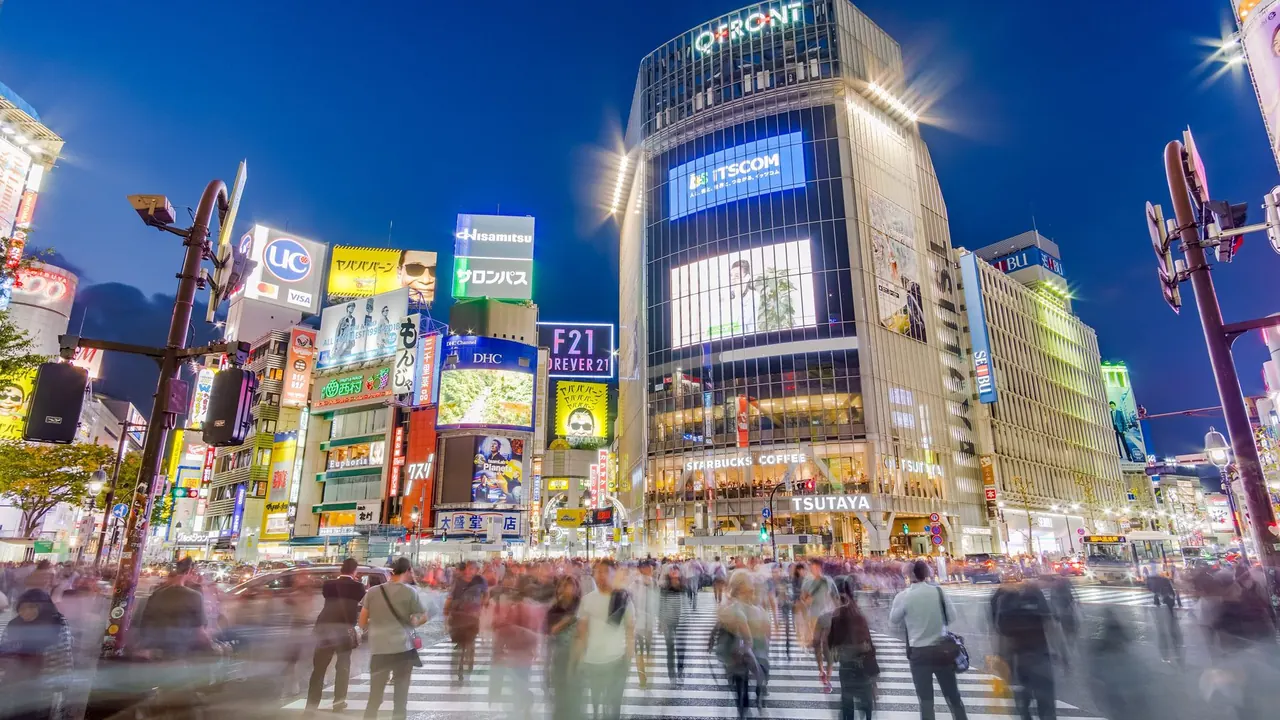
Photos: Kobe by Wei-Te Wong, CC BY-SA 2.0, cropped; Tokyo by Benh LIEU SONG, CC BY-SA 2.0, cropped.
Kobe or Tokyo?
Our verdict in twelve categories, each scored against the same fixed benchmark cities, and the climate month by month, so you can choose for your trip.
Choose Kobe for
- prices
- day trips
- nature and the outdoors
Kobe suits travellers who want a calm, manageable base rather than a megacity. The Rokko mountains rise straight behind the streets, Arima's hot springs lie within the city limits, and Himeji, Kyoto, Nara and Osaka are all easy days out by train. Rooms are easier to find and cheaper, so it works well for a slower trip around western Japan, especially for walkers and anyone who prefers quiet evenings.
Choose Tokyo for
- nightlife
- shopping
- culture and sights
Tokyo is the choice when the city itself is the reason for going. It has far more depth in food, shopping, museums, stage life and nights out, and enough family attractions to fill a week with children. You pay more for a smaller room and give up the mountains on the doorstep. In return you get a place you could explore for weeks and still find another neighbourhood, another counter and another specialist shop.
Scoreboard
Twelve categories on one fixed scale from 0 to 100. The shaded stretch is the gap between the two.
Your match
Pick a travel style or drag the sliders, and both match scores follow your weighting.
Wins on prices and day trips with your weighting.
Wins on nightlife and shopping with your weighting.
What matters to you?
Category by category
What the scores mean for a trip.
Beaches & swimming
Neither city is a beach destination, and in both the waterfront is mostly port. What differs is how far you have to go. From Kobe, the sandy beach at Suma is about fifteen minutes by train, with the city aquarium beside it, so a quick swim fits into an ordinary summer afternoon.
In Tokyo the town beaches at Odaiba and Kasai are for strolling, and a proper swim means about an hour south to the dark volcanic sand of the Shonan coast. That trip pairs well with Kamakura's temples, but summer weekends there are crowded.
Food & drink
Kobe eats very well within a recognisable range: Kobe beef teppanyaki, a long baking and cake tradition from its treaty-port years, steamed buns in Nankinmachi and the sake breweries of Nada. A few days of eating there feel rich and quite distinct from the rest of Japan.
Tokyo works at another scale. Single-dish specialists that have spent decades on soba, tempura or sushi, the depachika food halls, the Tsukiji outer market and the counters under the Yurakucho tracks give enough to fill a long stay without repeating a meal. Foreign cooking is also far better here than in Kobe.
Culture & sights
Kobe's sights tell one clear story, that of the treaty port. You see it in the merchant houses of Kitano, Meriken Park's broken quay and the moving earthquake museum, with Ando's art museum on the bay as a modern counterpoint. It all fits comfortably into two days.
Tokyo has far more to see, even though war and earthquake removed most of its old fabric. Ueno Park alone holds the national collection of Japanese art, and Senso-ji, Meiji Jingu, the palace moats and Yanaka's lanes add the heritage. Its museums and modern architecture are what put it well ahead.
Nightlife
A night out in Kobe means the lanes north of Sannomiya: izakaya, whisky bars and small counters for eating and drinking with a handful of regulars. There is little dancing, and locals who want a late night take the train to Osaka.
Tokyo has both the intimate side and the loud one, on a huge scale. Golden Gai's two hundred tiny bars and the themed bars stacked floor upon floor cover the first, and the clubs of Shibuya and Roppongi run until the first morning trains.
Nature & outdoors
Kobe has the edge because its mountains start in town. You can walk from Shin-Kobe station past the Nunobiki falls into the Rokko range, take a ropeway up Maya for the night view, or spend a full day on the ridge traverse or the rocky Suma Alps.
Tokyo's real hills begin about an hour out, at Mount Takao and the Okutama gorges, and Fuji and Hakone are around two hours away. Those views are grander, but each one is a day's trip, while inside the city Shinjuku Gyoen and Yoyogi Park are parks rather than wild country.
Day trips
Both are excellent bases, but Kobe sits closer to the classic sights of old Japan. Himeji Castle is under an hour away, Osaka about twenty minutes, and Kyoto and Nara are easy days. The shinkansen also brings Kurashiki and even Hiroshima within reach.
Tokyo's day trips have a different character: Kamakura's Great Buddha and Zen temples, the shrines of Nikko in their cedar forest, Hakone's hot-spring inns and the old merchant streets of Kawagoe. They are well worth the trip, but from Tokyo Kyoto lies just beyond an easy day.
Good for families
Kobe is easy and safe with children. Oji Zoo, the Suma aquarium, Harborland's Ferris wheel and the ropeways up Rokko make good outings, and Universal Studios Japan is about an hour away.
Tokyo has more to offer, with Disneyland and DisneySea across the bay, the Ghibli Museum, Miraikan's hands-on science and enough zoos, aquariums and toy districts for many days. The trade-off is scale: crowded rush-hour trains and huge stations are harder with a pushchair than Kobe's compact centre.
Getting around
Kobe is simple because of its shape. Parallel rail lines run east to west between mountains and sea, and Chinatown, the harbour, the arcades and Kitano are all walkable from Sannomiya, though Kitano is uphill.
Tokyo's network is the denser and more complete of the two. Almost every sight is a short walk from a station, signs are in English, and walking between neighbourhoods such as Shibuya and Harajuku is part of the pleasure. The cost is a confusing first day in Shinjuku or Tokyo station and crushed trains at rush hour.
Shopping & style
Kobe's shopping is stylish but limited: covered arcades, Daimaru and the boutiques of the old settlement, small shops along Tor Road, and local specialities such as pearls, Nagata leather shoes and Western cakes. Most visitors finish it in an afternoon.
Tokyo is in another league. Ginza's department stores and Omotesando's flagships cover luxury, Harajuku and Shimokitazawa cover vintage and independent labels, and whole districts are given over to one thing: knives in Kappabashi, books in Jimbocho, electronics in Akihabara.
Affordability
Kobe is the cheaper stay, and the gap is mostly in the room. Business hotels near Sannomiya are modest and rarely full, while central Tokyo rooms are small, cost more and get dearer still in cherry-blossom season and Golden Week.
Everyday eating is a bargain in both. Each city also has its own way to spend more: in Kobe it is the beef teppanyaki dinner, shinkansen day trips and a night in Arima, in Tokyo it is taxis, cocktail bars and fine dining.
Live music & performing arts
Kobe's live tradition is jazz. Small clubs and bars with resident pianists and trios dot Sannomiya and Kitano, and the Kobe Jazz Street festival fills Kitano each autumn. The Hyogo Performing Arts Center in nearby Nishinomiya covers classical concerts, but kabuki, opera and big productions mean a trip to Osaka.
In Tokyo all of that is inside the city. The Kabuki-za in Ginza sells single-act tickets, Suntory Hall and the NHK Symphony anchor a deep classical scene, the New National Theatre stages opera and ballet, and live houses in Koenji and Shimokitazawa have bands every night. You can see the Takarazuka Revue from either city: in Tokyo on its own stage, and from Kobe at its home theatre about forty minutes away.
Wellness & relaxation
Both cities treat bathing as part of daily life, so the difference is in the kind of bath. Kobe has Arima Onsen inside its own boundaries, about half an hour away over Mount Rokko. It is one of Japan's oldest hot-spring towns, with rust-red kinsen and clear ginsen water and ryokan for an overnight stay.
Tokyo's bathing is spread through the city instead: hundreds of neighbourhood sento, some fed by dark mineral springs, large sauna complexes, and quiet temple gardens for calm. For a true mountain onsen you go to Hakone, about ninety minutes away. In both cities many baths still turn away guests with tattoos, so check before you go.
When should you go?
Pick your month. The climate figures are measured averages, not a forecast.
Kobe in July
Tokyo in July
Daytime high, °C
Rainfall in the month, mm
Where the figures come from
Kobe's sunshine is measured 29 km from the centre, at Osaka.
Temperature and rainfall are climate normals, averaged over the years shown. Kobe: 1971-2000 (sunshine 1991-2020, rainfall 1991-2020) normals, Kobe (1.3 km from centre). Tokyo: 1991-2020 normals, Tokyo (3.6 km from centre).
The two cities follow much the same year: cool, dry winters with highs around 10°C, a mild spring, and a heavy, humid high summer when August reaches 32°C and sightseeing on foot becomes hard work. Spring and late autumn are the most comfortable months for walking in both. In either city the sea is only warm enough to swim from late July to September, and it is a little warmer off Kobe, reaching 27°C in August.
The real difference is when the rain comes. Kobe's wettest weather arrives early, peaking in July at 226mm, and is followed by a sunny August and a drier October and November. In Tokyo the heaviest rain comes later, with September and October both well over 200mm, so early autumn there can be damp. In winter Tokyo is clearly the sunnier of the two, with bright, clear days from December to February.
Which traveller are you?
On a food and nightlife trip, Tokyo is the obvious pick. Its specialist counters, food halls and yakitori alleys go much deeper than Kobe's beef, bakeries and sake, and after dinner Golden Gai and the Shibuya clubs keep going long after Sannomiya's bars have gone quiet.
For a shopping trip, Tokyo again, and by a wide margin. Ginza, Harajuku's vintage stores, Kappabashi's knives and Akihabara's electronics are a world apart from Kobe's arcades and pearl shops, which are pleasant enough but often send keen shoppers on to Osaka.
On a trip on a tight budget, Kobe stretches the money further. Business hotels around Sannomiya are modestly priced and rarely full, the centre can be covered on foot, and cheap local trains reach Osaka, Himeji and Kyoto, so a single room becomes a base for the whole region.
Before you go
| Measure | Kobe | Tokyo |
|---|---|---|
| Official language | Japanese | Japanese |
| Currency | Yen (JPY) | Yen (JPY) |
| Sockets | AB100 V, 50 and 60 Hz depending on the region | AB100 V, 50 and 60 Hz depending on the region |
| Driving side | Left | Left |
| Time zone | UTC+9 | UTC+9 |
| Emergency number | Police 110, fire 119 | Police 110, fire 119 |
| Elevation | 17 m | 6 m |
| Main airport | Kobe Airport (UKB)7 km from centre15 non-stop destinations | Tokyo Haneda International Airport (HND)18 km from centre98 non-stop destinations |
| Public holidays this year | 16 days | 16 days |
By the numbers
| Measure | Kobe | Tokyo |
|---|---|---|
| City population | 1,521,707 | 14,264,798 |
| People per km² | 2,732 | 6,501 |
| Museums within 10 km | 46 | 192 |
| UNESCO World Heritage sites within 50 km | 3 | 1 |
| Swim season, months above 21 °C | 5 months | 4 months |
Where else could you go?
Every comparison below shares a destination with this one, so you can follow Kobe or Tokyo somewhere new.