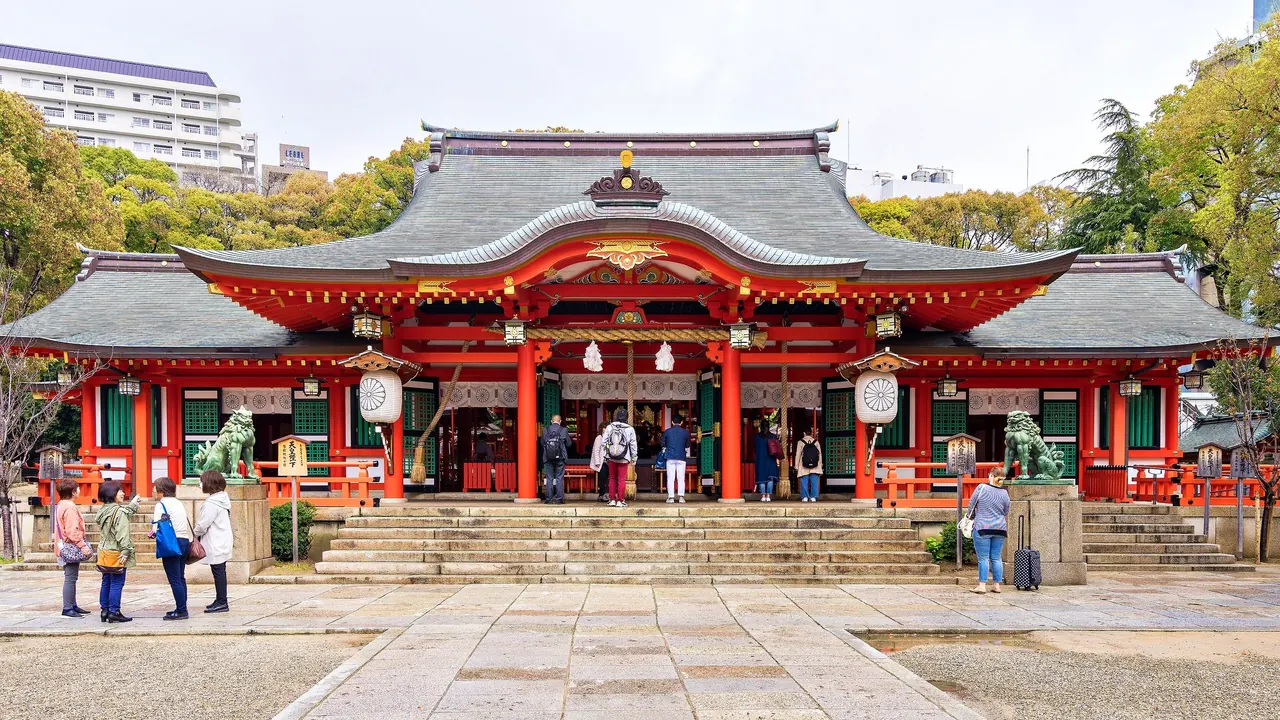
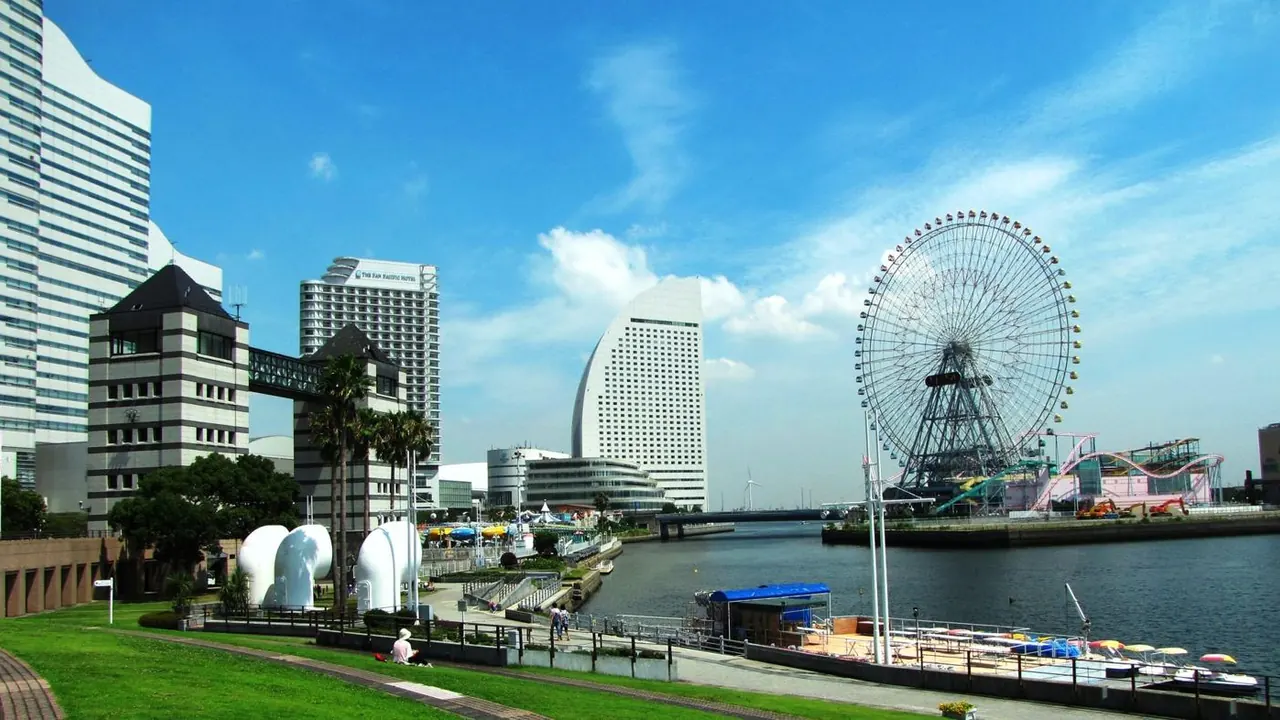
Photos: Kobe by Wei-Te Wong, CC BY-SA 2.0, cropped; Yokohama by Yoshio Kohara, CC BY 3.0, cropped.
Kobe or Yokohama?
Our verdict in twelve categories, each scored against the same fixed benchmark cities, and the climate month by month, so you can choose for your trip.
Choose Kobe for
- wellness
- nature and the outdoors
- day trips
Kobe suits travellers who want mountains, hot springs and western Japan's great sights. The Rokko range rises straight behind the streets, Arima Onsen lies within the city, and Himeji, Kyoto and Nara are all easy days out by rail. It is a calm, slightly cheaper base for walkers, onsen lovers and anyone planning to cover the Kansai region from one hotel.
Choose Yokohama for
- families
- beaches
- nightlife
Families and travellers drawn to the Tokyo area will do better in Yokohama. Children have more to do here, from making their own cup noodles to the island aquarium in the bay. Kamakura's temples are a short ride south and the capital is close enough to visit day after day. Evenings in Noge are a little livelier too, though neither city is built for late nights.
Scoreboard
Twelve categories on one fixed scale from 0 to 100. The shaded stretch is the gap between the two.
Your match
Pick a travel style or drag the sliders, and both match scores follow your weighting.
Too close to call, 1 point apart
Wins on wellness and nature and the outdoors with your weighting.
Wins on families and beaches with your weighting.
What matters to you?
Category by category
What the scores mean for a trip.
Beaches & swimming
Neither is a beach city, but Yokohama has a little more choice. Kobe's Suma is the easier beach to reach, a long stretch of sand fifteen minutes from the centre by train, and Awaji Island's quieter shores across the strait need a car or bus.
From Yokohama, the Shonan coast at Zushi, Kamakura and Enoshima and the Miura Peninsula offer several broad beaches of grey-brown sand, even if they take longer to reach. In both cities the swimming season is just July and August.
Food & drink
Both are excellent places to eat, but for different reasons. Kobe's table is beef grilled on teppanyaki counters, a baking and pastry tradition dating from its foreign merchants, and the sake breweries of Nada, where you can taste at the source.
Yokohama leans towards noodles and Chinese cooking. Its Chinatown is the largest in Japan, far bigger than Kobe's compact Nankinmachi, and the city lays claim to iekei ramen and even has a ramen museum. For an evening of grilled skewers, Noge's tiny counters are hard to beat.
Culture & sights
Both are treaty ports and tell much the same story through similar sights. Kobe's merchant houses climb the Kitano slopes and Yokohama's line the Yamate Bluff. The difference lies in each city's centrepiece. Kobe has its moving record of the 1995 earthquake and Tadao Ando's art museum on the bay.
Yokohama has Sankeien, a landscaped garden filled with temple buildings and teahouses moved from Kyoto and Kamakura, and the 1930s liner Hikawa Maru. Either city fills two days of sightseeing comfortably.
Nightlife
Yokohama offers a bit more to do after dark. Noge's warren of standing bars fills with office workers, Kannai adds karaoke and pubs, and Minato Mirai has bars looking over the lit harbour.
Kobe's evenings centre on the lanes north of Sannomiya, with small whisky and cocktail bars where a handful of regulars sit at the counter. It is a good scene for a quiet drink, but not much more. Club-goers leave both cities, heading to Osaka from Kobe and to Tokyo from Yokohama.
Nature & outdoors
Kobe has the stronger outdoors, because its mountains rise straight behind the streets. Trails climb on foot from Shin-Kobe station past the Nunobiki waterfalls into the Rokko range, and the ropeway up Mount Maya gives a night view over the bay. A short train ride west takes you to the rugged Suma Alps.
Yokohama's green country lies further out. There are wooded temple trails above Kamakura and coastal walks on Miura, and the Tanzawa mountains and Hakone's volcanic valleys are an hour or more inland. The reward is Mount Fuji on the horizon on clear winter days.
Day trips
Both are superb bases, but Kobe reaches more of Japan's headline sights. Himeji Castle is under an hour west, Osaka is twenty minutes east, Kyoto and Nara are easy days out, and the shinkansen stretches as far as Hiroshima and Miyajima.
From Yokohama the trips cluster around Tokyo and Kamakura, both close enough to visit again and again, with Enoshima, Hakone and the Edo-period streets of Kawagoe also on the list. The choice is wide, but most of it lies within one corner of the country.
Good for families
Both are safe, clean and easy with children, but Yokohama has more to keep them busy. The Cup Noodles Museum lets them design their own cup, Hakkeijima Sea Paradise combines an aquarium with rides, and Zoorasia is a spacious modern zoo. Tokyo Disneyland is about an hour away.
Kobe's offer is good but smaller. It has Oji Zoo, the aquarium at Suma beach and the Harborland waterfront, and its strength is the cable car ride up Rokko to a pasture farm.
Getting around
Both are easy to navigate, with punctual trains and a single IC card for every line. Kobe's long, narrow layout makes it the simpler city to grasp: parallel rail lines run east to west, and Chinatown, the harbour and the arcades are a walk from Sannomiya.
Yokohama is more spread out, with Sankeien and the zoo needing a bus. In return, its harbour walk from Minato Mirai to Chinatown is flat all the way, and water buses cross the bay. In both cities the old foreign quarter on the hill means a climb.
Shopping & style
Shopping is pleasant in both and comparable in depth, and serious shoppers from either city end up in Osaka or Tokyo. Kobe's distinctive buys are pearls from its historic pearl trade, Nada sake and leather shoes from Nagata, with Daimaru and boutiques in the old stone buildings of the former settlement.
Yokohama is at its best on Motomachi, a long street of leather goods and Western-tinged style, and around the dense department stores and underground arcades at Yokohama Station.
Affordability
Kobe is slightly easier on the budget. Its business hotels rarely fill up, whereas Yokohama's rooms get dearer on summer weekends and when a big concert or convention is in town. Everyday eating is cheap in both, from ramen to set lunches.
The costs pile up differently. In Kobe it is the beef dinner, a night in an Arima ryokan and shinkansen day trips. In Yokohama it is admission charges at the family attractions, partly offset by free sights such as the Bluff houses and Yamashita Park.
Live music & performing arts
Both are jazz cities with a port heritage and an autumn jazz festival, so the difference is in what surrounds that. Yokohama has more within its own limits: Minato Mirai Hall and its pipe organ, the Kanagawa Arts Theatre for opera and dance, and arenas for touring acts.
Kobe's classical hall is in nearby Nishinomiya, but it has something Yokohama lacks: the all-female Takarazuka Revue, playing in its home town forty minutes away. For kabuki, each city sends you to its larger neighbour.
Wellness & relaxation
For rest, Kobe is well ahead, because Arima Onsen, one of Japan's oldest hot-spring towns, lies within the city. Its rust-coloured kinsen and clear ginsen waters can be an afternoon's soak or an overnight stay in a ryokan.
Yokohama offers modern hot-spring bath complexes, including one on the waterfront, where people spend a whole evening with sauna and lounge. For a true mountain onsen you have to travel to Hakone, about an hour away. Its quiet places are Sankeien's ponds and the rose gardens on the Bluff.
When should you go?
Pick your month. The climate figures are measured averages, not a forecast.
Kobe in July
Yokohama in July
Daytime high, °C
Rainfall in the month, mm
Where the figures come from
Kobe's sunshine is measured 29 km from the centre, at Osaka.
Yokohama's sunshine is measured 29 km from the centre, at Tokyo.
Temperature and rainfall are climate normals, averaged over the years shown. Kobe: 1971-2000 (sunshine 1991-2020, rainfall 1991-2020) normals, Kobe (1.3 km from centre). Yokohama: 1971-2000 (sunshine 1991-2020, rainfall 1991-2020) normals, Yokohama (1.6 km from centre).
Both cities have a mild spring and a hot, humid summer. April and May are the most comfortable months for walking the streets and the hills. July and August are the only real beach months: Kobe's Osaka Bay water reaches about 27°C in August, and Yokohama's coast is barely cooler. Daytime heat of 32°C in Kobe that month makes hiking hard work. Kobe's wettest stretch is the early summer rainy season, peaking at 226mm in July. After that its autumn turns drier, and late October and November are excellent for hiking.
Yokohama's year is shaped differently. Its rain comes later, building through September to 276mm in October, so autumn there is less reliable than in Kobe. Winter is its quiet strength: days are cool but noticeably sunnier than Kobe's, with the clear skies that bring Mount Fuji into view from the coast. Kobe's winters are drier but greyer, and both cities stay cold for sightseeing from December to February.
Which traveller are you?
On a relaxing and wellness trip, Kobe is the better base. A real hot-spring town sits inside the city, so a long soak or a ryokan night slots easily between other plans. From Yokohama, a mountain onsen means giving up a whole day to get there.
On a family trip with young children, Yokohama keeps everyone busier for longer. There are enough child-centred outings within the city for several days, so journeys stay short and nap times survive. Lifts in stations and a flat waterfront make pushchairs easy, and Kobe runs out of ideas sooner.
For an outdoors trip, Kobe lets you fit a proper walk into almost any day. The mountains begin at the city's back door, so you can spend a morning on the ridges and an afternoon in town. Yokohama's best walking country starts with a train journey.
Before you go
| Measure | Kobe | Yokohama |
|---|---|---|
| Official language | Japanese | Japanese |
| Currency | Yen (JPY) | Yen (JPY) |
| Sockets | AB100 V, 50 and 60 Hz depending on the region | AB100 V, 50 and 60 Hz depending on the region |
| Driving side | Left | Left |
| Time zone | UTC+9 | UTC+9 |
| Emergency number | Police 110, fire 119 | Police 110, fire 119 |
| Elevation | 17 m | 24 m |
| Main airport | Kobe Airport (UKB)7 km from centre15 non-stop destinations | Tokyo Haneda International Airport (HND)18 km from centre98 non-stop destinations |
| Public holidays this year | 16 days | 16 days |
By the numbers
| Measure | Kobe | Yokohama |
|---|---|---|
| City population | 1,521,707 | 3,757,630 |
| People per km² | 2,732 | 8,585 |
| Museums within 10 km | 46 | 38 |
| UNESCO World Heritage sites within 50 km | 3 | 1 |
| Swim season, months above 21 °C | 5 months | 5 months |
Where else could you go?
Every comparison below shares a destination with this one, so you can follow Kobe or Yokohama somewhere new.