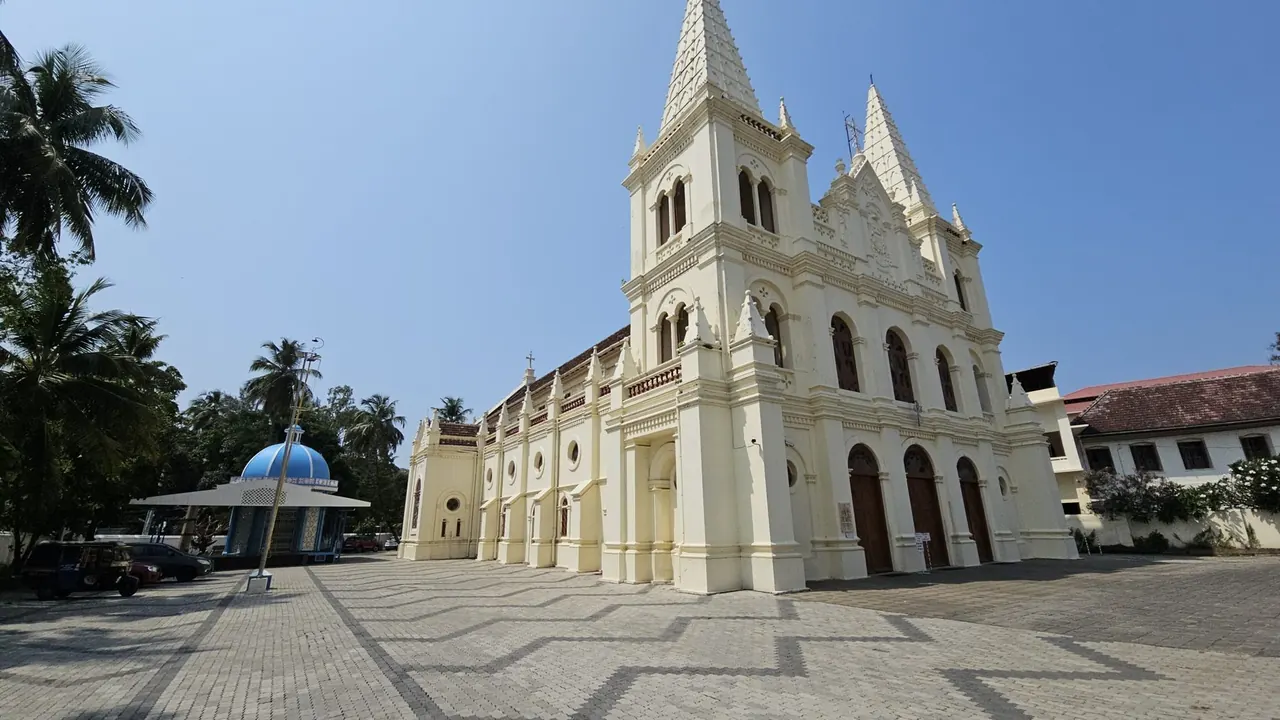
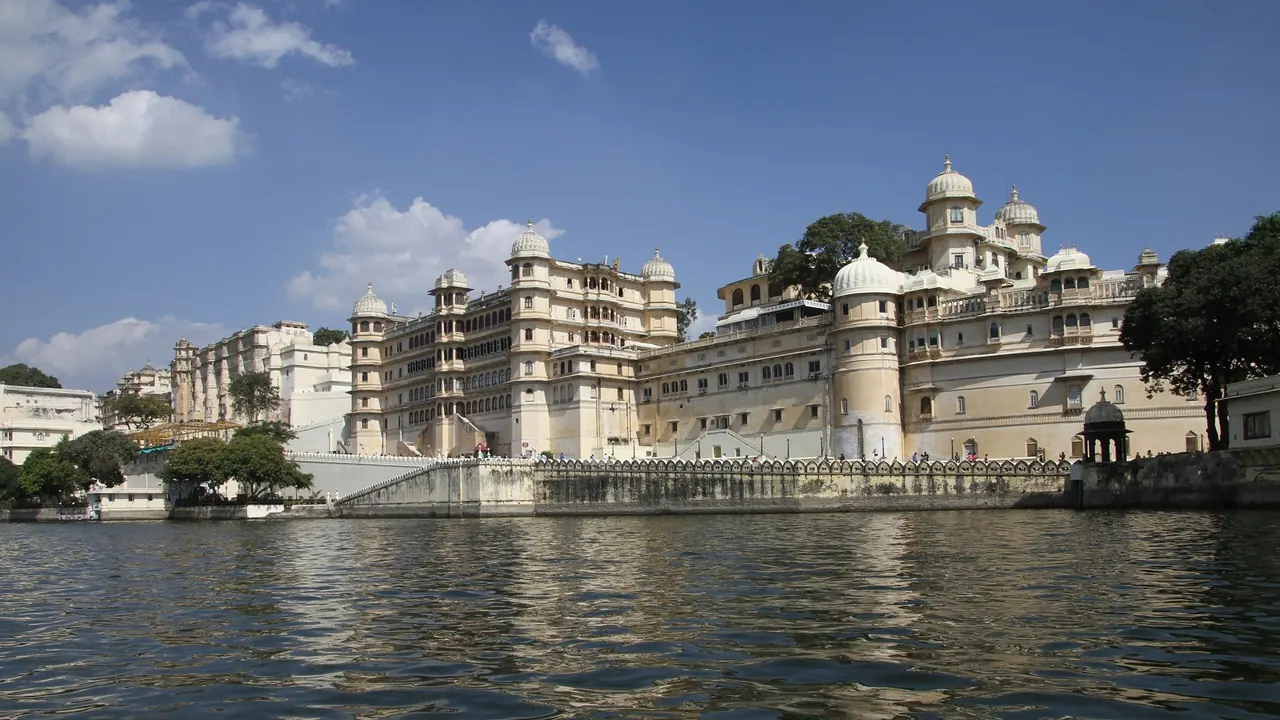
Photos: Kochi by Vis M, CC BY-SA 4.0, cropped; Udaipur by Gerd Eichmann, CC BY-SA 4.0, cropped.
Kochi or Udaipur?
Our verdict in twelve categories, each scored against the same fixed benchmark cities, and the climate month by month, so you can choose for your trip.
Choose Kochi for
- beaches
- wellness
- food and drink
Kochi suits a slower, more sensory trip: eating Kerala's coconut-and-pepper seafood, drifting through backwater canals by country boat, and booking a proper course of Ayurvedic treatment where it is practised as medicine. The layered port history of Fort Kochi and Mattancherry fills two or three unhurried days, ferries make the city easy to cross, and in the dry months there is a real beach at Cherai within reach.
Choose Udaipur for
- day trips
- culture and sights
- shopping
Udaipur is the pick for a romantic, heritage-led stay built around one great royal setting: the City Palace rising from Lake Pichola, the white island palaces on the water, and long road days out to Rajput forts and Jain temples. Its food, transport and everyday calm are narrower than Kochi's, but as a base for Mewar's history, and as a cool-season escape in winter, it has the stronger pull.
Scoreboard
Twelve categories on one fixed scale from 0 to 100. The shaded stretch is the gap between the two.
Your match
Pick a travel style or drag the sliders, and both match scores follow your weighting.
Wins on beaches and wellness with your weighting.
Wins on day trips and culture and sights with your weighting.
What matters to you?
Category by category
What the scores mean for a trip.
Beaches & swimming
Kochi at least gives you a sea. The sand at Fort Kochi is for strolling past the fishing nets, but Cherai Beach, an hour north, is a long palm-backed stretch with warm water, safe to swim from November to March.
Udaipur sits inland among the Aravalli hills and its lakes are not for bathing, so any swim there means a hotel pool, ideally one looking over Lake Pichola.
Food & drink
Kochi is the better place to eat by some distance. Kerala cooking, built on coconut, curry leaf and black pepper, is distinctive, seafood is the strength, and the city's Christian and Muslim communities add beef fry, duck roast and Malabar biryani. Eating fish bought from the stalls by the nets is a highlight in itself.
Udaipur's Mewari dishes, dal baati churma, laal maas and refillable thalis, reward a few days of exploring the old bazaars, but the lakefront rooftops sell the view more than the cooking.
Culture & sights
Both reward two or three days of sightseeing, but they tell different stories. Kochi's heritage is a mixed trading-port history: a Portuguese church where Vasco da Gama was first buried, the tiled Paradesi Synagogue, Dutch houses and the Hindu murals of Mattancherry Palace, with contemporary art filling the warehouses in Biennale years.
Udaipur is one royal ensemble rather than many layers. The City Palace, the Lake Palace and Jag Mandir on the water, and the havelis around the Jagdish Temple make a coherent, romantic picture that is grander to look at, if narrower in range.
Nightlife
Neither city goes out late, and both evenings follow the same pattern of sunset and dinner. The difference is the setting and the drink: in Kochi alcohol is tightly controlled, so a drink means a hotel bar or an Ernakulam lounge, and the evening is a waterfront walk, whereas Udaipur makes a sunset drink on a rooftop over Lake Pichola the easy centrepiece, with the odd lounge playing music at weekends.
Nature & outdoors
Kochi's outdoors are watery and lush: kayaks and country boats through the canals of Kumbalangi, herons in the Mangalavanam mangroves, birdwatching at Thattekad and the falls at Athirappilly. The monsoon greens it all, though it also cancels plans, and the tea hills of Munnar need an overnight trip.
Udaipur offers gentler, drier scenery of scrubby hills and linked lakes, with boat rides, the Sajjangarh sanctuary and short hikes or cycles in hill villages. Its outdoor season is confined to October to March.
Day trips
Udaipur is the better base for excursions, and they are major sights. The hill fort of Kumbhalgarh pairs with the marble Jain temple at Ranakpur, Chittorgarh is the most storied of Rajput fortresses, and the temple towns of Eklingji, Nagda and Nathdwara are close.
From Kochi the classic outing is a backwater day from Alappuzha, alongside the Muziris port sites and temple-centred Thrissur. They are characterful rather than celebrated, and congested roads stretch the journeys.
Good for families
Ferry crossings, backwater boat trips and the fishing nets being hauled in all keep young children absorbed in Kochi, and there is a large amusement and water park on the eastern edge. Neither city is built for children, but Fort Kochi's slow pace makes it the gentler of the two, as long as outings fit the cooler mornings and you are careful with food and water.
In Udaipur, children enjoy the boat rides, puppet shows and the cable car too. The narrow old-city lanes shared with motorbikes and cows, and the punishing heat from April to June, make it better suited to older, history-minded children visiting in winter.
Getting around
Water links Kochi together. Public ferries and the water metro make the harbour crossing between Fort Kochi and Ernakulam a pleasant part of the day, a metro line runs through the commercial centre, and the flat old quarter can be walked or cycled.
Udaipur has no public transport a visitor would use. Its old city is compact but steep in places and crowded with motorbikes, so everything beyond it means autorickshaws, ride-hailing cars or a hired driver.
Shopping & style
Both are craft-and-bazaar towns rather than fashion destinations, so the choice comes down to what you want to bring home. Kochi means antiques and reproductions in the Jew Town warehouses, spices sold by Mattancherry wholesalers and cream-and-gold kasavu handloom, with a large mall for brands.
Udaipur is stronger on handmade art: miniature paintings from palace-side workshops, bandhani textiles, silver and puppets, plus the December crafts fair at Shilpgram. Expect pushier commission-driven selling near the palace.
Affordability
Both are very cheap day to day, with low-cost meals, rickshaws and sights, so the budget turns on where you splurge. In Kochi the extras are a private houseboat, a heritage hotel or a residential Ayurveda course, and scarce alcohol keeps evenings cheap; in Udaipur the big outlay is the lake-view palace or haveli room, though mid-range lakeside stays fill the gap well.
Live music & performing arts
Kochi has the more memorable performance. Fort Kochi's small theatres stage Kathakali every evening, with the chance to watch the elaborate make-up being applied, often alongside Kalaripayattu, and temple drumming fills the festival season.
Udaipur's evening fixture is the folk dance show at Bagore ki Haveli, backed by puppet shows at Lok Kala Mandal and musicians at the winter Shilpgram fair. Both are worth an evening, not a programme.
Wellness & relaxation
Kochi is the far stronger choice for restoring yourself. Ayurveda is Kerala's own medicine, with consultations and treatment courses lasting up to three weeks, shirodhara and oil massage at every level, and backwater resorts nearby for complete quiet.
Udaipur offers massages, yoga classes and lavish palace-hotel spas, and the lake at sunset is genuinely calming, but the peace stays inside the hotels while the streets remain loud.
When should you go?
Pick your month. The climate figures are measured averages, not a forecast.
Kochi in July
Udaipur in July
Daytime high, °C
Rainfall in the month, mm
Where the figures come from
Kochi has no weather station within reach, so its figures come from a gridded climate model rather than a measured record, and read a broad area rather than the city itself.
Udaipur has no rain gauge within 25 km of the centre, so its rainfall comes from a gridded climate dataset read at the city rather than from a gauge further away.
Temperature and rainfall are climate normals, averaged over the years shown. Kochi: 2001-2020 normals, NASA POWER reanalysis grid, no weather station within 90 km. Udaipur: 1978-2025 (rainfall 1991-2020) normals, Udaipur Dabok (20.6 km from centre).
Kochi is hot and humid all year, with highs close to 30°C in every month, so the question is rain rather than heat. December to March is the dry, calm window, when the sea at Cherai sits around 29°C and swimming is safe. The southwest monsoon arrives in May and peaks in June at about 494mm, and October stays very wet too; these months are green and traditionally favoured for Ayurveda, but beach and outdoor plans suffer.
Udaipur runs to a sharper rhythm. November to February is the best time, with dry skies and January highs near 24°C, ideal for walking the old city and making day trips. From April to June it is fiercely hot, close to 39°C, and July to September brings the monsoon that fills the lakes. The two overlap most comfortably from December to February, when both are dry.
Which traveller are you?
For a relaxing and wellness trip, Kochi is the clear choice. Ayurveda is a living medical tradition there, with doctor-led courses lasting weeks, and the shaded lanes of Fort Kochi and nearby backwater resorts give genuine stillness that Udaipur's horn-filled lanes cannot.
On a food and nightlife trip, Kochi wins on the plate: Kerala seafood, Syrian Christian duck roast and Malabar biryani beat Udaipur's thalis and view-led rooftops. Neither city offers real nightlife, though, so expect long dinners rather than late nights in either.
For a culture and arts trip centred on palaces and forts, Udaipur is the stronger base. The City Palace and lake palaces form a grand ensemble, and Kumbhalgarh, Ranakpur and Chittorgarh lie within a day's drive, while Kochi's outings are pleasant rather than famous.
Before you go
| Measure | Kochi | Udaipur |
|---|---|---|
| Official language | Hindi, English | Hindi, English |
| Currency | Indian Rupee (INR) | Indian Rupee (INR) |
| Sockets | CM230 V, 50 Hz | CM230 V, 50 Hz |
| Driving side | Left | Left |
| Time zone | UTC+5:30 | UTC+5:30 |
| Emergency number | 108 or 112 | 108 or 112 |
| Elevation | 0 m | 578 m |
| Main airport | Cochin International Airport (COK)24 km from centre36 non-stop destinations | Maharana Pratap Airport (UDR)22 km from centre11 non-stop destinations |
By the numbers
| Measure | Kochi | Udaipur |
|---|---|---|
| City population | 677,381 | 451,100 |
| People per km² | 7,138 | 12,192 |
| Museums within 10 km | 4 | 3 |
| UNESCO World Heritage sites within 50 km | 0 | 0 |
| Swim season, months above 21 °C | 12 months | - |
Where else could you go?
Every comparison below shares a destination with this one, so you can follow Kochi or Udaipur somewhere new.