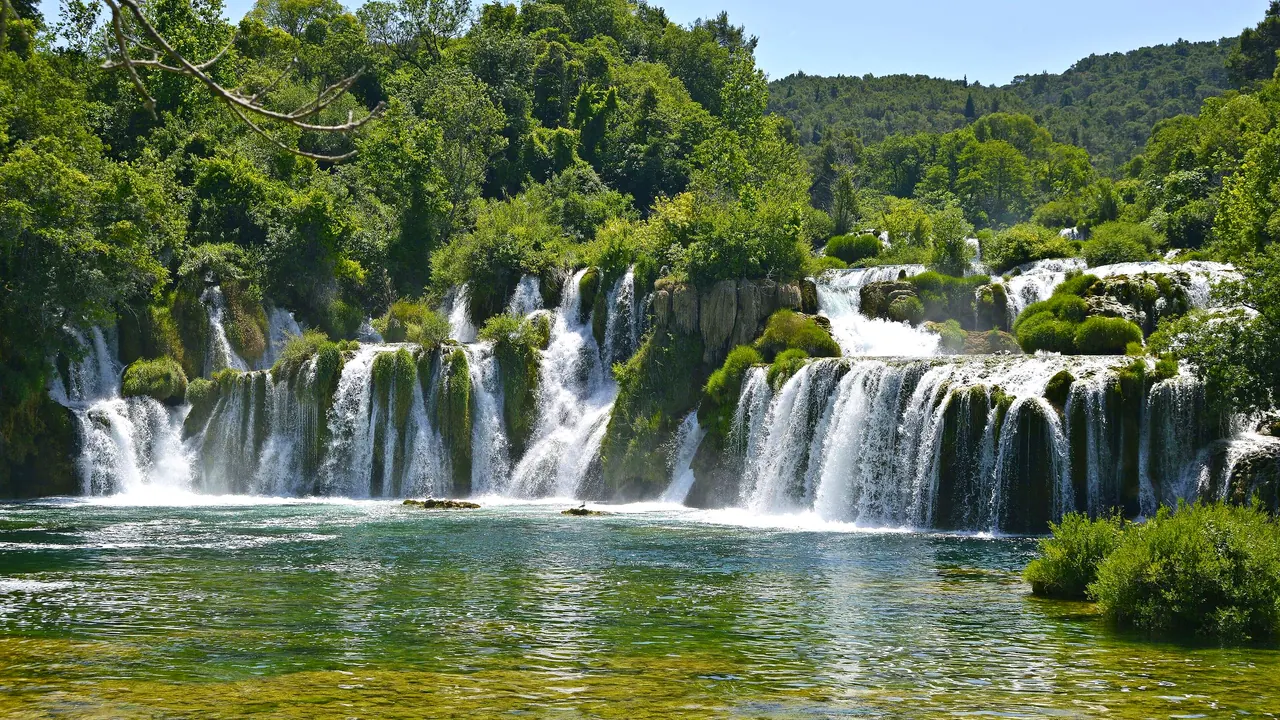
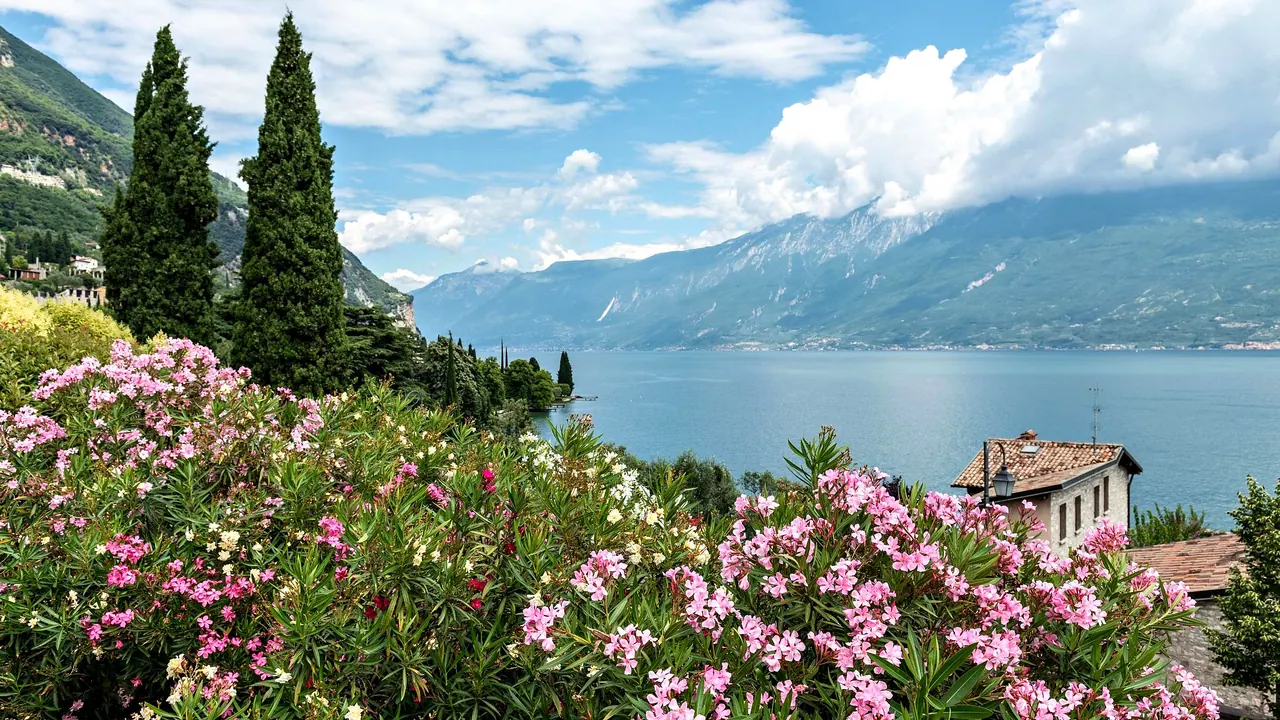
Photos: Krka by Alberto-g-rovi, CC BY 4.0, cropped; Lake Garda by Wolfgang Weiser, Pexels License.
Krka or Lake Garda?
Our verdict in twelve categories, each scored against the same fixed benchmark cities, and the climate month by month, so you can choose for your trip.
Choose Krka for
- culture and sights
- prices
- getting around
Krka suits a traveller who wants one striking landscape and a handful of serious old monuments, with the Adriatic close by. The travertine falls and canyon fill a day or two, Šibenik's cathedral and sea fortress anchor the history, and the coast gives you sea swimming and island ferries. It is a slow, compact trip that needs a car, has quiet evenings and works best for adults who are happy with simple Dalmatian cooking.
Choose Lake Garda for
- wellness
- families
- day trips
Lake Garda is the broader vacation and the easier one to fill. Families have theme parks and lidos on the south-east shore, active travellers have the mountain walls and wind of the north, and anyone after rest has Sirmione's thermal springs. Add better wine and fast trains to Verona and Venice, and it is the stronger choice for a longer stay or for a group with mixed interests.
Scoreboard
Twelve categories on one fixed scale from 0 to 100. The shaded stretch is the gap between the two.
Your match
Pick a travel style or drag the sliders, and both match scores follow your weighting.
Wins on culture and sights and prices with your weighting.
Wins on wellness and families with your weighting.
What matters to you?
Category by category
What the scores mean for a trip.
Beaches & swimming
These are different kinds of water. At Krka the falls are off limits for swimming, so swimming means the sea. You drive or take a boat down to Šibenik's pebble coves, the bays near Primošten or the rocky shores of Zlarin and Prvić, and it makes a good afternoon rather than the reason for the trip.
Lake Garda makes swimming part of daily life in summer. The south and east shores have lawned lidos, jetties and the rock shelves below Sirmione, so you can swim straight from where you stay. It is lake bathing on pebble and grass rather than sea and sand, and the north is cooler and windier.
Food & drink
Lake Garda eats better and with more variety. There is lake fish with risotto, bigoli, carne salada in the north and local olive oil, and above all a range of wines: Lugana, Bardolino, Chiaretto and Amarone from the hills nearby. The catch is that harbour-front menus can be generic, so the best meals are at agriturismi a little inland.
Krka's table is narrower but has character. There is meat slow-cooked under the iron bell, Skradin's long-cooked veal risotto, estuary mussels and oysters, and Babić red from the surrounding hills. Outside Šibenik's old town the choice soon comes down to a few family konobas.
Culture & sights
Krka has the heavier history, though it is spread along the river. Šibenik's Cathedral of St James and the St Nicholas sea fortress are both UNESCO-listed. Upstream you have the Franciscan monastery on its islet at Visovac, the Orthodox monastery with catacombs, and the Roman arches of Burnum on the plateau.
Garda's heritage is a series of pretty towns rather than one great site. The best of it is Sirmione's moated castle and the Grotte di Catullo, plus d'Annunzio's odd Vittoriale estate at Gardone. Each fills a pleasant half-day.
Nightlife
Neither place is for a night out, but Lake Garda at least has one. Desenzano draws students and visitors from Brescia and Verona to its lakefront bars and to the large clubs nearby on summer weekends, and Riva and Bardolino stay lively in season. At Krka an evening means dinner by the water and a drink beside the yachts in Skradin, or a few bars in Šibenik's lanes, with no clubs to speak of.
Nature & outdoors
Krka is one remarkable sight: a karst canyon with travertine falls at Skradinski Buk and Roški Slap, seen from boardwalks and park boats. Add canyon-rim trails, kayaking on the upper river and boat trips to the Kornati. With no mountains, most of it is gentle walking.
Lake Garda offers far more to do outdoors, especially in the fjord-like north. The cable car from Malcesine climbs Monte Baldo to about 1,760m, Arco's limestone walls and via ferrate draw climbers, mountain-bike trails run up the valleys, and the steady afternoon wind makes Torbole a classic for windsurfing.
Day trips
From Krka, you reach central Dalmatia by road. Walled Trogir and Split are to the south, Zadar's Roman forum is about an hour north, and small ferries from Šibenik serve Zlarin and Prvić. Plitvice is too far for a comfortable return in a day.
Lake Garda's southern shore sits on the Milan to Venice railway, which puts it in a different league. Verona is under an hour by train and Venice about an hour and a half, with Vicenza, Padua and Brescia on the same line. Bergamo's walled upper town is also within easy reach to the west, and Mantua and the Valpolicella vineyards are a short drive away.
Good for families
Lake Garda is built for family vacations, Krka is not. Near Peschiera there is Gardaland with its aquarium, more water and film parks, and the Parco Natura Viva safari park, and the shore is lined with campsites that have pools and children's clubs. The north suits older children who want to bike or try windsurfing.
At Krka, children enjoy the boardwalks over rushing water and the boat rides to Visovac, but that is the whole day out. Families usually stay at resort hotels near Šibenik and drive in.
Getting around
Both are hard work without planning, for different reasons. Around Krka the distances are short and the motorway runs close to Lozovac, so with a car everything is easy. Inside the park, buses and boats link the falls, but without a car you are limited to the Šibenik and Skradin buses and organised tours.
At Garda you can manage without a car if you stay in one town and use the ferries, with the railway at Peschiera and Desenzano for the cities. Driving around the lake is the slow part, on narrow, congested shore roads where parking is scarce.
Shopping & style
Neither is a shopping destination, but Garda gives you more to browse. Big weekly markets fill the lakefronts at Desenzano, Lazise and Bardolino, there are lemon products from Limone, outdoor gear shops in Riva and Arco, and Verona and Milan are close by for serious shopping. Around Krka it comes down to olive oil, honey and figs from small producers, a few craft shops in Šibenik and Zlarin's coral work.
Affordability
Costs are much the same, with Krka slightly kinder overall, and both are noticeably cheaper in spring and autumn. At Krka the biggest single cost is the national park ticket, highest in summer, and apartments inland around Lozovac are cheaper than rooms on the Šibenik waterfront.
At Garda the costs come from elsewhere: lakefront hotels in Sirmione or Limone, plus theme park tickets and ferry fares for a family. Campsites and hill agriturismi bring the cost down.
Live music & performing arts
Both come alive only in summer, and Lake Garda has the bigger evening on offer. The opera festival in Verona's Roman arena is under an hour from the southern shore, and the open-air amphitheatre at the Vittoriale stages concerts. Krka's programme is centred on Šibenik, with concerts in the fortresses, the children's festival and a small old theatre, plus klapa singing at village festivities. Along the river itself there is almost nothing.
Wellness & relaxation
Lake Garda has a real thermal tradition. Warm sulphur springs off Sirmione's peninsula feed pools that look over the water, a historic villa park near Lazise has open-air thermal baths among old trees, and Gardone and Salò have hotel spas. Krka offers only quiet: Skradin's harbour at dusk, the river early in the morning and silent inland villages. That suits a slow trip but leaves you with only a few resort spas near Šibenik.
When should you go?
Pick your month. The climate figures are measured averages, not a forecast.
Krka in July
Lake Garda in July
Daytime high, °C
Rainfall in the month, mm
Where the figures come from
Krka's temperatures are measured 53 km from the centre, at Split / Marjan.
Krka has no rain gauge within 25 km of the centre, so its rainfall comes from a gridded climate dataset read at the destination rather than from a gauge further away.
Krka's sunshine is measured 53 km from the centre, at Split / Marjan.
Lake Garda's sunshine is measured 28 km from the centre, at Verona / Villafranca.
Temperature and rainfall are climate normals, averaged over the years shown. Krka: 1991-2020 (sunshine 1971-2000) normals, Split / Marjan (52.9 km from centre). Lake Garda: 2005-2025 (sunshine 1991-2020, rainfall 1991-2020) normals, Verona / Rivoltella (1.6 km from centre).
The two climates are close in spring and autumn but differ in summer. Around Krka, July and August reach about 31°C and are very dry and sunny. That is ideal for the sea, which is at its warmest at about 24°C in those two months and a little cooler in June and September, but it makes the boardwalks tiring by midday. May, June and September are the comfortable months for the falls. Rain sets in from September and peaks in November at around 106mm, and winter is mild, with regular rain.
Lake Garda is a little cooler at the height of summer, about 29°C in July, which makes walking and cycling easier. It gets more rain than Krka from April to August, with frequent showers in late spring and August, and in November, its wettest month at about 121mm. Winters are colder and duller than on the Dalmatian coast. June to September is the season for lake swimming, and April, May and late September are best for hiking and climbing in the north.
Which traveller are you?
On a family trip with children, Lake Garda is the clear pick. Gardaland, the safari park and the campsites with pools sit together on the south-east shore, and the shallow lidos and ferry hops are easy. Around Krka, the boardwalks are fun for an afternoon, but there is little else.
For a relaxing and wellness trip, choose Lake Garda. Sirmione's warm sulphur springs feed thermal pools over the water, there are open-air thermal baths near Lazise, and the western Riviera has hotel spas. Krka gives you quiet evenings in Skradin, but no real spa.
On a culture trip built around historic sights, Krka has more weight. You get Šibenik's two UNESCO monuments, the island monastery at Visovac, the Roman camp at Burnum and the monastery catacombs upstream. Garda's castles and Roman villa make pleasant half-days rather than the main event.
Before you go
| Measure | Krka | Lake Garda |
|---|---|---|
| Official language | Croatian | Italian |
| Currency | Euro (EUR) | Euro (EUR) |
| Sockets | CF230 V, 50 Hz | CFL230 V, 50 Hz |
| Driving side | Right | Right |
| Time zone | UTC+1, UTC+2 in summer | UTC+1, UTC+2 in summer |
| Emergency number | 112 | 112 |
| Main airport | Split Saint Jerome Airport (SPU)69 non-stop destinations | Verona Villafranca Valerio Catullo Airport (VRN)96 non-stop destinations |
| Public holidays this year | 14 days | 13 days |
By the numbers
| Measure | Krka | Lake Garda |
|---|---|---|
| Swim season, months above 21 °C | 4 months | - |
Where else could you go?
Every comparison below shares a destination with this one, so you can follow Krka or Lake Garda somewhere new.
- Hvarvs Krka
- Bračvs Krka
- Lake Comovs Lake Garda
- Plitvice Lakesvs Krka
- Korčulavs Krka
- Lake Maggiorevs Lake Garda