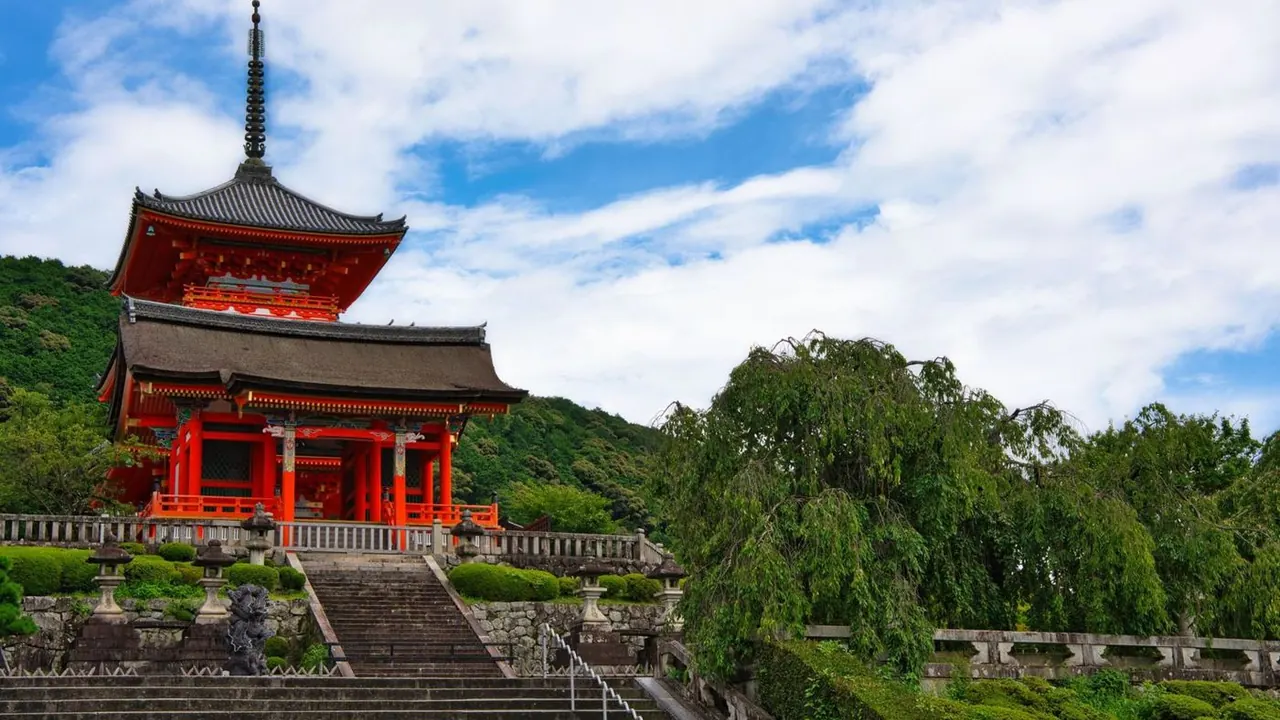
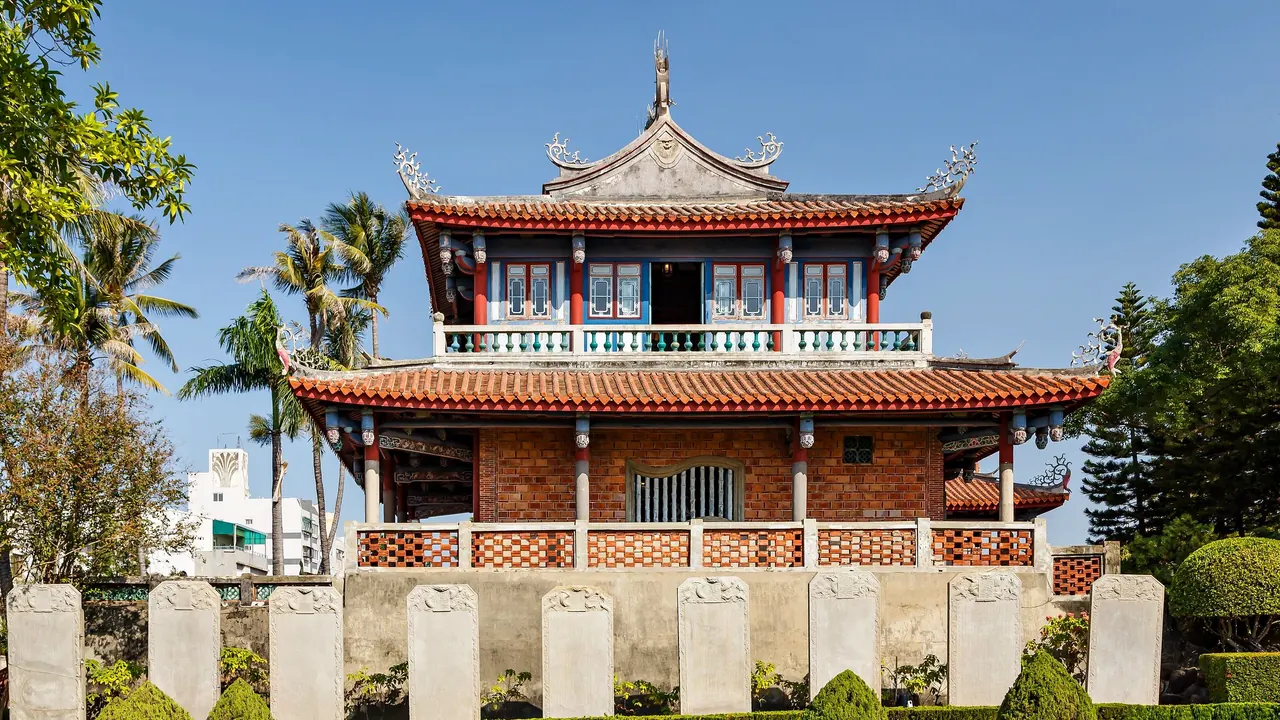
Photos: Kyoto by Bert Mulder, Pexels License; Tainan by CEphoto, Uwe Aranas, CC BY-SA 3.0, cropped.
Kyoto or Tainan?
Our verdict in twelve categories, each scored against the same fixed benchmark cities, and the climate month by month, so you can choose for your trip.
Choose Kyoto for
- getting around
- day trips
- shopping
Kyoto is for travellers who want to be immersed in Japan's classical culture: temple gardens, wooden teahouse lanes, kabuki and geisha dances, and a craft tradition you can carry home. It is also the better base for moving around. Nara, Osaka, Uji and Himeji are all easy rides away, the forested hills start at the edge of town, and families get more help. Expect to pay more for a room and to share the famous sights with crowds.
Choose Tainan for
- prices
- beaches
Tainan suits the curious eater on a budget who is happy with a slower, rougher-edged town. The day is shaped by breakfast beef soup, stall-to-stall grazing and night markets, and in between you visit temples and Dutch and Qing-era forts that tell Taiwan's oldest story. It costs much less than Kyoto. The trade-off is getting around: there is no metro, so expect a lot of taxis and a lot less polish.
Scoreboard
Twelve categories on one fixed scale from 0 to 100. The shaded stretch is the gap between the two.
Your match
Pick a travel style or drag the sliders, and both match scores follow your weighting.
Wins on getting around and day trips with your weighting.
Wins on prices and beaches with your weighting.
What matters to you?
Category by category
What the scores mean for a trip.
Beaches & swimming
Neither city is a place for a beach vacation, but Tainan at least sits on the sea. The long grey-sand shore beyond Anping, at the Golden Coast and Yuguang Island, makes a fine place for a sunset walk over the Taiwan Strait. Strong currents mean swimming there is often discouraged, though, so a hotel pool is the realistic way to swim.
Kyoto is inland, so a swim means the freshwater strands of Lake Biwa, which fill with families in July and August. The clear water of the Sea of Japan coast is more than two hours north, an overnight trip rather than an afternoon.
Food & drink
These are two of East Asia's great food cities, but they reward very different appetites. Kyoto is about precision: seasonal kaiseki in old wooden houses, Buddhist temple cooking at Daitokuji and Tenryuji, tofu and yuba, pickles from Nishiki Market and sake from the Fushimi breweries.
Tainan is about grazing. The day runs from fresh beef soup or milkfish porridge at breakfast, through danzai noodles and coffin bread at stalls that have made one dish for three generations, to shaved ice and the weekend night markets. Kyoto has the tasting menus, while Tainan has the street food Kyoto lacks.
Culture & sights
Kyoto's heritage is on another scale. It has seventeen UNESCO-listed sites, from Kinkaku-ji to Ryoan-ji's rock garden, Fushimi Inari's tunnels of gates and well over a thousand other temples, plus whole districts of machiya townhouses in Higashiyama and Gion. You could spend weeks here and still be finding new things.
Tainan tells a story Kyoto cannot: Taiwan's earliest chapters, from the Dutch at Fort Zeelandia and Chihkan Tower to Koxinga, the Qing and the Confucius Temple, which was the island's first school. Its incense-filled temples and Japanese-era buildings make for absorbing days, and the Chimei Museum adds European painting. Still, it is a rich town rather than a world capital of heritage.
Nightlife
Both cities wind down early, and in both the serious night out is a short train ride away, to Osaka from Kyoto and to Kaohsiung from Tainan. In Kyoto the evening centres on drinking, in the sake bars and standing izakaya of lantern-lit Pontocho and along Kiyamachi, with riverside terraces in summer.
In Tainan the evening centres on food. People eat their way through the night markets, and afterwards there are a few quiet cocktails or whiskies in the townhouse bars around Shennong Street and Haian Road.
Nature & outdoors
In Kyoto the outdoors starts at the edge of town. Trails climb to Daimonji in the eastern hills, Arashiyama's bamboo and wooded slopes mark the west, and a cedar-forest path links Kurama and Kibune. Cherry blossom and maple colour make the seasons a reason to travel in their own right.
Tainan's landscape is flat coastal wetland. You can take a boat through the mangrove tunnel at Sicao, see the black-faced spoonbills that winter at Qigu, and walk among the bleached salt pans. It is unusual rather than beautiful, and summer heat limits outdoor time to the early morning.
Day trips
Kyoto is among the best day-trip bases anywhere. Nara's great Buddha and deer, Osaka's food streets, Uji's tea and Byodo-in, and Himeji Castle are all quick rail rides away, and the fast trains mean little planning is needed.
Tainan's options are good but fewer. Kaohsiung is close, with Lotus Pond and Cijin Island, and beyond it lie Foguangshan's Buddha Museum and the umbrella makers of Meinong. Chiayi opens the way to the Alishan forest railway, while Lukang sits at the limit of what a day allows.
Good for families
Kyoto works better with children. The Railway Museum's steam roundhouse and simulators, the aquarium, and the ninja shows at Toei Studio Park give younger visitors something made for them, and the city's calm and cleanliness make the temples manageable.
Tainan is warm towards children, and the night-market games, Anping's forts and Tree House, and the mangrove boats go down well. Little else is built for families, however, and the city's theme park and big zoo are in Kaohsiung.
Getting around
Kyoto's flat central grid is good for walking and excellent for cycling, and trains, the Randen tram and buses reach the temples on the edges, though the buses crawl in peak seasons. Tainan has no metro, its buses are slow, and the high-speed rail station sits well outside town. Beyond the walkable old core around Chihkan Tower and Shennong Street, you will be relying on taxis, ride-hailing and bike-share.
Shopping & style
Kyoto is a place for buying things that last. Family workshops sell Kiyomizu-ware, Nishijin silk, fans, incense and hand-forged knives, and you can add the Teramachi arcades, the department stores of Shijo and the monthly flea markets at To-ji and Kitano Tenmangu.
Tainan's shopping is smaller and more personal. Townhouse shops around Shennong and Zhengxing streets sell indigo cloth, ceramics, tea and Taiwanese design, and the 1930s Hayashi Department Store, with its rooftop shrine, is worth seeing for itself.
Affordability
Rooms are where the two cities part most. Kyoto's hotels and ryokan inns are dear at any time and become scarce and costly in the cherry blossom and autumn colour seasons, while Tainan's hotels and guesthouses cost clearly less, so the same budget buys more nights or a better room there. Both feed you well for little day to day, but Kyoto's finest cooking means a kaiseki splurge, whereas Tainan's most celebrated food comes from stalls and is cheap by any standard.
Transport shifts the balance a little the other way. Kyoto's trains and buses are inexpensive and reach almost every temple, while Tainan has no metro, so the taxi hops between the old centre, Anping and the Chimei Museum become a steady daily cost. Tainan's cocktail bars and few smart restaurants are no bargain either. Even so, a stay there costs clearly less than one in Kyoto, as long as you eat where the locals eat.
Live music & performing arts
Kyoto has a real stage tradition. There are the spring dances of the geisha districts, kabuki at the Minamiza, Japan's oldest kabuki house, and regular Noh, as well as a concert hall and ROHM Theatre for orchestral music and opera.
Tainan's most memorable performances are informal ones: Taiwanese opera and glove puppetry on stages in front of temples on festival days, sometimes played for the gods to empty stools. Beyond those, the formal programme is thin, and the major shows take place in Kaohsiung.
Wellness & relaxation
Kyoto offers more ways to slow down. You can soak in century-old neighbourhood sento, stay in a ryokan with a wooden tub, sit in zazen meditation, or spend a night in a temple lodging, and Arima's hot springs are close by.
Tainan's main draw is the unusual grey mud springs at Guanziling, about an hour away. In town there are foot-reflexology parlours and unhurried tea rooms, but scooter noise and heat make deep rest harder to find.
When should you go?
Pick your month. The climate figures are measured averages, not a forecast.
Kyoto in July
Tainan in July
Daytime high, °C
Rainfall in the month, mm
Where the figures come from
Kyoto's sunshine is measured 43 km from the centre, at Osaka.
Tainan has no rain gauge within 25 km of the centre, so its rainfall comes from a gridded climate dataset read at the city rather than from a gauge further away.
Temperature and rainfall are climate normals, averaged over the years shown. Kyoto: 1971-2000 (sunshine 1991-2020, rainfall 1991-2020) normals, Kyoto (3.2 km from centre). Tainan: 1949-2025, 35 years observed (rainfall 1991-2020) normals, Tainan Tw-Afb (4.7 km from centre).
Kyoto has four distinct seasons. April and May, and again October and November, are the months for walking. They are mild enough for long temple circuits, and they bring the cherry blossom and the maple colour. Winter is cold but dry and often clear. The rains build from June and peak in July at about 250mm. August is the sunniest month but also hot and sticky at 32°C, which makes sightseeing on foot hard work, though the nearby sea is at its warmest in late summer.
Tainan's best season is the reverse of Kyoto's. November to March is its best stretch, with days in the mid-20s, around 23°C in January, and very little rain, so a winter trip finds Kyoto cold and Tainan pleasantly warm. October and April are already hot, close to 30°C, and April brings the first real rain. From May to September the city is hot and soaked, with about 588mm of rain in August alone. The sea stays warm all year, but summer is a season for early mornings and breaks indoors in the air conditioning.
Which traveller are you?
On a culture and arts trip, Kyoto wins clearly. It has a thousand years of imperial temples, gardens and palaces, along with kabuki at the Minamiza, Noh stages and the spring geisha dances. Tainan's forts and temples are absorbing, but they fill days rather than weeks.
For a trip on a tight budget, Tainan stretches your money much further. The snacks cost very little, most temples are free, and guesthouses are cheap. In Kyoto, the price of rooms, especially in the blossom and maple seasons, quickly eats into a modest budget.
On a family trip with children, Kyoto is the easier choice. The Railway Museum, the aquarium and the samurai shows keep children busy, and the deer in Nara are a short ride away. Tainan has little built for children, and scooter-cluttered pavements and taxi hops make outings harder work.
Before you go
| Measure | Kyoto | Tainan |
|---|---|---|
| Official language | Japanese | Taiwanese Sign Language, Amis, Taiwanese Hokkien, Rukai, Bunun, Kanakanavu, Standard Taiwanese Mandarin, Paiwan, Yami, Atayal, Saaroa, Kavalan, Tsou, Seediq, Puyuma, Saisiyat, Sakizaya, Taiwanese Hakka, Truku, Matsu dialect, Kinmen dialect, Wuqiu dialect |
| Currency | Yen (JPY) | New Taiwan Dollar (TWD) |
| Sockets | AB100 V, 50 and 60 Hz depending on the region | AB110 V, 60 Hz |
| Driving side | Left | Right |
| Time zone | UTC+9 | UTC+8 |
| Emergency number | Police 110, fire 119 | 110 or 112 or 119 |
| Elevation | 51 m | 1 m |
| Main airport | Kansai International Airport (KIX)81 km from centre62 non-stop destinations | Kaohsiung International Airport (KHH)48 km from centre35 non-stop destinations |
| Public holidays this year | 16 days | - |
By the numbers
| Measure | Kyoto | Tainan |
|---|---|---|
| City population | 1,463,723 | 1,849,762 |
| People per km² | 1,768 | 844 |
| Museums within 10 km | 77 | 17 |
| UNESCO World Heritage sites within 50 km | 4 | 0 |
| Swim season, months above 21 °C | 5 months | 12 months |
Where else could you go?
Every comparison below shares a destination with this one, so you can follow Kyoto or Tainan somewhere new.