Karakol
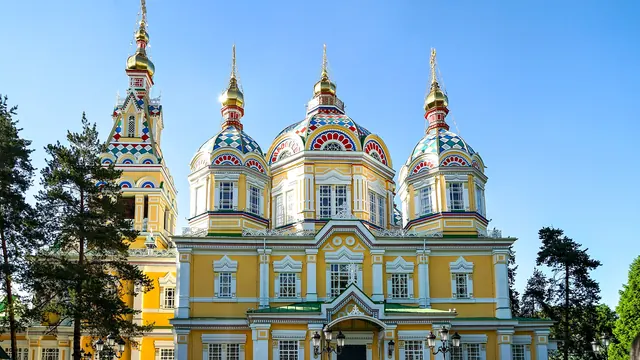
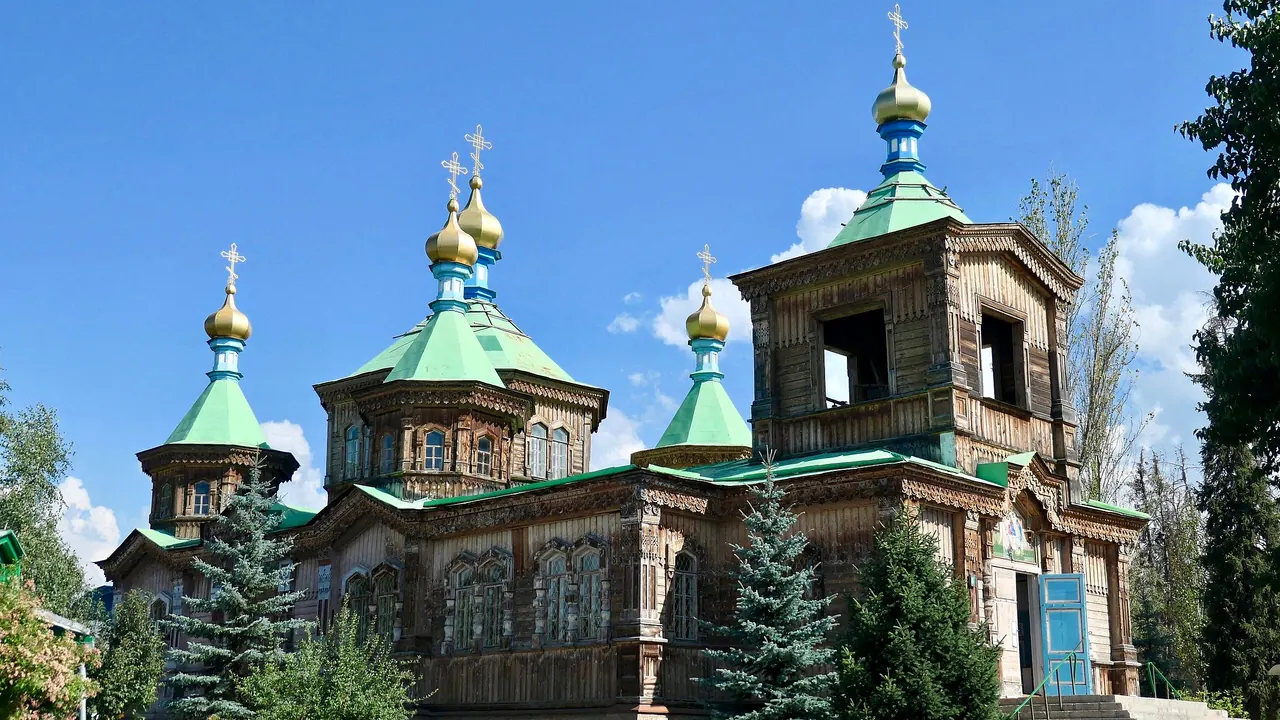
Karakol's Holy Trinity Cathedral, a wooden church with green roofs and gilded onion domes
- Affordability92
- Nature & outdoors90
- Wellness & relaxation50
Photo: Bruno Rijsman, CC BY 2.0, cropped
Match
37
Every category weighted equally
- Beach & sun41
- Culture & arts33
- Food & nightlife31
- Family trip43
- Outdoors45
- Relax & unwind43
- Shopping & style32
- On a budget43
Karakol in twelve categories
Our verdict on each, scored 0 to 100 against the same fixed benchmark cities, so a score means the same thing on every page.
Beaches & swimming. Scores 28 out of 100.
Food & drink. Scores 35 out of 100.
Culture & sights. Scores 33 out of 100.
Nightlife. Scores 7 out of 100.
Nature & outdoors. Scores 90 out of 100.
Day trips. Scores 14 out of 100.
Good for families. Scores 28 out of 100.
Getting around. Scores 38 out of 100.
Shopping & style. Scores 20 out of 100.
Affordability. Scores 92 out of 100.
Live music & performing arts. Scores 10 out of 100.
Wellness & relaxation. Scores 50 out of 100.
Karakol category by category
Beaches & swimming
28Karakol sits a few kilometres back from the eastern tip of Issyk-Kul, but it is not a lake resort. The shore closest to town, around the old Pristan landing, is shallow, reedy and better for a walk than a swim. The sandy stretches that draw summer crowds are on the north shore and around Tamga and Barskoon on the south shore, roughly one and a half to three hours away by road.
The lake lies at about 1,600m, slightly salty and very clear, and from late July to August the water near the shore warms to around 20°C. A swim can be a pleasant break during a trekking trip, but the season is short and visitors come to Karakol for the mountains, not the water.
Food & drink
35Karakol's one distinctive contribution to eating is ashlan-fu, a cold, sour, chilli-dark bowl of starch jelly and noodles from the town's Dungan community, served cheaply in plain canteens around the bazaar. Uyghur lagman, plov, manty and shashlyk fill out the rest of the menu. Some Dungan families also cook multi-course home dinners for visitors, and that is the best meal in town.
The bazaar sells dried fruit, honey from the surrounding valleys, fresh bread and summer apricots. Beyond that there is not much: a handful of guesthouse kitchens and cafés catering to trekkers, little choice for vegetarians, and no wine or coffee culture to speak of. Eating here is cheap, filling and interesting for a few days, not a reason to come.
Culture & sights
33Karakol was laid out in the 1860s as a Russian frontier garrison, and its grid of tree-lined streets still has single-storey wooden houses with carved window frames. The two buildings everyone comes to see are a short walk apart. One is the Holy Trinity Cathedral, a large wooden Orthodox church with green onion domes. The other is the Dungan Mosque, built in the early twentieth century by Chinese Muslim craftsmen in the style of a Chinese temple, with a pagoda-like minaret and painted eaves and no metal nails.
At the lakeside Pristan quarter, the memorial and museum to the explorer Nikolai Przhevalsky tell the story of Russian exploration of Central Asia, and the small regional museum covers local history. The Sunday animal market on the edge of town is lively and well worth an early start. Taken together, all of this fills a relaxed half-day.
Nightlife
7Evenings in Karakol mean dinner, a beer at the guesthouse and an early night before a trek. There are a few cafés with beer, some local karaoke rooms and, in winter, some après-ski drinking up at the ski area, but nothing that counts as a night out. Most of the town is quiet and dark by mid-evening.
Nature & outdoors
90Karakol is the gateway to the Terskey Ala-Too, the northern wall of the Tian Shan, and it is the reason most people come. A short drive puts you at the mouths of the Karakol, Altyn-Arashan and Jeti-Oguz valleys, with spruce forest, summer pastures with herders' yurts, and peaks above 4,000m. The classic route is the two- or three-day loop through Altyn-Arashan, over a high pass and down past the turquoise Ala-Kul lake. Jeti-Oguz, with its red sandstone cliffs, is an easy half-day out.
Horse trekking with local herders is easy to arrange, and mountain biking and longer expeditions further east are possible too. In winter the ski area on the slopes above town gives long, empty runs through the forest, and it is a base for ski touring. Hiking runs from about June to September. Trails are lightly marked and services are basic, so this suits independent hikers and people who book a guide.
Day trips
14Almost every outing from Karakol leads into the mountains or along the lake, which makes for a great day out but not a visit to another place. There are few towns or heritage sites within easy reach. The villages along the south shore of Issyk-Kul can be combined into a day, with eagle-hunting demonstrations near Bokonbaevo at the far end. The petroglyph field and lakeside resorts at Cholpon-Ata, on the north shore, are better done as an overnight stop than a return trip. Anyone looking for old towns or historic monuments will find little nearby.
Good for families
28Karakol has nothing made for children: no zoo, aquarium, theme park or play museums. Pavements are uneven, transport means cramped minibuses or taxis on rough mountain roads, and medical facilities are basic. Families with adventurous older children can still have a good trip, though: horse rides to herders' yurts, short valley walks, a night in a yurt camp and quiet ski slopes in winter all go down well. For toddlers and young children it is hard going.
Getting around
38The town itself is small and flat, and its grid of wide streets is easy to walk. The cathedral, mosque, bazaar and most guesthouses are within twenty minutes of one another. Leaving town is the harder part. Shared minibuses run to nearby villages, the ski area and the mouths of some valleys. They leave when full from around the bazaar, and the signs are in Cyrillic. Taxis are cheap and easy to hire for the day, and higher valleys such as Altyn-Arashan need a sturdy four-wheel drive or your own legs. You don't need your own car, but expect a lot of haggling over shared rides.
Shopping & style
20The one thing worth shopping for is felt. Shyrdak rugs, stitched from coloured felt in bold ram's-horn patterns, along with slippers, bags and kalpak hats, come from craft cooperatives and small workshops in and around town. The central bazaar sells household goods, clothes, dried fruit and honey, and is more interesting to wander than to shop. There are no fashion streets or department stores.
Affordability
92Karakol is one of the cheapest bases for mountain travel anywhere. Family guesthouses with breakfast, canteen meals of lagman and ashlan-fu, and shared minibuses cost very little, and a private taxi for the day is affordable for most travellers. Costs come from the outdoor side: guides, horses, four-wheel-drive transfers to the high valleys and rented gear. Even so, a week of trekking costs far less than in most mountain regions.
Live music & performing arts
10Karakol has a small regional drama theatre that stages plays in Kyrgyz and Russian, but there is little regular programming a visitor can follow. Traditional music, with the three-stringed komuz and recitations from the Manas epic, is more likely heard at a yurt camp, a festival or a guesthouse evening than in a concert hall. There is no live music scene to speak of.
Wellness & relaxation
50Hot springs are part of the local tradition. In the village of Ak-Suu, a short drive from town, the Soviet-era sanatorium has outdoor thermal pools that are open to day visitors. They are especially good after skiing or in the evening with snow on the slopes. Higher up, Altyn-Arashan has simple bathhouses and pools fed by hot springs at the end of a long walk or bumpy drive, and soaking there after a trek in a pine-ringed valley is one of the best experiences of the trip. Jeti-Oguz also has an old sanatorium.
The facilities are basic rather than polished, and there are no proper spas or massage culture in town. The town itself is quiet and unhurried, a good place to rest a few days between treks.
When should you go?
Pick a month to see what it is like. The climate figures are measured averages, not a forecast.
Karakol in July
Daytime high, °C
Rainfall in the month, mm
The whole year
Shaded against this destination’s own year: the deepest cell is its best month for that figure and the palest its weakest.
Temperature and rainfall are climate normals, averaged over the years shown. Karakol: 1991-2020 normals, Kyzyl-Suu / Chelpek (16 km from centre).
Before you go
| Measure | Karakol |
|---|---|
| Official language | Kyrgyz |
| Currency | Som (KGS) |
| Sockets | CF220 V, 50 Hz |
| Driving side | Right |
| Time zone | UTC+6 |
| Emergency number | 161 |
| Elevation | 1,690 m |
| Main airport | Manas International Airport (BSZ)326 km from centre42 non-stop destinations |
By the numbers
| Measure | Karakol |
|---|---|
| Population | 85,588 |
| People per km² | 1,779 |
| Museums within 10 km | 1 |
| UNESCO World Heritage sites within 50 km | 0 |
Compare Karakol with
Every comparison with a written verdict behind it.