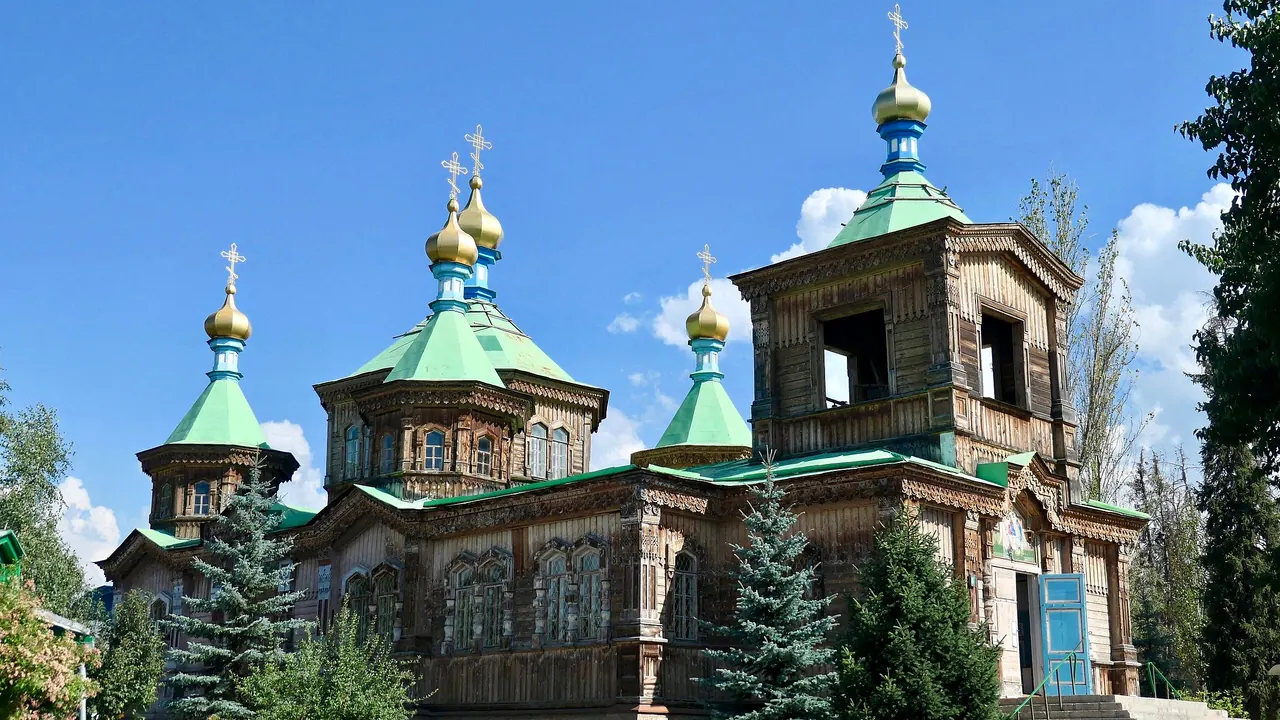
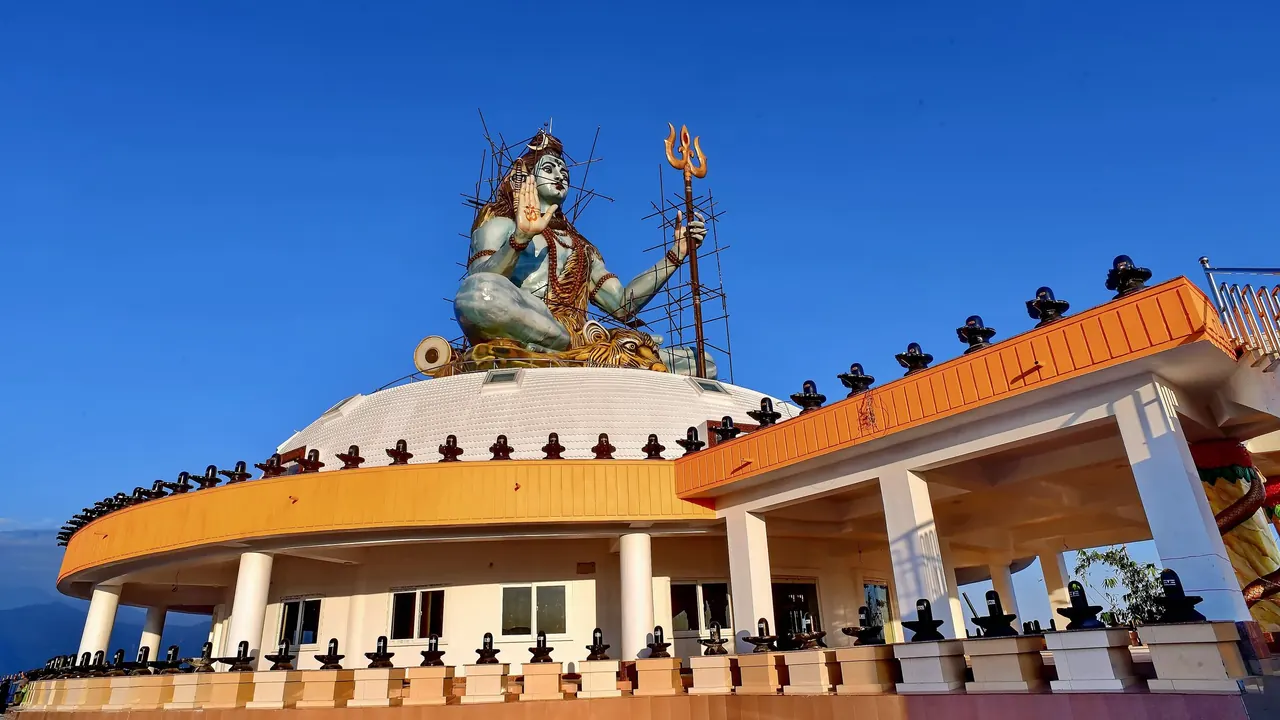
Photos: Karakol by Bruno Rijsman, CC BY 2.0, cropped; Pokhara by Rajesh Dhungana, CC BY-SA 4.0, cropped.
Karakol or Pokhara?
Our verdict in twelve categories, each scored against the same fixed benchmark cities, and the climate month by month, so you can choose for your trip.
Choose Karakol for
- beaches
- culture and sights
Karakol is for the traveller who wants the mountains with very few other people in them. The Tian Shan valleys start at the edge of a quiet Russian frontier town, the trails are lightly marked and the services basic, and a long day on the ridges ends in a hot spring, a Dungan dinner and an early night. It suits independent hikers, horse trekkers and winter skiers who don't mind rough roads, Cyrillic signs and very little to do after dark.
Choose Pokhara for
- nightlife
- shopping
- day trips
Pokhara gives you higher peaks, more comfort and more company. The Annapurnas stand straight above Phewa Lake, paragliders drift off Sarangkot, and treks of every length begin within a short drive. Lakeside adds the things Karakol lacks: bars full of trekkers, yoga retreats, massage, craft and gear shops. It is the better choice for first-time Himalayan trekkers, mixed groups and anyone who wants the trail and some easy evenings in the same trip.
Scoreboard
Twelve categories on one fixed scale from 0 to 100. The shaded stretch is the gap between the two.
Your match
Pick a travel style or drag the sliders, and both match scores follow your weighting.
Wins on beaches and culture and sights with your weighting.
Wins on nightlife and shopping with your weighting.
What matters to you?
Category by category
What the scores mean for a trip.
Beaches & swimming
Neither is a swimming destination, but Karakol at least has a lake you can swim in. Issyk-Kul is clear and slightly salty, and it warms to a pleasant temperature in late summer. The good sandy shores near Tamga, Barskoon or the north coast are a drive of one and a half to three hours, so it works as an outing during a trekking trip.
In Pokhara, Phewa Lake is for rowing in a painted boat, not for swimming. The occasional dip happens at Begnas Lake or a quiet shore, and otherwise a hotel pool is the realistic option.
Food & drink
Both towns feed hungry trekkers well and cheaply without being worth a trip for the food alone. The difference is in kind. In Karakol the memorable meals come from the Dungan community: ashlan-fu in the bazaar canteens, and multi-course home dinners laid on by Dungan families. Around these are Uyghur lagman and plov, with slim pickings for vegetarians and no coffee culture.
Pokhara offers more variety but less character along Lakeside, where long menus of pizza and curry sit alongside Thakali dal bhat, momos and buffalo sekuwa further from the lake. Its bakeries and Nepali-grown coffee make for better breakfasts than anything in Karakol.
Culture & sights
Karakol has slightly more to show for a short wander. Its frontier-town grid of carved wooden houses leads to the Holy Trinity Cathedral and the Dungan Mosque, a Chinese-style temple built without metal nails, and the Sunday animal market is a scene you won't find in Pokhara.
Pokhara's sights are more scattered and mostly modern: Tal Barahi on its island, the World Peace Pagoda on the ridge and the old Newar shopfronts around Bindhyabasini. Its International Mountain Museum and Gurkha Museum give more depth on Himalayan history than Karakol's Przhevalsky memorial gives on Central Asian exploration. In both places sightseeing fills a day or two at most.
Nightlife
Pokhara is the only one of the two with any night out. Lakeside's rooftop and lakefront bars, cover bands and a couple of small dance bars keep things sociable until around midnight.
Karakol goes dark by mid-evening, apart from a few cafés with beer, local karaoke rooms and some après-ski drinking in winter. Pick it only if you want early nights before a trek.
Nature & outdoors
Both are first-rate mountain bases, and the difference lies in the type of wilderness. From Pokhara the Annapurnas and Machhapuchhre rise straight above the lake, and trekking there is well organised, from short Australian Camp walks to Poon Hill and Annapurna Base Camp. Paragliding off Sarangkot and kayaking on Phewa add easy days, though the monsoon can hide the peaks for days on end.
Karakol's Tian Shan is lower but much emptier. Spruce valleys and herders' summer pastures lead to the Ala-Kul loop, horse trekking is part of everyday life, and in winter there is skiing, which Pokhara does not have. The trails here are rougher and less marked, so you need either your own experience or a guide.
Day trips
Pokhara has the one proper day out between them: Bandipur, a car-free Newar hill town of old brick houses about two hours away. Gorkha and Tansen are better kept for overnight stops.
Karakol has nothing comparable. A day along the south shore of Issyk-Kul, ending with eagle hunters near Bokonbaevo, makes a good drive, and Cholpon-Ata's petroglyphs need a night away. Beyond that, every outing leads into the mountains rather than to another town.
Good for families
Pokhara is easier with children. Lakeside has light traffic, boats are simple to hire, and older children enjoy the cave, the waterfall, the mountain museum and tandem paragliding if they meet the limits.
Karakol asks more of a family, with cramped minibuses, uneven pavements and basic medical care. Adventurous older children will still love a night in a yurt camp or a horse ride to the herders, but neither town suits toddlers.
Getting around
In both towns the centre is flat and easy on foot, and the trouble starts at the edge of town. Leaving Karakol means haggling for seats on shared minibuses at the bazaar or hiring a cheap taxi, with four-wheel drive needed for valleys like Altyn-Arashan. In Pokhara most visitors skip the crowded local buses and rent a bicycle or scooter, or hire a driver for Sarangkot and the trailheads.
Shopping & style
Pokhara gives you more to browse. Lakeside's gear shops sell and rent jackets and boots for a trek, the craft shops stock pashminas, singing bowls and thangkas, and the Tibetan settlements sell carpets and jewellery from workshops you can visit.
Karakol's one real buy is felt, from shyrdak rugs in ram's-horn patterns to slippers and kalpak hats from local cooperatives. Its bazaar is better for wandering than for shopping.
Affordability
Both are among the cheapest mountain bases you could pick, with guesthouse rooms, canteen meals and taxis costing very little. What decides the budget is the activities. In Pokhara these are paragliding, Annapurna permits and guided treks. In Karakol they are guides, horses and four-wheel-drive transfers to the high valleys.
Live music & performing arts
Neither town has a cultural calendar to plan around, and what little there is differs in kind. Pokhara has bar cover bands and Gurung and Magar dance shows staged for diners. In Karakol the komuz and Manas recitations turn up at a yurt camp or a guesthouse evening rather than on any stage, and the small drama theatre performs only in Kyrgyz and Russian.
Wellness & relaxation
Pokhara does relaxation more completely. Its yoga and meditation retreats range from drop-in classes to residential courses, Ayurvedic and Nepali massage is everywhere, and Lakeside's slow pace is restful in itself.
Karakol's strength is hot water, which Pokhara lacks in town. There are the outdoor thermal pools at the Ak-Suu sanatorium, good on a snowy evening, and the simple spring-fed baths at Altyn-Arashan at the end of a trek. Beyond the springs there is little in the way of treatments.
When should you go?
Pick your month. The climate figures are measured averages, not a forecast.
Karakol in July
Pokhara in July
Daytime high, °C
Rainfall in the month, mm
Where the figures come from
Pokhara has no weather station within reach, so its figures come from a gridded climate model rather than a measured record, and read a broad area rather than one spot.
Temperature and rainfall are climate normals, averaged over the years shown. Karakol: 1991-2020 normals, Kyzyl-Suu / Chelpek (16 km from centre). Pokhara: 1991-2020 normals, TerraClimate 4 km grid at the town, no weather station within 90 km.
Karakol has a short, clear summer and a long cold winter. From June to September days are mild, reaching about 25°C in August, which suits both the high trails and the town streets. That is also the only time the lake is warm enough for a swim. Rain is modest all year and never sets in heavily. From December to February days hover around 1°C, which is too cold for much walking but right for the ski slopes above town.
Pokhara runs to a completely different calendar, set by the monsoon. From May to September heavy rain falls, peaking at about 674mm in July, and the mountains often disappear behind cloud. Late spring is also hot, with highs near 31°C. October and November are the prime months, dry and clear with comfortable days, and the mild, dry winter that follows is still good for walking. Karakol is at its best during Pokhara's wettest months, so the two rarely compete for the same dates.
Which traveller are you?
For a food and nightlife trip, Pokhara is the clear pick. Neither town is a dining destination, but Lakeside's rooftop bars, cover bands and trekkers celebrating at least make an evening out. In Karakol a beer at the guesthouse is usually where the night ends.
On a relaxing and wellness trip, Pokhara suits better. It has yoga and meditation retreats on the far shore, massage on every street and slow mornings watching the Annapurnas. Karakol's thermal pools at Ak-Suu and Altyn-Arashan are lovely, but there is little else for unwinding.
For skiers, Karakol has what Pokhara lacks. The ski area just above town has long, empty runs through spruce forest, it is a base for ski touring, and the Ak-Suu hot pools are a short drive away for the evening. Pokhara has no skiing at all.
Before you go
| Measure | Karakol | Pokhara |
|---|---|---|
| Official language | Kyrgyz | Nepali |
| Currency | Som (KGS) | Nepalese Rupee (NPR) |
| Sockets | CF220 V, 50 Hz | CM230 V, 50 Hz |
| Driving side | Right | Left |
| Time zone | UTC+6 | UTC+5:45 |
| Emergency number | 161 | Police 100, ambulance 102, fire 101 |
| Elevation | 1,690 m | 900 m |
| Main airport | Manas International Airport (BSZ)326 km from centre42 non-stop destinations | Pokhara International Airport (PHH)4 km from centre9 non-stop destinations |
By the numbers
| Measure | Karakol | Pokhara |
|---|---|---|
| Population | 85,588 | 353,841 |
| People per km² | 1,779 | 762 |
| Museums within 10 km | 1 | 2 |
| UNESCO World Heritage sites within 50 km | 0 | 0 |
Where else could you go?
Every comparison below shares a destination with this one, so you can follow Karakol or Pokhara somewhere new.
- Kathmanduvs Pokhara
- Almatyvs Karakol
- Bishkekvs Karakol
- Varanasivs Pokhara
- Darjeelingvs Pokhara
- Thimphuvs Pokhara