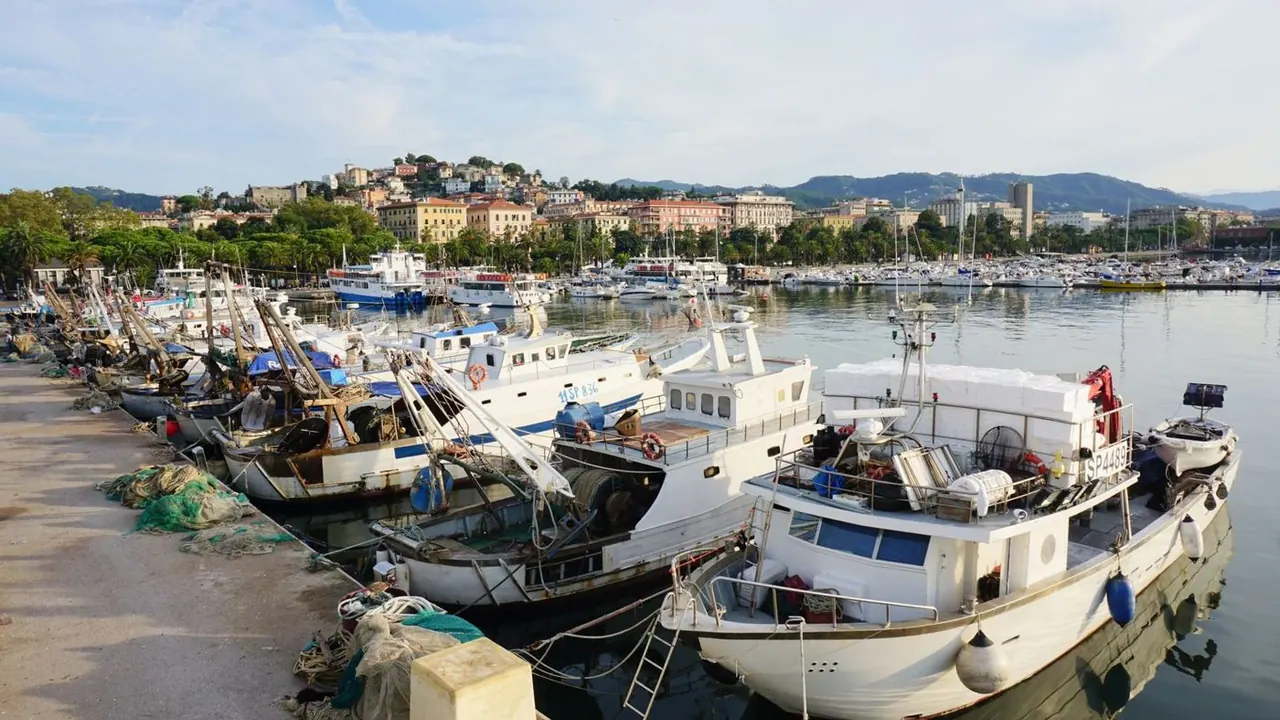
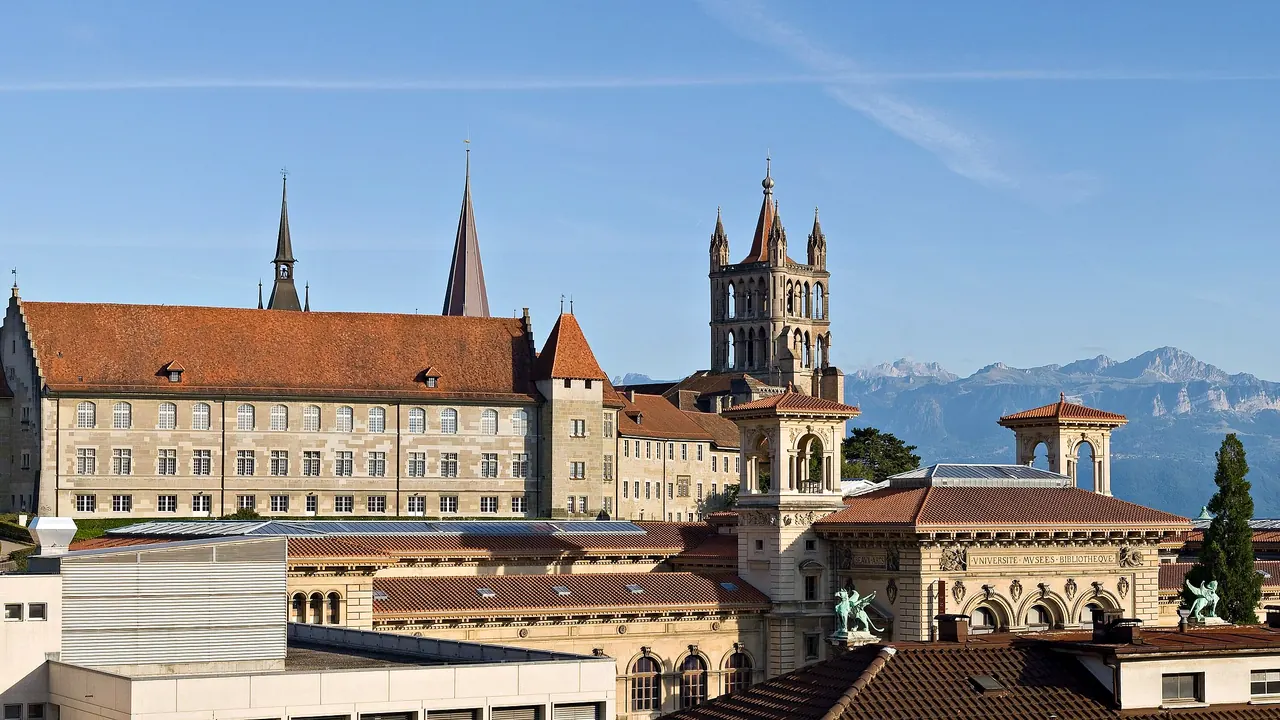
Photos: La Spezia by Irina Balashova, Pexels License; Lausanne by Christian Mehlführer, CC BY-SA 3.0, cropped.
La Spezia or Lausanne?
Our verdict in twelve categories, each scored against the same fixed benchmark cities, and the climate month by month, so you can choose for your trip.
Choose La Spezia for
- prices
- beaches
- food and drink
La Spezia suits travellers who want the Italian Riviera without paying village prices. It is a practical, mid-priced base with a warm sea through the summer, cliff paths close by and the Cinque Terre a few minutes away by train. Treat it as a place to sleep, eat farinata and set out from each morning, not as a city to linger in for its museums or its evenings.
Choose Lausanne for
- live music and the arts
- families
- wellness
Lausanne makes the better choice when you want the city itself to be part of the trip. The Gothic cathedral, the Olympic Museum, ballet and opera fill the evenings and the rainy days, the lake and the Alps cover the outdoors, and there is more to keep children busy. The cost is high, though, and swimming here means a lake dip in a short summer, not a reason to go.
Scoreboard
Twelve categories on one fixed scale from 0 to 100. The shaded stretch is the gap between the two.
Your match
Pick a travel style or drag the sliders, and both match scores follow your weighting.
Wins on prices and beaches with your weighting.
Wins on live music and the arts and families with your weighting.
What matters to you?
Category by category
What the scores mean for a trip.
Beaches & swimming
Neither city has a beach in town, but La Spezia puts real sea swimming within easy reach. Buses and boats take you to the sheltered sand and pebble of San Terenzo and Lerici, the coves at Fiascherino and Tellaro, and the clear rocky water around Portovenere and Palmaria. The train runs to Monterosso's long sandy beach, and the season lasts from June into early October.
Lausanne swaps all that for Lake Geneva. You swim from grass, piers and shingle at Vidy or the old lido at Bellerive, the water stays cooler, and the season covers only high summer. It is a pleasant afternoon, but nobody chooses Lausanne for it.
Food & drink
The two eat about equally well, but in very different ways. La Spezia is cheap and casual. You snack on farinata from wood ovens, eat mussels farmed off Portovenere and pesto on trofie, and drink crisp Cinque Terre whites. It has little fine dining.
Lausanne leans the other way. You get lake perch, papet vaudois and fondue, Chasselas tasted from the growers in the Lavaux caveaux, and some of Switzerland's most celebrated tables nearby. Simple, cheap meals are the hard part.
Culture & sights
Lausanne gives the sightseer considerably more. The painted portal of its Gothic cathedral and the steep lanes around Place de la Palud make a real old town, and the Olympic Museum, the Plateforme 10 museums by the station and the Collection de l'Art Brut add two or three days of solid visiting.
La Spezia is a nineteenth-century naval city, laid out in straight arcaded avenues and not around a medieval core. The Museo Amedeo Lia and the Lunigiana stele statues at Castello San Giorgio fill a day or so, and the deeper history lies out at Portovenere, Sarzana and Luni.
Nightlife
Lausanne is the livelier of the two after dark, thanks to its large student population. The Flon's old warehouses hold clubs and late bars that fill on Friday and Saturday nights, though drinks are expensive and weeknights are quiet.
La Spezia's evening is the aperitivo: a spritz or a Vermentino on Via del Prione or the seafront, or on the waterfront at Lerici in summer. After that the town goes to bed early, as do the hikers.
Nature & outdoors
Both are superb outdoor bases, and the difference lies in the landscape. La Spezia is about the sea meeting the cliffs. There are the terraced paths of the Cinque Terre national park, the loop round Palmaria, and kayaking and diving in the gulf, with the marble peaks of the Apuan Alps an hour inland.
Lausanne looks across the lake to the Alps. You can walk the Lavaux vineyard terraces, sail on the lake, and reach hiking and skiing at Villars, Leysin or Glacier 3000 within an hour, with the Jura for cross-country skiing. That makes it the one of the two that also works in winter.
Day trips
La Spezia's outings sit in a tight ring around its own gulf, while Lausanne's spread across half a country. From La Spezia the five Cinque Terre villages are minutes away on the coastal train, Portovenere is a short boat or bus ride, and walled Sarzana and the Roman ruins of Luni lie close inland. Pisa and Lucca take about an hour.
Lausanne reaches further. Montreux and the Château de Chillon on its rock in the lake are about twenty minutes along the shore. Geneva is a little under an hour and Bern's arcaded old town a little over. Gruyères, with its hilltop castle and cheese dairies, makes a classic day out, and boats cross the water to Évian in France, so each day out can take you somewhere quite different.
Good for families
Lausanne is the easier city with children. The hands-on Olympic Museum, the freshwater aquarium-vivarium, the animal park and pedal boats at Sauvabelin, and the paddle steamers on the lake give several ready-made days out. The steep streets are the catch with a pushchair.
La Spezia's flat centre is easier on small legs, and boat trips and the shallow beaches at San Terenzo work well. Beyond those it has no zoo or aquarium, and the region's crowded trains and steep villages suit older children better than toddlers.
Getting around
Lausanne has the edge, though its hills mean more effort on foot. The m2 metro climbs from the lake at Ouchy to the upper town, and fast, punctual Swiss trains run along the lake and across the country.
La Spezia is flat and you can cross the centre on foot. Trains, buses and seasonal ferries cover the coast well, but the coastal trains and village platforms get crowded in summer.
Shopping & style
Neither city is a reason to travel for shopping, but Lausanne offers a little more. Rue de Bourg has Swiss watches, jewellery and chocolatiers, and the Flon adds a few design shops. La Spezia has everyday high-street shopping along Via del Prione, and the best things to take home are pesto, olive oil and a bottle of Sciacchetrà.
Affordability
This is where the two differ most. La Spezia is mid-priced, with inexpensive trains and fair-value food, and its rooms are cheaper than in the Cinque Terre villages. Bathing establishments, trail passes and boat trips add up, especially in summer.
Lausanne is very expensive. Hotels, restaurant meals, wine and taxis all cost far more than in most of Europe. Picnics from bakeries, the free lakeside promenades and a glass of Chasselas in a village caveau soften the bill only slightly.
Live music & performing arts
Lausanne has a stage life well beyond its size. It is home to the Béjart Ballet and the Prix de Lausanne, the Théâtre de Vidy stages internationally known contemporary work, and the opera and the chamber orchestra run full seasons. In July, the Montreux Jazz Festival is a short train ride away.
La Spezia has the Teatro Civico and a long-established summer jazz festival, but little happens for most of the year. For opera you have to go to Genoa or Pisa.
Wellness & relaxation
Lausanne is better set up for a restful stay. The grand lakeside hotels have extensive spas, the thermal baths at Yverdon-les-Bains are under half an hour by train, and Lavey-les-Bains has Switzerland's hottest springs.
La Spezia's closest thermal water is the small baths at Equi Terme, an hour inland. Its calm comes instead from long lunches in Tellaro and quiet days on Palmaria, best enjoyed outside the summer crowds.
When should you go?
Pick your month. The climate figures are measured averages, not a forecast.
La Spezia in July
Lausanne in July
Daytime high, °C
Rainfall in the month, mm
Where the figures come from
La Spezia's temperatures are measured 65 km from the centre, at Pisa / S. Giusto.
La Spezia has no rain gauge within 25 km of the centre, so its rainfall comes from a gridded climate dataset read at the city rather than from a gauge further away.
Lausanne's temperatures are measured 40 km from the centre, at Payerne.
Lausanne has no rain gauge within 25 km of the centre, so its rainfall comes from a gridded climate dataset read at the city rather than from a gauge further away.
Temperature and rainfall are climate normals, averaged over the years shown. La Spezia: 1991-2020 normals, Pisa / S. Giusto (64.8 km from centre). Lausanne: 1991-2020 (sunshine 1961-1990) normals, Payerne (39.7 km from centre).
La Spezia has the longer and warmer season. From late May the days are comfortably warm, and from June into early October the sea is fine for swimming, reaching about 25°C in August. July and August bring highs near 30°C, which makes the coastal paths hard work around midday. That makes May, June and September the best months for walking, with the most sunshine falling in midsummer. Autumn turns wet, and November can bring around 151mm of rain, but winter days stay mild.
Lausanne is much cooler at both ends of the year. Winter highs sit around 4°C under grey, sunless skies, so the city is best for the mountains then and not for walking the streets. Summer peaks at a pleasant 26°C, good for exploring the steep town and swimming in the lake, but rain is spread across every month, with summer showers among the heaviest. June to early September is the reliable window.
Which traveller are you?
On a trip with a tight budget, La Spezia is the clear choice. Rooms, trattorias, farinata and local trains are all moderately priced, while Lausanne is one of the most expensive bases in Europe, and there even a simple lunch out quickly adds up.
For a beach and sun trip, La Spezia wins. From June into October the sea is warm, with sheltered sand at Lerici and San Terenzo and clear rocky water at Palmaria. Lausanne offers only lake swimming from lawns and piers in a brief summer.
On a culture and arts trip, Lausanne has far more to give. It has the Gothic cathedral and old town, the Olympic Museum and Plateforme 10, and the Béjart Ballet, the Théâtre de Vidy and a full opera season, while La Spezia's stages are quiet for most of the year.
Before you go
| Measure | La Spezia | Lausanne |
|---|---|---|
| Official language | Italian | French, German, Italian, Romansh |
| Currency | Euro (EUR) | Swiss Franc (CHF) |
| Sockets | CFL230 V, 50 Hz | CJ230 V, 50 Hz |
| Driving side | Right | Right |
| Time zone | UTC+1, UTC+2 in summer | UTC+1, UTC+2 in summer |
| Emergency number | 112 | 112 |
| Elevation | 3 m | 495 m |
| Main airport | Pisa International Airport (PSA)65 km from centre82 non-stop destinations | Geneva International Airport (GVA)52 km from centre150 non-stop destinations |
| Public holidays this year | 13 days | 9 days |
By the numbers
| Measure | La Spezia | Lausanne |
|---|---|---|
| City population | 92,119 | 144,873 |
| People per km² | 1,792 | 3,499 |
| Museums within 10 km | 12 | 31 |
| UNESCO World Heritage sites within 50 km | 2 | 3 |
| Swim season, months above 21 °C | 4 months | - |
Where else could you go?
Every comparison below shares a destination with this one, so you can follow La Spezia or Lausanne somewhere new.
- Genevavs Lausanne
- Portofinovs La Spezia
- Luccavs La Spezia
- Pisavs La Spezia
- Chamonixvs Lausanne
- Bernvs Lausanne