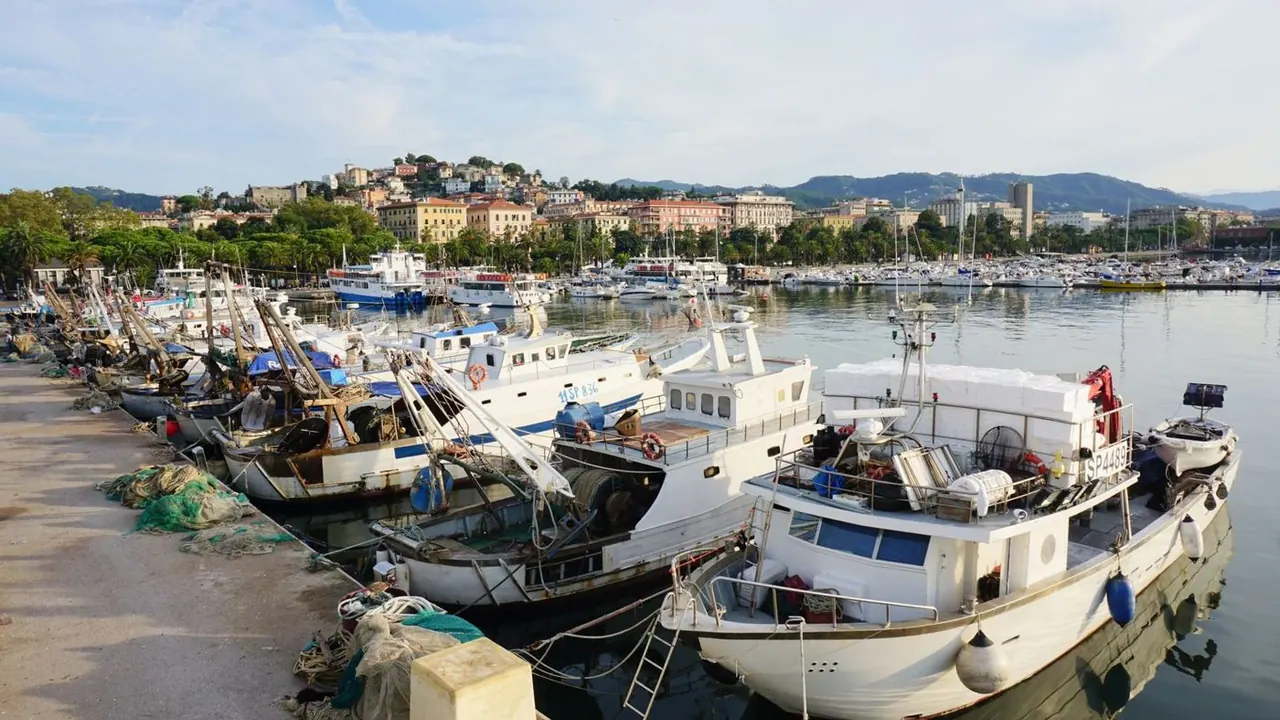
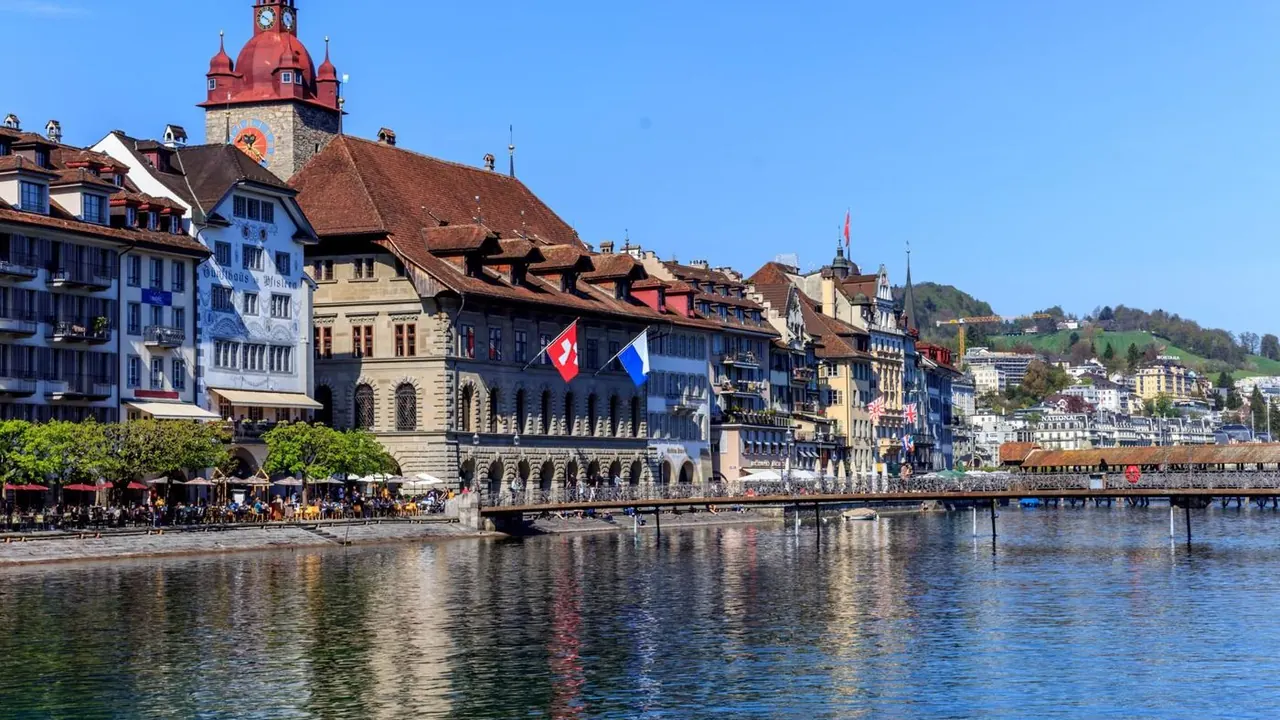
Photos: La Spezia by Irina Balashova, Pexels License; Lucerne by ILOVESwitzerland, Pexels License.
La Spezia or Lucerne?
Our verdict in twelve categories, each scored against the same fixed benchmark cities, and the climate month by month, so you can choose for your trip.
Choose La Spezia for
- prices
- beaches
- food and drink
La Spezia suits travellers who want the Mediterranean on their doorstep without Swiss prices. It offers warm sea for swimming and Ligurian cooking, and the Cinque Terre villages, Portovenere and Lerici are all a short train or boat ride away. It works best as a base for coastal walks, beach days and constant excursions, and it costs far less to sleep and eat well.
Choose Lucerne for
- live music and the arts
- culture and sights
- families
Lucerne is the pick for mountains, music and a trip where every connection runs smoothly. Pilatus and Rigi rise straight from the lake, and the steamers and cogwheel railways make the big outings easy, even with children. In late summer the festival brings world-class orchestras to the lakefront. Come with a generous budget, because very little here is cheap.
Scoreboard
Twelve categories on one fixed scale from 0 to 100. The shaded stretch is the gap between the two.
Your match
Pick a travel style or drag the sliders, and both match scores follow your weighting.
Wins on prices and beaches with your weighting.
Wins on live music and the arts and culture and sights with your weighting.
What matters to you?
Category by category
What the scores mean for a trip.
Beaches & swimming
La Spezia gives you a real sea vacation within easy reach. There is sheltered sand and pebble at San Terenzo and Lerici, very clear rocky water off Portovenere and Palmaria, and Monterosso's long sandy beach just up the line. The beaches are small and many are paid bathing establishments, but the sea stays warm well into autumn.
In Lucerne you swim from lakeside lawns and the old wooden baths, in clean water ringed by mountains. It is lovely on a hot July afternoon, but the water is cooler, the season lasts only a couple of months and there is no sand.
Food & drink
La Spezia eats better, and for less. Farinata from wood ovens, mussels from the ropes off Portovenere, trofie with pesto and the Piazza Cavour market give it a distinct local table. Cinque Terre whites and Sciacchetrà go with it, even if fine dining is scarce.
Lucerne serves hearty Swiss fare such as Chügelipastete, fondue, rösti and lake perch, in guild houses and on riverside terraces. The quality is reliable but the choice is narrow, and the restaurants near the Chapel Bridge lean towards the coach-tour trade.
Culture & sights
Lucerne has the stronger set of sights in a small space. There is the Chapel Bridge with its Water Tower, a medieval Old Town of frescoed squares, the climbable Musegg towers and the Lion Monument, along with Picasso and Klee at the Rosengart.
La Spezia is a nineteenth-century naval town of arcaded avenues, with no old core. The Museo Amedeo Lia and the stele statues in Castello San Giorgio are worth a visit, but the region's places steeped in history, such as Portovenere and Sarzana, lie outside the city.
Nightlife
Neither city suits a late night out, and both go quiet early. The difference is in style. La Spezia's evenings are the Italian aperitivo, with spritz and Vermentino along Via del Prione, and in summer the crowd moves to the waterfront bars at Lerici. Lucerne has pubs and wine bars by the river and a small club scene near the station, and once a year Fasnacht turns the Old Town into an all-night carnival.
Nature & outdoors
Both are superb for the outdoors, but Lucerne has the bigger landscape. Pilatus, Rigi and the Stanserhorn rise straight above the lake, and Titlis keeps its snow all year. Paddle steamers and mountain railways let you combine boat, rail and hike in one day, and winter adds skiing.
La Spezia's draws are the terraced cliffs and coastal paths of the Cinque Terre, the loop walk on Palmaria and the pines of Montemarcello, with kayaking and diving in the gulf. This is a landscape of sea and cliffs rather than Alps. For serious peaks you go to the Apuan Alps, an hour inland.
Day trips
La Spezia has more within very easy reach. The five Cinque Terre villages are minutes away by train, Portovenere and Lerici are a short boat or bus ride, and Carrara, Pisa and Lucca take an hour or less. A whole week can be spent on excursions without long journeys.
Lucerne's outings are fewer but varied. Zurich, Bern and Basel are each under an hour away, Einsiedeln has its Baroque abbey, and a boat on the lake takes you to the Rütli meadow and William Tell country. Interlaken is about two hours away on a scenic line.
Good for families
Lucerne is the easier family base. The Swiss Museum of Transport fills a whole day, and the cogwheel trains, steamers and the toboggan run on Pilatus make the journeys part of the fun. The lakeside lawns are good for picnics, though rainy days and costs both add up.
In La Spezia, family days are spent on the water, with boat trips to the islands and the shallow beaches at San Terenzo and Lerici. Beyond that there is no big attraction for children, and the steep villages and crowded trains are hard going with toddlers.
Getting around
Neither city needs a car and both have a flat, walkable centre, but Lucerne's system runs more smoothly. The station, the boat piers and the Old Town sit together on the lakefront, and one integrated ticket network covers the steamers, cogwheel railways and cable cars.
La Spezia works well too, with coastal trains, buses around the gulf and seasonal ferries. Its weak point is summer, when the Cinque Terre trains and the village platforms are packed.
Shopping & style
La Spezia's best buys go in a picnic bag. Via del Prione and Corso Cavour have high-street chains, shoe shops and a few independent boutiques. The things worth taking home are pesto, olive oil, Sciacchetrà and Monterosso anchovies, and the towns nearby sell pieces of Carrara marble.
Lucerne gives a shopper more to aim for, above all Swiss watches. The big watch and jewellery houses line Schwanenplatz and the lakefront, alongside shops selling army knives, chocolate and cuckoo clocks, and the Saturday market by the river adds local crafts. Beyond the watch trade, fashion and design are thin in both cities.
Affordability
The gap here is wide. La Spezia charges ordinary Western European prices. Trains are inexpensive, trattorias are fair value and rooms cost well below Cinque Terre levels, especially in spring and autumn.
Lucerne is very expensive at every turn. Hotels, simple meals and above all the mountain railways and cable cars weigh on the budget, and a Swiss travel pass and picnics by the lake only soften the bill.
Live music & performing arts
Lucerne is the far stronger choice for music. The Lucerne Festival brings leading orchestras to Jean Nouvel's lakefront hall, which is famous for its acoustics and has its own year-round programme. The city theatre adds opera and dance.
La Spezia has the Teatro Civico, a long-running summer jazz festival and open-air concerts in castle courtyards around the gulf. The rest of the year is thin, and for opera you have to go to Genoa or Pisa.
Wellness & relaxation
In La Spezia, rest comes in between the busy days: a long lunch in Tellaro, the quiet of Palmaria and off-season evenings on the seafront. For a soak you have to travel to the small thermal baths at Equi Terme, an hour inland, and in summer the crowds along the coast work against any sense of calm.
Lucerne makes it easier to slow down. The mineral bath designed by Mario Botta high on the Rigi gives you a soak with a mountain view, and the resorts on the slopes above the lake have their own spas. Evenings are quiet, and a steamer ride or a slow walk along the lakeside promenades fills an afternoon. Only the Old Town at midday, when the tour groups arrive, breaks the calm.
When should you go?
Pick your month. The climate figures are measured averages, not a forecast.
La Spezia in July
Lucerne in July
Daytime high, °C
Rainfall in the month, mm
Where the figures come from
La Spezia's temperatures are measured 65 km from the centre, at Pisa / S. Giusto.
La Spezia has no rain gauge within 25 km of the centre, so its rainfall comes from a gridded climate dataset read at the city rather than from a gauge further away.
Lucerne has no rain gauge within 25 km of the centre, so its rainfall comes from a gridded climate dataset read at the city rather than from a gauge further away.
Lucerne's sunshine is measured 42 km from the centre, at Zurich Town / Ville..
Temperature and rainfall are climate normals, averaged over the years shown. La Spezia: 1991-2020 normals, Pisa / S. Giusto (64.8 km from centre). Lucerne: 2005-2025 (sunshine 1991-2020, rainfall 1991-2020) normals, Emmen (4.2 km from centre).
La Spezia is the warmer and sunnier of the two, and it is built for summer. The sea is comfortable for swimming from June to September and reaches about 25°C in August. July and August are dry and very sunny, though highs near 30°C make the coastal paths hard work at midday. May, June and the very start of autumn are the best months for walking. Rain sets in from September and is heaviest in October and November, at around 151mm a month. Winters are mild but grey.
Lucerne is cooler and, unusually, at its wettest in summer. Highs reach about 24°C in July and August, which is good for hiking and a lake swim, but May to August also bring the heaviest rain, up to 141mm a month. September is drier and still mild, a good month for the mountains. Winter highs stay in single figures and there is little sun, so winter suits skiing and sledging rather than long days in the streets.
Which traveller are you?
For a beach and sun trip, La Spezia is the clear choice. The sea around the gulf stays warm from June into early October, and the sandy coves at Lerici and Monterosso are a short ride away. Lucerne offers only a brief lake-swimming season from lawns and jetties.
On a culture and arts trip, Lucerne gives more. It has the Chapel Bridge and the medieval Old Town, Picasso and Klee at the Rosengart, and the festival in Jean Nouvel's concert hall. La Spezia is a naval town with one fine collection.
On a tight budget, La Spezia wins easily. Rooms in town cost less than in the Cinque Terre villages, farinata and focaccia make inexpensive meals, and local trains are cheap. In Lucerne, even simple meals and the essential mountain railways put heavy strain on any budget.
Before you go
| Measure | La Spezia | Lucerne |
|---|---|---|
| Official language | Italian | French, German, Italian, Romansh |
| Currency | Euro (EUR) | Swiss Franc (CHF) |
| Sockets | CFL230 V, 50 Hz | CJ230 V, 50 Hz |
| Driving side | Right | Right |
| Time zone | UTC+1, UTC+2 in summer | UTC+1, UTC+2 in summer |
| Emergency number | 112 | 112 |
| Elevation | 3 m | 436 m |
| Main airport | Pisa International Airport (PSA)65 km from centre82 non-stop destinations | Zürich Airport (ZRH)49 km from centre226 non-stop destinations |
| Public holidays this year | 13 days | 12 days |
By the numbers
| Measure | La Spezia | Lucerne |
|---|---|---|
| City population | 92,119 | 86,234 |
| People per km² | 1,792 | 2,963 |
| Museums within 10 km | 12 | 14 |
| UNESCO World Heritage sites within 50 km | 2 | 1 |
| Swim season, months above 21 °C | 4 months | - |
Where else could you go?
Every comparison below shares a destination with this one, so you can follow La Spezia or Lucerne somewhere new.