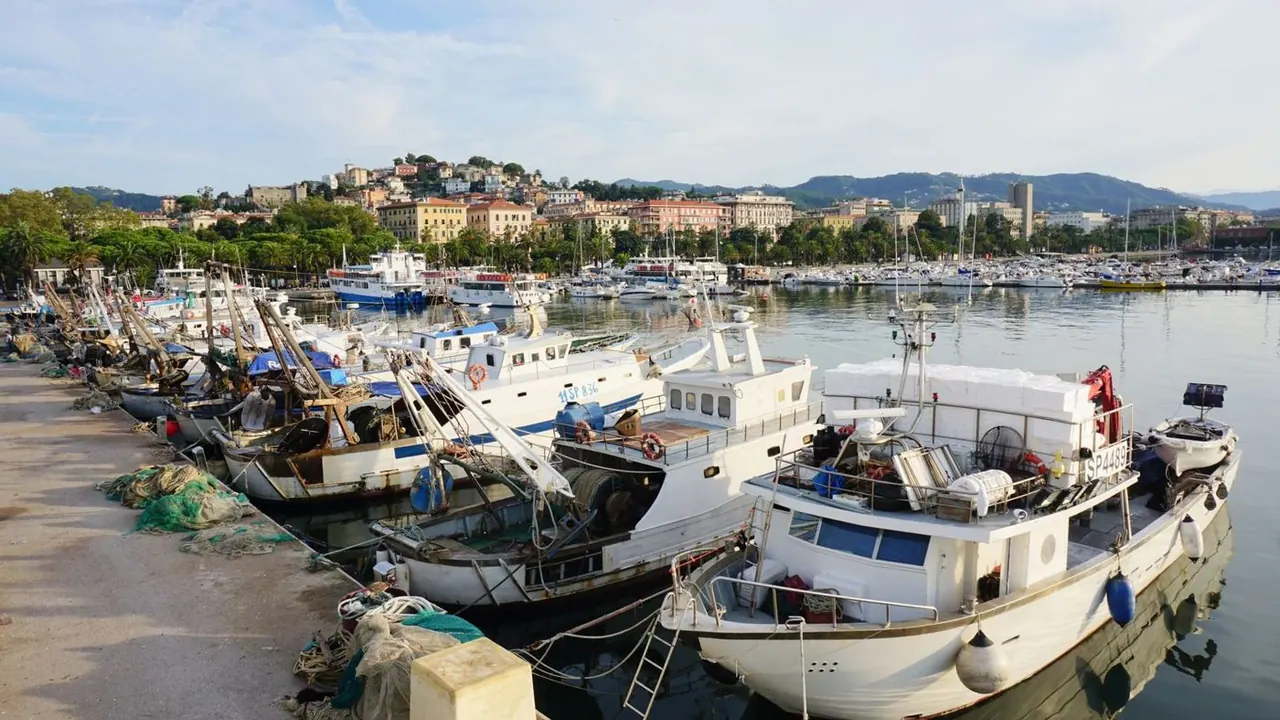
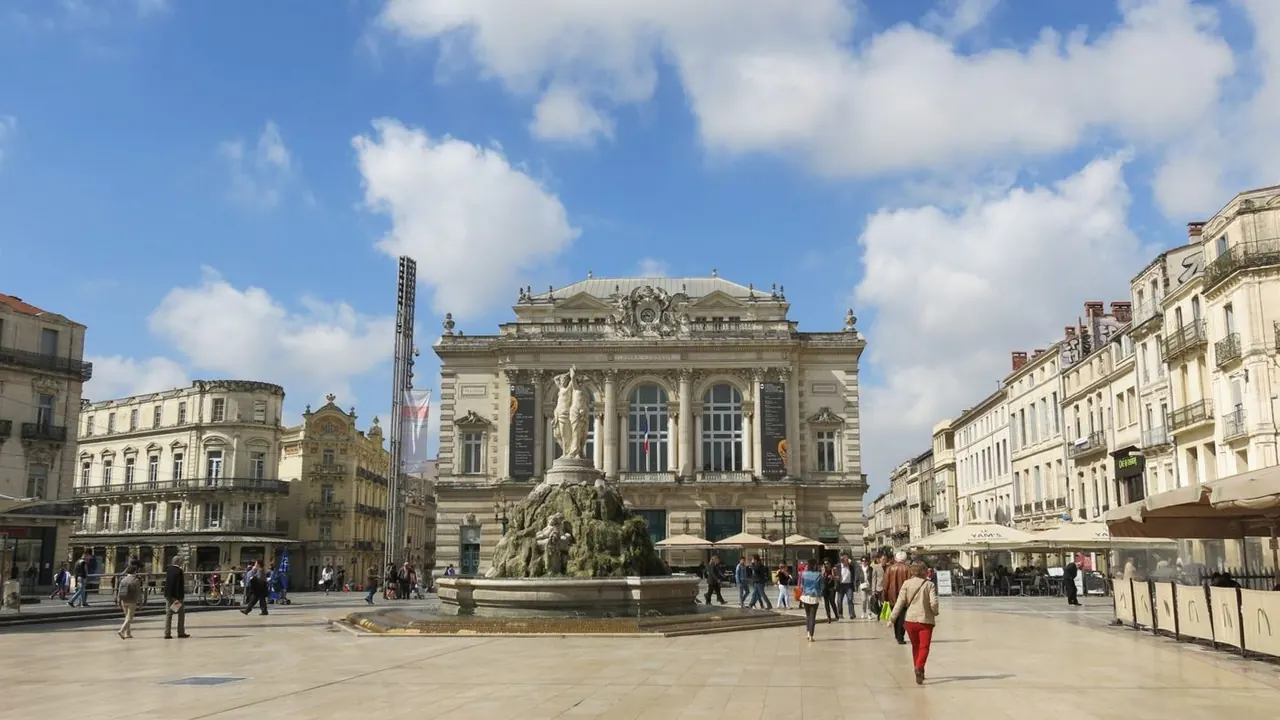
Photos: La Spezia by Irina Balashova, Pexels License; Montpellier by Peter, CC BY 2.0, cropped.
La Spezia or Montpellier?
Our verdict in twelve categories, each scored against the same fixed benchmark cities, and the climate month by month, so you can choose for your trip.
Choose La Spezia for
- nature and the outdoors
- day trips
La Spezia suits travellers who come for the coast rather than the city. The Cinque Terre villages are minutes away by train, the cliff paths and the island of Palmaria are close, and the swimming is in rocky coves with clear water. Evenings are an aperitivo and an early night. Choose it for walking, boat days and Ligurian cooking, and don't expect much of the town itself.
Choose Montpellier for
- live music and the arts
- nightlife
- culture and sights
Montpellier is the better pick if you want the city to be part of the trip. The medieval Écusson, the Musée Fabre, a real opera and dance season and a student bar scene give it life after the sights close. Roman Provence is a short train ride away. It also works better with young children and for anyone who wants a fuller evening than a spritz on the seafront.
Scoreboard
Twelve categories on one fixed scale from 0 to 100. The shaded stretch is the gap between the two.
Your match
Pick a travel style or drag the sliders, and both match scores follow your weighting.
Wins on nature and the outdoors and day trips with your weighting.
Wins on live music and the arts and nightlife with your weighting.
What matters to you?
Category by category
What the scores mean for a trip.
Beaches & swimming
Neither city has a beach in town, and both suit beach days rather than a beach vacation, but the coastlines are very different. Around La Spezia the swimming is in small coves of pebble and sand at Lerici, Fiascherino and Tellaro, or off the rocks at Portovenere and Palmaria in very clear water. Much of the shore is taken up by paid bathing establishments, and the sea is a little warmer at its peak.
Montpellier has one long, flat sweep of fine sand, from Palavas and Carnon to the dunes of l'Espiguette. The water is shallow and easy, but there are no coves or rocks to snorkel round.
Food & drink
Montpellier eats better, mainly because the Languedoc vineyards and the Thau lagoon's oysters are on its doorstep. Its covered halls and student-priced counters also give more range at every level, from market lunches to good bistros.
La Spezia's cooking is narrower but very much its own: farinata from wood ovens, mesciua soup, the gulf's rope-grown mussels and pesto on testaroli, with Cinque Terre whites and sweet Sciacchetrà to drink. It is honest port food, with little fine dining.
Culture & sights
Montpellier has the richer centre. The car-free Écusson has stone mansions around hidden courtyards, and the Peyrou terrace looks out along its aqueduct. Add France's oldest botanical garden and the Musée Fabre, a collection that justifies a trip of its own.
La Spezia is a nineteenth-century naval town of arcaded avenues with no medieval core. The Amedeo Lia collection and the Lunigiana stele statues in the castle are worth a morning each, but the region's history lies out in Portovenere and the villages.
Nightlife
Montpellier is much the livelier place after dark. Its huge student population fills the bars around Place Jean-Jaurès even on weeknights, and later the crowd takes taxis to clubs towards Lattes and the coast.
La Spezia's evening is the aperitivo on Via del Prione or the Lerici waterfront, and then it is largely over. Most visitors are saving their energy for an early start on the trails.
Nature & outdoors
La Spezia has the edge, because the landscape is right there. The terraced cliffs of the Cinque Terre national park, the Sentiero Azzurro and the quieter ridge paths, Palmaria's forts and sea caves, and diving and kayaking in the gulf are all reachable without a car. The marble peaks of the Apuan Alps add serious hiking.
Montpellier's outdoors is gentler and more spread out. There are flamingo lagoons and the Camargue to the south, and to the north the climb up Pic Saint-Loup and canoeing in the Hérault gorges. Its windy coast is better for kitesurfing and windsurfing.
Day trips
Both are excellent bases, but for different kinds of outing. From La Spezia the trips are coastal and quick: the five Cinque Terre villages by train, Portovenere by boat, Lerici across the gulf, with Pisa, Lucca and the Riviera towards Portofino as longer days.
Montpellier's trips are about history. There are Roman Nîmes and the Pont du Gard, Arles, Avignon's papal palace and Carcassonne's walls, plus Sète and Aigues-Mortes nearer by. The main sights are on the rail line, but the smaller villages go much better with a car.
Good for families
Montpellier gives children more to do. There are the Lunaret zoo, the aquarium and planetarium at Odysseum, pedestrian streets and trams that take a pushchair, and beaches where the water stays shallow for a long way out.
La Spezia is safe and calm, and boat trips round the islands and the sheltered sand at San Terenzo make good days. Beyond the naval museum's torpedoes, though, there is little made for children, and the steep paths and crowded trains favour older ones.
Getting around
Both are easy without a car, in different ways. La Spezia's flat centre is a short walk from end to end, and the town is a rail hub. Coastal trains, buses and ferries reach everything worth seeing, and a car is more trouble than help, though summer trains get crowded.
Montpellier runs on its tram network, which crosses the wider city. The Écusson itself sits on a low hill with slopes and uneven paving. Reaching the beach takes a tram and then a bus, and the hills and Camargue really call for a car.
Shopping & style
Montpellier offers somewhat more. There are small boutiques, bookshops and delicatessens in the Écusson lanes, plus the Polygone mall and Odysseum for big brands. La Spezia has chain stores and a few independents along Via del Prione and Corso Cavour. In both, the best things to take home are edible: pesto, Sciacchetrà and anchovies from one, Languedoc wine, olive oil and honey from the other.
Affordability
Costs come out about the same, but they build up in different places. In La Spezia, a room in town is the way to avoid Cinque Terre village prices, and trains and street food are cheap, but trail passes, boat trips and beach loungers add up.
In Montpellier, the student economy keeps casual food and drink cheap, and lunch menus help. Restaurant dinners with wine are where the money goes. In both cities, rooms cost noticeably more in high summer.
Live music & performing arts
This is one of the widest gaps between the two. Montpellier has a national orchestra, opera and ballet in the Opéra Comédie and the Corum, and the Montpellier Danse festival, one of Europe's most respected. In summer the Radio France festival adds many free concerts.
La Spezia has the Teatro Civico's season and a long-running summer jazz festival, but for most of the year little is on. Opera means a trip to Genoa or Pisa.
Wellness & relaxation
Montpellier is slightly better placed. The spa town of Balaruc-les-Bains is half an hour away on the Thau lagoon, while La Spezia's nearest thermal water is the small baths at Equi Terme, an hour inland. For rest without a spa, quiet Palmaria and off-season Lerici are calmer than Montpellier's lively student centre.
When should you go?
Pick your month. The climate figures are measured averages, not a forecast.
La Spezia in July
Montpellier in July
Daytime high, °C
Rainfall in the month, mm
Where the figures come from
La Spezia's temperatures are measured 65 km from the centre, at Pisa / S. Giusto.
La Spezia has no rain gauge within 25 km of the centre, so its rainfall comes from a gridded climate dataset read at the city rather than from a gauge further away.
Temperature and rainfall are climate normals, averaged over the years shown. La Spezia: 1991-2020 normals, Pisa / S. Giusto (64.8 km from centre). Montpellier: 1991-2020 normals, Montpellier (7.8 km from centre).
The two cities have almost the same summer. Highs reach about 30°C in July and August, which is too hot for long walks through the streets or along open paths, so spring and autumn suit sightseeing better. La Spezia has the warmer sea. It reaches about 25°C in August and stays comfortable for swimming from June through September. Rain is the thing to watch there. Spring has steady showers and July and August are the driest months, but from September the autumn rain builds quickly to a peak of about 151mm in November. For the Cinque Terre trails, late April, May and June give the best mix of dry paths and manageable heat.
Montpellier is sunnier in every month and drier for most of the year, though in August it gets about as much rain as La Spezia. Its sea stays cooler and peaks at about 22°C, so the swimming season is shorter and fresher, mainly July and August. Autumn turns wet there too, but less so, with the most rain in October at about 111mm. Its winters are bright and mild and its spring is sunny, which makes March and April good months for a city break.
Which traveller are you?
On an outdoors trip, La Spezia is the stronger base. The Cinque Terre's terraced cliffs and ridge paths, the loop round Palmaria and the Apuan Alps inland are all close by train or boat, without the car that Montpellier's gorges and hills need.
For a culture and arts trip, Montpellier wins clearly. It has the medieval Écusson, the Musée Fabre's European painting, a season of opera and ballet and a renowned summer dance festival. La Spezia offers a day of museums and little on stage.
On a family trip with children, Montpellier is easier. There is a zoo in a wooded park, an aquarium and planetarium, a pedestrian old town and gently shelving sandy beaches. La Spezia's steep villages and crowded summer trains suit older children better than toddlers.
Before you go
| Measure | La Spezia | Montpellier |
|---|---|---|
| Official language | Italian | French |
| Currency | Euro (EUR) | Euro (EUR) |
| Sockets | CFL230 V, 50 Hz | CE230 V, 50 Hz |
| Driving side | Right | Right |
| Time zone | UTC+1, UTC+2 in summer | UTC+1, UTC+2 in summer |
| Emergency number | 112 | 112 |
| Elevation | 3 m | 7 m |
| Main airport | Pisa International Airport (PSA)65 km from centre82 non-stop destinations | Montpellier-Méditerranée Airport (MPL)8 km from centre41 non-stop destinations |
| Public holidays this year | 13 days | 11 days |
By the numbers
| Measure | La Spezia | Montpellier |
|---|---|---|
| City population | 92,119 | 310,240 |
| People per km² | 1,792 | 5,452 |
| Museums within 10 km | 12 | 14 |
| UNESCO World Heritage sites within 50 km | 2 | 2 |
| Swim season, months above 21 °C | 4 months | 2 months |
Where else could you go?
Every comparison below shares a destination with this one, so you can follow La Spezia or Montpellier somewhere new.