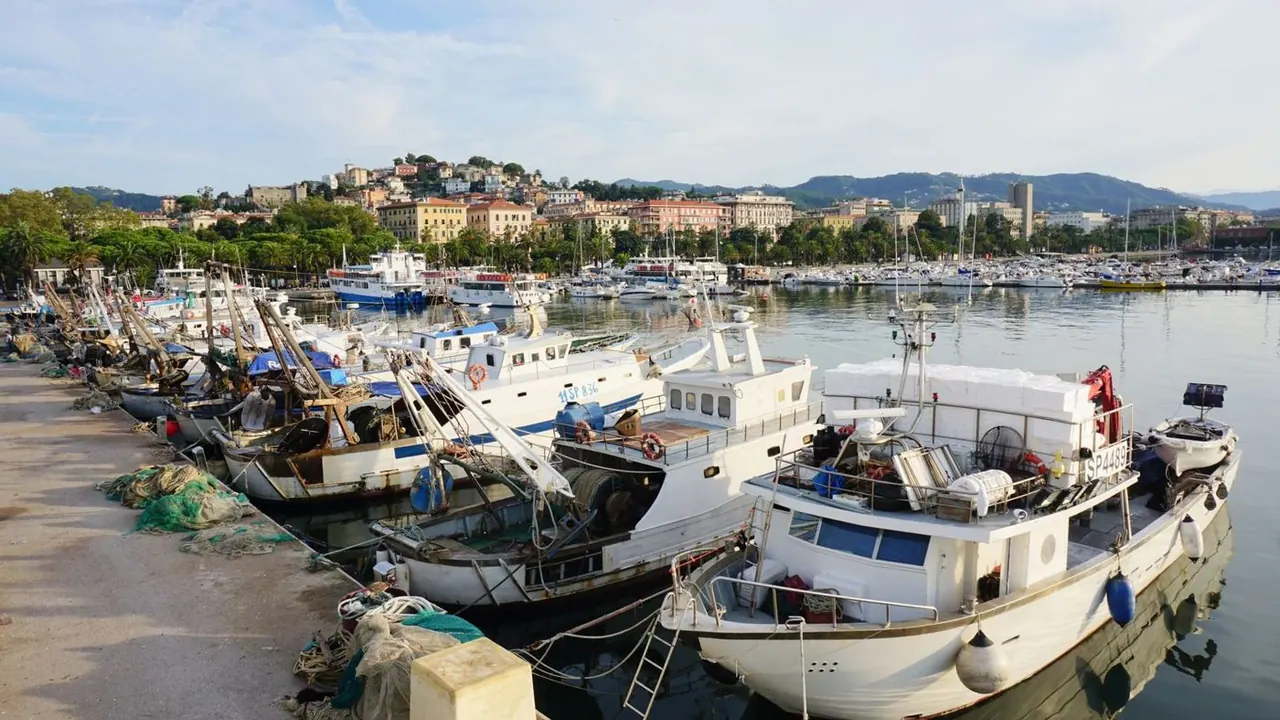
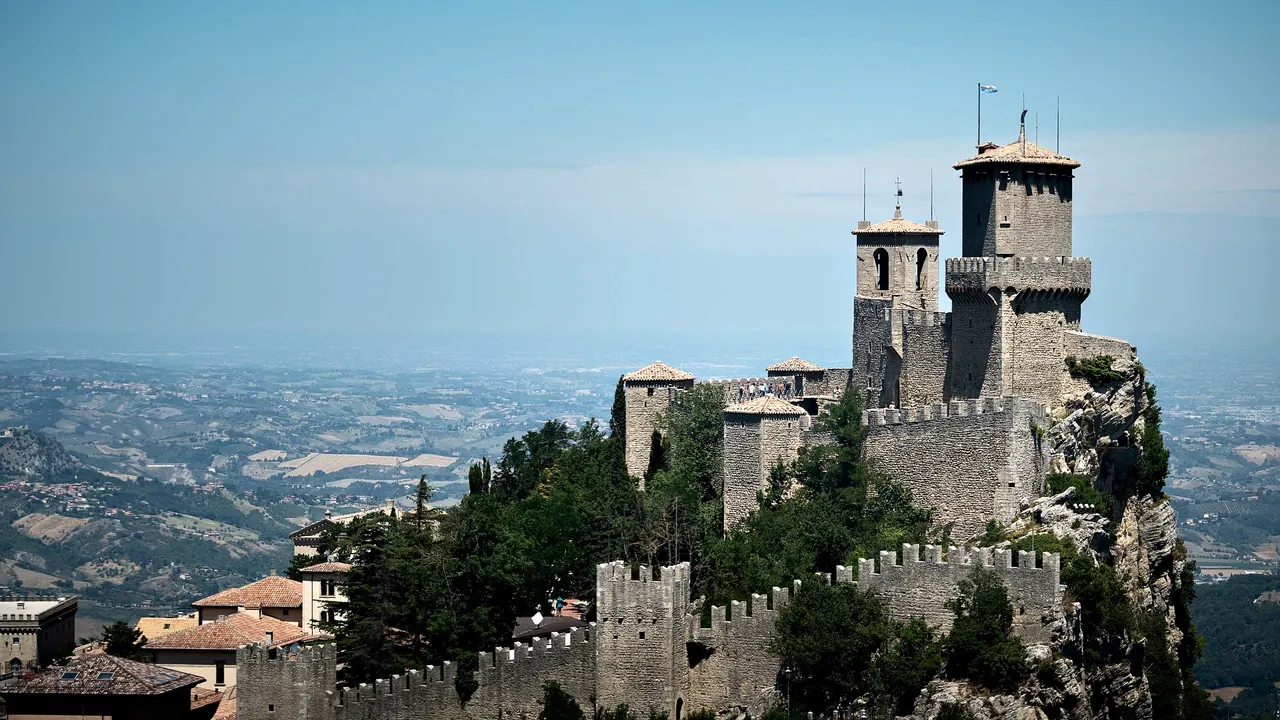
Photos: La Spezia by Irina Balashova, Pexels License; San Marino by Tibor Szabo, Pexels License.
La Spezia or San Marino?
Our verdict in twelve categories, each scored against the same fixed benchmark cities, and the climate month by month, so you can choose for your trip.
Choose La Spezia for
- nature and the outdoors
- getting around
- food and drink
La Spezia suits travellers who want to be outdoors and on the move. It puts the Cinque Terre footpaths, Portovenere and the coves of the gulf a short train, bus or boat ride from your door, so a week can be spent walking cliff paths, swimming off rocks and eating mussels and farinata without ever needing a car. Its evenings are livelier and its table is better than San Marino's, even if the city itself is a working naval port rather than a showpiece.
Choose San Marino for
- culture and sights
- prices
San Marino is a place for a shorter stay with a car. The medieval town on the crest of Monte Titano is the attraction, and it is well seen in half a day. After that the mountain works as a base for touring the hill country: San Leo, Urbino and Gradara inland, with Rimini's long sandy beaches and theme parks below for families. Choose it for the towers and quiet evenings on the walls rather than for the food or a night out.
Scoreboard
Twelve categories on one fixed scale from 0 to 100. The shaded stretch is the gap between the two.
Your match
Pick a travel style or drag the sliders, and both match scores follow your weighting.
Wins on nature and the outdoors and getting around with your weighting.
Wins on culture and sights and prices with your weighting.
What matters to you?
Category by category
What the scores mean for a trip.
Beaches & swimming
Neither city has a beach of its own, but from La Spezia the sea is closer and more varied. The gulf has sheltered strips at Lerici and San Terenzo, small coves at Fiascherino and Tellaro, and rocky spots in clear water around Palmaria, while Monterosso's sandy beach is a train ride away.
From San Marino you drive down to the Romagna shore, where Rimini and Riccione offer long, shallow sand lined with rows of umbrellas. That makes for an easier beach day with toddlers, but it is one kind of coast only, with almost nothing wild about it.
Food & drink
La Spezia eats better. Farinata from wood ovens, mesciua, pesto on testaroli, rope-grown mussels from Portovenere and the Piazza Cavour market give a stay a genuine local flavour, along with Vermentino and Sciacchetrà.
San Marino's Romagna cooking of piadina, passatelli and grilled meats is honest food. The trouble is that the summit trades on its view, so the good meals mean heading down to trattorias in Borgo Maggiore or over the border.
Culture & sights
The two are broadly level, but the culture comes in different forms. La Spezia offers museums inside a nineteenth-century naval city: the Amedeo Lia collection of early Italian painting, the naval museum and the Lunigiana stele statues in Castello San Giorgio. You go there for the collections, not the streets.
San Marino is the reverse. Its medieval town, the three towers on the cliff edge and the Palazzo Pubblico of an ancient republic are themselves the sight, and they are memorable, but half a day covers most of it.
Nightlife
Neither is a place for a night out, but La Spezia at least has an evening. Spritz and Vermentino on Via del Prione, around Piazza Verdi and along the promenade, and summer bars on the waterfront at Lerici, keep things going until fairly early. San Marino offers dinner and a glass of wine with the coast's lights below, and anyone wanting more has to drive down to the Riviera clubs at Rimini.
Nature & outdoors
This is La Spezia's biggest advantage. Terraced cliffs fall into the sea along the Cinque Terre, with the Sentiero Azzurro and the quieter ridge paths above, and there are Palmaria's forts and sea caves, diving in the gulf and the marble peaks of the Apuan Alps an hour inland.
Monte Titano offers fine views to the Adriatic and gentle paths between the towers and through the woods to Borgo Maggiore. The Montefeltro hills beyond are lovely for cycling or a drive, but there is nothing here to fill a week of serious walking.
Day trips
Both make good bases, but La Spezia's outings are closer and need no car. The five Cinque Terre villages are minutes away by train, Portovenere and Lerici are a bus or boat ride, and Pisa, Lucca and walled Sarzana are easy to reach by rail.
San Marino's list is grand in its own way, with the fortress of San Leo, Renaissance Urbino, Ravenna's mosaics and the castle at Gradara. Most of the hill towns, though, really require a car.
Good for families
For families the two are even, but they suit different ages. La Spezia has a flat centre that is easy with a pushchair, calm water at San Terenzo and boat trips round the islands, yet its main draws are steep villages and long walks, which suit older children. San Marino has towers and a cable car that children enjoy and steps that defeat pushchairs, but with a car the theme parks and shallow beaches around Rimini are an easy afternoon away.
Getting around
La Spezia is much easier without a car. The flat centre puts the station, market and seafront within walking distance, and trains, buses and summer ferries fan out around the gulf and along the coast, although the summer trains get packed.
In San Marino the core is car-free but almost every street climbs or drops by steps. The bus from Rimini is the only regular link to the outside, so beyond the mountain a car is close to essential.
Shopping & style
Neither city is worth the trip for shopping, but La Spezia comes out a little ahead because its shops serve the people who live there. Via del Prione and Corso Cavour work as an ordinary Italian high street, with familiar fashion names, footwear and the odd small boutique to browse on a walk through town. The best things to take home are from the kitchen: a jar of pesto, Ligurian olive oil or a bottle of Sciacchetrà.
San Marino's shops are shaped by the border rather than by local life. Italians come up the mountain for the tax savings on scent, watches and leather, and collectors look for the republic's own stamps and coins. Ceramics and ornamental crossbows for the coach parties fill the rest of the summit. You go there for a bargain or a keepsake, while La Spezia offers the everyday shopping of a provincial town.
Affordability
Costs are much the same in both, and the savings come in different places. In La Spezia they come from staying in town rather than in the Cinque Terre villages and from cheap local trains, but park passes, boat trips and bathing establishments add up. In San Marino the advice is to sleep below the summit and eat in the lower villages, and lower taxes help with fuel and spirits.
Live music & performing arts
La Spezia has the more regular calendar. The Teatro Civico runs a theatre and concert season, and summer brings a long-established jazz festival and concerts in castle courtyards around the gulf. San Marino has little beyond a small theatre and its summer Medieval Days, with costumed musicians, crossbow contests and flag-throwers, which is more pageant than performance. For opera, both send you elsewhere.
Wellness & relaxation
La Spezia offers a little more for unwinding: the small thermal baths at Equi Terme in the Lunigiana valley, a long lunch in Tellaro and the quiet paths of Palmaria. The summer crowds on the Cinque Terre work against it, so the calm belongs to the off-season.\n\nSan Marino's restful hour is the evening, when the day visitors have left and the walls are calm, with the plain spread out below. Spas are limited to a few hotels, and thermal baths mean a separate trip to the coast or the Apennine valleys.
When should you go?
Pick your month. The climate figures are measured averages, not a forecast.
La Spezia in July
San Marino in July
Daytime high, °C
Rainfall in the month, mm
Where the figures come from
La Spezia's temperatures are measured 65 km from the centre, at Pisa / S. Giusto.
La Spezia has no rain gauge within 25 km of the centre, so its rainfall comes from a gridded climate dataset read at the city rather than from a gauge further away.
San Marino's temperatures are measured 52 km from the centre, at Frontone.
San Marino has no rain gauge within 25 km of the centre, so its rainfall comes from a gridded climate dataset read at the city rather than from a gauge further away.
Temperature and rainfall are climate normals, averaged over the years shown. La Spezia: 1991-2020 normals, Pisa / S. Giusto (64.8 km from centre). San Marino: 1991-2020 normals, Frontone (51.5 km from centre).
Both have a hot midsummer, with highs around 30°C in July and August, and in both the sea is warm enough for swimming from June through September. La Spezia's summer is the drier one: July is almost rainless at about 20mm, and the warmth lasts further into autumn, with October days still mild by the gulf. Then the rain arrives, around 150mm a month in October and November.
For the Cinque Terre paths, spring and late September are better than the hot middle of summer.\n\nSan Marino sits high on its ridge and has the colder winter, with January highs near 7°C against the milder Ligurian coast, and by October it already feels cool. Its rain is spread more evenly through the year, with no single autumn deluge, though autumn is still its wettest season and even July brings some showers. Summer is the time for days on the Rimini sand below. Late spring and September suit walking the walls and driving to the hill towns.
Which traveller are you?
On an outdoors trip, La Spezia is the clear choice. The Cinque Terre national park, the Palmaria loop, Montemarcello and kayaking along the gulf are all close by, and the Apuan Alps are within reach. San Marino offers pleasant morning walks around one ridge, and that is about all.
For a food and nightlife trip, go to La Spezia. Ligurian cooking, the gulf's mussels and Cinque Terre whites make for better eating, and aperitivo on Via del Prione at least gives the evening some life. San Marino's summit goes quiet once the coaches leave.
On a family trip with children and a car, San Marino is the better fit. Children like the towers and the cable car, and Rimini's shallow sandy beaches, Italia in Miniatura and the waterparks are close below. La Spezia's steep villages and crowded trains suit older children better.
Before you go
| Measure | La Spezia | San Marino |
|---|---|---|
| Official language | Italian | Italian |
| Currency | Euro (EUR) | Euro (EUR) |
| Sockets | CFL230 V, 50 Hz | CFL230 V, 50 Hz |
| Driving side | Right | Right |
| Time zone | UTC+1, UTC+2 in summer | UTC+1, UTC+2 in summer |
| Emergency number | 112 | 112 |
| Elevation | 3 m | 675 m |
| Main airport | Pisa International Airport (PSA)65 km from centre82 non-stop destinations | Bologna Guglielmo Marconi Airport (BLQ)114 km from centre98 non-stop destinations |
| Public holidays this year | 13 days | 18 days |
By the numbers
| Measure | La Spezia | San Marino |
|---|---|---|
| City population | 92,119 | 4,040 |
| People per km² | 1,792 | 569 |
| Museums within 10 km | 12 | 19 |
| UNESCO World Heritage sites within 50 km | 2 | 2 |
| Swim season, months above 21 °C | 4 months | 4 months |
Where else could you go?
Every comparison below shares a destination with this one, so you can follow La Spezia or San Marino somewhere new.
- Portofinovs La Spezia
- Luccavs La Spezia
- Pisavs La Spezia
- Genoavs La Spezia
- Assisivs San Marino
- Florencevs San Marino