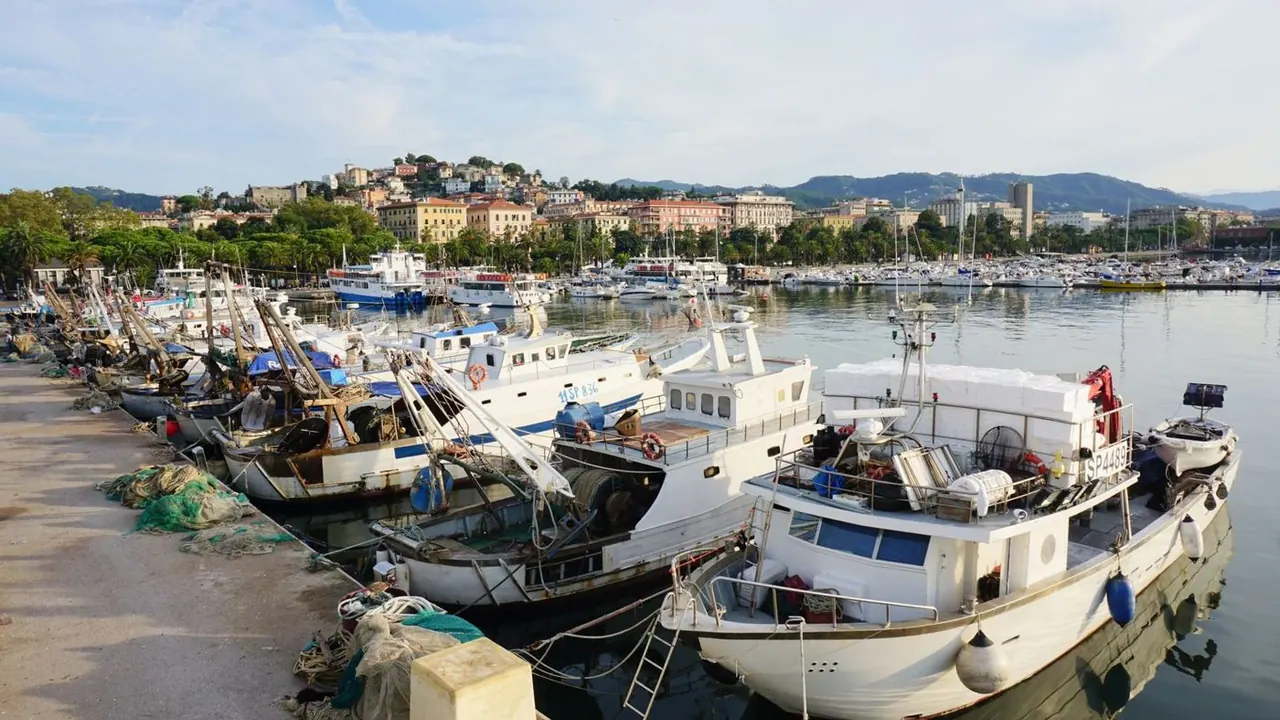
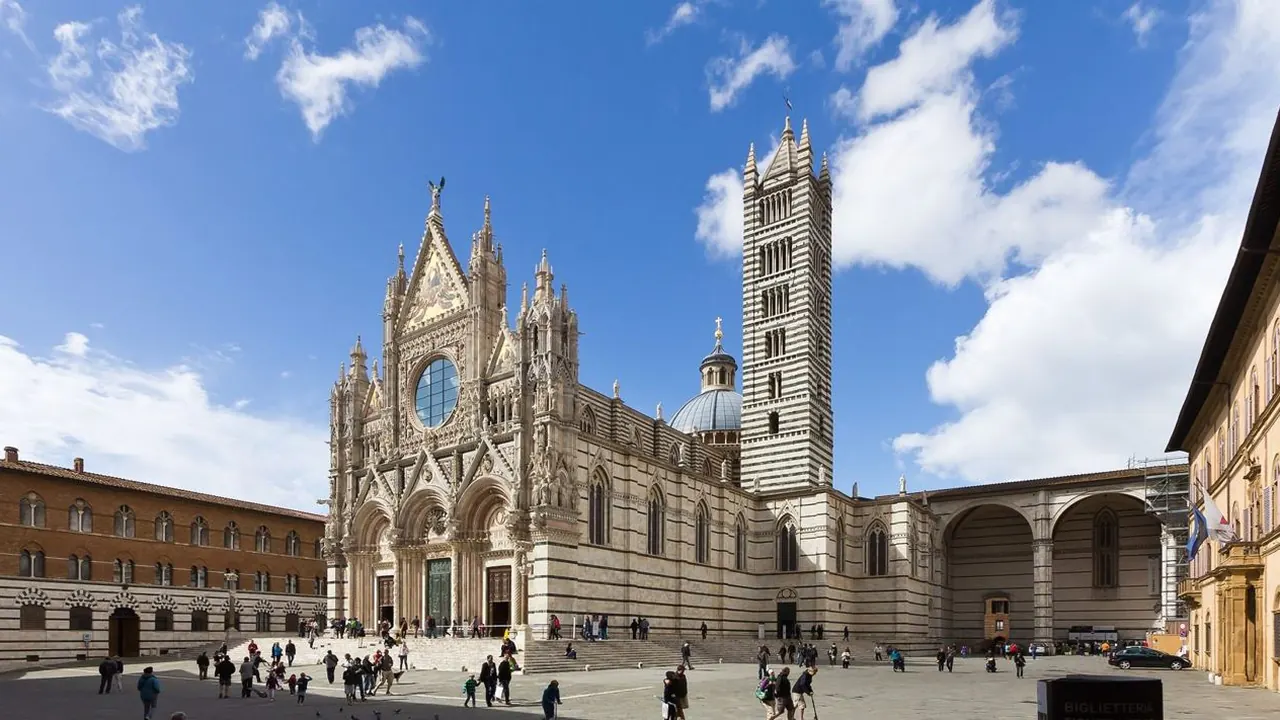
Photos: La Spezia by Irina Balashova, Pexels License; Siena by Raimond Spekking, CC BY-SA 4.0, cropped.
La Spezia or Siena?
Our verdict in twelve categories, each scored against the same fixed benchmark cities, and the climate month by month, so you can choose for your trip.
Choose La Spezia for
- beaches
- nature and the outdoors
- families
La Spezia is the better base when the sea and the cliffs are the point of the trip. The Cinque Terre villages and their footpaths are minutes away by train, Portovenere and the gulf beaches are a short bus ride off, and the flat town centre makes it easy to manage without a car. It suits walkers, swimmers and families with older children, and staying here costs less than sleeping in the villages themselves.
Choose Siena for
- culture and sights
- wellness
- live music and the arts
Siena is for travellers who come for art, architecture and the rolling Tuscan countryside. The Campo, the Duomo and the frescoed halls of the Palazzo Pubblico fill several days on their own, and hill towns, wine estates and warm springs lie all around. It rewards anyone happy to hire a car for the countryside and to spend the evenings over Chianti rather than going to the beach.
Scoreboard
Twelve categories on one fixed scale from 0 to 100. The shaded stretch is the gap between the two.
Your match
Pick a travel style or drag the sliders, and both match scores follow your weighting.
Too close to call, level with your weighting
Wins on beaches and nature and the outdoors with your weighting.
Wins on culture and sights and wellness with your weighting.
What matters to you?
Category by category
What the scores mean for a trip.
Beaches & swimming
Swimming from La Spezia is an easy outing, not the shape of the stay, because the town's own waterfront is a port and a promenade. A bus round the gulf takes you to the sheltered sand and pebble of San Terenzo and Lerici. Portovenere and Palmaria have clear water off the rocks, and the train runs up the coast to the long sandy beach at Monterosso. Expect small, often pebbly beaches, many of them taken up by paid bathing establishments.
Siena is a hill town well inland, and the sea plays no part in a visit. The Maremma beaches around Castiglione della Pescaia are well over an hour's drive away, so a swim there takes a whole day, and most visitors swim in a hotel or farmhouse pool instead.
Food & drink
Both eat well in a regional, home-cooking way, and in both the choice of international food and fine dining is thin. What separates them is sea against land. La Spezia lives on chickpeas and the gulf: farinata from wood ovens, mesciua soup, stuffed mussels from the ropes off Portovenere, and crisp Cinque Terre whites with sweet Sciacchetrà.
Siena's cooking is heavier and comes from the hills: hand-rolled pici, ribollita, cinta senese pork and wild boar, and old bakeries selling panforte and ricciarelli. Its wine is the bigger draw, with Chianti Classico and Brunello poured by the glass in enoteche across town.
Culture & sights
These two are far apart here. La Spezia is a nineteenth-century naval town of arcaded streets and Liberty facades, and a day or two covers it. The Museo Amedeo Lia's early Italian paintings, the naval museum and the Lunigiana stele statues in Castello San Giorgio are the highlights.
Siena is one of Europe's most intact medieval cities, and the whole centre counts as the sight. The sloping Campo, Lorenzetti's Good and Bad Government, the Duomo with its library and pulpit, Duccio's Maestà and the vast Santa Maria della Scala keep a visitor busy for days. The seventeen contrade, each with its own church, fountain and flag, give its streets a character no port town can match.
Nightlife
Both are early-to-bed places, and neither is somewhere to go clubbing. La Spezia's evenings are aperitivo on Via del Prione and the promenade, moving out to the waterfront bars of Lerici in summer. Siena's are a long dinner, wine on the Campo and a few student pubs, except during the Palio, when contrada dinners keep the streets full until late.
Nature & outdoors
La Spezia has the more dramatic and more varied outdoors. Terraced cliffs fall into the sea along the Cinque Terre paths, Palmaria has its loop past forts and sea caves, and the gulf is good for kayaking and diving. The marble peaks of the Apuan Alps are about an hour inland for serious hiking.
Siena's landscape is gentler: the bare clay hills of the Crete Senesi and the fields of the Val d'Orcia, with no coast or high mountains. Its strength is cycling, as the white gravel strade bianche start right at the edge of town, and the Via Francigena gives easy walking.
Day trips
Both are superb bases, but Siena has more on its doorstep. Florence is just over an hour by bus, and San Gimignano, Monteriggioni, Volterra, the Chianti villages, Pienza, Montalcino and abbeys such as Sant'Antimo and San Galgano all lie close. Many of them really need a car.
La Spezia's outings are fewer but easier without one. The Cinque Terre villages are minutes away by train and Portovenere is a short boat ride. Pisa and Lucca are about an hour away, while Florence makes a long day.
Good for families
La Spezia is the easier place with young children. The flat centre and seafront gardens suit a pushchair, and boat trips and the shallow beaches at San Terenzo and Lerici make for good days out. Neither city has a zoo, aquarium or theme park.
Siena works better with older children, who enjoy climbing the Torre del Mangia and watching the contrada drummers. Its steep lanes are hard going with toddlers, so families often stay at a farmhouse with a pool and come into town for half days.
Getting around
The difference is between a flat rail hub and a walking town on a hilltop. In La Spezia the station, market, museums and seafront are an easy level walk apart. Buses run round the gulf to Portovenere and Lerici, and from spring to autumn ferries offer another way along the coast, so a car is more nuisance than help. Summer is the weak point, when the coastal trains and village platforms are packed.
Siena's centre is compact and mostly closed to traffic, but it spreads across three ridges, so most walks mean steep climbs and stepped lanes. A chain of escalators links the old town to the station in the valley. Trains are slow and infrequent and buses are the better link to Florence, while the hill towns and wineries really call for a hire car left outside the walls.
Shopping & style
Neither is a shopping destination, and both are best for food to take home. In La Spezia that means pesto, olive oil, anchovies and Sciacchetrà from the Piazza Cavour market and shops along Via del Prione, with Carrara marble sold in the towns nearby. Siena adds more craft: hand-painted majolica, leather goods and contrada scarves, along with panforte and pecorino, plus a large weekly market by the Fortezza Medicea.
Affordability
La Spezia is the cheaper base, and that is why so many Cinque Terre visitors sleep there. Rooms cost less than in the villages and the local trains are cheap. Trail passes, boat trips and beach clubs still add up over a stay.
Siena has few rooms inside its walls, and they get dearer in summer and around the Palio. The separate entry charges for the cathedral complex and the civic museums also add up. Osteria lunches are fair value, and an agriturismo outside town often brings the cost down.
Live music & performing arts
Neither is a place to plan a trip around performances, but Siena gives a music lover more to find. La Spezia's offer is mostly a summer one: jazz and open-air evenings in the squares and castle courtyards around the gulf, with little on for the rest of the year.
Siena's edge comes from being a training ground for musicians. Its classical academy and its jazz school keep players and recitals in town, and two historic theatres carry drama and music through the winter, so a visit outside summer is less likely to find nothing on.
Wellness & relaxation
Siena is surrounded by thermal water, and that sets it well ahead. The travertine pools at Rapolano Terme are half an hour away, and further south are the steaming medieval bath at Bagno Vignoni, the free limestone pools of Bagni San Filippo and Petriolo's sulphur river.
La Spezia has only hotel spas and the small baths at Equi Terme, an hour inland. Its calm comes from the setting instead: a long lunch in Tellaro, a quiet walk on Palmaria, an off-season evening on the seafront.
When should you go?
Pick your month. The climate figures are measured averages, not a forecast.
La Spezia in July
Siena in July
Daytime high, °C
Rainfall in the month, mm
Where the figures come from
La Spezia's temperatures are measured 65 km from the centre, at Pisa / S. Giusto.
La Spezia has no rain gauge within 25 km of the centre, so its rainfall comes from a gridded climate dataset read at the city rather than from a gauge further away.
Siena's temperatures are measured 45 km from the centre, at Arezzo.
Siena has no rain gauge within 25 km of the centre, so its rainfall comes from a gridded climate dataset read at the city rather than from a gauge further away.
Temperature and rainfall are climate normals, averaged over the years shown. La Spezia: 1991-2020 normals, Pisa / S. Giusto (64.8 km from centre). Siena: 2006-2017 (rainfall 1991-2020) normals, Arezzo (45 km from centre).
The two share a hot midsummer, with highs around 30°C in July and August, but they suit different months. La Spezia is a beach place from June to early October, when the sea is warm enough for a comfortable swim and reaches about 25°C in August. Summer is also its sunniest and driest season. The rain arrives in September and stays through the autumn, with more than 100mm a month from October into November, so late October is better for walking the trails than for swimming. Spring is mild and fairly dry, and that is the best time for the coastal paths.
Siena has no sea to wait for, so its best months are the ones for walking the streets and touring the hills: late April, May, and September into October. July and August are hot for climbing its steep lanes, with highs of 31°C. It is wetter than La Spezia in spring, and its winters are colder, at about 9°C in January, which makes it quieter but still workable for sightseeing.
Which traveller are you?
On a beach and sun trip, La Spezia is the clear choice. The coves at Lerici and Tellaro, the clear water off Palmaria and the sand at Monterosso are all within easy reach, while from Siena the nearest decent beach takes a full day.
For a culture and arts trip, Siena wins easily. Its whole medieval centre is a single sight, with Lorenzetti's frescoes, Duccio's Maestà and the marble floor of the Duomo, and summer adds the Accademia Chigiana's concerts in palaces and churches.
On a relaxing and wellness trip, choose Siena. Rapolano Terme is half an hour away and the hot pools of Bagno Vignoni and Bagni San Filippo are further south, while La Spezia offers little more than hotel spas and one small thermal bath inland.
Before you go
| Measure | La Spezia | Siena |
|---|---|---|
| Official language | Italian | Italian |
| Currency | Euro (EUR) | Euro (EUR) |
| Sockets | CFL230 V, 50 Hz | CFL230 V, 50 Hz |
| Driving side | Right | Right |
| Time zone | UTC+1, UTC+2 in summer | UTC+1, UTC+2 in summer |
| Emergency number | 112 | 112 |
| Elevation | 3 m | 322 m |
| Main airport | Pisa International Airport (PSA)65 km from centre82 non-stop destinations | Florence Airport, Peretola (FLR)55 km from centre46 non-stop destinations |
| Public holidays this year | 13 days | 13 days |
By the numbers
| Measure | La Spezia | Siena |
|---|---|---|
| City population | 92,119 | 52,812 |
| People per km² | 1,792 | 446 |
| Museums within 10 km | 12 | 30 |
| UNESCO World Heritage sites within 50 km | 2 | 5 |
| Swim season, months above 21 °C | 4 months | - |
Where else could you go?
Every comparison below shares a destination with this one, so you can follow La Spezia or Siena somewhere new.