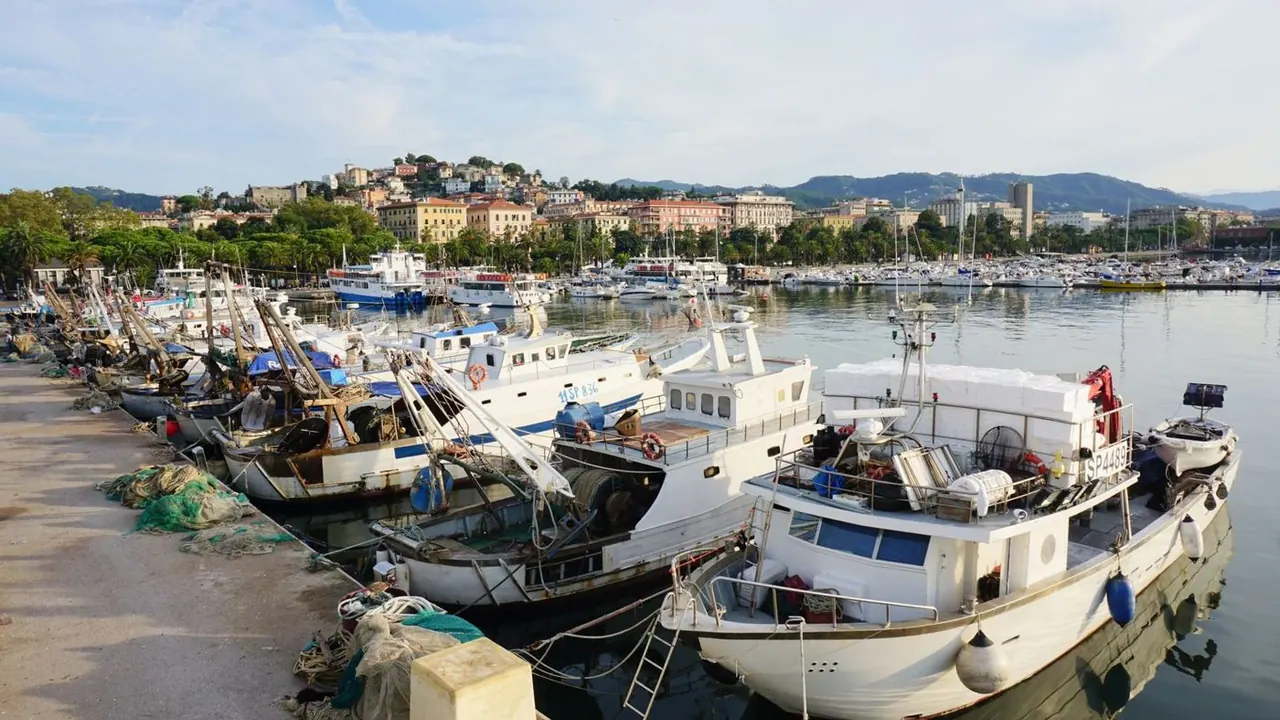
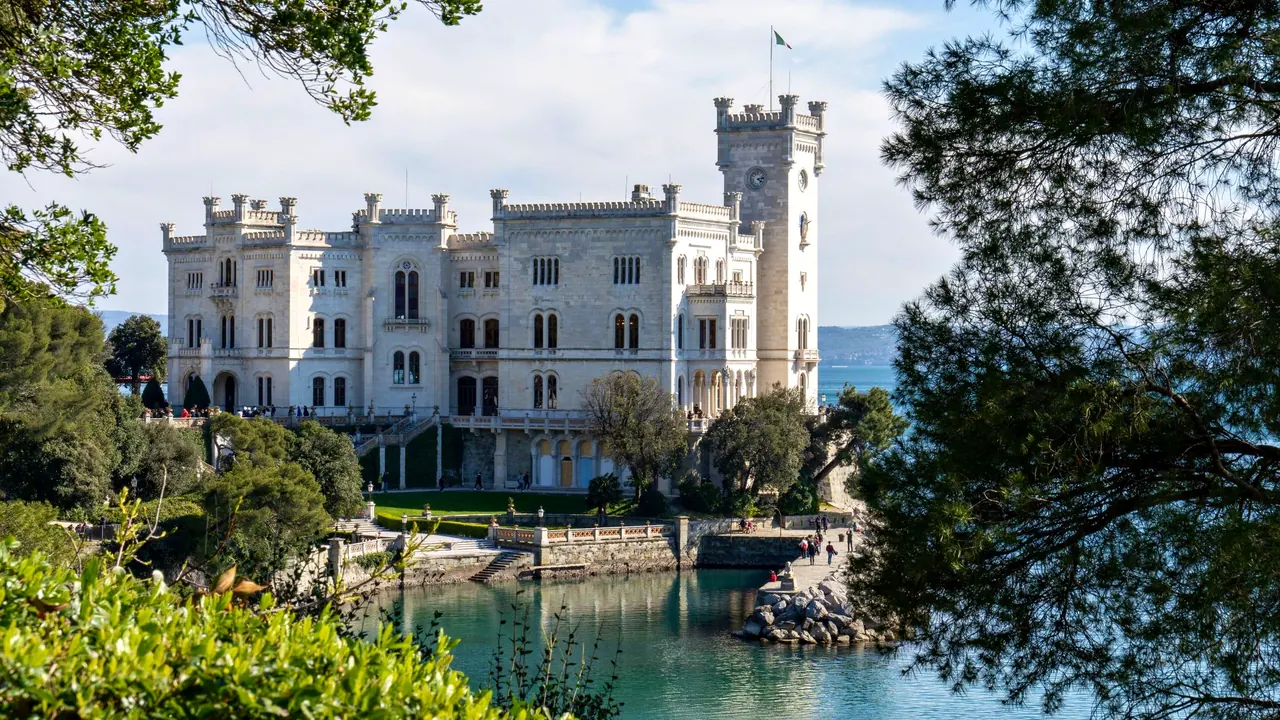
Photos: La Spezia by Irina Balashova, Pexels License; Trieste by Tibor Szabo, Pexels License.
La Spezia or Trieste?
Our verdict in twelve categories, each scored against the same fixed benchmark cities, and the climate month by month, so you can choose for your trip.
Choose La Spezia for
- nature and the outdoors
- day trips
La Spezia is the better choice when the coast itself is the reason for the trip. It works as a practical base for the Cinque Terre, Portovenere and the gulf: the villages are minutes away by train, rooms cost less than in the villages, and the cliff paths, islands and coves fill the days. It suits walkers and day-trippers who want to be out early and in bed early. Don't expect much from the town itself, which has little in the way of sights or evenings.
Choose Trieste for
- live music and the arts
- culture and sights
- wellness
Trieste is a city you stay in for its own sake. It has Habsburg squares and coffee houses on the sea, a cathedral hill with mosaics, Miramare Castle and a real opera house. Behind it, the Karst plateau, caves and three countries are all within easy reach. It rewards travellers who like history, music and an unhurried pace, and families with older children will find more to do there.
Scoreboard
Twelve categories on one fixed scale from 0 to 100. The shaded stretch is the gap between the two.
Your match
Pick a travel style or drag the sliders, and both match scores follow your weighting.
Wins on nature and the outdoors and day trips with your weighting.
Wins on live music and the arts and culture and sights with your weighting.
What matters to you?
Category by category
What the scores mean for a trip.
Beaches & swimming
Neither city has a proper town beach, and swimming in each is good in a different way. From La Spezia you travel out for it: to the sheltered sand and pebble at San Terenzo and Lerici, to the coves at Fiascherino and Tellaro, to the rocks off Palmaria, or by train to Monterosso's long sandy beach. Much of that shore is taken up by paid bathing establishments, and in August the free stretches fill early.
Trieste brings the sea to the doorstep. At Barcola you swim from concrete platforms and ladders a short bus ride from the centre, and the coves at Sistiana and Duino are prettier. There is almost no sand, though, so anyone after soft beaches does better around the gulf at La Spezia.
Food & drink
The two eat equally well, but the cooking comes from very different worlds. La Spezia is Ligurian through and through: farinata from wood ovens, mesciua soup, pesto on trofie and testaroli, and mussels farmed off Portovenere, washed down with Cinque Terre whites and sweet Sciacchetrà.
Trieste's table is Central European as much as Italian. It has buffets carving boiled pork with horseradish, jota and presnitz, a coffee ritual with its own vocabulary, and farmhouse osmize on the Karst pouring Vitovska and Terrano. Neither city offers much fine dining or international food.
Culture & sights
Trieste has far more to see. Piazza Unità opens onto the sea, the Borgo Teresiano runs along the Canal Grande past San Spiridione, and San Giusto hill has a cathedral with mosaics, a castle and a Roman theatre below. Add Miramare Castle, the Revoltella, the great synagogue and the Risiera di San Sabba, and you have several full days.
La Spezia is a nineteenth-century naval town with arcaded streets rather than an old core. The Museo Amedeo Lia's early Italian paintings and the stele statues in Castello San Giorgio are worth a visit, but most of the area's history lies out at Portovenere, Sarzana and Luni.
Nightlife
Evenings in both cities centre on the aperitivo, and neither is a place for clubbing. La Spezia's spritz crowd gathers on Via del Prione and around Piazza Verdi, moving to the waterfront bars at Lerici in summer. The town empties early because most visitors have a morning on the trails ahead. Trieste stays up a little longer, thanks to university students in the wine bars of Cavana and the summer kiosks along Barcola.
Nature & outdoors
La Spezia has the more striking landscape. Terraced vines and olives drop into the sea along the Cinque Terre, with the Sentiero Azzurro and the quieter ridge paths above it. Closer to town are the forts and sea caves of Palmaria and the pine woods of Montemarcello, and the marble peaks of the Apuan Alps rise about an hour inland. Kayaking and diving in the gulf round it off, though summer heat and crowds weigh on the coastal paths.
Trieste's outdoors is different in kind. It has the clifftop Strada Napoleonica and Rilke Path, climbing in Val Rosandra, the Grotta Gigante and Škocjan caves, and serious sailing on the gulf. The Bora can make winter walks rough.
Day trips
La Spezia packs more into a short radius. The five Cinque Terre villages, Portovenere, Lerici and Tellaro are minutes away by train, bus or boat, Sarzana and Luni are close inland, and Pisa and Lucca are about an hour away. Easy day trips are close enough to fill a week.
Trieste's options are spread wider and cross three countries. You can visit Aquileia's mosaics, star-shaped Palmanova, Cividale and the Collio wine country, then cross to Piran, Ljubljana and Postojna in Slovenia. Several of these take longer to reach, Croatian Istria needs a car, and Venice is a long day at about two hours each way.
Good for families
Trieste gives children more to do. There is a waterfront aquarium, a hands-on science centre, the Miramare gardens and the Grotta Gigante, which usually amazes older children. The drawbacks are rocky swimming and steep, stepped streets above the seafront.
La Spezia has the gentler beaches. The shallow, sheltered water at San Terenzo and Lerici and the boat trips round Portovenere make good days with small children. Beyond that there is no aquarium or park to fall back on, and packed summer trains to the steep villages are hard with a toddler.
Getting around
Both are easy to get about on foot, but they work in different ways. La Spezia is a transport hub. The station, the market, the museums and the seafront are all a short, flat walk apart, and from there coastal trains run through the Cinque Terre, buses go to Portovenere and Lerici, and from spring to autumn ferries cross the gulf. You won't need a car, but expect crowded trains and village platforms in summer.
Trieste is more a city to explore in itself. The waterfront, Piazza Unità and the Borgo Teresiano are flat and close together, but San Giusto and the districts behind it climb by long flights of steps. Buses run out to Barcola, Miramare and the Karst, and boats cross to Muggia. A car only helps for the wine villages and trips over the border.
Shopping & style
Neither is a place to shop, and in both the best things to take home are edible. In La Spezia that means pesto, olive oil, Cinque Terre wine and Sciacchetrà from the shops along Via del Prione, with Carrara marble in the nearby towns. Trieste has more interesting browsing in the antique and second-hand shops of the old town, plus coffee from local roasters, Karst honey and presnitz.
Affordability
Both are fairly priced rather than cheap, and Trieste is slightly easier on the budget. La Spezia's appeal is that it costs less than staying in the Cinque Terre villages, but summer rooms are at ordinary levels, and trail passes, boat trips and bathing establishments add up. In Trieste, many of the best things cost nothing: swimming at Barcola, the cathedral hill and Karst walks. A buffet lunch or a coffee at the bar is inexpensive, though rooms fill up around the autumn regatta.
Live music & performing arts
Trieste is the place for a night at the theatre. The Teatro Verdi on the waterfront has a full season of opera and ballet, and the city keeps alive a Habsburg fondness for operetta. The Politeama Rossetti stages plays and musicals, and there is also a Slovenian-language theatre.
La Spezia has the Teatro Civico, a long-established summer jazz festival and open-air concerts in castle courtyards around the gulf. For most of the year there is little else, and opera means going to Genoa or Pisa.
Wellness & relaxation
Neither city has a spa or bathing tradition of its own. From La Spezia, pampering means a hotel spa or a drive of about an hour into the Lunigiana to the small thermal baths at Equi Terme. The calm here is something you go looking for: a long lunch in Lerici or Tellaro, an afternoon on Palmaria, or the seafront once the season is over.
Trieste is the better choice for a restful stay. Its few day spas mean you can book a treatment without staying in a hotel that has one. In summer the sea is part of the daily routine, with a swim off the pine-shaded lawns at Barcola, and sunsets over the gulf end the day. Its literary past, from Joyce to Svevo, suits slow days with a book.
When should you go?
Pick your month. The climate figures are measured averages, not a forecast.
La Spezia in July
Trieste in July
Daytime high, °C
Rainfall in the month, mm
Where the figures come from
La Spezia's temperatures are measured 65 km from the centre, at Pisa / S. Giusto.
La Spezia has no rain gauge within 25 km of the centre, so its rainfall comes from a gridded climate dataset read at the city rather than from a gauge further away.
Temperature and rainfall are climate normals, averaged over the years shown. La Spezia: 1991-2020 normals, Pisa / S. Giusto (64.8 km from centre). Trieste: 1991-2020 normals, Trieste (1.6 km from centre).
La Spezia is at its best from late May to early October. From June the sea is warm enough for easy swimming, and it peaks at about 25°C in August. July is very dry, with only around 20mm of rain and long, sunny days. Midsummer highs of 30°C make the steep coastal paths hard going, so walkers do better in April, May and late September. Autumn turns wet suddenly, and October and November are by far the rainiest months.
Trieste follows a similar summer pattern, and by July and August its sea is as warm as La Spezia's. Its rain is spread more evenly, though, so late spring and summer bring more showers, with about 90mm in May. Winter there is a few degrees colder, with January highs around 9°C, and the Adriatic stays chilly well into spring. Out of season the difference is clear: La Spezia is milder but wetter, while Trieste is colder and drier.
Which traveller are you?
For a culture and arts trip, Trieste is the clear pick. It has Piazza Unità and the Borgo Teresiano, San Giusto's mosaics, Miramare and the Revoltella. In the evenings there is opera and ballet at the Teatro Verdi, while La Spezia offers a day of museums and very little on stage.
On an outdoors trip, La Spezia wins. The terraced cliffs and footpaths of the Cinque Terre start a few train stops away. Add the Palmaria loop, Montemarcello and the Apuan Alps, and you have more walking than the Karst edge and gorges behind Trieste.
For a relaxing and wellness trip, Trieste suits better. Long sittings in old coffee houses, evening strolls on the Molo Audace and a quiet, older city set the pace. In La Spezia, the summer crowds on the coastal trains and trails work against a restful stay.
Before you go
| Measure | La Spezia | Trieste |
|---|---|---|
| Official language | Italian | Italian |
| Currency | Euro (EUR) | Euro (EUR) |
| Sockets | CFL230 V, 50 Hz | CFL230 V, 50 Hz |
| Driving side | Right | Right |
| Time zone | UTC+1, UTC+2 in summer | UTC+1, UTC+2 in summer |
| Emergency number | 112 | 112 |
| Elevation | 3 m | 2 m |
| Main airport | Pisa International Airport (PSA)65 km from centre82 non-stop destinations | Trieste Airport (TRS)31 km from centre32 non-stop destinations |
| Public holidays this year | 13 days | 13 days |
By the numbers
| Measure | La Spezia | Trieste |
|---|---|---|
| City population | 92,119 | 198,417 |
| People per km² | 1,792 | 2,332 |
| Museums within 10 km | 12 | 33 |
| UNESCO World Heritage sites within 50 km | 2 | 5 |
| Swim season, months above 21 °C | 4 months | 4 months |
Where else could you go?
Every comparison below shares a destination with this one, so you can follow La Spezia or Trieste somewhere new.
- Portofinovs La Spezia
- Luccavs La Spezia
- Pisavs La Spezia
- Rovinjvs Trieste
- Ljubljanavs Trieste
- Genoavs La Spezia