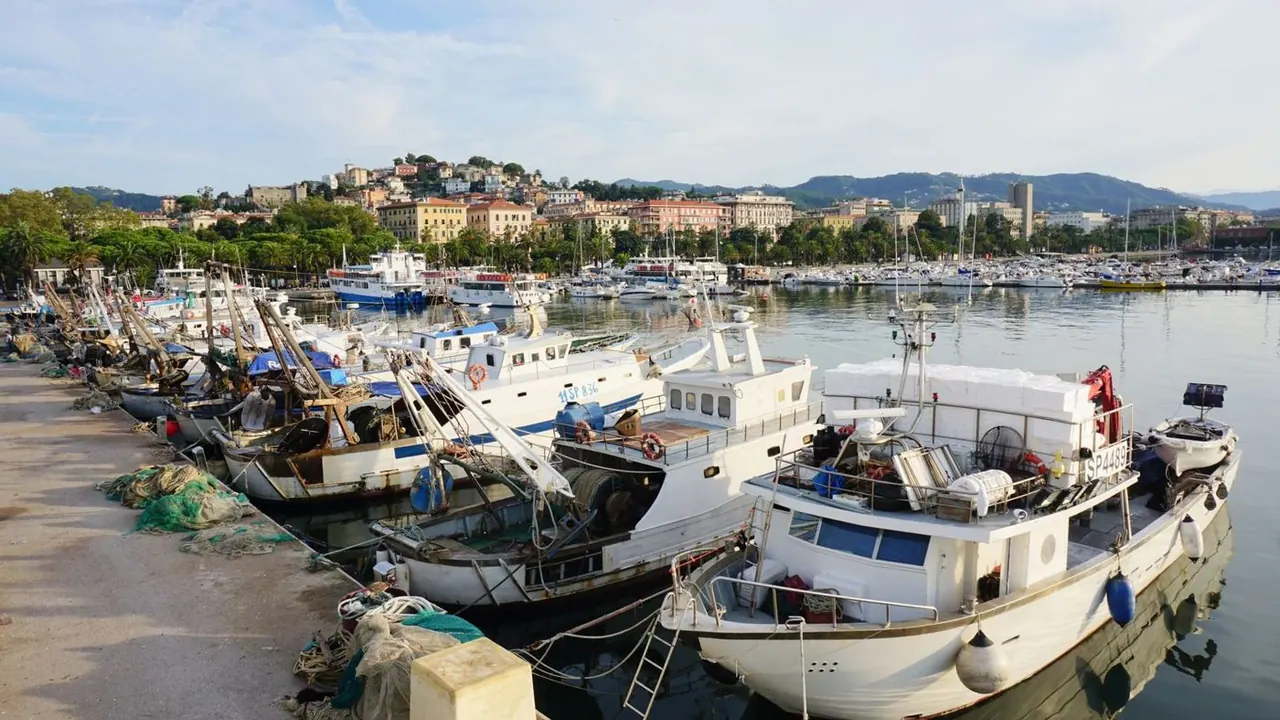
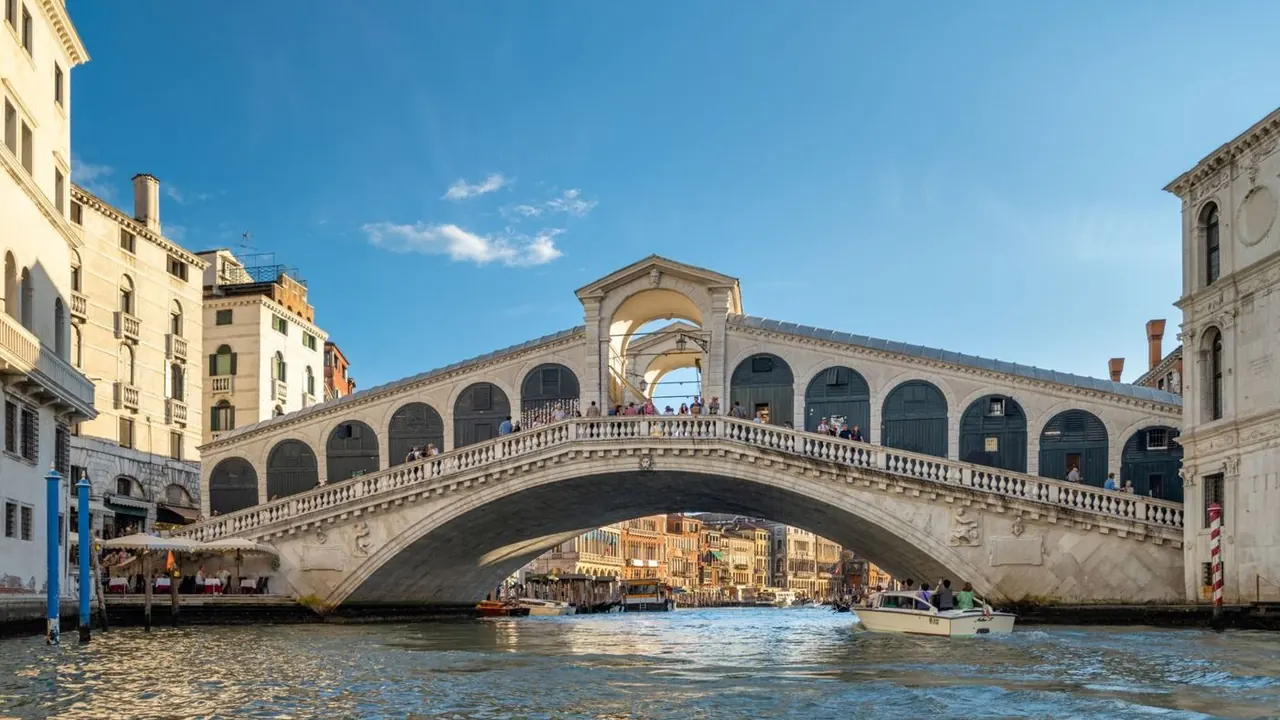
Photos: La Spezia by Irina Balashova, Pexels License; Venice by David Vives, Pexels License.
La Spezia or Venice?
Our verdict in twelve categories, each scored against the same fixed benchmark cities, and the climate month by month, so you can choose for your trip.
Choose La Spezia for
- nature and the outdoors
- prices
- beaches
La Spezia suits walkers and anyone who wants the Ligurian coast without paying Cinque Terre prices. The terraced cliffs, the national park footpaths and the coves around the gulf are all a short train or boat ride away. The town is a working port with a grid of arcaded streets rather than a showpiece, so you spend your days out along the coast and come back to a calmer, cheaper base in the evening.
Choose Venice for
- culture and sights
- live music and the arts
- shopping
Venice is the trip for people who travel for art, architecture and music. The city itself is the sight: palaces on the water, Titian and Tintoretto in the churches where they still hang, and opera at La Fenice. It costs a great deal more and the outdoors is mostly flat lagoon, but no stretch of coast can stand in for a week spent getting lost among the canals.
Scoreboard
Twelve categories on one fixed scale from 0 to 100. The shaded stretch is the gap between the two.
Your match
Pick a travel style or drag the sliders, and both match scores follow your weighting.
Wins on nature and the outdoors and prices with your weighting.
Wins on culture and sights and live music and the arts with your weighting.
What matters to you?
Category by category
What the scores mean for a trip.
Beaches & swimming
Neither city has a beach in town, so both mean a short trip out, but the swimming is quite different. From La Spezia you reach small pebble and sand coves at Lerici, Tellaro and Fiascherino, or rocky ledges with very clear water off Palmaria and Portovenere, with Monterosso's longer sandy beach up the line.
Venice has a single long stretch of fine sand at the Lido, a vaporetto ride away. The water there is shallow and gentle but greenish, and quieter Pellestrina lies beyond it. Pick La Spezia for clear water and variety, and the Lido for an easy afternoon on sand with small children.
Food & drink
The two eat about equally well, but they eat very differently. La Spezia's food is cheap and filling: farinata from wood ovens, mesciua soup, pesto on testaroli and stuffed gulf mussels, at steady prices but with little fine dining.
Venice is at its best grazing at the counters of the bacari, where cicchetti such as salt cod, sarde in saor and soft-shell crab come with a small glass of wine. Behind them comes lagoon cooking like black cuttlefish risotto. The trouble in Venice is avoiding the tourist menus around San Marco. In La Spezia the trouble is that the choice runs out sooner.
Culture & sights
This is where the two differ most. La Spezia is a nineteenth-century naval town, and a day or two covers the Museo Amedeo Lia, the naval museum and the Lunigiana stele statues in the Castello San Giorgio. Most of the area's history lies out along the coast.
Venice is one of the great heritage cities of Europe, with six centuries of palaces and churches standing on water and a depth of art that runs from the Accademia to the Guggenheim. Even its small parish churches hold masterpieces, and in Biennale years the Arsenale fills with exhibitions.
Nightlife
Both are aperitivo towns that go quiet early. In La Spezia the spritz hour happens along Via del Prione and the seafront, and in summer it moves to the waterfront at Lerici. Venice has its bacari at the Rialto and on the Fondamenta della Misericordia, plus a student crowd that stays out later in Campo Santa Margherita. Neither has a club scene, though a silent canal walk after midnight is a pleasure only Venice can offer.
Nature & outdoors
La Spezia is the clear choice for the outdoors. The terraced cliffs of the Cinque Terre national park, the ridge and sanctuary paths above the Sentiero Azzurro, the pine woods of Montemarcello and the Apuan Alps about an hour inland give real hiking, along with diving and kayaking in the gulf.
The nature around Venice is quieter and flat. It means birdwatching for egrets and flamingos in the salt marshes near Torcello, cycling along the Pellestrina sea walls, and gentle hills an hour away. The mountains are much further off.
Day trips
From La Spezia the days out follow the coast. The Cinque Terre villages are minutes away on the train, Portovenere is a short boat ride across the gulf, and Lerici and Tellaro sit on the far shore. Walled Sarzana and the Roman ruins at Luni are close by inland, and Pisa and Lucca are about an hour away.
From Venice the fast trains head inland to the art cities of the Veneto: Padua for Giotto's chapel, Verona for its arena, and Palladio's Vicenza in between. You do not need a train for the lagoon islands. Murano's glass furnaces, Burano's painted houses and Torcello's lonely cathedral make a full day by boat.
Good for families
Neither city is built around children, and each has its own snag. La Spezia's flat centre and seafront gardens are easy with a pushchair, and the sheltered beaches at San Terenzo make good water days. The steep villages and crowded trains are better suited to older children.
Venice has the boats, the car-free alleys and the glass-blowing on Murano that children love, but its stepped bridges make a pushchair a daily struggle.
Getting around
La Spezia is a flat little hub built around its railway station. The market, the museums and the seafront are all a short walk away, and from there trains run along the coast and inland, buses go round the gulf and ferries sail in season. The weak point is the packed coastal trains in summer.
Venice is a car-free maze where walking is the only way to get about on land. The alleys twist and end at canals, hundreds of bridges have steps, and the slow, crowded vaporetti do the rest. Wheeled luggage and pushchairs are hard work there, while in La Spezia they cause no trouble.
Shopping & style
Venice is clearly the better place to shop, thanks to crafts made on the spot: Murano glass, Burano lace, papier-mâché masks, marbled paper and furlane slippers. The big fashion names are on Calle Larga XXII Marzo, though you have to steer past a lot of imported imitations.
La Spezia offers ordinary high-street shopping along Via del Prione. Its best souvenirs are things to eat and drink, such as pesto, olive oil and Sciacchetrà.
Affordability
La Spezia is much easier on the wallet. It is mid-priced rather than cheap, and summer rooms, trail passes and paid beaches still add up, but local transport and everyday eating are fair value.
Venice is among the most expensive places to stay in Italy. Centre hotels, visitor-priced water transport and entry to the sights all cost a lot, and the main way to save is to eat cicchetti at the bar and sleep in Mestre.
Live music & performing arts
Venice has much more to offer here. La Fenice, where Verdi and Rossini had premieres, runs a full season of opera, ballet and concerts, the Biennale stages contemporary festivals, and Vivaldi concerts in the churches run most evenings.
La Spezia has the Teatro Civico and a summer jazz festival with open-air concerts in castle courtyards. For opera you would have to travel to Genoa or Pisa.
Wellness & relaxation
Neither city has a spa culture of its own, but Venice has a little more to offer. It has hotel spas in old palazzi and on the Lido, the Roman-era thermal mud of Abano Terme within an hour, and a deep hush at dawn in Castello and on Giudecca.
La Spezia's options are slimmer, mainly the small baths at Equi Terme inland. Its restful moments come from long lunches in Tellaro and the quiet of Palmaria.
When should you go?
Pick your month. The climate figures are measured averages, not a forecast.
La Spezia in July
Venice in July
Daytime high, °C
Rainfall in the month, mm
Where the figures come from
La Spezia's temperatures are measured 65 km from the centre, at Pisa / S. Giusto.
La Spezia has no rain gauge within 25 km of the centre, so its rainfall comes from a gridded climate dataset read at the city rather than from a gauge further away.
Venice has no rain gauge within 25 km of the centre, so its rainfall comes from a gridded climate dataset read at the city rather than from a gauge further away.
Venice's sunshine is measured 26 km from the centre, at Treviso / S. Angelo.
Temperature and rainfall are climate normals, averaged over the years shown. La Spezia: 1991-2020 normals, Pisa / S. Giusto (64.8 km from centre). Venice: 1991-2020 normals, Venezia / Tessera (6.7 km from centre).
July and August are equally hot in both cities, with highs of about 28°C, but the rain falls in different months. La Spezia has a dry, very sunny summer, and the sea is warm enough for swimming from June into early October. The autumn rain sets in with September and keeps building to about 150mm in November, the wettest month of its year. That makes April, May and early June the best time for the trails, after the winter chill and before the summer heat. September is warm and good for the sea, but expect some wet days on the paths.
Venice has no reliably dry summer. Its wettest month is September, at about 78mm, and May and the autumn months are not much drier, and the city gets less sunshine than La Spezia in every month. Winter is its driest season, but it is cold, with January highs near 8°C. The Lido's shallow sea is a little warmer in August than the water off Liguria. For walking the alleys, April and May are the most comfortable, mild rather than humid, though you should pack something for the odd shower.
Which traveller are you?
For a culture and arts trip, Venice is far ahead. San Marco, the Accademia, the Frari and the Scuola Grande di San Rocco would fill a week on their own, and La Fenice adds an evening of opera that La Spezia cannot offer.
On an outdoors trip, choose La Spezia. The Cinque Terre footpaths, the Palmaria loop, kayaking in the gulf and the marble peaks of the Apuan Alps inland outclass Venice's lagoon, where flat marshland and a kayak or rowing lesson are most of what's on offer.
On a tight budget, La Spezia stretches the money much further. Rooms cost less than in the coastal villages, the trains and buses are cheap, and farinata makes an easy lunch. In Venice, rooms, boats and church entry fees soon add up.
Before you go
| Measure | La Spezia | Venice |
|---|---|---|
| Official language | Italian | Italian |
| Currency | Euro (EUR) | Euro (EUR) |
| Sockets | CFL230 V, 50 Hz | CFL230 V, 50 Hz |
| Driving side | Right | Right |
| Time zone | UTC+1, UTC+2 in summer | UTC+1, UTC+2 in summer |
| Emergency number | 112 | 112 |
| Elevation | 3 m | 2 m |
| Main airport | Pisa International Airport (PSA)65 km from centre82 non-stop destinations | Venice Marco Polo Airport (VCE)7 km from centre103 non-stop destinations |
| Public holidays this year | 13 days | 13 days |
By the numbers
| Measure | La Spezia | Venice |
|---|---|---|
| City population | 92,119 | 250,369 |
| People per km² | 1,792 | 602 |
| Museums within 10 km | 12 | 52 |
| UNESCO World Heritage sites within 50 km | 2 | 5 |
| Swim season, months above 21 °C | 4 months | 4 months |
Where else could you go?
Every comparison below shares a destination with this one, so you can follow La Spezia or Venice somewhere new.