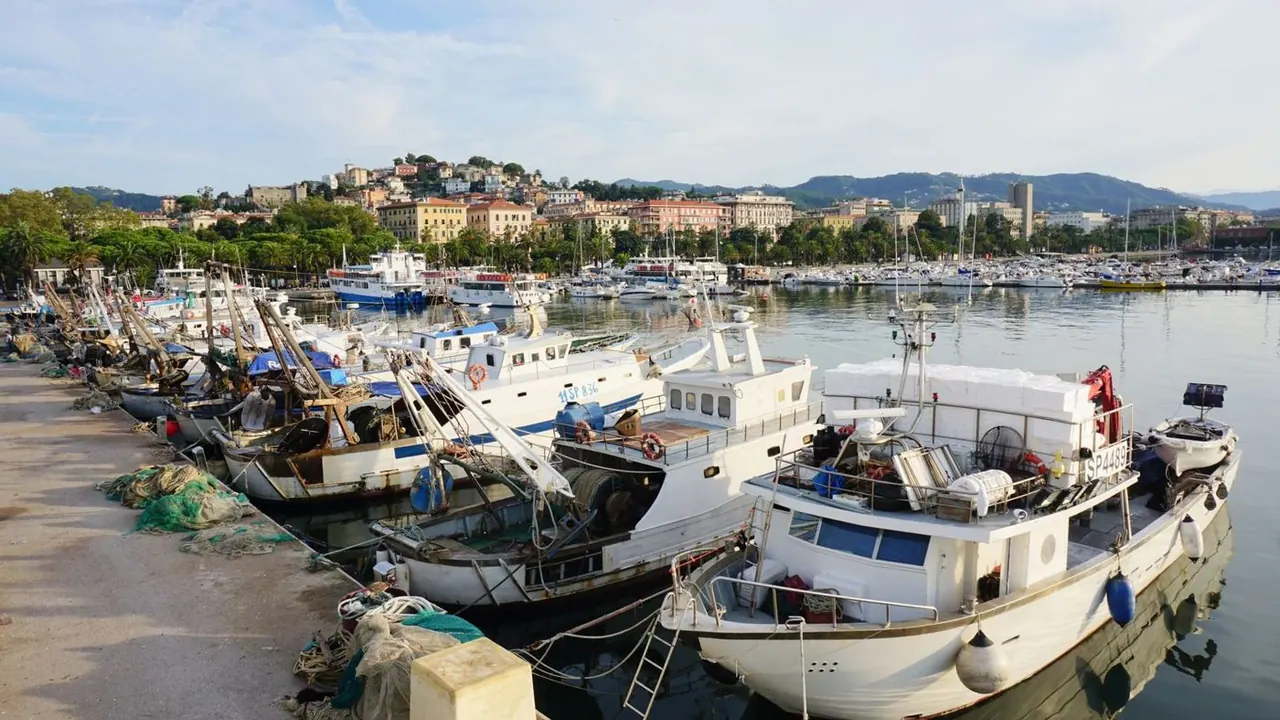
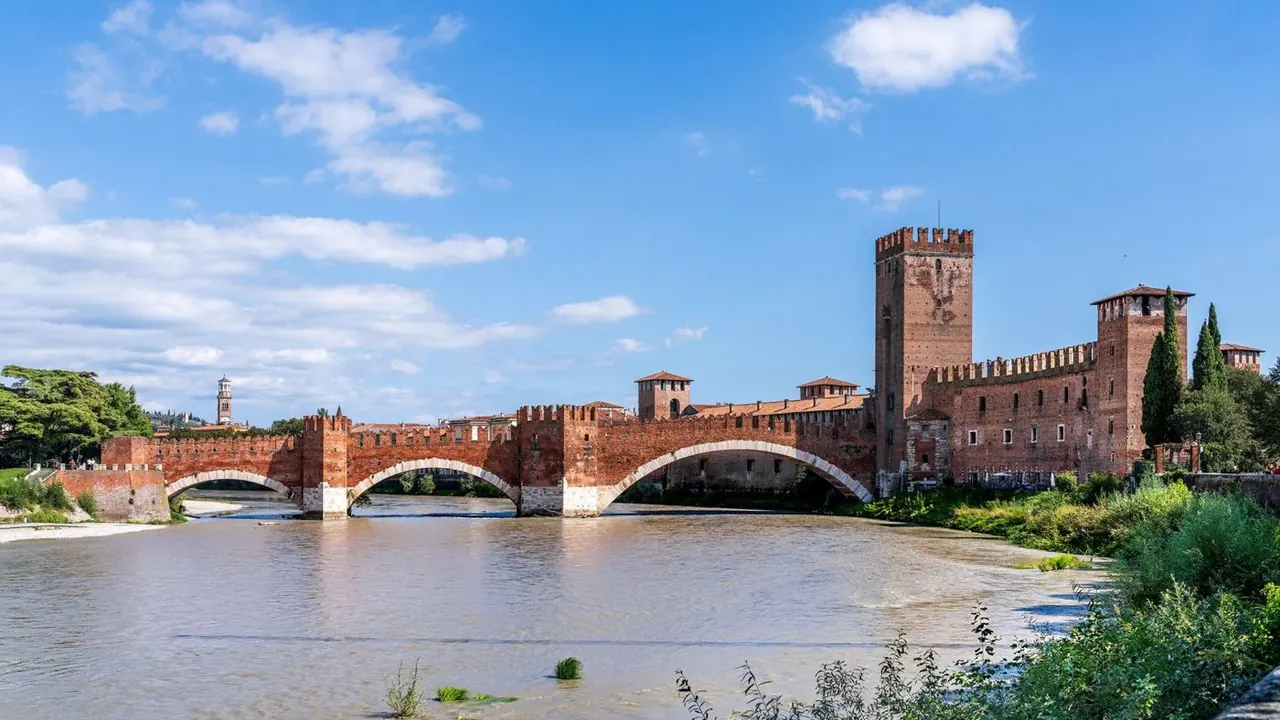
Photos: La Spezia by Irina Balashova, Pexels License; Verona by NorbertNagel, CC BY-SA 4.0, cropped.
La Spezia or Verona?
Our verdict in twelve categories, each scored against the same fixed benchmark cities, and the climate month by month, so you can choose for your trip.
Choose La Spezia for
- beaches
- nature and the outdoors
- prices
La Spezia suits travellers who come for the coast and are happy for the town to be a base rather than the sight. The Cinque Terre cliff paths, the coves around Lerici and Tellaro and the boats to Portovenere and Palmaria are all close by. Evenings end early, the cooking is plain Ligurian, and the reward is a landscape you can walk out into every morning without a car.
Choose Verona for
- live music and the arts
- culture and sights
- families
Verona is the better choice when the city itself should fill the days. It has a Roman amphitheatre still used for opera, Romanesque and Gothic churches, Scaliger tombs and Castelvecchio, with Valpolicella wine on the table each evening. Families do better here too, with Gardaland and a safari zoo nearby, and the rail line puts Venice, Padua and Vicenza within easy reach.
Scoreboard
Twelve categories on one fixed scale from 0 to 100. The shaded stretch is the gap between the two.
Your match
Pick a travel style or drag the sliders, and both match scores follow your weighting.
Wins on beaches and nature and the outdoors with your weighting.
Wins on live music and the arts and culture and sights with your weighting.
What matters to you?
Category by category
What the scores mean for a trip.
Beaches & swimming
La Spezia has more and better swimming within reach, though not in the port itself. Within a short ride there are sheltered sand and pebble strips at San Terenzo and Lerici, small coves under olive terraces at Fiascherino and Tellaro, and very clear water off the rocks of Portovenere and Palmaria. Monterosso's long sandy beach is a train ride up the coast.
Verona's swimming is fresh water on Lake Garda, about half an hour away. There you find calm lidos, lawns running down to the shore and the limestone shelves at Sirmione. The lake is pleasant but narrow-beached and crowded at weekends, and in both places a swim is an outing rather than the shape of the stay.
Food & drink
Verona eats and drinks better. Its cooking comes from the inland Veneto: risotto made with Amarone, bigoli with duck, and bollito with peppery pearà, served in wood-panelled osterie around Piazza delle Erbe and in Veronetta. The vineyards of Valpolicella, Amarone and Soave are a short drive away, so the wine is the real draw.
La Spezia's food is lighter and closer to the sea. Farinata from wood ovens, mussels from the gulf, pesto on testaroli and crisp Cinque Terre whites make good everyday eating at steady prices, but there is little beyond that. Neither city has much international range.
Culture & sights
Here the gap is wide. Verona's centre within the loop of the Adige runs from the Arena and the Roman theatre through the Scaliger tombs to San Zeno's bronze doors, with Scarpa's Castelvecchio holding the art. It rewards two or three unhurried days.
La Spezia is a nineteenth-century naval town of arcaded avenues and Liberty facades. It has fine early Italian paintings at the Museo Amedeo Lia and the strange Lunigiana stele statues up at Castello San Giorgio, enough for a day or so. Most of its history lies out along the coast.
Nightlife
Neither is a place to go out late, but Verona keeps going a little longer. Both towns are built around the aperitivo. Across the Ponte Pietra, Veronetta's student wine bars and pubs stay busy in term time, and in summer the crowd leaving the Arena near midnight gives the centre a second wind.
In La Spezia the spritz hour on Via del Prione and around Piazza Verdi, or by the water at Lerici in summer, is the main event. After that most visitors head to bed ahead of an early start on the trails.
Nature & outdoors
La Spezia has the more striking landscape, and it starts right outside town. Terraced cliffs drop into the sea along the Cinque Terre, with the Sentiero Azzurro and the quieter ridge paths above it. The Palmaria island loop, the pine woods of Montemarcello and kayaking and diving in the gulf are all close, and the marble peaks of the Apuan Alps are an hour inland.
Verona's countryside is gentler. It offers vineyard walks and cycling in Valpolicella, the long Adige cycle route and the Lessinia plateau. The steepest terrain is on Monte Baldo above Lake Garda, where the north of the lake adds sailing and windsurfing, but most of it takes a drive to reach.
Day trips
Both are excellent bases, but the days out are of different kinds. From La Spezia the outings are short and coastal: the five Cinque Terre villages minutes away by train, Portovenere by boat, and walled Sarzana and Roman Luni inland, with Pisa and Lucca about an hour off.
From Verona the rail line leads to great art cities. Vicenza's Palladio, Padua's Giotto, Gonzaga Mantua and Venice are all comfortable in a day, with Garda harbours and wine cellars in between.
Good for families
Verona has much more to offer children, though most of it is just outside the city. Gardaland, the water parks along Garda's southern shore and the drive-through safari at Parco Natura Viva are each about half an hour away. The Arena tends to win over even children who are tired of sightseeing.
La Spezia's family days are on the water, with boat trips round Portovenere and shallow, sheltered beaches at San Terenzo. There is no zoo or theme park, though, and the steep villages are hard going with a pushchair. Both centres are flat and easy on foot.
Getting around
Both are easy on foot, and the difference is what happens outside town. La Spezia works entirely without a car: coastal trains, gulf buses and seasonal ferries reach everything worth seeing, and driving into the villages is more trouble than it is worth, though summer trains are packed.
Verona's car-free centre is a pleasure to stroll, and fast trains run to Venice and the lake. The Valpolicella villages and the Lessinia, however, are thinly served by bus and far easier to reach by car.
Shopping & style
Verona is the better place to shop, though neither is a fashion destination. Via Mazzini, paved in marble, carries the Italian labels, and Corso Porta Borsari has jewellers and small boutiques. Amarone and the city's own pandoro make good things to take home.
La Spezia offers chain stores on Via del Prione and the Piazza Cavour market. Its best souvenirs come in jars and bottles: pesto, olive oil and Sciacchetrà.
Affordability
The two cost much the same overall, but in different places. In La Spezia, rooms in town are cheaper than in the Cinque Terre villages, while trail passes, boat trips and bathing establishments add to the bill, and spring and autumn are noticeably cheaper.
In Verona, rooms in the historic centre are the main expense, especially on summer opera nights and during trade fairs, and tables facing the Arena charge for the view. Staying in Veronetta or near the station keeps costs down.
Live music & performing arts
Verona is in a different league. From June to early September, grand productions of Verdi and Puccini fill the Arena's stone tiers by candlelight, and the Roman theatre hosts Shakespeare, dance and jazz in the open air. The Teatro Filarmonico carries a smaller season through the cooler months.
La Spezia has the Teatro Civico's touring programme and a long-running summer jazz festival in the piazzas and castle courtyards around the gulf. For opera, though, you have to go to Genoa or Pisa.
Wellness & relaxation
Verona has warm springs nearby, which La Spezia largely lacks. The thermal pools at Sirmione look out over Lake Garda, a spring-fed lake near Lazise sits in an old villa garden, and Caldiero's waters have been used since Roman times.
In La Spezia, wellness means a hotel spa or the small baths at Equi Terme, an hour up the Lunigiana. Its restful side is a quiet day on Palmaria or a long lunch in Tellaro, out of season.
When should you go?
Pick your month. The climate figures are measured averages, not a forecast.
La Spezia in July
Verona in July
Daytime high, °C
Rainfall in the month, mm
Where the figures come from
La Spezia's temperatures are measured 65 km from the centre, at Pisa / S. Giusto.
La Spezia has no rain gauge within 25 km of the centre, so its rainfall comes from a gridded climate dataset read at the city rather than from a gauge further away.
Temperature and rainfall are climate normals, averaged over the years shown. La Spezia: 1991-2020 normals, Pisa / S. Giusto (64.8 km from centre). Verona: 1991-2020 normals, Verona / Villafranca (11.6 km from centre).
The two share a hot midsummer, with both reaching about 30°C in July and August, but the rest of the year differs. On the Ligurian coast, La Spezia has mild winters, with January highs around 11°C against roughly 7°C in Verona, where the Po plain turns grey and chilly from November to February. In La Spezia the sea warms to 22-25°C from June to September, so beach days run from early summer into early October, and July is the sunniest month in either city.
Rain falls at different times. La Spezia is dry in summer, but autumn brings heavy downpours from September, peaking at about 151mm in November. Verona's rain is spread more evenly across the year and includes summer thunderstorms, so its autumn is less of a washout. For walking, April, May and late September are best in La Spezia, before the trails get hot and after the heaviest summer use. Verona's streets are most pleasant from late April to early June and again in September and October.
Which traveller are you?
On a culture and arts trip, La Spezia gives you a day of museums, while Verona fills two or three. Its UNESCO-listed centre packs Roman, medieval and Renaissance buildings into a short walk, and on summer nights there is opera in the amphitheatre.
On an outdoors trip, La Spezia wins easily. The Cinque Terre footpaths, the Palmaria loop and kayaking or diving in the gulf all start minutes from town, with no car needed. Verona's vineyard walks and Monte Baldo's ridges take more travel to reach.
On a family trip with children, La Spezia mainly suits teenagers who are happy to hike between the Cinque Terre villages. Verona is the better choice for most families, ideally with a car for the theme park and zoo, and Garda's tideless water suits small swimmers.
Before you go
| Measure | La Spezia | Verona |
|---|---|---|
| Official language | Italian | Italian |
| Currency | Euro (EUR) | Euro (EUR) |
| Sockets | CFL230 V, 50 Hz | CFL230 V, 50 Hz |
| Driving side | Right | Right |
| Time zone | UTC+1, UTC+2 in summer | UTC+1, UTC+2 in summer |
| Emergency number | 112 | 112 |
| Elevation | 3 m | 59 m |
| Main airport | Pisa International Airport (PSA)65 km from centre82 non-stop destinations | Verona Villafranca Valerio Catullo Airport (VRN)10 km from centre96 non-stop destinations |
| Public holidays this year | 13 days | 13 days |
By the numbers
| Measure | La Spezia | Verona |
|---|---|---|
| City population | 92,119 | 255,588 |
| People per km² | 1,792 | 1,285 |
| Museums within 10 km | 12 | 18 |
| UNESCO World Heritage sites within 50 km | 2 | 5 |
| Swim season, months above 21 °C | 4 months | - |
Where else could you go?
Every comparison below shares a destination with this one, so you can follow La Spezia or Verona somewhere new.